Marble Cutter Reduce Edge Chipping During Use?
Using a Marble Cutter for stone and tile processing requires careful operation to avoid edge chipping. Chipping not only affects the appearance of the material but may also weaken the structural integrity of tiles or slabs. Proper techniques and equipment selection can significantly improve cutting quality.
Selecting a high-quality diamond blade designed for stone or ceramic materials helps produce cleaner cuts. Fine-segment or continuous-rim blades are particularly effective in reducing edge damage and providing smoother finishes.
- Controlling Cutting Speed
Maintaining a steady and moderate cutting speed reduces stress on the material. Excessive speed or pressure may cause vibration, which increases the risk of chipped edges.
Supporting the workpiece firmly during cutting prevents unwanted movement. Stable support reduces vibration and helps maintain a straight cutting line.
Wet cutting methods help reduce heat and friction. Water cooling also prevents dust accumulation and improves blade performance, causing smoother edges.
- Starting and Finishing Carefully
Edge chipping often occurs at the beginning or end of a cut. Starting slowly and finishing with reduced pressure helps prevent sudden breakage along the edges.
With correct handling methods, users can achieve precise and clean cuts while reducing material damage.
Difference Between Free-Adjustment Marble Saw Cutter and Fixed Depth Models?
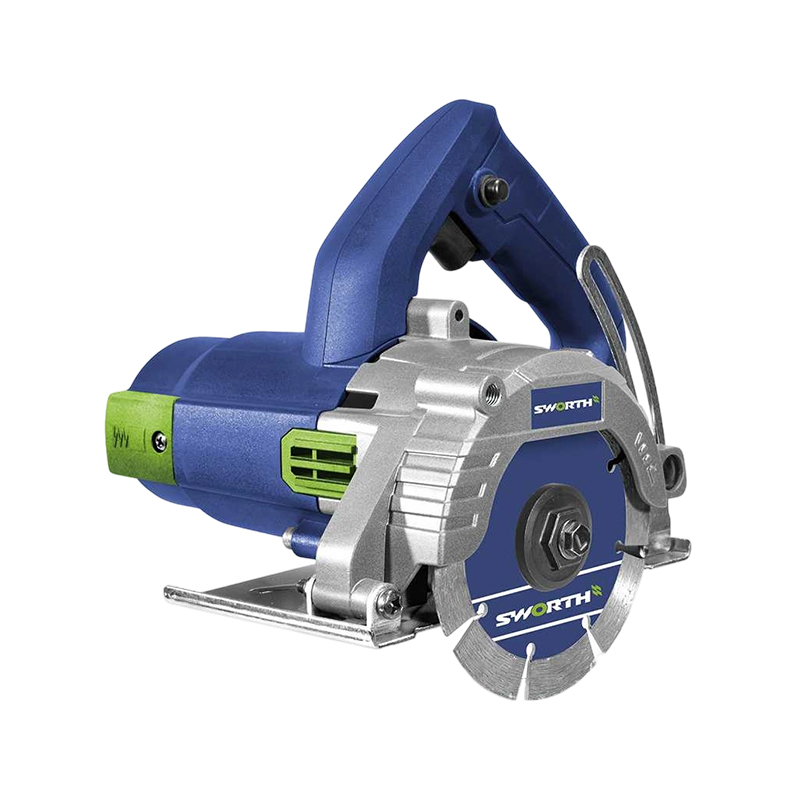
A Free Adjustment Marble Saw Cutter provides adjustable cutting depth and sometimes angle settings, while fixed-depth models are designed for consistent and repetitive cutting operations. Understanding these differences helps users choose the right tool for their projects.
1. Cutting Depth Flexibility
Adjustable models allow operators to set different cutting depths depending on the thickness of the material. This flexibility makes them suitable for various applications such as tile installation and stone shaping. Fixed-depth tools are limited to a preset depth and may require multiple passes for thicker materials.
2. Versatility of Applications
Adjustable machines can handle a wider range of tasks, including shallow scoring and deep cutting. Fixed-depth machines are more specialized and usually intended for uniform cutting operations.
3. Ease of Adjustment
Adjustable tools often include simple mechanisms that allow quick depth changes. This feature improves efficiency when switching between materials of different thicknesses.
4. Precision and Consistency
Fixed-depth models often provide consistent cutting results because the settings remain unchanged. Adjustable models require careful calibration to maintain precision.
5. Cost and Complexity
Adjustable machines tend to have more components, which may increase cost and maintenance requirements. Fixed-depth models are typically simpler and easier to maintain.
Both designs have their advantages, and the choice depends on whether flexibility or consistency is the primary requirement.
Handheld Electric Marble Cutter: Perform When Cutting Tile and Stone?
The Handheld Electric Marble Cutter is widely used in construction and renovation projects due to its portability and ease of use. It performs effectively when cutting tiles and stone materials if operated properly.
- Performance on Ceramic Tiles: Handheld cutters are well-suited for ceramic and porcelain tiles. Their compact design allows operators to make precise cuts in confined spaces, such as kitchens and bathrooms.
- Performance on Natural Stone: These tools can also handle materials such as granite and marble. Adequate power and proper blades enable efficient cutting even with dense stone materials.
- Mobility Advantages: Portable design allows users to work directly at installation sites. This eliminates the need to transport heavy stone pieces to stationary cutting equipment.
- Control and Handling: Handheld operation provides flexibility but requires steady hands. Using guide rails or markings can improve cutting accuracy.
- Efficiency in Practical Use: Portable cutters are ideal for small and medium projects. They provide sufficient cutting capability without the need for large equipment.
Handheld electric cutters provide reliable performance for both tile and stone cutting tasks, especially in situations where portability and convenience are essential.
 English
 русский
 Español





 No. 101, Yugui Road, chengxi Industrial Zone, Yongkang City, Zhejiang Province, China
