 English
 русский
 Español

SW9128 Hex 6-Tooth Rotating Gear Demolition Hammer: High-Torque Power for Severe Concrete and Rock Breaking
Heavy-duty demolition work demands more than a high wattage label. Contractors and industrial users need a hammer that can transfer power efficiently, withstand repeated impact, remain comfortable enough for long shifts, and continue working when the material becomes harder, denser, or more heavily reinforced. The SW9128 Hex 6-Tooth Rotating Gear Demolition Hammer is designed around these practical requirements.
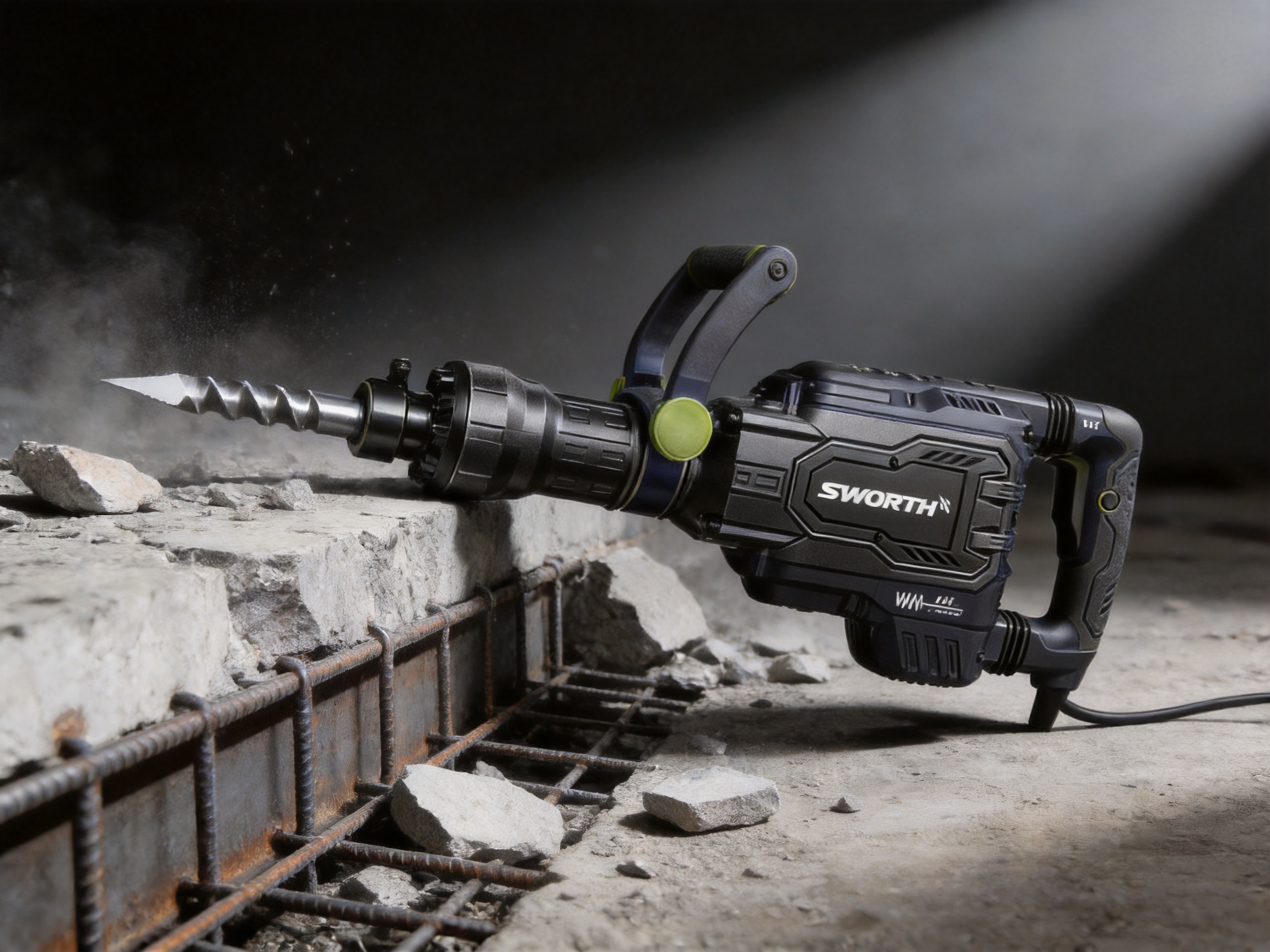
With a 1,750 W motor, a 55 J impact rating, a 6-tooth rotating gear, an integral forged iron head, dual anti-vibration handles, and a hardened 35CrMo lock rod, the SW9128 is built as a force-oriented demolition tool. Its design avoids unnecessary electronic complexity and concentrates on mechanical torque transmission, durable structural components, and serviceable wear parts. This approach makes it especially suitable for professional users who prioritize dependable breaking performance in demanding construction and industrial environments.
Unlike lighter demolition tools intended for occasional renovation work, the SW9128 is engineered for foundation breaking, bridge and column demolition, retaining-wall work, quarry applications, mining operations, and heavy trenching. Its combination of impact energy and mechanical reinforcement gives operators a tool that is prepared for prolonged contact with reinforced concrete, hard rock, frozen soil, and other resistant materials.

SW9128 Hex 6-Tooth Rotating Gear Demolition Hammer
Product Overview
The SW9128 is an electric demolition hammer in the heavy-duty class. It operates on a rated voltage of 220–240 V at 50/60 Hz and uses a 1,750 W power input to generate a no-load speed of 1,950 revolutions per minute. Its stated impact energy is 55 J, providing the high-impact output required for serious breaking applications.
The defining feature of the tool is its 6-tooth rotating gear. This gear arrangement is intended to improve torque transmission between the motor and the impact mechanism. In practical terms, the design helps the hammer apply stronger turning force to the internal working assembly, supporting more aggressive material penetration and reducing the likelihood of the tool feeling weak when the bit encounters dense concrete or embedded reinforcement.
The tool also uses a hexagonal bit connection. Hex shanks are widely used in heavy demolition because they offer a robust interface between the tool and the accessory. A properly matched hex bit can transfer high impact loads while remaining suitable for chiseling, breaking, trenching, and related applications.
Its construction includes an integral forged iron head. Instead of depending on a welded head assembly, the forged structure is formed as a more continuous, reinforced component. This eliminates weld seams in the head area and helps reduce potential weak points associated with cracking or separation under repeated vibration and impact.
To improve handling, the SW9128 includes anti-vibration handles at both the top and bottom of the tool. These handles are complemented by soft rubber grip surfaces and an oversized trigger. The result is a control arrangement intended to reduce hand fatigue, limit rebound sensation, and make it easier for operators to maintain a stable working position.
Key Technical Specifications
| Specification | Value | Practical Significance |
|---|---|---|
| Product type | Electric demolition hammer | Designed for high-impact breaking and chiseling |
| Model | SW9128 | Heavy-duty professional configuration |
| Rated voltage | 220–240 V~, 50/60 Hz | Suitable for compatible commercial electrical systems |
| Power input | 1,750 W | Provides a strong electrical power reserve for demanding work |
| No-load speed | 1,950 rpm | Supports rapid mechanical cycling before load is applied |
| Impact energy | 55 J | High impact output for severe breaking applications |
| Gear design | 6-tooth rotating gear | Improves torque transmission and mechanical advantage |
| Motor stator | 94 mm diameter × 45 mm height | Substantial motor architecture for high-power operation |
| Motor rotor | 53 mm diameter × 45 mm height | Designed to work with the high-power stator assembly |
| Lock rod material | 35CrMo with carburizing | Improves wear resistance and service life |
| Carbon brushes | 7 × 17 × 24 mm | Oversized replaceable wear components |
| Handle system | Dual top-and-bottom anti-vibration handles | Improves control and reduces perceived rebound |
| Bit interface | Hex connection | Suitable for robust demolition accessories |
These specifications should be considered together rather than individually. A high impact rating is valuable only when the motor, gear train, head, lock rod, bit interface, and handles can work as a coordinated system. The SW9128 is designed around this complete-system concept.
Why the 6-Tooth Rotating Gear Matters
The 6-tooth rotating gear is the central mechanical feature of the SW9128. In a demolition hammer, electrical power must ultimately become controlled mechanical movement and impact energy. The gear assembly plays an important role in transferring rotational force from the motor into the impact mechanism.
A 6-tooth configuration provides a direct and robust mechanical arrangement intended to deliver higher torque. Greater torque can be especially useful when the bit is pressed against dense concrete, compacted ground, hard stone, or material containing steel reinforcement. Under these conditions, the tool needs more than speed. It needs the ability to continue transmitting force as resistance increases.
This is one of the main differences between a purpose-built heavy demolition hammer and a lighter multi-purpose tool. Smaller hammers may be easier to carry, but they generally offer less impact energy and less mechanical reserve for extreme work. The SW9128 emphasizes force and structural durability, making it better suited to applications where breaking speed, penetration, and persistence are more important than minimum weight.
The gear also supports a straightforward mechanical design. The tool does not rely on a complicated electronic control system to create its primary breaking force. Instead, the motor and gear mechanism provide the foundation of performance. For professional users, this can be an important consideration because a mechanically focused design is easier to understand, inspect, and maintain than a system that depends on multiple electronic modules.
Mechanical simplicity does not mean that the tool is basic. It means that the design concentrates engineering attention on the components that experience the greatest forces. The rotating gear, forged head, lock rod, brush holder, motor assembly, and handle structure are all important to the product’s ability to endure repeated demolition cycles.
55 J Impact Energy for Severe Breaking Work
The SW9128 is rated at 55 J of impact energy. This places it in a powerful category for heavy concrete and rock breaking. The impact rating describes the energy delivered through the working mechanism and bit during each impact cycle. Higher impact energy can help the bit fracture resistant material more effectively, particularly when the operator uses the correct chisel and applies steady, controlled pressure.
In foundation work, the tool can be used to break sections of heavily reinforced concrete, remove excess concrete around structural repairs, or open access points for further construction. On bridge decks, columns, and retaining walls, a high-energy demolition hammer can help remove damaged sections and prepare surfaces for rebuilding.
Quarry and mining users may require a tool capable of working against hard rock and compact mineral material. Although site conditions vary significantly, a 55 J impact rating gives the SW9128 the energy reserve needed for serious chipping and breaking tasks. The operator must still select the appropriate bit, follow safe working procedures, and account for the characteristics of the rock.
Heavy trenching is another suitable application. Frozen soil, compacted ground, and embedded stones can resist ordinary digging tools. A high-impact hex hammer can assist in opening narrow trenches, breaking obstructions, and loosening sections of ground before removal.
Impact energy alone does not determine productivity. Bit condition, material thickness, operator technique, working angle, duty cycle, extension-cord quality, and maintenance all influence actual results. Nevertheless, the 55 J rating shows that this model is designed for applications well beyond light renovation and occasional household repair.
Integral Forged Iron Head
The head of a demolition hammer is exposed to substantial shock, vibration, and stress. Every impact creates forces that travel through the bit, tool holder, internal mechanism, and housing. A weakness in the head can lead to cracking, distortion, or premature failure.
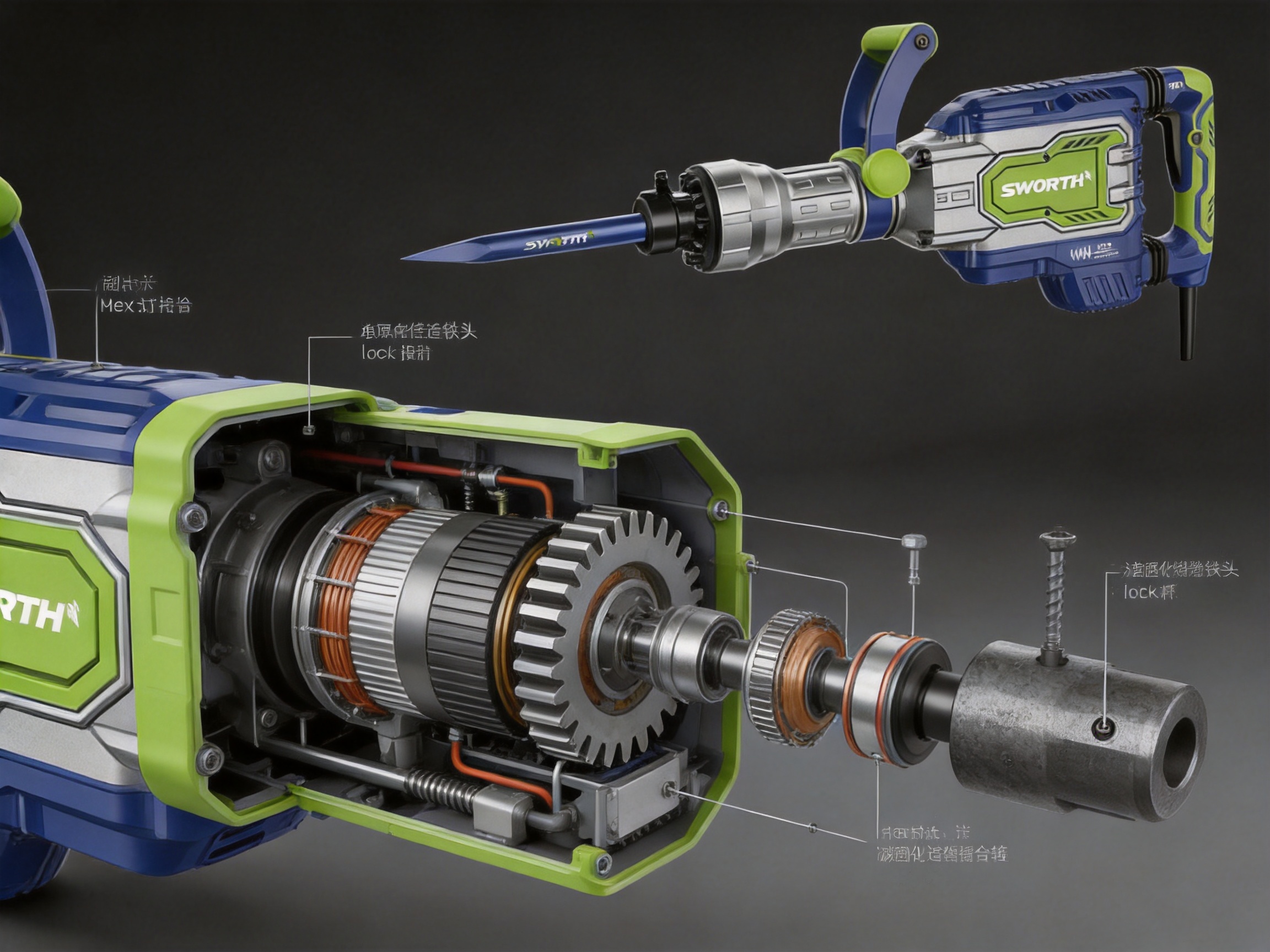
The SW9128 uses an integral forged iron head rather than a head assembly that depends on weld seams. Forging forms the material under controlled pressure, creating a strong structural component with a continuous body. The absence of weld seams in this area helps eliminate potential stress concentration points associated with welding defects, incomplete fusion, or heat-affected zones.
This design is particularly valuable in heavy demolition because the tool is expected to work under repeated impact rather than occasional shock. A forged head can provide a stable foundation for the internal mechanism and help maintain alignment between the bit interface and the impact assembly.
The head design also supports the product’s positioning as a professional tool. Contractors cannot afford frequent interruptions caused by avoidable structural damage. A durable head helps protect the investment in the motor and internal components while contributing to longer service intervals when the tool is used correctly.
Forging is only one part of quality. The finished component must also be correctly machined, inspected, assembled, and tested. Dimensional accuracy is important because misalignment can increase vibration, accelerate wear, and reduce impact efficiency. Yongkang Siwei Technology Co., Ltd. emphasizes process control, high-quality materials, and professional manufacturing as part of its approach to producing demolition hammers and chisel tools.
35CrMo Lock Rod with Carburizing Treatment
The lock rod is a critical wear component in a heavy demolition hammer. It helps retain and guide the hex bit while the tool is delivering repeated impacts. Because it is exposed to friction, pressure, shock, and repeated movement, its material and surface treatment directly affect service life.
The SW9128 uses 35CrMo steel for the lock rod and applies a carburizing process. 35CrMo is a chromium-molybdenum alloy steel commonly selected for components that require a combination of strength and toughness. Carburizing introduces carbon into the surface layer, allowing the outer region to achieve higher hardness while the core retains greater toughness.
This combination is useful in a demolition tool. The hardened surface can resist wear caused by bit movement and repeated contact, while the tougher core helps the component withstand shock loading. According to the product information, the treated lock rod is designed to increase working life by approximately 30 percent compared with the previous configuration.
A longer-lasting lock rod can provide several practical benefits. It may reduce the frequency of replacement, help maintain bit retention, support stable tool operation, and lower downtime during extended projects. It also contributes to a more consistent connection between the hammer and accessory.
Operators should still inspect the lock rod and bit holder regularly. Excessive wear, deformation, looseness, or difficulty retaining the bit should not be ignored. The use of compatible accessories and correct lubrication practices is also important for obtaining the expected service life from the locking assembly.
Dual Anti-Vibration Handle System
Demolition work exposes operators to continuous vibration and sudden rebound. If the handle design does not provide adequate control, the user may experience faster fatigue, reduced accuracy, and greater discomfort during long shifts. The SW9128 addresses this issue with dual anti-vibration handles positioned at the top and bottom of the tool.
The two-handle arrangement gives the operator more than one point of control. The upper handle helps guide the tool and maintain downward pressure, while the lower handle assists with positioning, balance, and rebound management. This is valuable when the hammer is working vertically, horizontally, or at an angle.
The handles use soft rubber grip surfaces. Rubber can improve contact between the user’s hands and the tool, especially when gloves are worn or the working environment is dusty. The textured, cushioned feel can also reduce the tendency to grip excessively tightly. A relaxed but secure grip is helpful for maintaining control and reducing unnecessary strain.
The oversized trigger is designed to be easier to press and hold. During extended work, a small or stiff trigger can create pressure points in the fingers. A larger switch area allows the operator to activate the tool with less concentrated force and may make it easier to use while wearing protective gloves.
Anti-vibration features do not eliminate all vibration. Operators should still follow recommended exposure limits, take appropriate breaks, rotate tasks where possible, and use suitable personal protective equipment. However, a well-designed handle system can make the tool more manageable and help reduce the discomfort associated with repeated operation.
Motor and Electrical Architecture
The SW9128 uses a 1,750 W motor designed to supply the power required by its high-impact mechanism. Its stated no-load speed is 1,950 rpm. The motor dimensions include a stator measuring 94 mm in diameter by 45 mm in height and a rotor measuring 53 mm in diameter by 45 mm.
The substantial motor dimensions reflect the tool’s heavy-duty positioning. A demolition hammer needs to maintain mechanical output while operating against high resistance. The motor must provide sufficient rotational force to drive the gear assembly and sustain repeated impact cycles without becoming the limiting factor in the system.
The product uses an upgraded brush holder with enlarged 7 × 17 × 24 mm carbon brushes. Carbon brushes are consumable components in brushed electric motors. They transfer electrical current to the rotating armature and gradually wear through normal operation. Larger brushes can offer a greater contact area and may support longer working intervals when matched correctly with the motor and commutator.
The brush holder is also important because it must keep the brushes properly aligned and maintain reliable contact. A well-designed holder can help reduce uneven wear, protect the surrounding electrical components, and simplify service procedures when replacement becomes necessary.
Because this is a high-power electric tool, users should connect it to a suitable electrical supply. The voltage must match the rating, and cables or extension cords must be appropriately sized for the power demand and site conditions. Undersized or damaged cables can cause voltage drop, overheating, or unsafe operation.
Performance Advantages in Comparison with Lighter Demolition Tools
Product comparison should be based on the intended application. A lightweight rotary hammer may be preferable for drilling anchor holes, installing fixtures, or performing short-duration renovation tasks. A compact demolition hammer may be easier to transport between floors or use in confined spaces. The SW9128 is aimed at a different requirement: high-force, high-impact material removal.
Compared with lighter tools, the SW9128 offers several notable advantages:
First, its 55 J impact rating provides substantially greater breaking capacity for resistant materials. This can help reduce the time required to fracture thick concrete, hard rock, or frozen ground.
Second, the 6-tooth rotating gear is designed to deliver higher torque transmission. This gives the operator a mechanical advantage when the bit encounters severe resistance.
Third, the forged iron head avoids weld seams in a critical structural area. This supports durability under repeated shock and vibration.
Fourth, the 35CrMo carburized lock rod is designed for improved wear resistance and an approximately 30 percent longer service life. This is especially beneficial for users who operate the hammer frequently.
Fifth, the dual anti-vibration handle layout offers greater control than a single basic grip. Better control can contribute to more accurate bit placement and reduced fatigue.
Sixth, the enlarged carbon brushes and upgraded brush holder support serviceability. Consumable brush components can be inspected and replaced as part of normal maintenance rather than requiring replacement of the complete motor assembly.
These advantages are most meaningful on demanding jobs. For a contractor breaking a small amount of thin masonry, a lighter tool may be sufficient. For a professional crew working on reinforced concrete, bridge structures, rock, or frozen ground, the SW9128’s greater mechanical reserve can provide a more appropriate match between tool capability and working conditions.
Applications and Jobsite Suitability
Foundation Work
Foundation construction and renovation often involve thick concrete, embedded reinforcement, and restricted access. The SW9128 can be used for breaking unwanted sections, enlarging openings, removing damaged concrete, and preparing surfaces for repair. Its high impact energy is suitable for material that is too resistant for lighter handheld tools.
Bridge Decks and Columns
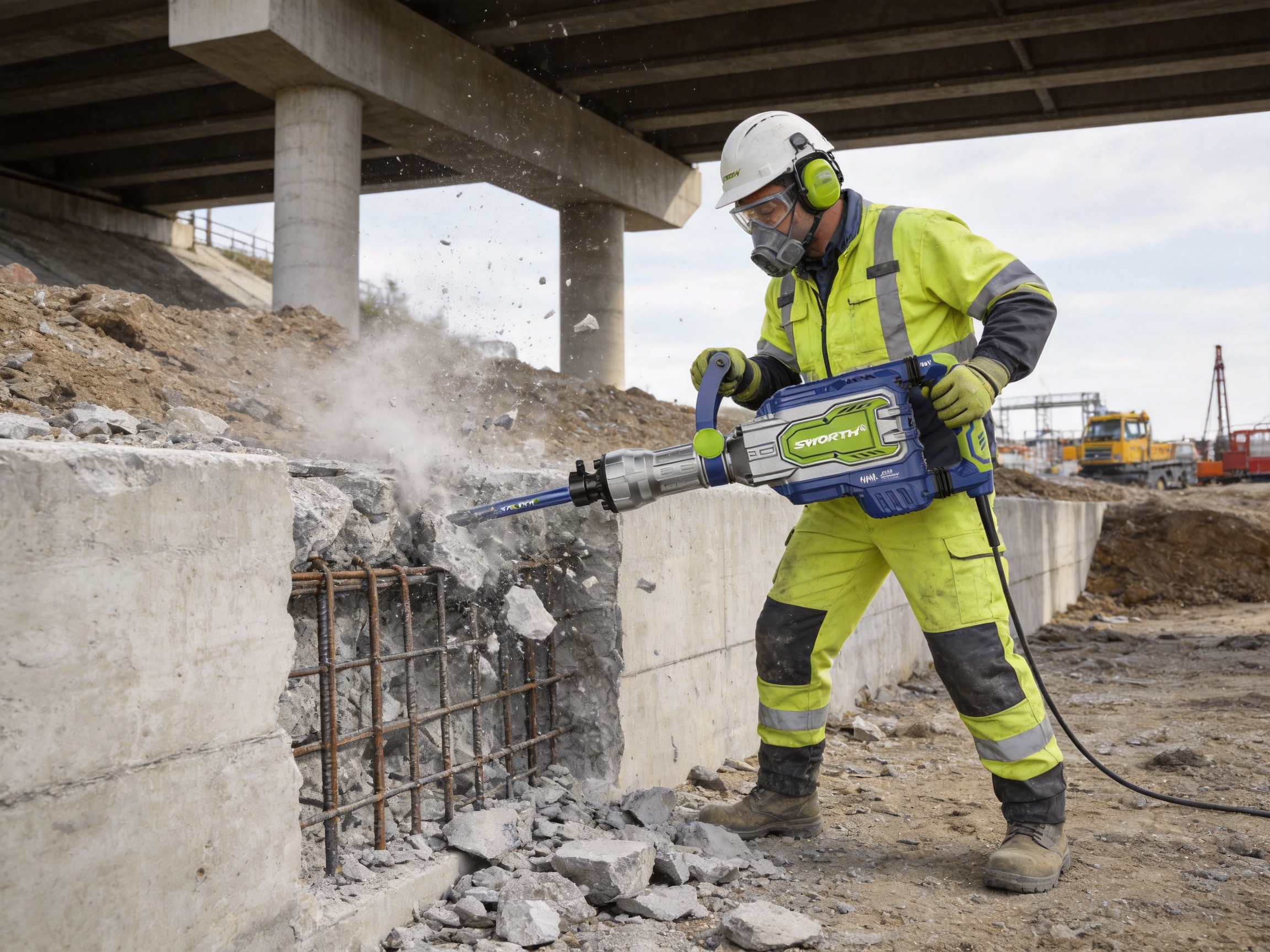
Bridge maintenance may require the removal of damaged concrete while leaving surrounding structures ready for inspection or reconstruction. The operator can use suitable chisels to remove material progressively. The dual handles help maintain control when working on vertical columns, edges, and overhead or angled surfaces.
Retaining Walls
Retaining-wall demolition can involve dense structural concrete and limited working space. The SW9128’s force-oriented design supports controlled section-by-section removal. Operators should plan the sequence carefully and ensure that temporary support, exclusion zones, and structural safety requirements are addressed before demolition begins.
Quarry and Mining Operations
Hard rock breaking requires a durable impact tool, appropriate accessories, and a clear understanding of geological conditions. The 55 J impact rating and hex bit interface make the SW9128 suitable for selected quarry and mining tasks, including breaking rock fragments, opening access points, and assisting with localized trenching or scaling work.
Frozen or Compacted Ground
Ground that has frozen or become heavily compacted can be difficult to penetrate with conventional digging equipment. A demolition hammer can loosen hard layers and break embedded obstructions before excavation. The operator should avoid forcing the bit sideways, as lateral loading can accelerate accessory and lock-rod wear.
Industrial Renovation
Factories, warehouses, and commercial facilities often require removal of concrete bases, old floors, masonry sections, and machine foundations. The SW9128 can support these projects when a high-impact handheld solution is more practical than larger equipment.
Manufacturing Strengths and Process Control
The performance of a heavy demolition hammer depends heavily on manufacturing discipline. High impact energy places demanding requirements on material selection, machining accuracy, heat treatment, assembly, and final inspection. Yongkang Siwei Technology Co., Ltd. integrates research and development, production, and sales, allowing the company to coordinate product design with manufacturing experience and customer requirements.
The company’s stated manufacturing philosophy is based on professional focus and quality first. This is reflected in the SW9128’s use of application-specific components rather than generic parts selected only for initial cost. The forged head, carburized 35CrMo lock rod, enlarged carbon brushes, and dual anti-vibration handle system each address a known challenge in professional demolition work.
Material selection is an important starting point. The head requires a strong structural material capable of enduring repeated impact. The lock rod requires a steel grade that can combine surface hardness with core toughness. The motor requires electrical and mechanical components that can sustain high power input. Each part must be matched to the load it will experience.
Forging the iron head creates a component with a continuous structural form. The subsequent machining process must achieve the dimensional precision needed for proper alignment and fit. If the head, gear, and impact mechanism are not correctly aligned, the tool may experience excess vibration, inefficient power transfer, and faster wear.
Carburizing the lock rod provides a controlled surface treatment rather than relying only on the base material. Heat-treatment consistency is essential. The depth and hardness of the carburized layer must be suitable for the component’s function, while the inner core must retain enough toughness to resist impact failure.
The brush holder and enlarged carbon brushes also show attention to maintainability. In a professional tool, consumable components should be accessible for inspection and replacement. A serviceable brush system can extend the useful life of the tool and help maintenance teams manage operating costs.
Quality control should continue through assembly. Fasteners, seals, bearings, electrical connections, gear alignment, switch function, and handle installation all affect the final result. Finished tools should be evaluated for basic electrical safety, abnormal noise, vibration, operating stability, and functional performance before delivery.
Yongkang Siwei Technology Co., Ltd. also has experience developing brushless motors, electronic controls, intelligent battery platforms, and cordless garden tools. Although the SW9128 is a corded mechanical demolition hammer, this broader engineering background indicates experience across motor systems, power transmission, control technology, and user-oriented tool design.
Maintenance and Service Considerations
Heavy demolition tools require regular care. Maintenance does not replace sound design, but it allows the design advantages to deliver their expected service life.
Before each use, inspect the power cord, plug, switch, handles, housing, bit holder, and accessory. Do not operate the tool if the cord insulation is damaged, the switch is unreliable, or the handles are loose. Check that the hex bit is compatible and properly locked into position.
Inspect the bit for excessive wear, cracks, deformation, or a damaged shank. A worn chisel may reduce breaking efficiency and place additional stress on the tool. Using a sharp and suitable accessory helps the hammer work more effectively and reduces the temptation to apply excessive force.
Keep the ventilation openings clear. Dust from concrete, masonry, and rock can accumulate around air passages. Restricted airflow may increase motor temperature and reduce operating life. Cleaning should be performed with the tool disconnected from the power supply and according to the applicable service instructions.
Carbon brushes are wear parts. Their condition should be checked at suitable service intervals, especially when the tool has been used intensively. Signs of brush wear may include reduced power, intermittent operation, visible sparking, unusual motor noise, or difficulty starting. Replacement should be carried out with compatible parts by a qualified technician when necessary.
The lock rod and bit interface should be kept clean and lubricated according to the manufacturer’s recommendations. Excessive dust, inadequate lubrication, or a damaged retaining mechanism can increase friction and accelerate wear.
Operators should allow the tool to cool when required. Continuous operation in extreme conditions without appropriate pauses can place unnecessary thermal stress on the motor and electrical components. A planned duty cycle is generally more productive than operating until an avoidable failure occurs.
Safe Operating Practices
Demolition work can produce flying fragments, dust, noise, vibration, and unexpected structural movement. Operators should wear appropriate eye protection, hearing protection, gloves, protective footwear, and respiratory protection where dust control requires it.
Before beginning work, survey the material and identify electrical cables, plumbing, reinforcement, gas lines, and other concealed hazards. In structural demolition, confirm that the planned sequence will not compromise the stability of the remaining structure.
Use the correct chisel for the task and keep both hands on the handles during operation. Maintain a stable stance and avoid overreaching. Allow the hammer to apply impact energy rather than forcing the tool sideways or using it as a pry bar.
Do not use a damaged accessory, modified bit, unauthorized attachment, or improvised extension. The hex connection is intended for compatible demolition accessories. Incorrect components can reduce control and increase the risk of breakage.
Disconnect the tool from the power supply before changing accessories, cleaning, inspecting, or carrying out maintenance. When moving between work areas, do not carry the tool by the cord or leave it connected when unattended.
Dust generated by concrete and masonry may contain hazardous particles. Use appropriate dust suppression, extraction, ventilation, and respiratory protection measures based on the material and local regulations.
Purchasing Considerations for Contractors and Distributors
Professional buyers should evaluate more than the purchase price. A demolition hammer represents an operating asset, and its total value depends on productivity, durability, serviceability, accessory availability, and downtime.
The SW9128 is a suitable candidate for buyers who need a high-impact tool for repeated heavy work. Its 55 J impact rating, 1,750 W motor, forged head, hardened lock rod, and anti-vibration handles provide a clear specification profile for construction, demolition, infrastructure maintenance, quarry, and industrial users.
Distributors can position the model as a specialist solution rather than a general-purpose home tool. Customers who regularly break reinforced concrete or hard rock often understand the cost of insufficient impact power. A tool that completes work more efficiently and withstands demanding use can offer better value over the operating life.
Fleet managers should consider spare carbon brushes, compatible hex bits, maintenance procedures, and technician support when preparing for deployment. Keeping wear parts available can minimize delays during active projects.
Importers and project suppliers should also confirm regional electrical requirements, packaging standards, documentation, warranty conditions, and service arrangements before placing large orders. The rated 220–240 V, 50/60 Hz configuration is suitable only where the local electrical supply matches the tool’s requirements.
Frequently Asked Questions
What type of work is the SW9128 designed for?
The SW9128 is designed for heavy demolition and breaking work, including reinforced concrete, bridge decks, columns, retaining walls, hard rock, frozen ground, compacted soil, machine foundations, and other resistant materials.
What does the 55 J impact rating mean?
The 55 J rating indicates the stated impact energy of the demolition hammer. It represents a high-impact output intended for severe material-breaking applications. Actual productivity will depend on the material, bit type, operator technique, and working conditions.
What is the advantage of the 6-tooth rotating gear?
The 6-tooth rotating gear is designed to improve torque transmission and provide greater mechanical advantage. This helps the tool maintain strong breaking force when the bit encounters dense concrete, reinforcement, hard rock, or compacted ground.
Why is the forged iron head important?
The integral forged iron head has no weld seams in the head structure. This helps remove potential weak points associated with welded construction and provides a strong foundation for a mechanism exposed to repeated impact and vibration.
How does the 35CrMo lock rod improve durability?
The lock rod uses 35CrMo alloy steel with carburizing treatment. The process is intended to provide a wear-resistant outer surface and a tougher internal core. The product information states that this design increases working life by approximately 30 percent.
Does the SW9128 use replaceable carbon brushes?
Yes. The tool uses an upgraded brush holder with enlarged 7 × 17 × 24 mm carbon brushes. Carbon brushes are wear components and should be inspected and replaced when required by a qualified service professional.
Are the handles designed to reduce vibration?
Yes. The SW9128 has dual anti-vibration handles located at the top and bottom. Soft rubber grips and an oversized trigger are intended to improve comfort, control, and handling during extended operation.
Can the tool be used for drilling?
The SW9128 is primarily a demolition hammer for breaking and chiseling. Users should use only compatible hex accessories and should not assume that ordinary drilling functions are available unless specifically confirmed in the operating documentation.
What electrical supply does the tool require?
The stated rating is 220–240 V at 50/60 Hz. The tool should be connected only to a compatible electrical supply through suitable cables and protective equipment.
How can operators extend service life?
Use compatible accessories, inspect the bit and lock rod regularly, keep ventilation openings clear, maintain the correct lubrication, monitor carbon-brush wear, avoid sideways loading, and follow suitable duty cycles. Prompt maintenance is especially important after dusty or intensive work.
Is the SW9128 suitable for occasional household use?
It can be used wherever the electrical supply, work environment, and operator qualifications are suitable, but its heavy-duty output is primarily intended for professional construction, demolition, infrastructure, quarry, mining, and industrial applications.
Conclusion
The SW9128 Hex 6-Tooth Rotating Gear Demolition Hammer is built for users who need force, durability, and dependable mechanical performance. Its 1,750 W motor and 55 J impact rating provide the power foundation for breaking reinforced concrete, hard rock, frozen ground, retaining walls, bridge components, and industrial structures.
The product’s strongest advantages come from the way its components work together. The 6-tooth rotating gear is designed to transmit higher torque. The integral forged iron head provides a solid, weld-free structural foundation. The carburized 35CrMo lock rod improves resistance to wear and is specified for an approximately 30 percent longer service life. The enlarged carbon brushes support a serviceable motor system, while the dual anti-vibration handles improve control and reduce the discomfort associated with repeated impact operation.
These features reflect a manufacturing approach focused on real jobsite challenges rather than appearance alone. Yongkang Siwei Technology Co., Ltd. combines product development, production, material selection, heat-treatment processes, mechanical design, and service considerations to create tools for professional users. Its broader experience with high-efficiency motors, electronic controls, intelligent battery platforms, and cordless garden tools further supports its ability to develop power equipment across multiple categories.
For contractors, industrial buyers, distributors, and project suppliers seeking a serious electric demolition hammer, the SW9128 offers a force-oriented solution with a clear emphasis on torque transmission, impact output, structural durability, wear resistance, and operator control. When correctly matched with the application and maintained according to proper procedures, it is designed to deliver reliable performance in some of the most demanding breaking environments.
References
1. Product technical information for the SW9128 Hex 6-Tooth Rotating Gear Demolition Hammer, including rated voltage, power input, no-load speed, impact energy, motor dimensions, gear design, handle system, lock-rod treatment, and carbon-brush specifications.
2. Manufacturer-provided product overview and application information for heavy concrete demolition, bridge and column work, retaining-wall removal, quarry operations, mining, and frozen-ground trenching.
3. Manufacturer company information regarding research and development, production, sales integration, material selection, forging, professional demolition tools, brushless motor development, electronic controls, intelligent battery platforms, and cordless garden equipment.
4. General engineering principles concerning forged structural components, carburized alloy steel, electric motor brush systems, torque transmission, impact tools, and vibration-reduction handle design.
5. General occupational safety practices for concrete demolition, masonry breaking, power-tool operation, vibration exposure, dust control, electrical safety, and personal protective equipment.
Product: SW9128 Hex 6-Tooth Rotating Gear Demolition Hammer

Recommended Products
-


SW528 Small Hole Rebar Hammer
-
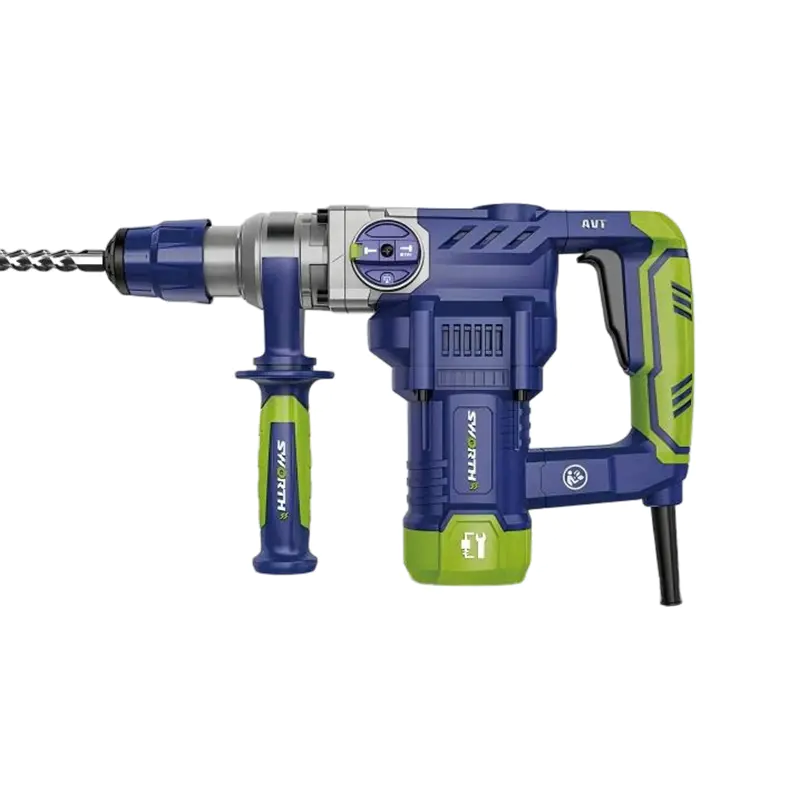
SW932 Groove Sandblasting Hammer
-
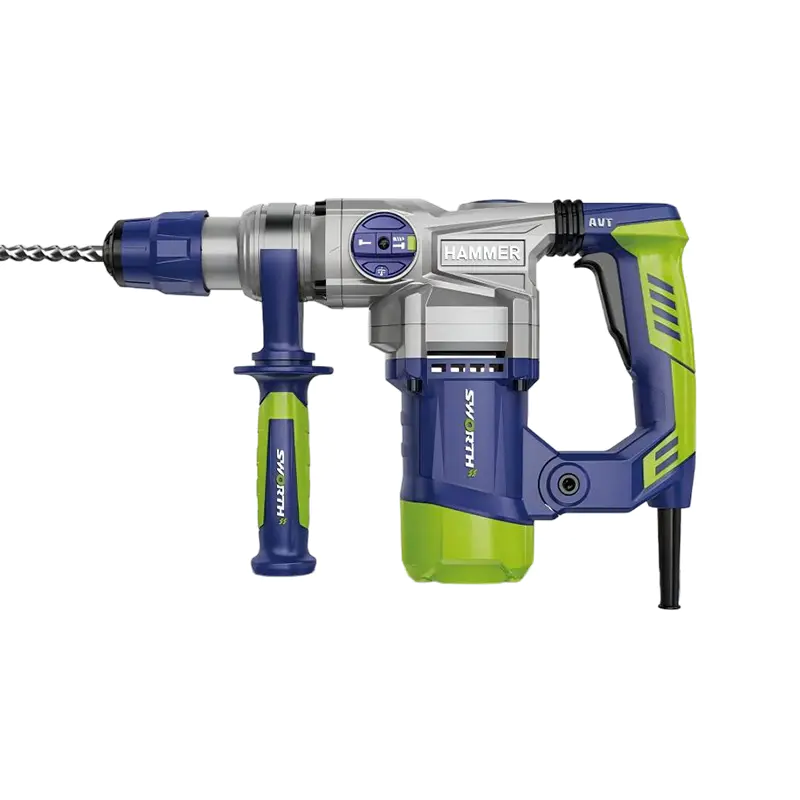
SW9362A Large Hole Rebar Hammer
-
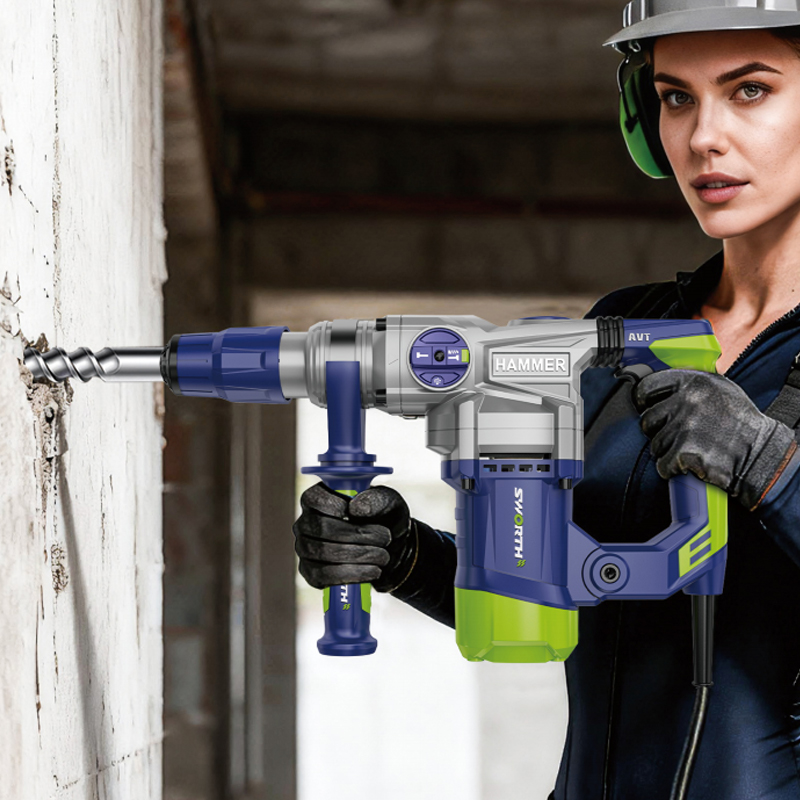
SW940 Enlarged Hole Rebar Hammer
-
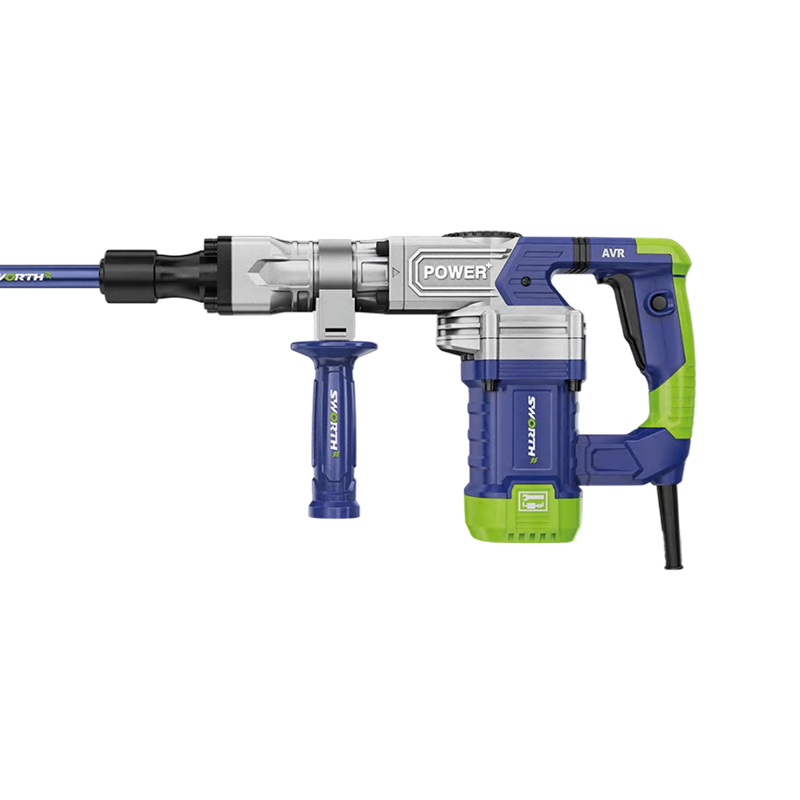
SW35S1 Powerful Demolition Hammer
-
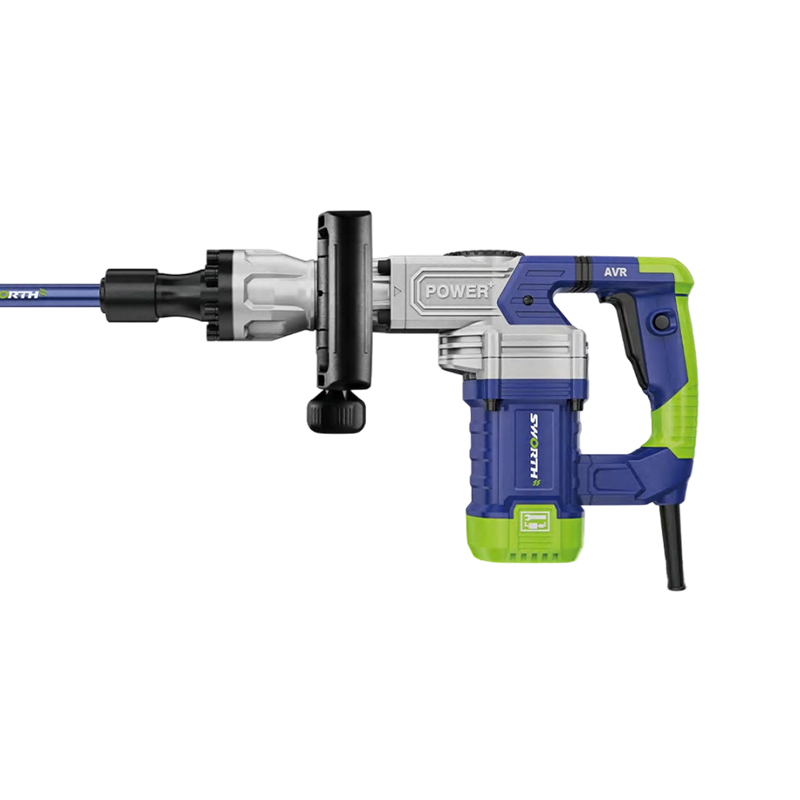
SW35S2 High-Efficiency Heat Dissipation Demolition Hammer
-
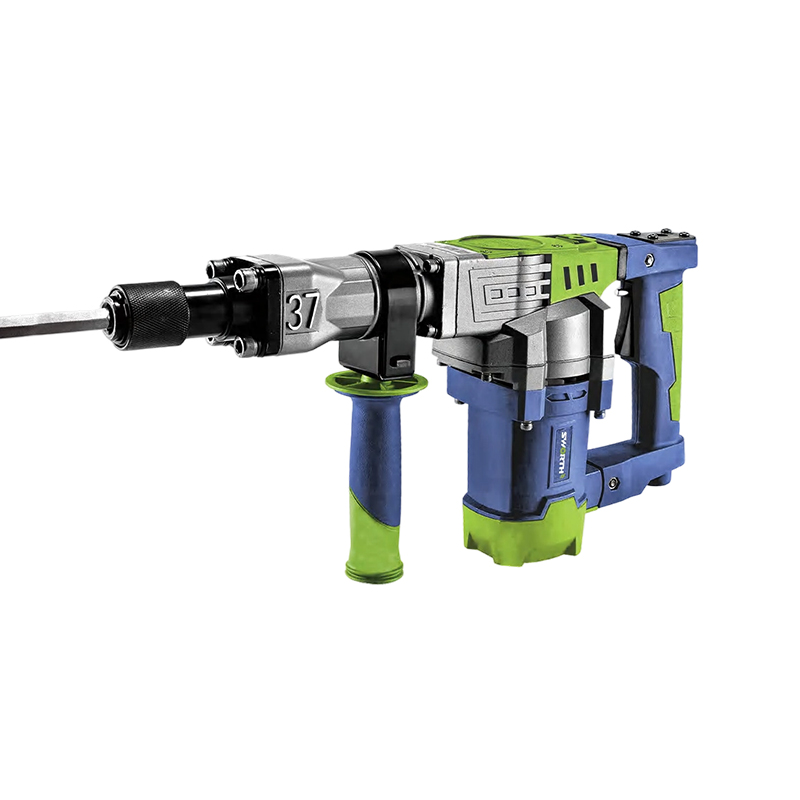
SW9371 High-Power Demolition Hammer
-
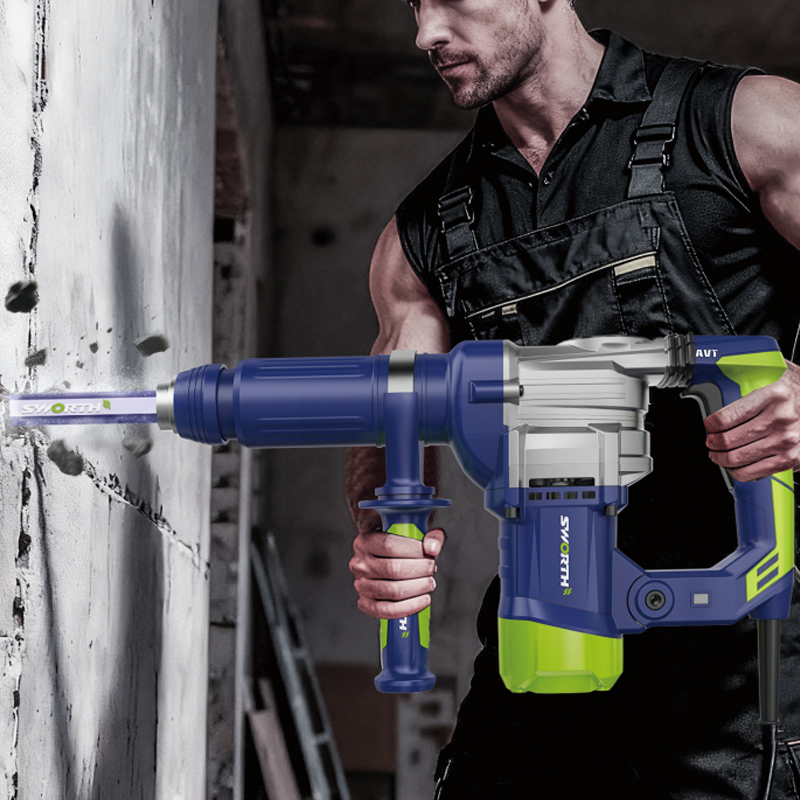
SW9373 Anti-Scalding Carbon Brush Holder Demolition Hammer
-
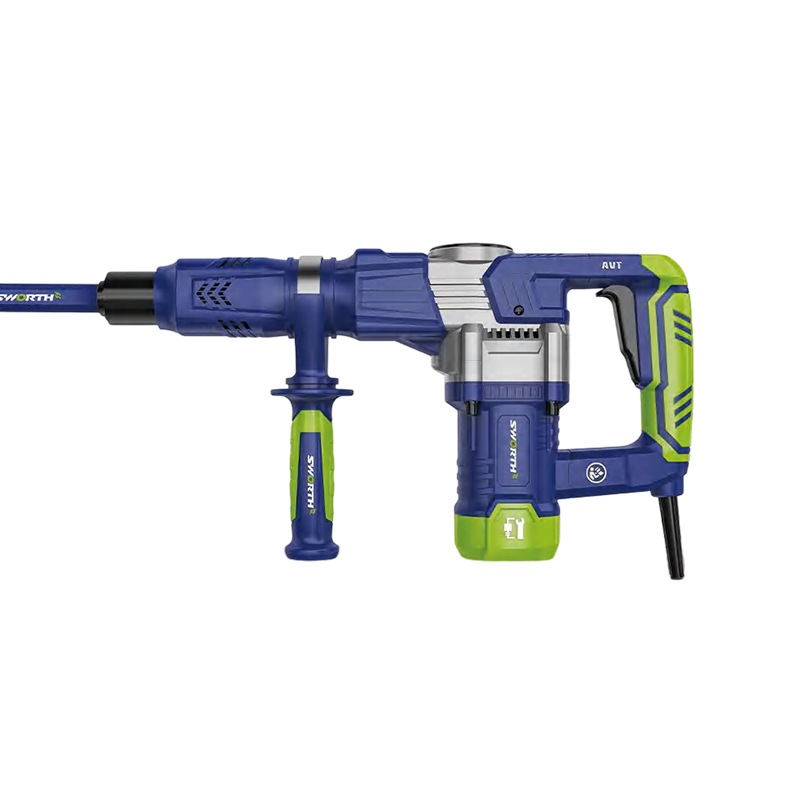
SW535 Powerful Anti-Scalding Demolition Hammer
-
SW535-2 Durable Powerful Demolition Hammer
-
SW35S3 Five-Pipe Drill Bit Demolition Hammer
-

SW11E Five-Pipe Clamping Demolition Hammer
 +86-18314829275
 sale@sworthtools.com
 No. 101, Yugui Road, chengxi Industrial Zone, Yongkang City, Zhejiang Province, China
Copyright© Yongkang Siwei Technology Co., Ltd. All Rights Reserved

Hammer Tools & Cordless Garden Tools Manufacturer
