 English
 русский
 Español

SW125 Heavy-Duty Demolition Hammer: Forged Strength, 55-Joule Impact Power, and Long-Life Performance
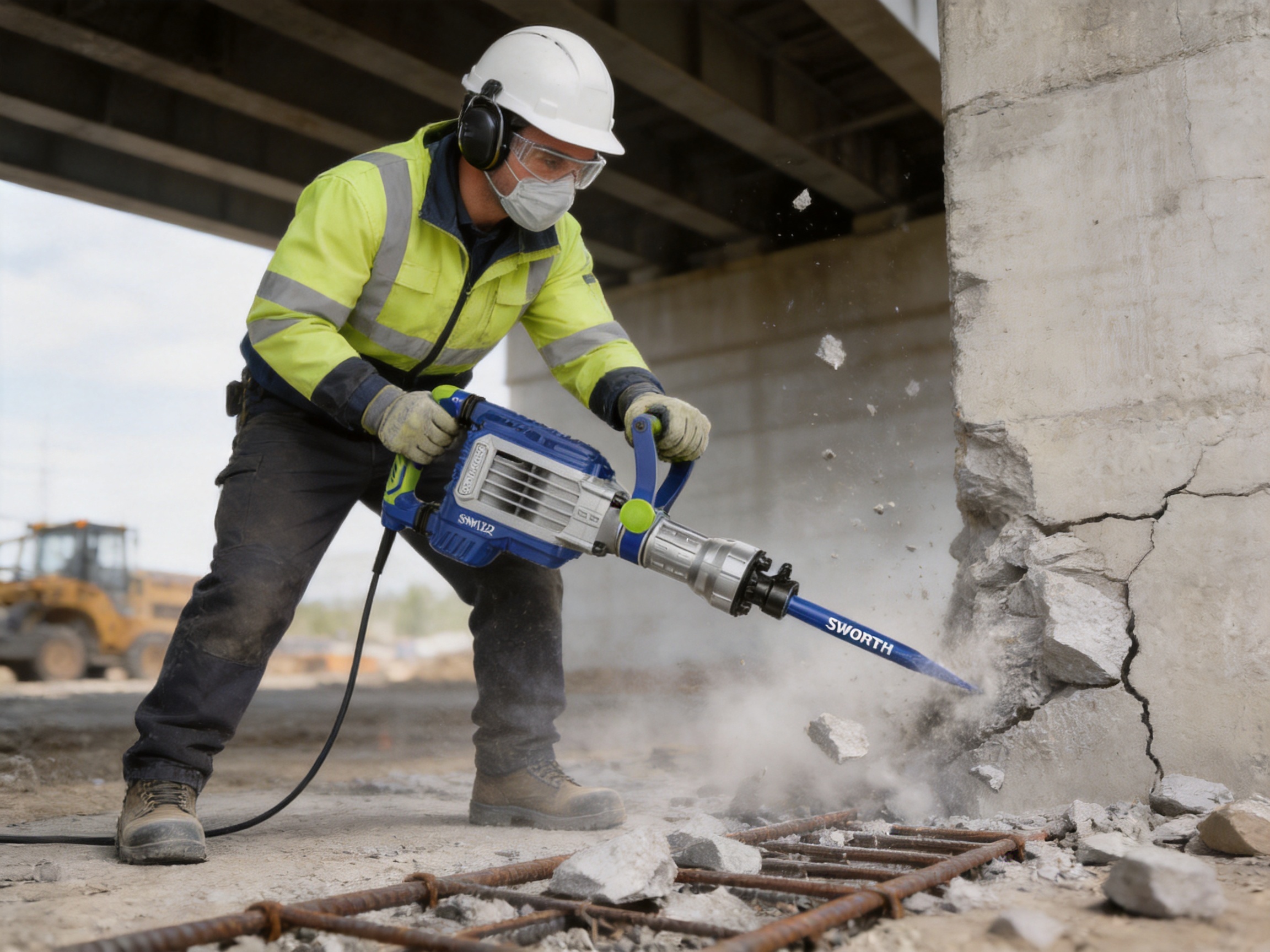
In demanding demolition work, a hammer must do more than produce high impact energy. It must continue working when concrete is heavily reinforced, rock is exceptionally hard, temperatures are low, and downtime creates serious project delays. The SW125 Hex Integral Forged Iron Head Demolition Hammer is designed for precisely these conditions. It combines a 1,750-watt motor, 55 joules of impact energy, a robust one-piece forged iron head, a six-tooth rotating gear system, reinforced internal components, and dual anti-vibration handles in one professional demolition platform.
Unlike light-duty breakers designed mainly for occasional renovation, the SW125 is built around durability and sustained mechanical performance. Its construction addresses several common causes of demolition hammer failure, including cracked housings, worn locking rods, insufficient brush capacity, excessive vibration, and loss of torque under heavy resistance. The result is a tool intended for professional contractors, infrastructure teams, quarry operators, mining crews, and other users who require dependable high-force performance.
This article examines the SW125’s construction, working advantages, manufacturing strengths, application range, maintenance requirements, and competitive position. It also explains how Yongkang Siwei Technology Co., Ltd. uses material selection, forging, heat treatment, motor development, and product-focused engineering to create demolition tools for demanding working environments.
Built for the Most Punishing Demolition Conditions
Demolition hammers operate under severe mechanical stress. Every impact transfers a large amount of energy through the tool body, locking mechanism, gear train, working accessory, and operator interface. If any one of these parts is under-designed, the entire machine may become unreliable. A cracked front housing, worn lock rod, overheated motor, or poorly controlled vibration can reduce productivity and increase operating costs.
The SW125 approaches this challenge as a complete system rather than simply adding a powerful motor to a conventional body. Its integral forged iron head eliminates weld seams in one of the most highly stressed areas. The internal gear structure uses six rotating teeth to support higher torque transmission. The 35CrMo lock rod is carburized to improve wear resistance and extend service life. Larger 7×17×24 mm carbon brushes support longer working intervals, while the dual anti-vibration handle design helps reduce the physical burden on the operator.
These features are particularly relevant when the hammer is used for reinforced concrete, bridge construction, dam repair, frozen soil, hard rock, quarry work, and mining operations. In such environments, the tool may be exposed to continuous impacts, abrasive dust, irregular surfaces, and high reaction forces. A demolition hammer designed for occasional household work may not offer sufficient structural reserve. The SW125 is intended to provide that additional reserve.
The tool is powered by a 220–240 V supply at 50/60 Hz and has a rated input of 1,750 W. Its stated impact energy is 55 J, placing it in a heavy-duty class suitable for breaking dense and resistant materials. The listed impact frequency is 1,950 rpm. Although impact frequency and impact energy are different performance measurements, the combination is important: energy determines the force available per blow, while operating frequency influences how quickly the tool can deliver repeated impacts.
One-Piece Integral Forged Iron Head
The most distinctive structural feature of the SW125 is its integral forged iron head. The head is produced as a unified forged component rather than relying on welded sections at a high-stress location. This design directly addresses a common weakness found in heavily loaded demolition equipment: cracking around joints, seams, or transitions in the front assembly.
Forging forms metal under controlled pressure, allowing the material to develop a dense and continuous structure. Compared with a construction that depends on welded pieces, a one-piece forged head can reduce the number of potential stress concentration points. It also avoids the need to rely on a weld seam in an area repeatedly exposed to impact, vibration, and bending forces.
For professional users, the importance of this design is practical rather than merely technical. When a demolition hammer head fails, the consequences may include an unexpected stoppage, replacement costs, delayed work, and potential safety risks. A reinforced forged head helps the machine maintain structural integrity over repeated cycles. It is especially valuable in applications where the operator cannot easily stop to replace the tool or where access to a repair facility is limited.
The forged head also contributes to the tool’s overall heavy-duty character. A demolition hammer must preserve alignment between the motor, gear train, impact mechanism, locking system, and accessory. Any deformation or cracking in the front section can affect this alignment and accelerate wear. By using an integral head, the SW125 provides a solid foundation for the internal impact components.
In comparison, many lower-cost demolition hammers prioritize reduced manufacturing cost or lighter overall weight. Such machines may be appropriate for short-duration work, but they may not provide the same structural confidence under continuous high-load operation. The SW125’s forged front assembly is therefore a major competitive advantage for users who value service life and resistance to severe impact conditions over the lowest initial purchase price.

SW125 Hex Integral Forged Iron Head Demolition Hammer
55 Joules of Impact Energy for Heavy Materials
Impact energy is one of the most important specifications for a demolition hammer because it indicates the energy delivered by each impact cycle. With a stated impact energy of 55 J, the SW125 is designed to attack materials that require substantial force to fracture and remove.
High impact energy is useful when breaking heavily reinforced concrete, thick masonry, asphalt, hard rock, frozen ground, and other resistant materials. The operator can apply the accessory to a difficult section, allow the hammer mechanism to deliver repeated high-energy blows, and gradually create fractures through the material. The tool is not dependent only on the operator’s downward force; the internal mechanism supplies the repeated impact required for heavy demolition.
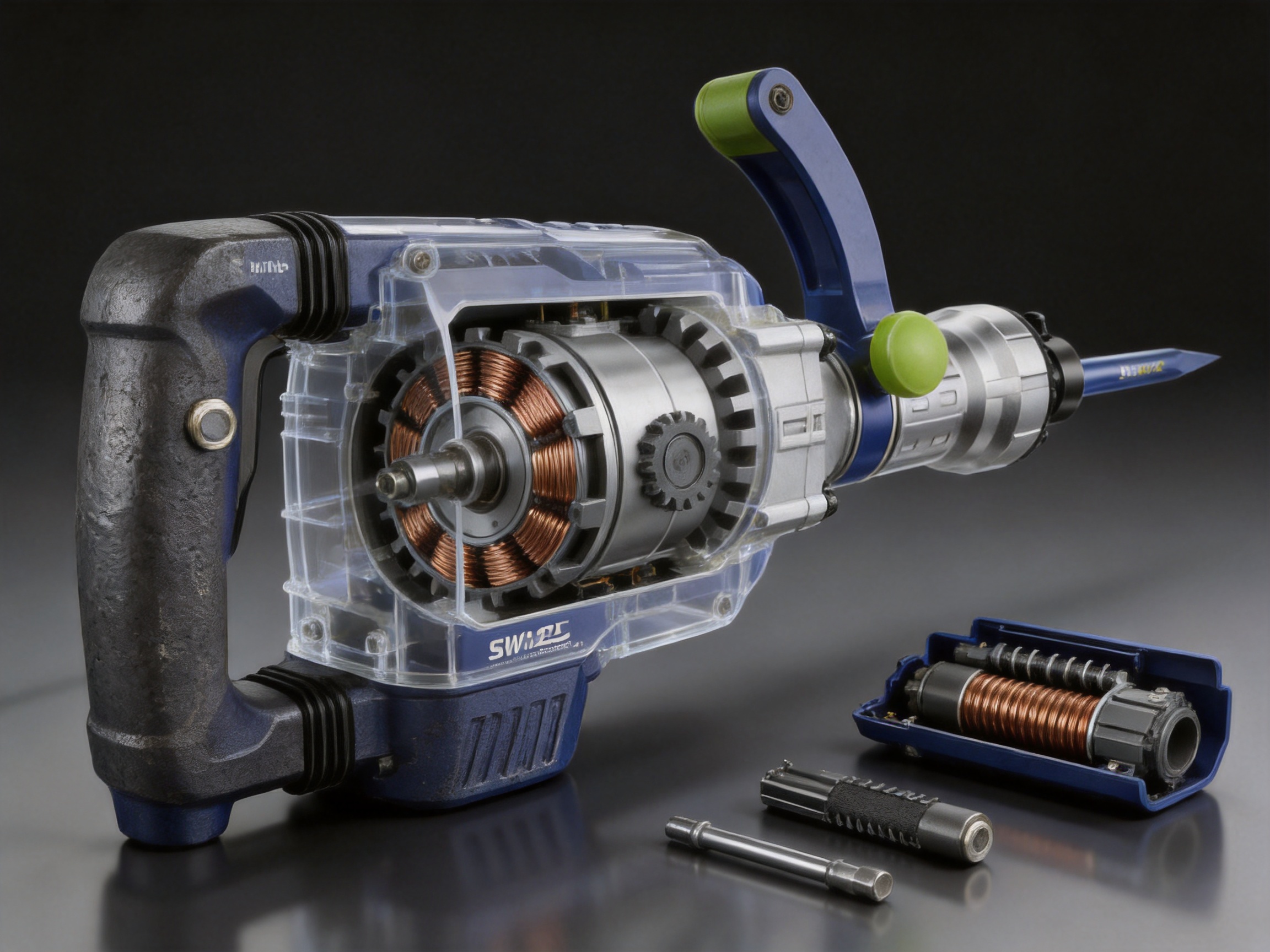
The 1,750 W motor provides the electrical input needed to sustain this high-energy operation. A motor used in a heavy demolition hammer must tolerate high starting loads, repeated impact-related vibration, and the heat generated by extended use. The SW125 uses an enlarged stator and rotor configuration, listed as a stator diameter of Ø94×45H and a rotor diameter of Ø53×45H. These dimensions reflect a motor designed around substantial electromagnetic and mechanical capability rather than a compact light-duty layout.
Impact energy should always be considered together with the complete machine design. A powerful motor alone does not guarantee effective demolition. The gear system must transfer power efficiently, the head must withstand impact forces, the locking rod must retain the accessory securely, and the handles must allow the operator to control the tool. The SW125 integrates these elements so the available power can be converted into useful work at the tip of the chisel or point.
Compared with smaller demolition hammers, the SW125 can reduce the number of passes required on dense materials. This may help contractors improve output on large jobs and reduce the time spent working on a single section. The productivity advantage is particularly meaningful in commercial construction, infrastructure repair, utility trenching, and quarrying, where the cost of labor and equipment downtime can exceed the initial tool price.
Six-Tooth Rotating Gear for Torque and Power Transmission
The SW125 uses a six-tooth rotating gear system designed to deliver higher torque and greater power. The gear train is responsible for transmitting motor output to the impact mechanism. Because demolition hammers experience repeated resistance, the gear system must remain stable under sudden loads and continuous vibration.
A multi-tooth engagement system can distribute transmission forces across several contact points. This helps the gear train handle torque more effectively and supports consistent power delivery. The six-tooth arrangement is intended to improve the machine’s ability to maintain working force when the accessory encounters dense concrete, embedded reinforcement, hard stone, or frozen ground.
Torque is especially important when the tool is not simply striking a thin layer of material but is required to penetrate, fracture, and remove a substantial mass. If the gear train loses efficiency under load, the tool may feel weak, run hotter, or require more operator pressure. The SW125’s gear design is intended to reduce this loss and provide a more forceful working response.
Gear durability also depends on manufacturing precision, lubrication, material quality, and assembly control. Yongkang Siwei Technology Co., Ltd. emphasizes integrated research, production, and sales, allowing product requirements to be connected with manufacturing processes. For a demolition hammer, this integrated approach is important because gear performance depends not only on the theoretical design but also on machining accuracy, alignment, surface finish, and quality inspection.
In competitive products with simpler or less robust gear arrangements, heavy use can lead to accelerated tooth wear, excessive backlash, or loss of power transmission. The SW125 is differentiated by combining a six-tooth rotating gear with a forged front structure and reinforced locking system. Each feature supports the others: the gear transmits power, the head contains the load, and the lock rod keeps the working accessory properly secured.
35CrMo Carburized Lock Rod
The lock rod is a critical component because it holds the chisel, point, or other compatible accessory in the working position. It is exposed to repeated movement, contact pressure, impact shock, abrasive dust, and friction. If the lock rod wears prematurely, the accessory may develop excessive movement, the impact may become less efficient, and replacement intervals may become shorter.
The SW125 uses a lock rod made from 35CrMo steel and applies a carburizing process. 35CrMo is a chromium-molybdenum alloy steel known for its strength and suitability for mechanically loaded components. Carburizing enriches the surface layer with carbon, allowing the outer region to become harder while the inner core retains toughness. This combination is useful for parts that must resist surface wear while absorbing repeated loads.
The stated result is an approximately 30 percent increase in working life. Actual service life will depend on operating conditions, accessory quality, lubrication, cleaning, and maintenance, but the engineering objective is clear: improve the lock rod’s resistance to wear and prolong the period before replacement is necessary.
This treatment offers an advantage over basic untreated or inadequately hardened locking components. A soft surface can wear quickly, while an excessively brittle component may be vulnerable to cracking under impact. Properly controlled carburizing seeks to balance surface hardness with core strength. That balance is essential in a demolition tool, where a component must survive both rubbing contact and repeated shock.
For professional teams operating several machines, longer lock rod life can reduce spare-part consumption and maintenance interruptions. It can also help preserve consistent accessory retention over the service interval. A secure locking system supports both productivity and safe operation, provided that the operator uses the correct accessory and inspects the rod regularly.
Large Carbon Brushes and an Upgraded Brush Holder
The SW125 uses oversized carbon brushes measuring 7×17×24 mm and an upgraded brush holder structure. Carbon brushes conduct electrical current to the rotating armature in a brushed motor. During operation, they gradually wear through contact with the commutator. Their size, material, holder design, spring pressure, and cooling conditions all influence motor reliability.
Larger brushes can provide additional wear material, potentially extending the operating interval before replacement is required. This is particularly useful in demolition work because long working periods and dusty conditions can accelerate brush wear. The upgraded brush holder is intended to maintain more stable brush positioning and reliable electrical contact during vibration.
Brush holders must also help manage heat and maintain proper contact pressure. If contact becomes inconsistent, the motor may experience arcing, reduced power, uneven operation, or excessive heat. A secure structure helps the brush remain aligned with the commutator while the machine is subjected to repeated movement.
Many compact tools use smaller brushes because of limited internal space or a focus on reducing cost and size. That approach can be adequate for occasional use but may result in shorter maintenance intervals during continuous heavy-duty operation. The SW125’s larger brush dimensions reflect a design priority centered on serviceability and sustained performance.
Because the SW125 is a brushed electric hammer, brush inspection remains part of responsible maintenance. Operators should monitor signs such as reduced power, unusual sparking, intermittent operation, burning odor, or visible brush wear. Replacing brushes before they are completely worn can help protect the commutator and avoid more expensive motor repairs.
Dual Anti-Vibration Handles
Demolition hammers transfer substantial reaction force back toward the operator. The SW125 uses anti-vibration handles at both the top and bottom of the machine to help reduce numbness, rebound, and fatigue. This configuration gives the operator two controlled contact points while distributing handling forces across the body.
Vibration control is important for productivity as well as comfort. When a tool produces excessive vibration, the operator may need to take more frequent breaks, apply less consistent pressure, or stop work earlier. Fatigue can also make it more difficult to keep the accessory accurately positioned. By reducing the amount of vibration transmitted through the handles, the dual-handle design supports more controlled operation.
The soft rubber grip adds another layer of comfort. Rubber can improve hand contact, reduce slipping, and provide a more secure hold when the operator is working on uneven surfaces or wearing protective gloves. The large switch is designed to be comfortable to press and hold, allowing the operator to maintain control during extended demolition tasks.
Anti-vibration handles do not eliminate all vibration, and they should not be considered a substitute for safe work practices. Operators should follow appropriate exposure limits, use suitable personal protective equipment, take planned breaks, and avoid forcing the hammer beyond its intended capacity. Nevertheless, the SW125’s top-and-bottom handle arrangement is a meaningful advantage over simpler machines with limited vibration isolation.
The handle design also contributes to control during rebound. When the chisel encounters an unexpected obstruction or reinforcement bar, the machine may react suddenly. A secure two-handed grip helps the operator stabilize the tool, maintain a proper stance, and redirect the accessory when necessary. This is valuable in both vertical and horizontal demolition work.
Applications in Construction, Infrastructure, and Industry
The SW125 is suitable for a broad range of heavy demolition applications. Its high impact energy and reinforced construction make it appropriate for work where ordinary rotary hammers or lighter breakers may be insufficient.
Reinforced Concrete
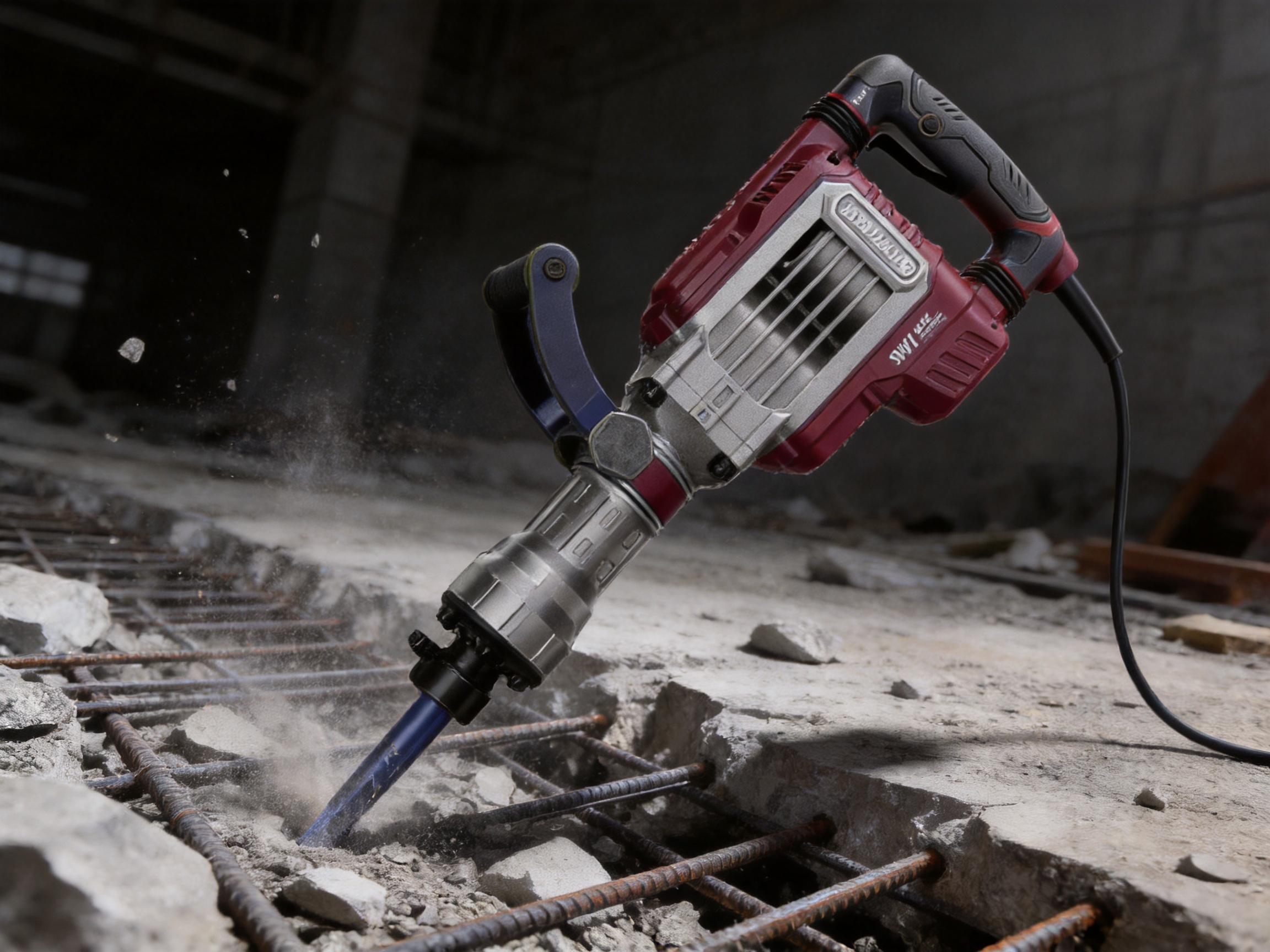
Breaking reinforced concrete requires a combination of impact force and mechanical endurance. Concrete may be thick, densely compacted, or strengthened with steel reinforcement. The SW125 can be used with suitable accessories to create fractures, remove sections, open repair areas, and prepare structures for reconstruction.
Bridge decks, bridge supports, dam structures, foundations, retaining walls, and industrial floors often require equipment capable of handling hard material over long work periods. The forged head and high-energy impact mechanism are intended to support this type of work, while the dual handles help the operator manage the reaction forces.
Quarry and Mining Operations
Quarrying and mining environments place unusual demands on power tools. Material hardness may vary significantly from one location to another, and dust and debris can be present throughout the work area. The SW125 can support secondary breaking, edge correction, localized rock removal, and other tasks where a portable impact tool is useful.
In these settings, equipment reliability is especially important. A failed hammer may interrupt a production sequence or require workers to move materials manually. The forged head, treated lock rod, and larger carbon brushes are intended to reduce common wear and failure points.
Frozen Ground and Hard Soil
Frozen ground can become extremely resistant to ordinary digging tools. The SW125 can be used for trenching, utility work, foundation preparation, and site access where frost has hardened the soil. A high-energy breaker is able to create initial fractures, after which loosened material can be removed with appropriate tools.
Renovation and Structural Removal
Although the SW125 is designed for heavy-duty use, it can also be applied to demanding renovation tasks. Contractors may use it to remove thick masonry, concrete stair sections, old industrial flooring, heavy tile beds, or structural infill. Because the tool delivers significant impact energy, operators should select accessories and operating techniques carefully to avoid unnecessary damage to surrounding structures.
Emergency and Remote Repair Work
In emergency repair situations, the ability to depend on a tool can be more important than achieving the lowest possible equipment cost. The SW125 is intended for jobs where tool failure means costly delays and safety risks. Its reinforced components make it suitable for contractors and maintenance teams that need a durable electric demolition solution available when required.
Manufacturing Strengths of Yongkang Siwei Technology Co., Ltd.
Yongkang Siwei Technology Co., Ltd. is a professional tool manufacturer integrating research and development, production, and sales. Its stated operating principle is “Focus on Professionalism, Quality First.” This approach is reflected in the SW125, which emphasizes material performance, structural durability, user control, and service life rather than relying only on headline motor power.
Integrated manufacturing can provide several advantages. Product engineers can communicate directly with production teams, manufacturing feedback can influence design revisions, and quality information can be connected across the supply chain. This is especially useful for demolition tools because the interaction between parts is complex. A change to the head, gear, locking system, brush holder, or handle may affect the performance of the complete machine.
The company uses advanced processes and high-quality materials to develop tools intended for harsh working conditions. For the SW125, relevant process strengths include integral forging for the front head, carburizing for the 35CrMo lock rod, the development of an upgraded brush holder, and the use of enlarged motor components. These are not cosmetic upgrades; they are manufacturing decisions aimed at addressing real points of stress and wear.
Quality control for a professional demolition hammer should cover incoming materials, dimensional accuracy, machining, assembly, electrical safety, no-load operation, impact performance, vibration behavior, and final inspection. A manufacturer with experience in professional hammers and chisels is better positioned to understand how these tests relate to actual job-site conditions.
The company also specializes in demolition hammers and chisel cutting tools. This specialization allows product development to remain focused on impact mechanisms, accessory retention, protective housings, vibration control, and the practical needs of engineering construction users. Rather than treating demolition hammers as one item within a broad unrelated catalog, the company builds expertise around the working conditions these tools must withstand.
Since 2024, the company has also developed capabilities in green new energy technologies, high-efficiency brushless motors, electronic control systems, and intelligent battery platforms. These capabilities support a separate cordless garden tool range, but they also demonstrate broader competence in motor engineering, electronic controls, battery integration, and user-focused product development. This expanding technical foundation may support future developments in both corded professional tools and cordless equipment.
Competitive Advantages Over Conventional Demolition Hammers
The SW125 competes most strongly in applications where durability, impact power, and service life are more important than compact size or minimum purchase price. Its advantages can be summarized across several areas.
| Performance Area | SW125 Design Advantage | Practical Benefit |
|---|---|---|
| Front head strength | Integral forged iron head without weld seams | Improved resistance to cracking under repeated impact |
| Impact output | 55 J impact energy with a 1,750 W motor | Effective breaking of dense concrete, rock, and frozen ground |
| Torque transmission | Six-tooth rotating gear | Higher torque and more consistent power under load |
| Locking system durability | 35CrMo lock rod with carburizing treatment | Improved wear resistance and longer working life |
| Motor serviceability | Upgraded brush holder and 7×17×24 mm carbon brushes | Longer brush intervals and stable electrical contact |
| Operator control | Top and bottom anti-vibration handles | Less numbness, rebound, and fatigue |
| Grip security | Soft rubber grip and oversized trigger | More comfortable handling during prolonged work |
Compared with a conventional welded-head hammer, the SW125 provides a stronger response to front-end cracking concerns. Compared with a smaller machine, it offers greater impact energy for difficult materials. Compared with a basic brushed hammer, its larger brush system and upgraded holder support longer service intervals. Compared with a single-handle design, its dual anti-vibration arrangement gives the operator more control and comfort.
These advantages should not be interpreted as a claim that one tool is ideal for every situation. A 55-joule demolition hammer is a substantial machine and may be excessive for light tile removal, small masonry repairs, or delicate renovation work. Its competitive value is highest when the user needs serious breaking performance and expects the tool to operate in demanding conditions.
Engineering Details and Specification Summary
The following specifications define the principal configuration of the SW125.
| Specification | Value |
|---|---|
| Model | SW125 |
| Product type | Electric demolition hammer |
| Rated voltage | 220–240 V~, 50/60 Hz |
| Power input | 1,750 W |
| Impact frequency | 1,950 rpm |
| Impact energy | 55 J |
| Stator diameter | Ø94×45H |
| Rotor diameter | Ø53×45H |
| Gear structure | Six-tooth rotating gear |
| Lock rod material | 35CrMo steel |
| Lock rod treatment | Carburizing process |
| Carbon brush size | 7×17×24 mm |
| Handle system | Top and bottom anti-vibration handles |
Specifications should be evaluated in combination with the tool’s intended use. Electrical supply must match the rated voltage and frequency. Accessories must be compatible with the hammer’s locking system and selected according to the material being broken. The operator should also confirm that the work environment, extension cable, circuit protection, and grounding arrangements meet applicable local requirements.
Operator Safety and Correct Working Practices
A heavy demolition hammer must be handled with care. Before starting work, inspect the power cord, plug, housing, handles, locking rod, carbon brush covers, and accessory. Do not use the tool if the cord is damaged, the handle is loose, or the accessory cannot be secured correctly.
Wear suitable eye protection, hearing protection, protective gloves, safety footwear, and work clothing. Demolition can produce flying fragments, dust, intense noise, and sharp debris. Depending on the material, respiratory protection and additional site controls may be necessary. Before breaking a wall, floor, bridge component, or concrete structure, confirm that hidden electrical cables, gas lines, water pipes, reinforcement, and other services have been identified.
Hold the machine firmly with both handles and maintain a balanced stance. Allow the impact mechanism to perform the work instead of applying excessive body weight. Excessive pressure may reduce the tool’s ability to impact freely, increase heat, and place additional stress on the motor and gear system.
Do not use a demolition hammer as a lever unless the accessory and manufacturer’s instructions specifically permit that action. Side loading can damage the accessory, locking rod, front head, or internal mechanism. When the chisel becomes stuck, switch off and disconnect the tool before attempting to release it. Never touch the accessory immediately after prolonged operation because it may be extremely hot.
For extended projects, rotate operators when appropriate, schedule rest periods, and monitor vibration exposure. The anti-vibration handle system helps reduce transmitted vibration but does not remove the need for occupational safety procedures.
Maintenance for Longer Service Life
Regular maintenance allows the SW125 to deliver more consistent performance and helps identify problems before they become major failures. After each work session, remove dust and debris from the exterior, ventilation areas, handle surfaces, and accessory connection region. Do not use compressed air in a way that drives abrasive dust deeper into the motor or bearings unless the procedure is approved for the machine.
Inspect the lock rod and accessory for wear. A worn accessory can increase vibration and reduce breaking efficiency. If the accessory shows deformation, excessive rounding, cracking, or abnormal movement, replace it with a suitable part. The lock rod should move correctly and retain the accessory securely. Lubrication should follow the recommended maintenance procedure for the hammer and accessory system.
Carbon brushes are wear components. Check them at regular intervals, especially when the hammer is used continuously. Replace both brushes as a matched set when required. New brushes should be installed correctly and allowed to seat according to the applicable service instructions. If the motor produces unusual sparking or loses power, discontinue operation and arrange inspection.
Keep the cooling passages clear. A heavy-duty motor generates significant heat during operation, and blocked ventilation can raise internal temperatures. Avoid covering the tool with dusty materials immediately after use. Allow it to cool before storage, then place it in a clean, dry location protected from impact and moisture.
Power cables and plugs deserve special attention on construction sites. Cables may be exposed to sharp edges, vehicles, water, and repeated bending. Use appropriate cable protection and avoid pulling the machine by its cord. Disconnect the tool before changing accessories, cleaning, inspecting, or transporting it.
Choosing the Right Accessory and Work Method
The performance of a demolition hammer depends partly on the condition and type of its accessory. Pointed accessories are useful for initiating penetration and concentrating impact energy into a small area. Flat chisels can help separate slabs, cut channels, and remove material across a wider line. Other specialized accessories may be used for scaling, trenching, or particular construction tasks, provided they are compatible with the tool.
Choose an accessory based on the material, required depth, desired fracture pattern, and access conditions. Do not continue using an accessory that has become badly worn. A damaged or unsuitable chisel may cause inefficient impact transfer, increased vibration, and unnecessary strain on the locking system.
Start work at an appropriate angle and allow the accessory to create an initial fracture. Once the material begins to break, reposition the tool rather than forcing it sideways. In reinforced concrete, work progressively around exposed reinforcement and follow site procedures for cutting or removing steel. In rock, identify natural fracture lines where possible to improve productivity.
The machine should be used in a controlled manner. High impact energy does not mean that maximum pressure is always best. A steady, balanced technique normally produces better results and reduces fatigue. Professional operators often achieve higher output by maintaining correct positioning and moving methodically instead of forcing the hammer continuously into one point.
Why Professional Buyers Select Durable Construction
For a professional buyer, tool value includes more than the purchase price. The total cost of ownership includes productivity, maintenance, replacement parts, operator comfort, downtime, and the risk of failure in a critical operation. A hammer that costs less initially but fails frequently may be more expensive over its working life.
The SW125 is designed around this total-cost perspective. The integral forged head targets structural durability. The six-tooth gear supports power transmission. The carburized 35CrMo lock rod targets wear resistance. The larger carbon brushes support longer service intervals. The anti-vibration handles help reduce operator strain. Together, these features are intended to preserve productivity in conditions where the tool may be used frequently and intensely.
Professional users may also value a manufacturer that can provide more than a single product. Yongkang Siwei Technology Co., Ltd. specializes in demolition hammers and chisel cutting tools and maintains capabilities in research, production, and sales. This can simplify product communication, technical discussions, sourcing, and future procurement for contractors or distributors who require a consistent professional tool supply.
The company’s experience with both traditional corded demolition tools and newer brushless motor, electronic control, and battery-platform technologies also indicates an ability to work across different tool architectures. Corded tools remain valuable for high-output applications where continuous mains power is available, while cordless products are useful where mobility and low-emission operation are priorities.
Environmental and Operational Considerations
The SW125 is an electric demolition hammer designed for 220–240 V operation. Electric equipment can be advantageous in indoor or partially enclosed environments compared with combustion-powered machines because it does not produce direct exhaust emissions at the point of use. Nevertheless, demolition dust, noise, vibration, and debris remain important hazards and must be controlled.
Longer component life can also support more responsible equipment use. When the head, lock rod, gear system, and motor wear components remain serviceable for longer, users may reduce the frequency of complete tool replacement. Proper maintenance, repair, and replacement of individual wear parts can help extend the useful life of the equipment.
The company’s development of green new energy technologies and intelligent battery platforms demonstrates an additional commitment to efficient motor systems and future-oriented tool solutions. Although the SW125 is a corded model, this broader technical direction complements its professional manufacturing foundation.
Frequently Asked Questions
What type of tool is the SW125?
The SW125 is a heavy-duty electric demolition hammer designed for high-force breaking applications. It is intended for professional work involving reinforced concrete, hard rock, frozen ground, masonry, quarry materials, and other resistant surfaces.
How much impact energy does the SW125 produce?
The stated impact energy is 55 J. This high impact rating is intended to support demanding demolition work where substantial force is needed to fracture dense or reinforced materials.
What electrical supply does the hammer require?
The rated supply is 220–240 V~, 50/60 Hz. Users should verify that the site electrical system, extension equipment, circuit protection, and grounding arrangements are suitable for the tool’s 1,750 W power input.
What is the advantage of the integral forged iron head?
The one-piece forged head has no weld seams in the front structural section. This helps reduce a common failure risk associated with cracking around high-stress welded joints and provides a more robust foundation for the impact mechanism.
Why is the six-tooth rotating gear important?
The six-tooth gear is designed to transmit higher torque and greater power. Multiple tooth engagement helps support stable power transfer when the hammer encounters dense concrete, rock, reinforcement, or other strong resistance.
What is the purpose of the 35CrMo lock rod?
The lock rod secures the working accessory. It is made from 35CrMo steel and treated through carburizing to improve surface hardness and wear resistance while retaining a tougher internal core. The stated design objective is to increase working life by approximately 30 percent.
Does the SW125 use replaceable carbon brushes?
Yes. The hammer uses carbon brushes, with a stated size of 7×17×24 mm. The upgraded brush holder and larger brushes are intended to support stable operation and longer service intervals. Brushes should be inspected and replaced as wear requires.
How do the dual anti-vibration handles help the operator?
The top and bottom anti-vibration handles help reduce the amount of vibration and rebound transmitted to the hands and arms. They also provide two controlled grip positions, which can improve stability and handling during prolonged demolition work.
Is the SW125 suitable for light household renovation?
It may be used for demanding renovation tasks, but its 55-joule impact energy makes it a substantial professional machine. For light tile removal or minor masonry work, a smaller and lighter tool may be more appropriate. The SW125 is best selected when high breaking force and durability are required.
What maintenance does the hammer require?
Important maintenance tasks include cleaning the exterior and ventilation areas, inspecting the accessory and lock rod, checking lubrication according to service instructions, monitoring carbon brush wear, inspecting the power cord, and keeping the machine dry during storage. Maintenance should be performed with the tool disconnected from the power supply.
Who manufactures the SW125?
The SW125 is manufactured by Yongkang Siwei Technology Co., Ltd., a professional tool manufacturer based in Yongkang City, Zhejiang Province, China. The company integrates research and development, production, and sales and specializes in demolition hammers and chisel cutting tools.
What makes this hammer different from lower-cost competitors?
Its main differentiators are the integral forged iron head, six-tooth rotating gear, 35CrMo carburized lock rod, large carbon brushes, upgraded brush holder, and dual anti-vibration handles. These features are designed to address structural failure, wear, power transmission, maintenance, and operator comfort.
Conclusion
The SW125 Heavy-Duty Demolition Hammer is designed for users who require more than basic impact performance. Its 1,750 W motor and 55 J impact energy provide the force needed for reinforced concrete, hard rock, frozen ground, quarry work, and other severe applications. Its six-tooth rotating gear helps transmit torque, while the one-piece forged iron head protects one of the most highly stressed parts of the machine.
The 35CrMo carburized lock rod, larger carbon brushes, and upgraded brush holder focus on service life and maintenance efficiency. The top-and-bottom anti-vibration handles, soft rubber grip, and oversized trigger support operator control and comfort. Together, these features create a balanced professional tool designed to withstand demanding work while helping contractors reduce interruptions.
Yongkang Siwei Technology Co., Ltd. strengthens this product offering through focused experience in demolition hammers and chisel tools, integrated manufacturing capabilities, advanced material processes, and ongoing development in motor and electronic technologies. For professional users evaluating demolition equipment, the SW125 represents a practical combination of forged structural strength, high impact output, reinforced wear components, and job-site usability.
References
1. Product technical information supplied for the SW125 Hex Integral Forged Iron Head Demolition Hammer.
2. Material engineering references concerning 35CrMo alloy steel and carburizing treatment.
3. General industrial guidance on electric demolition hammer operation, maintenance, and accessory selection.
4. General occupational safety principles for construction noise, vibration, dust, flying debris, and electrical equipment.
5. Manufacturing information supplied by Yongkang Siwei Technology Co., Ltd.
Product: SW125 Hex Integral Forged Iron Head Demolition Hammer

Recommended Products
-


SW528 Small Hole Rebar Hammer
-
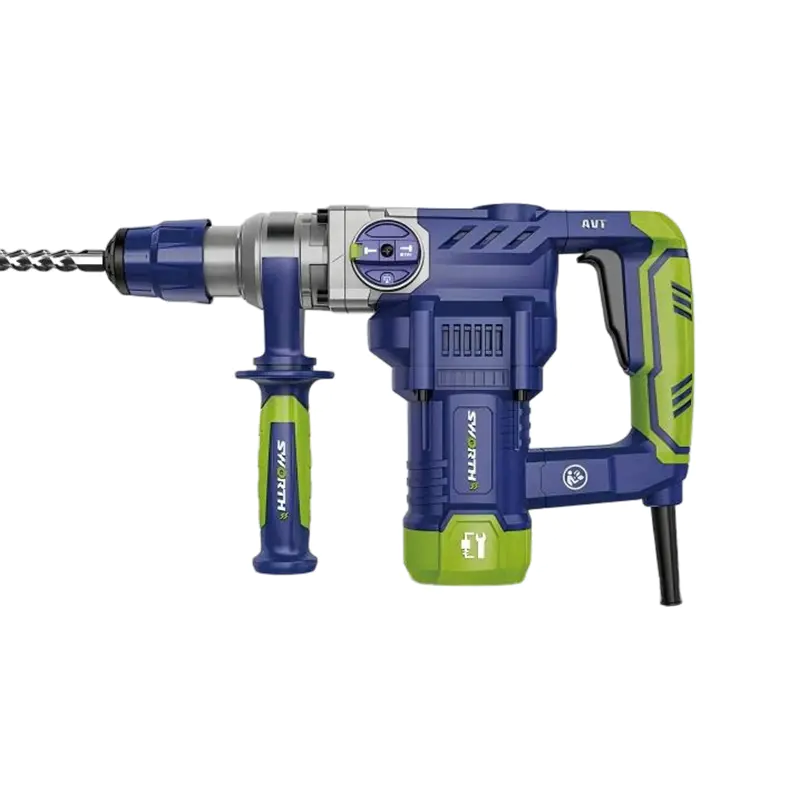
SW932 Groove Sandblasting Hammer
-
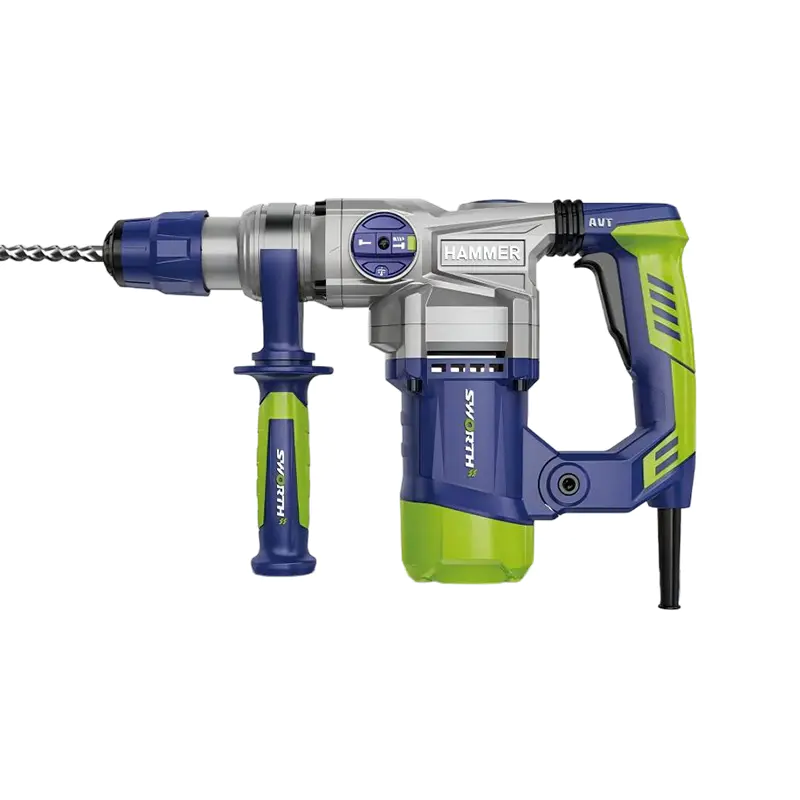
SW9362A Large Hole Rebar Hammer
-
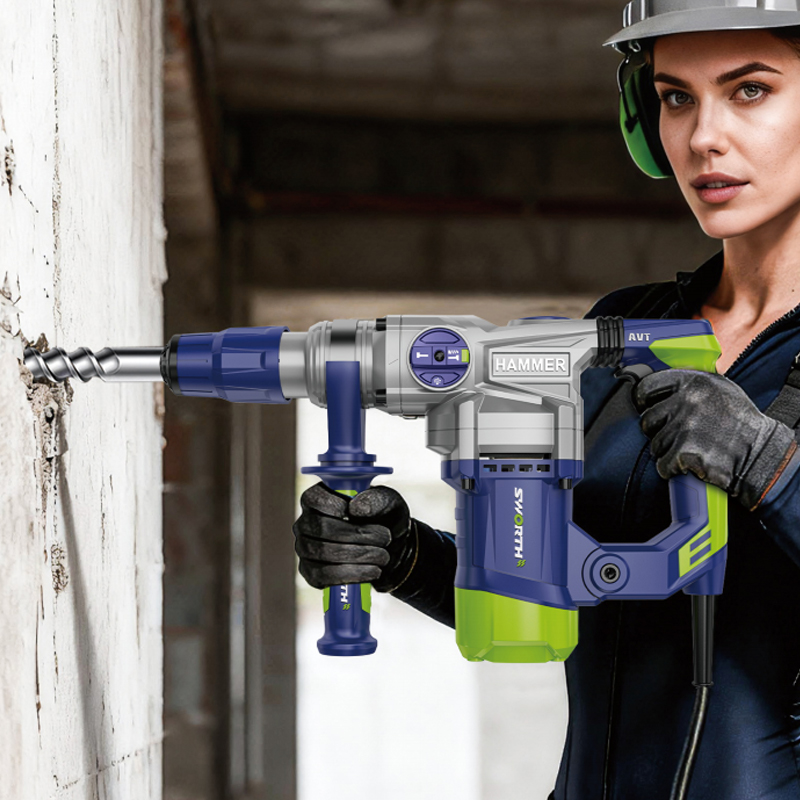
SW940 Enlarged Hole Rebar Hammer
-
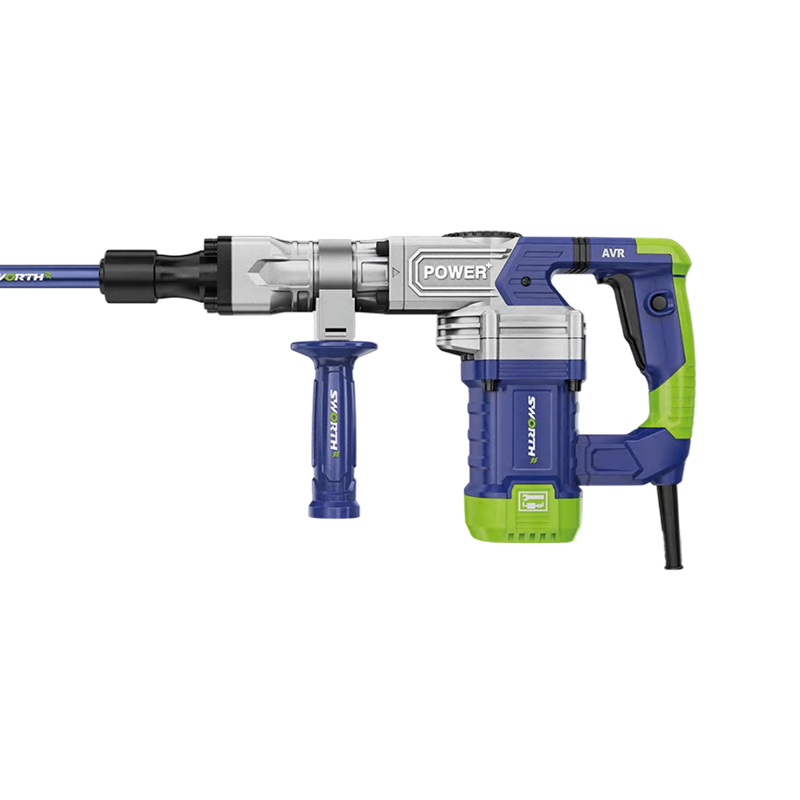
SW35S1 Powerful Demolition Hammer
-
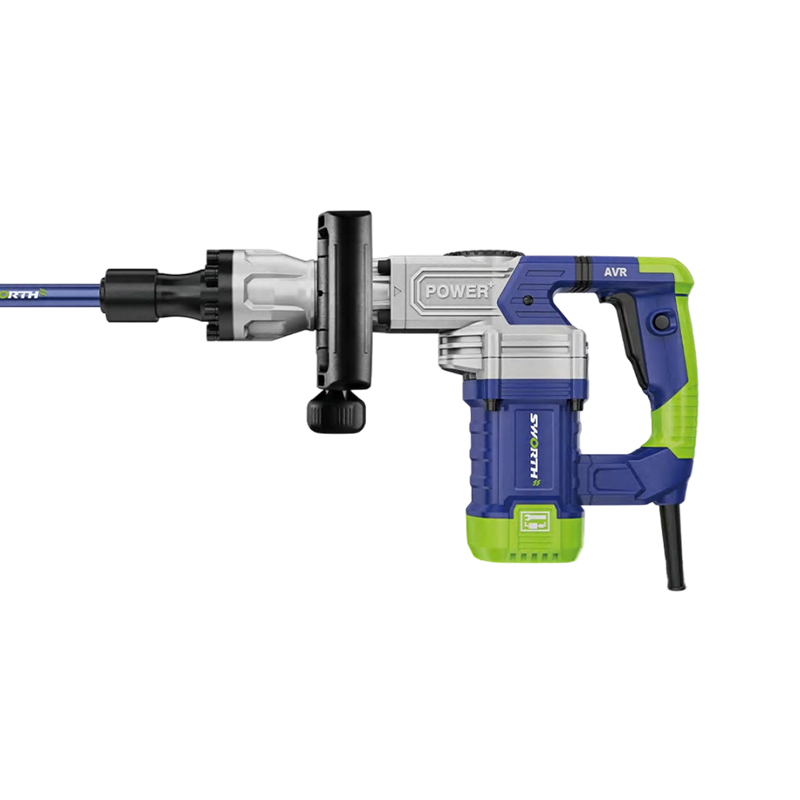
SW35S2 High-Efficiency Heat Dissipation Demolition Hammer
-
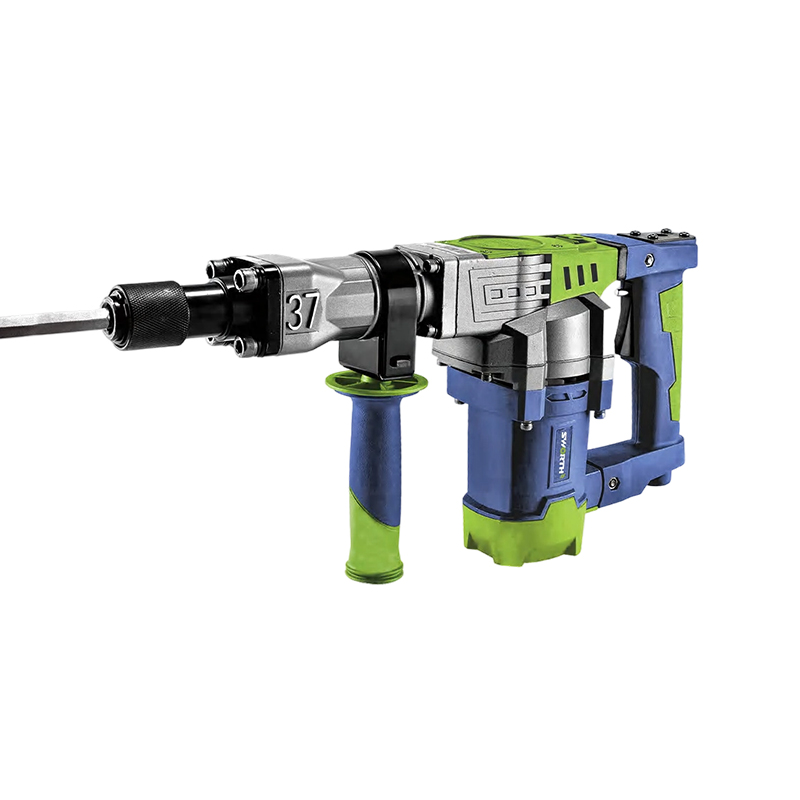
SW9371 High-Power Demolition Hammer
-
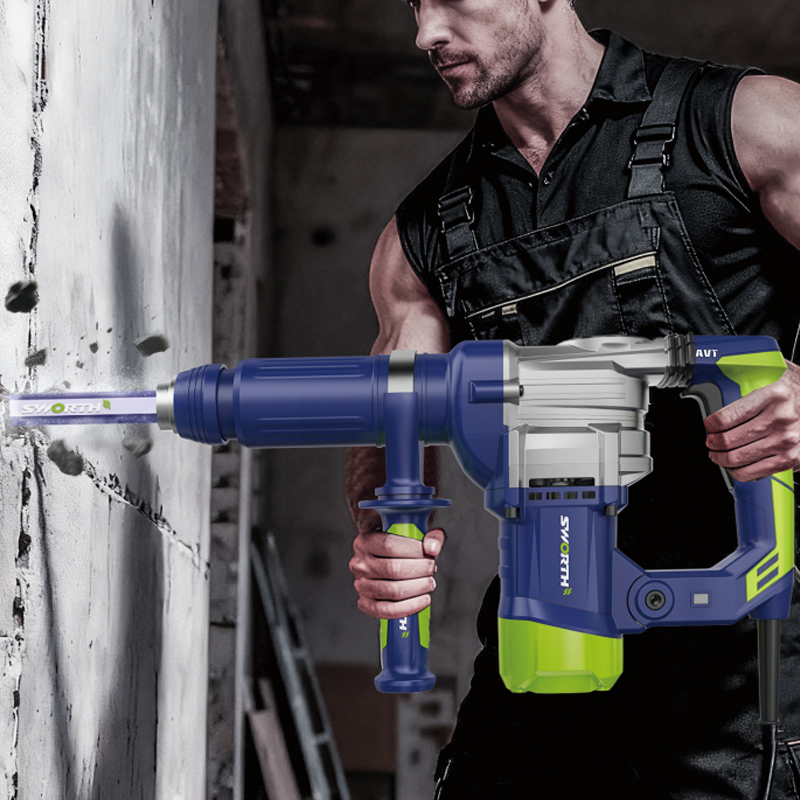
SW9373 Anti-Scalding Carbon Brush Holder Demolition Hammer
-
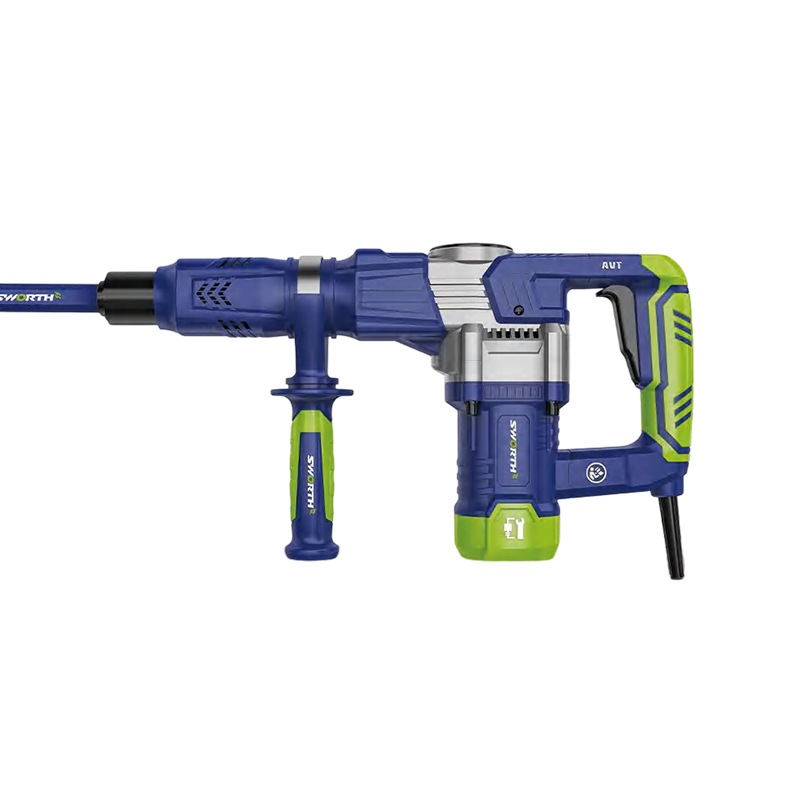
SW535 Powerful Anti-Scalding Demolition Hammer
-
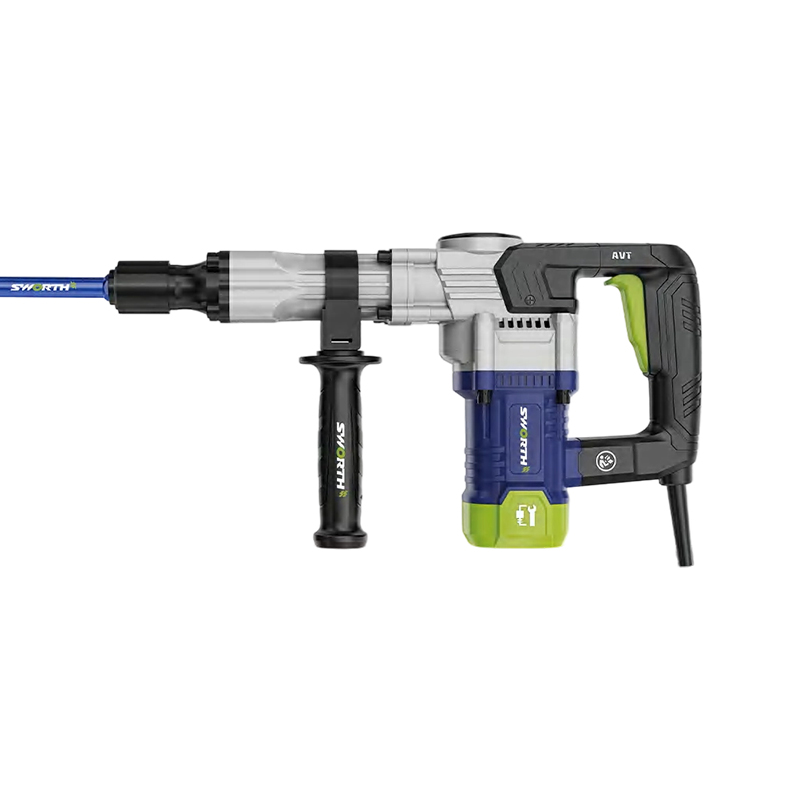
SW535-2 Durable Powerful Demolition Hammer
-
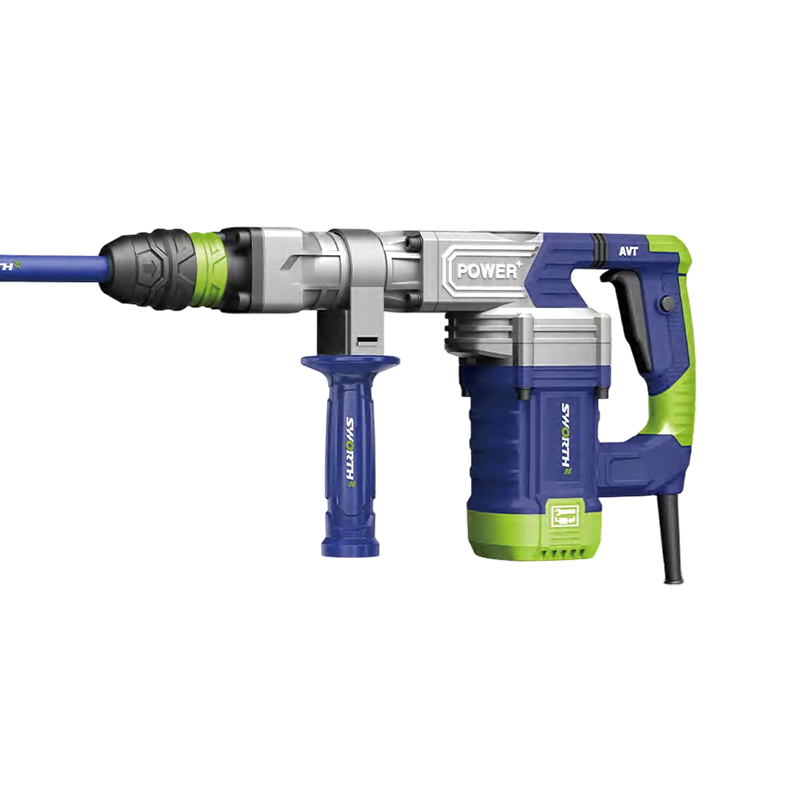
SW35S3 Five-Pipe Drill Bit Demolition Hammer
-

SW11E Five-Pipe Clamping Demolition Hammer
 +86-18314829275
 sale@sworthtools.com
 No. 101, Yugui Road, chengxi Industrial Zone, Yongkang City, Zhejiang Province, China
Copyright© Yongkang Siwei Technology Co., Ltd. All Rights Reserved

Hammer Tools & Cordless Garden Tools Manufacturer
