 English
 русский
 Español

SW9373 35mm Hex Demolition Hammer: High-Output Breaking for Demanding Construction Work
The SW9373 35mm Hex Power Indicator Light Demolition Hammer is designed for contractors, construction crews, renovation specialists, and industrial users who need dependable breaking performance during long and demanding work sessions. Combining a 1300W motor, a 42J impact rating, an extended 35mm cylinder, visible power-status monitoring, and an anti-scald front barrel, this demolition hammer is built around a simple objective: deliver strong, consistent chiseling performance while improving operator comfort and equipment awareness.
Demolition work places exceptional demands on power tools. A hammer used for breaking floor slabs, foundations, road surfaces, quarry materials, or heavy masonry must generate substantial impact energy while resisting heat, vibration, dust, oil pressure, and mechanical stress. At the same time, professional users need to know whether the tool is operating correctly, whether the handle can be controlled safely, and whether the machine can continue working without frequent cooling interruptions.
The SW9373 addresses these practical challenges through a combination of structural reinforcement and operator-oriented features. Its extended 35mm cylinder and impact mechanism are designed to increase impact force by 30% compared with the previous configuration. The integrated power indicator light gives the user immediate visual confirmation of tool status. The anti-scald front barrel helps reduce discomfort when the tool is held during extended operation, while the soft rubber anti-vibration handle supports more comfortable control.
Manufactured by Yongkang Siwei Technology Co., Ltd., the SW9373 reflects the company’s focus on professional demolition equipment, durable mechanical construction, and continuous product development. The company integrates research and development, production, and sales, with manufacturing processes intended to support dependable performance in harsh working conditions. Its wider product expertise also includes chisel cutting tools, brushless motor systems, electronic controls, lithium-ion garden equipment, and intelligent battery platforms.

SW9373 Hex Power Indicator Light Demolition Hammer
Product Overview
The SW9373 is a corded electric demolition hammer designed for intensive chiseling and breaking applications. It operates on a 220–240V supply at 50/60Hz and uses a 1300W power input to drive its impact mechanism. With a listed impact energy of 42J and an impact frequency of 3750rpm, the tool is configured for forceful material removal rather than delicate drilling or light-duty fastening.
The 35mm cylinder is one of the central design features of the machine. A longer or extended cylinder and impact assembly can support a more substantial hammering stroke and improve the transfer of energy to the fitted chisel. According to the product specifications, the extended cylinder and impact hammer increase impact performance by 30%. This makes the SW9373 particularly suitable for applications where the user must break through dense, thick, or strongly bonded materials.
The tool is identified as a hex demolition hammer, making it appropriate for heavy chiseling accessories designed for a compatible hex tool holder. In practical use, the correct chisel selection remains essential. Point chisels can be used for concentrated penetration, flat chisels for splitting and shaping, and wider chisels for removing larger sections of masonry or concrete. Accessory compatibility should always be confirmed before operation.
A visible power indicator light provides an immediate status reference. On a busy construction site, users often work in changing light conditions, around dust, noise, and multiple electrical tools. A clear indicator can help confirm that the machine is receiving power and is ready for operation. It also allows the user to notice a change in normal status more quickly than relying only on sound or vibration.
The front section uses an anti-scald design. During prolonged breaking, heat can build up around the front barrel and surrounding components. By designing the front barrel to be safer to hold during extended use, the SW9373 helps reduce one of the common discomforts associated with powerful demolition tools. Users should still follow safe handling procedures and allow the machine to cool when required.
Key Specifications
| Specification | SW9373 Value |
|---|---|
| Product type | Electric demolition hammer |
| Tool category | Demolition Hammer |
| Tool interface | Hex type |
| Rated voltage | 220–240V~, 50/60Hz |
| Power input | 1300W |
| Impact frequency | 3750rpm as listed |
| Impact energy | 42J |
| Cylinder size | 35mm extended cylinder |
| Stator dimensions | Ø73 × 42H |
| Rotor dimensions | Ø44 × 42H |
| Power indication | Integrated power indicator light |
| Handle design | Anti-vibration soft rubber handle |
| Brush specification | Enlarged 7 × 11 carbon brushes |
The specifications show that the SW9373 is intended for high-impact work. The 42J impact rating places the tool within a heavy-duty operating class, while the 1300W input provides the electrical power necessary to sustain repeated impact cycles. The stator and rotor dimensions also indicate that the motor is built around a substantial electromagnetic system rather than a compact light-duty arrangement.
Users should interpret performance specifications together rather than focusing on one figure alone. Impact energy determines the force delivered in each stroke, while impact frequency affects how rapidly those strokes are repeated. Motor input, cooling design, mechanical alignment, lubrication, and accessory condition all influence the actual productivity achieved on site.
Designed for Extended Demolition Sessions
Many demolition tools can produce strong individual impacts, but professional productivity depends on how effectively the tool performs across an entire work period. A contractor may need to break a large concrete slab, remove a foundation section, open a road surface, or reduce a thick masonry wall. These tasks can require thousands of repeated impacts. The tool must therefore be designed not only for peak force but also for durability, heat management, and manageable operator fatigue.
The SW9373 is built around an extended impact system that supports stronger material-breaking performance. The 35mm cylinder provides the basis for a larger impact path, while the impact hammer is configured to increase impact force by 30% according to the product information. This additional force can help the chisel penetrate hard material more efficiently and may reduce the amount of time spent repeatedly attacking the same area.
A higher-impact design is especially useful when working on dense concrete, reinforced construction, thick floor slabs, foundations, quarry materials, and road surfaces. The goal is not simply to make the tool feel more powerful. The practical benefit is improved material separation: concentrated impact energy helps create cracks, enlarge existing fractures, and release sections of material for removal.
Productivity also depends on selecting the correct chisel and maintaining a suitable working angle. A point chisel is useful when starting a penetration point or directing force into a narrow area. A flat chisel can widen a break and help lift sections. A broad chisel may be more appropriate for removing surface layers or separating material along a line. Even a powerful hammer will perform poorly if the accessory is blunt, damaged, incorrectly installed, or unsuitable for the material.
Power Indicator Light for Faster Status Checks
The power indicator light is a practical feature that distinguishes the SW9373 from many conventional demolition hammers that provide little visual feedback. On a loud or dusty site, a user may not immediately know whether the tool is receiving power, whether a connection has been interrupted, or whether the machine is in a ready state. A visible light provides a simple point of reference before and during operation.
This feature is valuable during setup. Before beginning a breaking task, the operator can check the tool’s status while wearing hearing protection and other personal protective equipment. The indicator can also help identify a basic power-supply issue before the user applies the chisel to the work surface. This can make the startup process more efficient and reduce unnecessary troubleshooting.
Status visibility is particularly helpful when several tools are being used in the same work area. Cables may run across the floor, power distribution equipment may be positioned nearby, and background noise may make it difficult to distinguish one motor from another. A light-based indication gives the operator an additional source of information instead of relying entirely on sound.
The power light does not replace electrical inspection or professional maintenance. It should be treated as a convenience and monitoring feature rather than a complete diagnostic system. If the tool behaves abnormally, users should stop work, disconnect the power supply, and inspect the equipment according to appropriate safety procedures.
Anti-Scald Front Barrel for Improved Handling
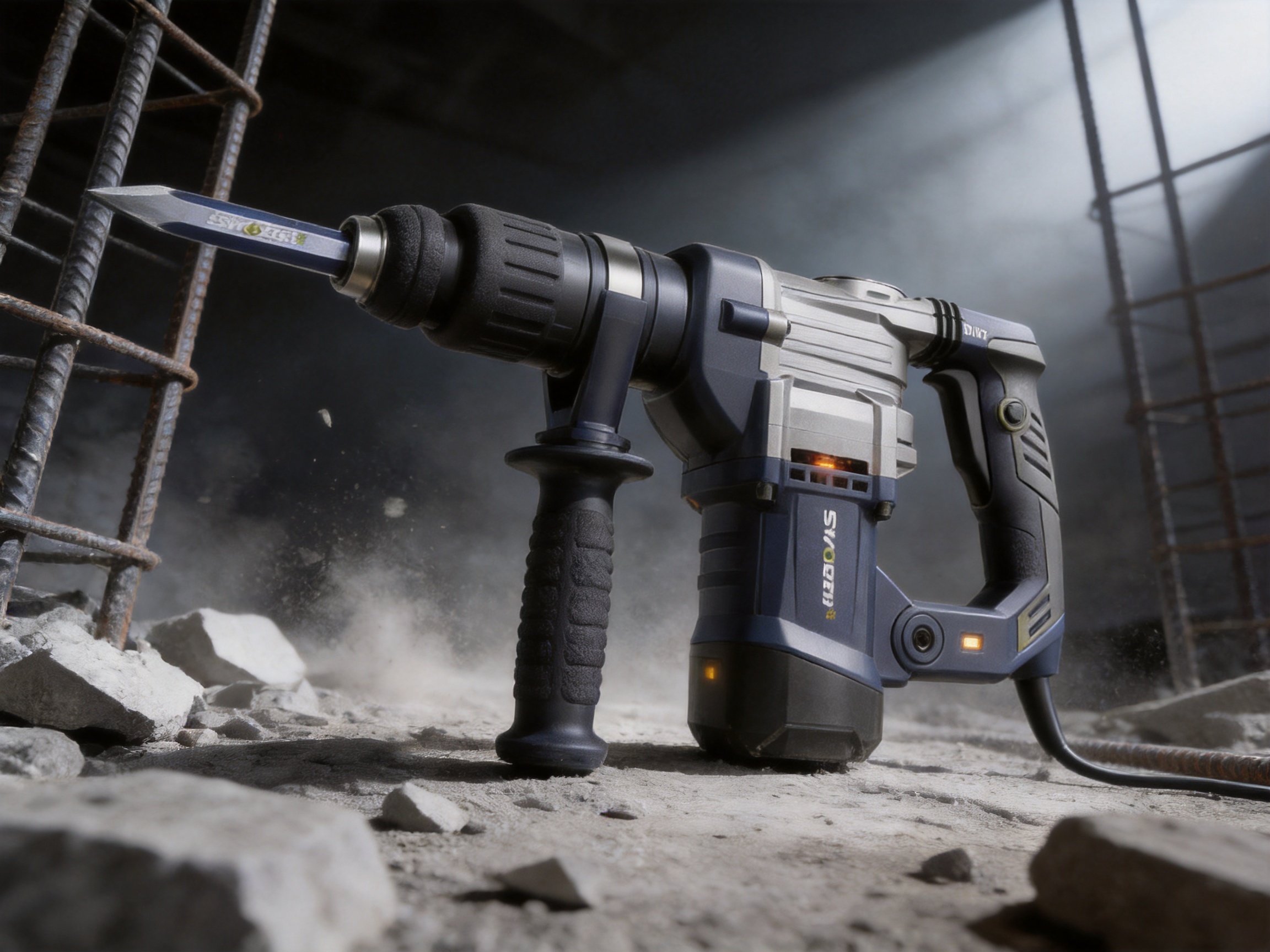
Heat is a significant concern during continuous demolition. The motor, impact assembly, bearings, lubricant, and front barrel all experience mechanical and thermal stress. As operation continues, exposed metal surfaces can become uncomfortable or unsafe to touch. The SW9373 uses an anti-scald front barrel design intended to allow the user to hold the front section more safely during extended work.
This design contributes to handling confidence. Demolition hammers generate reaction forces as the chisel strikes hard material. The operator must guide the tool, maintain contact with the work surface, and correct the direction of the chisel as the material breaks. A front barrel that is more comfortable to hold can make it easier to maintain a stable working position.
The anti-scald feature is also beneficial in high-temperature environments and direct sunlight, where the tool and surrounding surfaces may heat more quickly. The product is therefore suited to outdoor construction, road repair, quarry work, and summer renovation projects where equipment may be exposed to elevated ambient temperatures.
However, anti-scald construction should not be interpreted as immunity from heat. Operators should never touch exposed components unnecessarily, cover ventilation openings, or continue using the tool if there is smoke, an unusual smell, abnormal noise, or excessive temperature. Scheduled pauses, clean air passages, and correct lubrication remain important parts of responsible tool operation.
Anti-Vibration Handle and Operator Comfort
Repeated impact produces vibration that travels through the tool body and into the operator’s hands and arms. Over a long shift, this can contribute to discomfort, reduced control, and fatigue. The SW9373 includes an anti-vibration handle with soft rubber covering. The handle is intended to improve grip comfort, reduce slipping, and reduce the sensation of numbness during sustained use.
The soft rubber grip has several practical functions. First, it creates a more secure contact surface between the operator’s hand and the tool. Second, it helps absorb part of the high-frequency vibration generated by the motor and impact mechanism. Third, it improves comfort when the user must hold the tool for repeated breaking cycles.
The oversized trigger is another operator-oriented element. A larger switch is easier to locate and press while wearing work gloves. It can also be more comfortable during tasks that require repeated activation. A well-positioned and easy-to-operate trigger helps the user control the working rhythm without placing unnecessary pressure on a small switch surface.
Good ergonomics do not eliminate the need for safe working habits. Operators should use both hands where appropriate, maintain a balanced stance, keep the power cable away from the chisel and work area, and avoid forcing the machine beyond its intended capacity. Hearing protection, eye protection, safety footwear, gloves, and suitable work clothing should be selected according to the application.
Pressure-Relief Oil Cap and Lubrication Protection
Heavy impact mechanisms depend on correct lubrication. The moving parts inside a demolition hammer experience repeated loads, and lubricant helps reduce friction, wear, and heat. At the same time, pressure can build inside the oil chamber as the machine warms during operation. If that pressure is not managed properly, it may contribute to oil leakage or seal stress.
The SW9373 uses an oil cap with a breather hole designed to release internal pressure and help prevent oil leakage. This is a small component with an important role in maintaining the integrity of the lubrication system. By allowing controlled pressure release, the cap supports cleaner operation around the housing and helps protect the surrounding structure from unnecessary oil contamination.
Effective oil management is important for both performance and service life. Too little lubricant can increase friction and accelerate wear. Excessive or unsuitable lubricant can create other problems, including leakage or contamination. Users should follow the applicable maintenance instructions and use the recommended type and quantity of oil for the tool.
Before inspecting the oil cap or performing maintenance, the machine should be switched off and disconnected from the power supply. The tool should be allowed to cool, and the work area should be kept clean. Any sign of persistent oil leakage, damaged sealing, or abnormal impact performance should be investigated by qualified service personnel.
Enlarged Carbon Brushes and Motor Cooling
The SW9373 uses an upgraded brush-holder structure with enlarged 7 × 11 carbon brushes. Carbon brushes are wear components in brushed electric motors. They transfer current to the rotating armature and gradually wear during operation. Their size, contact quality, holder design, and cooling environment influence motor reliability and maintenance intervals.
Enlarging the carbon brushes provides a greater contact area and can support improved electrical transfer when the brush system is correctly designed. The upgraded holder structure is intended to improve cooling and help the brushes operate more reliably during demanding use. This is especially relevant for a demolition hammer, because extended high-load operation can place significant stress on the motor and brush assembly.
Brushes should be inspected as part of routine maintenance. Excessive wear can reduce motor performance, create sparking, and cause intermittent operation. Replacing brushes in pairs and using suitable replacement parts helps maintain balanced operation. The brush holder should also be kept free from accumulated dust and debris, with cleaning performed only when the tool is safely disconnected.
The brush system represents a practical engineering choice for users who value serviceability. Although brushless motors offer advantages in certain applications, a well-designed brushed motor can provide strong output and straightforward maintenance for corded heavy-duty equipment. The SW9373’s enlarged brushes and improved holder show attention to the conditions experienced by professional demolition tools.
Applications in Construction and Renovation
Breaking Large Floor Slabs
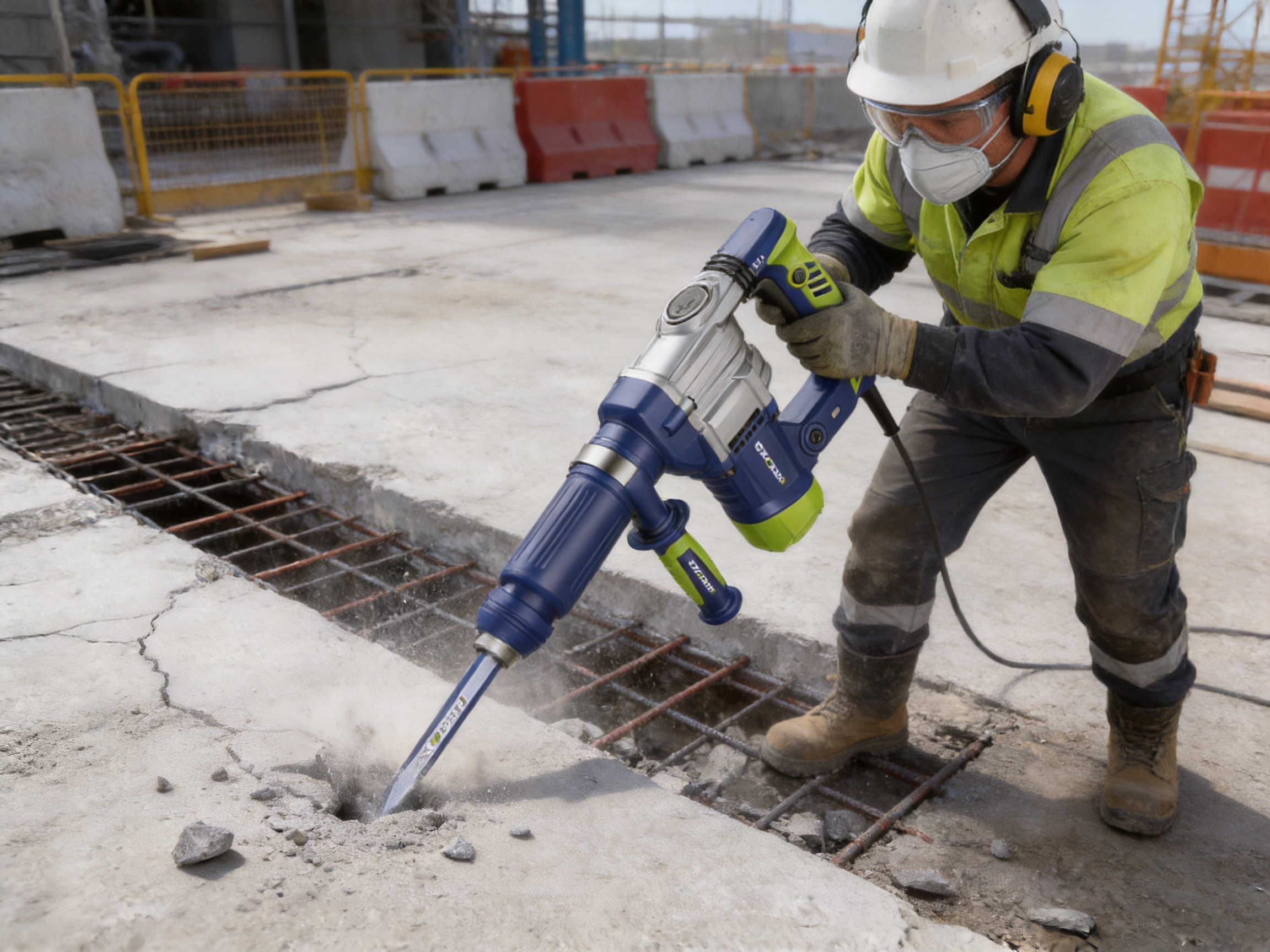
Floor slabs can be difficult to remove because concrete is dense, thick, and often reinforced. A high-impact demolition hammer can be used to create initial fractures and divide the slab into smaller sections. The SW9373’s 42J impact energy and extended 35mm impact system make it suitable for substantial breaking work where a light hammer would require excessive time and repeated passes.
Operators should plan the breaking sequence before starting. Marking the removal area, identifying embedded services, and creating controlled sections can make debris handling safer and more efficient. The tool should be allowed to do the work through repeated impacts rather than being forced downward with excessive body weight.
Foundation and Structural Demolition
Foundation removal often involves dense concrete, compacted material, and restricted access. The SW9373 can be used for heavy chiseling where strong impact is needed to open cracks and separate material. Its anti-vibration grip and manageable status monitoring are useful when the work requires long periods of controlled operation.
Structural demolition must always be planned by qualified professionals. Removing part of a foundation, wall, column, or load-bearing structure can affect the stability of an entire building. The tool is a mechanical solution for material removal, not a substitute for structural assessment, temporary support, or site-specific safety planning.
Road and Quarry Work
Road repair and quarry operations often involve hard, abrasive materials. A demolition hammer used in these environments must tolerate dust, impact, vibration, and extended duty cycles. The SW9373’s cooling-oriented brush-holder design, pressure-relief oil cap, and anti-scald front barrel support its suitability for demanding outdoor work.
In quarry and road applications, work surfaces may be uneven and access may be limited. Operators should maintain a firm stance and inspect the power cable regularly for abrasion or crushing. Dust should be prevented from accumulating around ventilation areas, and the hammer should be cleaned after use according to proper maintenance procedures.
High-Temperature Environments
Direct sunlight, hot weather, and enclosed spaces can increase the operating temperature of a power tool. The SW9373 is designed with features intended to support continued work in such conditions, including the anti-scald front barrel and improved brush-holder cooling structure. These features can help improve the user experience when ordinary cooling periods are difficult to avoid.
Even in a heat-resistant design, operators should monitor the tool for signs of overload. A temporary pause may be necessary if the housing becomes excessively hot or if the motor sound changes. Keeping ventilation openings clear and avoiding unnecessary pressure on the chisel are simple ways to support thermal management.
Advantages Compared with Conventional Demolition Hammers
The SW9373 offers several design advantages over basic demolition hammers that lack status monitoring, extended impact components, or enhanced operator-contact features. The most visible difference is the power indicator light. Many conventional tools leave users to determine operating status from motor noise or vibration. A light provides a faster visual check and may be especially useful on noisy construction sites.
The extended 35mm cylinder and 30% increased impact claim provide another distinction. Standard or smaller impact assemblies may be adequate for light chiseling, but they can be slower when used against thick concrete, foundations, and road materials. A stronger impact mechanism can help improve penetration and reduce the number of repeated strikes required in difficult sections.
The anti-scald front barrel also improves the working experience compared with tools that expose a hot metal front section. This is not merely a comfort feature. Better contact comfort can help the operator maintain control, particularly when the tool must be repositioned frequently or used in a difficult working posture.
The anti-vibration soft rubber grip, oversized trigger, pressure-relief oil cap, and enlarged carbon brushes complete the practical advantage package. Together, these details address common problems associated with professional demolition: vibration discomfort, difficult switching, oil leakage, motor heat, and maintenance wear.
Performance comparisons should always consider the full tool system. Impact energy, accessory quality, motor efficiency, housing strength, lubrication, service support, and operator technique all affect job results. The SW9373 is positioned as a balanced heavy-duty tool that combines high impact power with features intended to support longer and more controlled work sessions.
Manufacturing Strengths of Yongkang Siwei Technology Co., Ltd.
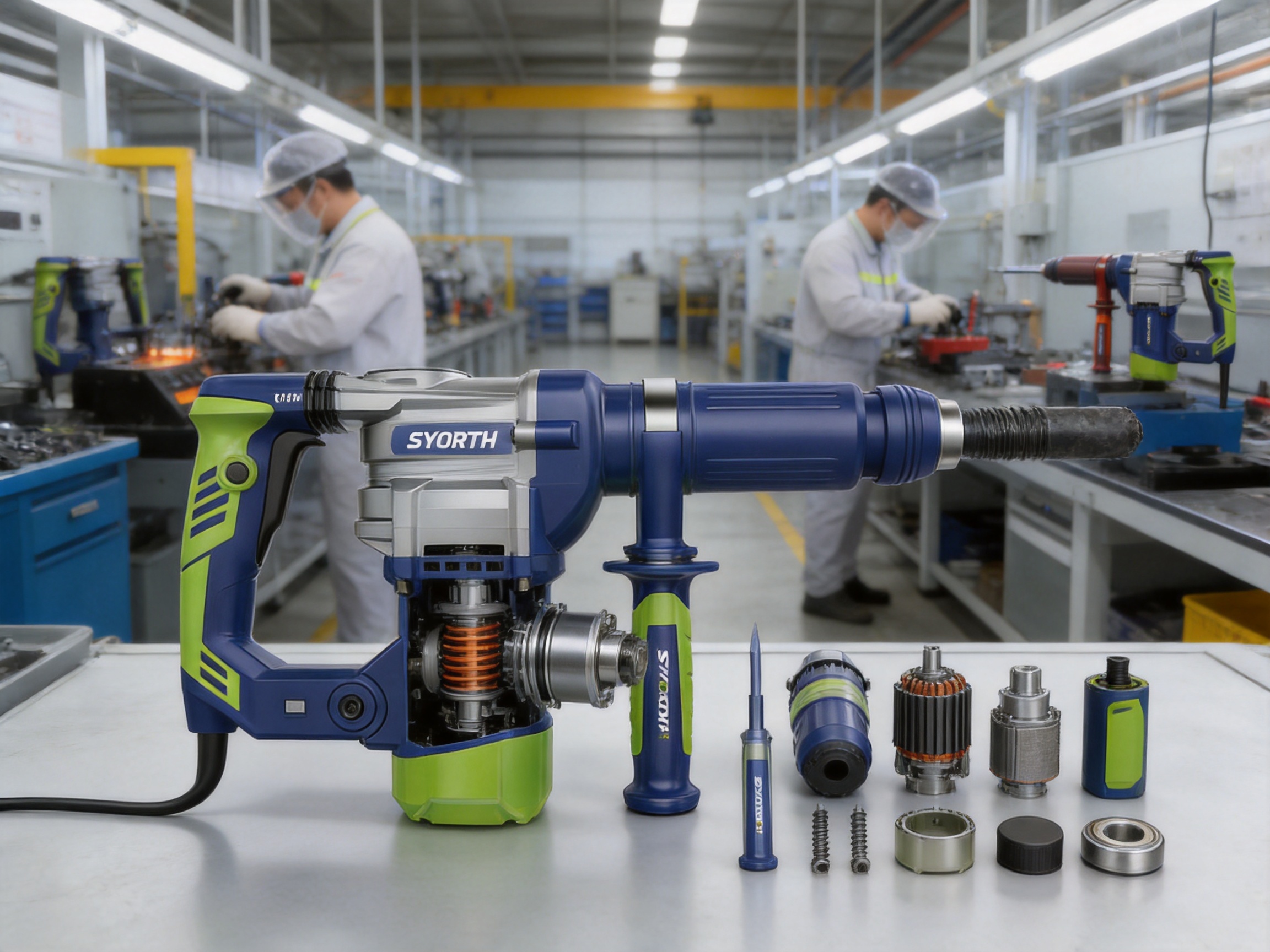
Yongkang Siwei Technology Co., Ltd. is a professional tool manufacturer integrating research and development, production, and sales. This integrated structure allows the company to connect product design with manufacturing experience and market feedback. Instead of treating the motor, housing, impact mechanism, and operator controls as separate elements, the company can develop them as part of a complete tool system.
The company emphasizes the principles of professional focus and quality-first manufacturing. Its product range includes demolition hammers and chisel cutting tools intended for construction and engineering users. This specialization gives the company direct experience with the requirements of heavy-impact equipment, including durable housings, reinforced mechanical assemblies, shock-absorbing grips, and reliable lubrication systems.
Advanced manufacturing processes are important for a product such as the SW9373 because performance depends on accurate assembly as well as raw power. The motor must be correctly aligned, the rotor and stator must operate within suitable tolerances, the impact mechanism must transfer force efficiently, and the oil chamber must be sealed while still allowing pressure management. Consistent production processes help ensure that these elements work together as intended.
Quality materials and appropriate processing are also central to durability. Demolition tools operate under repeated shock loads, so components must resist deformation, fatigue, friction, and heat. The company’s manufacturing approach focuses on producing tools capable of withstanding harsh working conditions. Features such as the upgraded brush holder, enlarged carbon brushes, anti-vibration handle, and pressure-relief oil cap demonstrate attention to component-level reliability.
The company’s engineering development has also expanded into green new energy technologies. Since 2024, its team has worked on high-efficiency brushless motors, electronic control systems, and intelligent battery platforms. This experience supports the development of cordless garden tools, including lithium-ion lawn mowers, string trimmers, lawn tractors, hedge trimmers, electric pruning shears, and high-speed chainsaws.
Although the SW9373 is a corded demolition hammer, the company’s broader experience with electronic controls and motor systems strengthens its overall technical foundation. Knowledge gained from brushless motor development, battery management, and control electronics can contribute to future improvements in efficiency, user control, and product reliability across different categories.
Yongkang Siwei Technology Co., Ltd. serves domestic and international markets and has supplied tools for professional engineering projects. Its ability to combine product specialization, manufacturing capability, and export-oriented service makes it a suitable partner for distributors, contractors, and tool purchasers seeking dependable equipment for demanding applications.
Production and Quality Considerations
A professional demolition hammer requires quality control at multiple stages. Incoming materials should be checked for conformity before they enter production. Motor components, housings, handles, switches, brush holders, seals, and impact parts must meet the design requirements for the finished tool. Consistent inspection helps reduce variation between individual units.
Assembly quality is equally important. Incorrectly seated bearings, insufficient lubrication, misaligned mechanical parts, or poorly fitted electrical connections can reduce service life even when the individual components are satisfactory. A structured assembly process helps ensure that the impact mechanism, motor, front barrel, and control components operate together correctly.
Functional testing is essential for a tool that produces high impact energy. Testing may include electrical operation, switch response, impact performance, vibration behavior, unusual noise detection, and inspection for oil leakage. The product’s listed features indicate that the design pays attention to these practical issues through the power indicator, pressure-relief oil cap, brush-holder structure, and anti-vibration grip.
Packaging and product handling also influence delivery quality. A demolition hammer is heavy and contains precision mechanical components. Protective packaging helps reduce the risk of impact damage during storage and transportation. Clear product identification and suitable documentation support correct distribution, installation, maintenance, and after-sales service.
Recommended Operating Practices
Before use, inspect the tool, chisel, cable, plug, handle, front barrel, and visible housing. Confirm that the accessory is compatible with the hex holder and is properly installed. Make sure the work area is free from unnecessary obstacles and that the material does not contain hidden electrical cables, gas pipes, water lines, or other hazards.
Wear appropriate personal protective equipment, including safety glasses or a face shield, hearing protection, work gloves, safety footwear, and suitable protective clothing. Demolition produces flying fragments, dust, and high noise levels. Additional respiratory protection may be needed depending on the material and local safety requirements.
Hold the hammer securely with both hands when the application requires it. Position the chisel at a controlled angle and apply steady guidance rather than excessive downward force. Let the impact mechanism break the material. Forcing the tool can increase vibration, reduce accessory life, and place unnecessary stress on the motor and impact assembly.
During long sessions, check the tool’s temperature, sound, vibration, and operating status. The power indicator should be used as a quick visual reference, while abnormal behavior should be treated as a reason to stop and investigate. Do not continue operation if there is smoke, burning odor, significant sparking, oil leakage, or a sudden reduction in impact performance.
After work, disconnect the tool from the power supply before cleaning or inspection. Remove dust from external surfaces and ventilation areas using a safe method. Inspect the chisel for deformation or cracks and check the power cable for damage. Store the hammer in a dry location protected from moisture, extreme heat, and unauthorized use.
Maintenance and Service Life
Regular maintenance helps preserve the performance of a high-impact demolition hammer. The oil system should be checked according to the recommended service schedule. The pressure-relief oil cap and breather hole should remain free from blockage, and the surrounding area should be monitored for signs of leakage.
Carbon brushes are wear parts and should be inspected periodically. If the brushes become too short, damaged, or heavily worn, they should be replaced with suitable components. Continued operation with severely worn brushes can reduce motor performance and may damage the commutator or other electrical parts.
Chisels should be kept in good condition. A blunt or damaged chisel transfers energy less effectively and may force the operator to apply greater pressure. Sharpening or replacement should be performed according to the accessory manufacturer’s instructions. Never use a chisel with visible cracks, severe deformation, or a damaged shank.
Vibration and impact can gradually loosen fasteners and affect external components. Periodic inspection can identify loose screws, worn grips, damaged covers, or abnormal movement before these issues become more serious. Service should be carried out by qualified personnel when internal disassembly is required.
Purchasing Value for Professional Users
For professional buyers, the value of a demolition hammer is determined by more than its purchase price. Productivity, durability, maintenance requirements, operator comfort, and service support all contribute to the total cost of ownership. A tool that breaks material faster and requires fewer interruptions may provide better economic value over its working life.
The SW9373 offers a combination of high impact energy and practical operating features. Its 42J impact rating and extended 35mm cylinder support heavy breaking tasks, while the power indicator light can simplify daily use. The anti-scald front barrel and anti-vibration handle contribute to user comfort, and the pressure-relief oil cap and enlarged carbon brushes support serviceability.
For distributors, the product also provides clear selling points. The visible power indicator is easy to explain to end users. The 30% increased impact claim provides a straightforward performance message. The 1300W motor, 42J impact energy, anti-scald barrel, and upgraded brush holder create a feature set suited to professional construction and engineering markets.
For contractors, the key advantage is the balance between force and usability. A powerful demolition hammer must still be controllable, maintainable, and practical for repeated operation. The SW9373 is designed to address each of these requirements through its impact system, handle design, heat-conscious front section, and maintenance-focused internal components.
Frequently Asked Questions
What type of tool is the SW9373?
The SW9373 is a corded electric demolition hammer with a hex-type tool interface. It is designed for heavy chiseling and breaking work rather than light drilling or general fastening.
What voltage does the demolition hammer use?
The rated voltage is 220–240V at 50/60Hz. Users should confirm that the available power supply matches the tool rating before operation.
How powerful is the impact mechanism?
The listed impact energy is 42J. The product also uses an extended 35mm cylinder and impact mechanism, which the product information describes as providing a 30% increase in impact force.
What does the power indicator light do?
The power indicator light provides a visible reference of the tool’s operating or power status. It helps users check the tool at a glance, especially in noisy or busy work environments.
Can the SW9373 be used for concrete?
Yes. It is intended for heavy chiseling and breaking applications such as concrete floor slabs, foundations, road surfaces, masonry, quarry materials, and other hard construction materials. The correct chisel must be selected for the specific material and task.
What is the purpose of the anti-scald front barrel?
The anti-scald front barrel is designed to make the front section safer and more comfortable to hold during extended operation. It helps reduce the discomfort associated with heat buildup, although normal safety precautions and cooling periods are still required.
How does the handle improve comfort?
The handle uses soft rubber with an anti-vibration design. It is intended to reduce discomfort, improve grip security, and help limit the sensation of numbness during prolonged work. The oversized trigger is easier to press while wearing gloves.
What is the function of the oil-cap breather hole?
The breather hole releases internal pressure from the oil chamber and helps prevent oil leakage. The oil cap and breather area should be kept clean and checked during routine maintenance.
Why are the carbon brushes enlarged to 7 × 11?
The enlarged carbon brushes provide a larger brush specification for the motor’s electrical contact system. Together with the upgraded brush holder, they are intended to improve cooling and support reliable operation during demanding use.
Is the SW9373 suitable for continuous work?
The tool is designed for extended demolition sessions, but continuous work must still be managed responsibly. Operators should monitor temperature, vibration, sound, power status, and accessory condition, and should allow cooling or service whenever necessary.
What industries can use this demolition hammer?
Potential applications include building demolition, concrete renovation, foundation removal, road repair, quarry work, masonry removal, industrial maintenance, and other heavy construction tasks requiring high-impact chiseling.
What should buyers consider before ordering?
Buyers should confirm voltage compatibility, accessory requirements, intended material, expected duty cycle, service availability, replacement brush supply, and local safety requirements. They should also ensure that the tool’s weight and impact class are appropriate for the intended operators and applications.
Conclusion
The SW9373 35mm Hex Power Indicator Light Demolition Hammer is engineered for users who require strong, repeatable breaking performance and practical control during demanding work. Its 1300W motor, 42J impact energy, extended 35mm cylinder, and stated 30% impact-force increase provide a solid foundation for heavy demolition applications.
Its advantages extend beyond raw power. The visible power indicator light improves status awareness, the anti-scald front barrel supports more comfortable handling, and the soft rubber anti-vibration grip helps reduce operator discomfort. The pressure-relief oil cap addresses internal lubrication pressure, while the upgraded brush holder and enlarged 7 × 11 carbon brushes support motor cooling and serviceability.
Supported by Yongkang Siwei Technology Co., Ltd.’s experience in demolition hammers, chisel tools, motor systems, and electronic control development, the SW9373 represents a professional approach to heavy-duty tool manufacturing. Its combination of mechanical strength, heat-conscious design, operator comfort, and maintenance-focused construction makes it suitable for construction crews, contractors, distributors, and engineering projects that demand dependable performance.
When correctly matched with suitable chisels and operated under proper safety and maintenance procedures, the SW9373 can help professional users complete demanding breaking tasks with greater productivity, clearer equipment awareness, and improved working comfort.
References
1. Product specification sheet for the SW9373 35mm Hex Power Indicator Light Demolition Hammer.
2. Manufacturer-provided product information regarding the extended 35mm cylinder, 42J impact energy, power indicator, anti-scald barrel, pressure-relief oil cap, and enlarged carbon brushes.
3. General principles of electric motor maintenance, carbon-brush inspection, and mechanical lubrication for corded power tools.
4. General workplace guidance for demolition-tool operation, personal protective equipment, vibration exposure, electrical safety, and construction-site risk control.
5. General engineering practices for concrete breaking, masonry removal, foundation demolition, road repair, and quarry chiseling applications.
Product: SW9373 Hex Power Indicator Light Demolition Hammer

Recommended Products
-


SW528 Small Hole Rebar Hammer
-
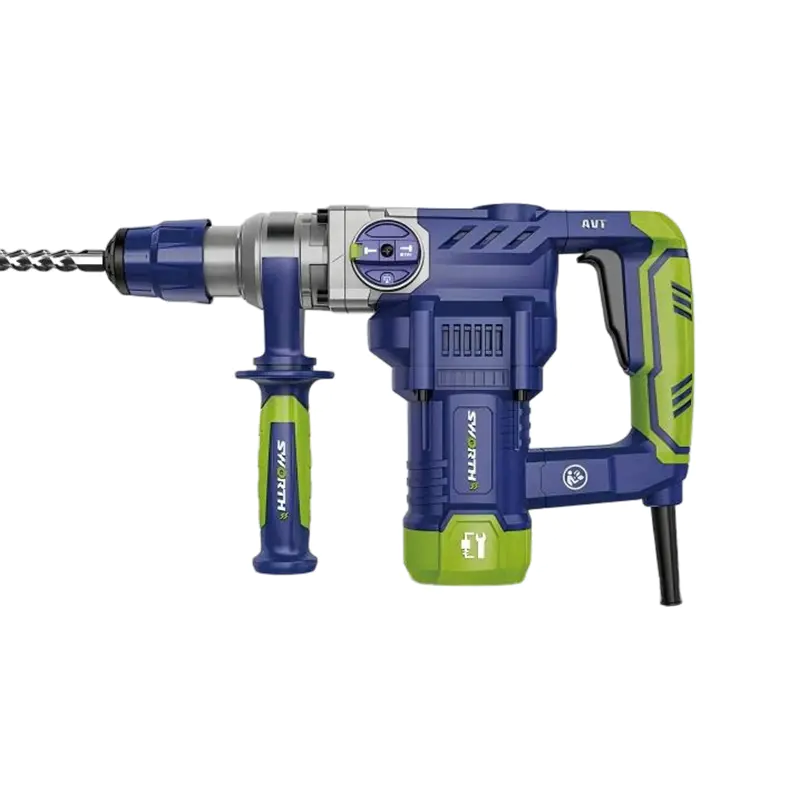
SW932 Groove Sandblasting Hammer
-
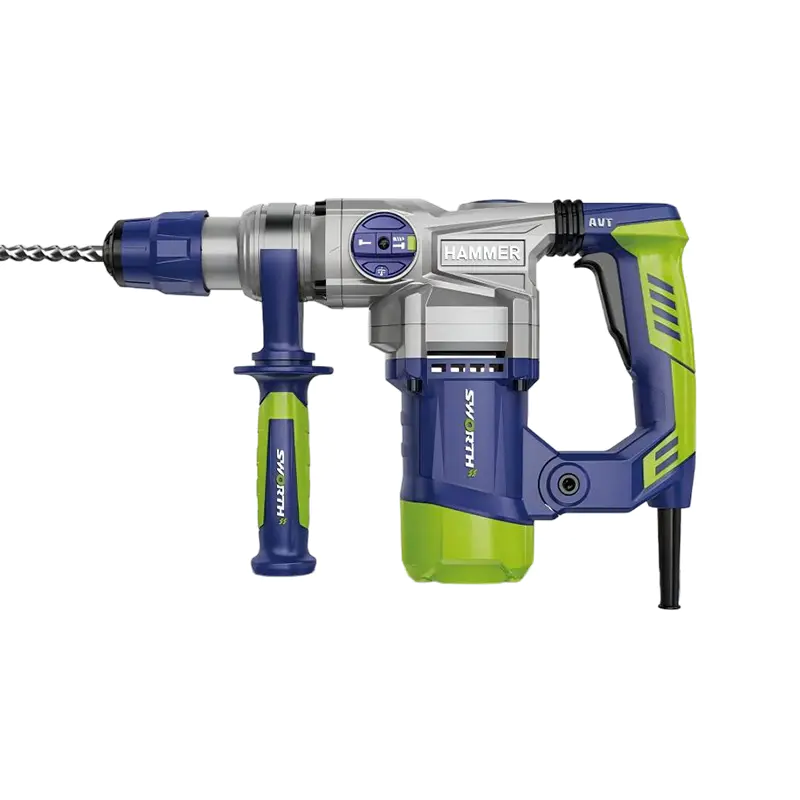
SW9362A Large Hole Rebar Hammer
-
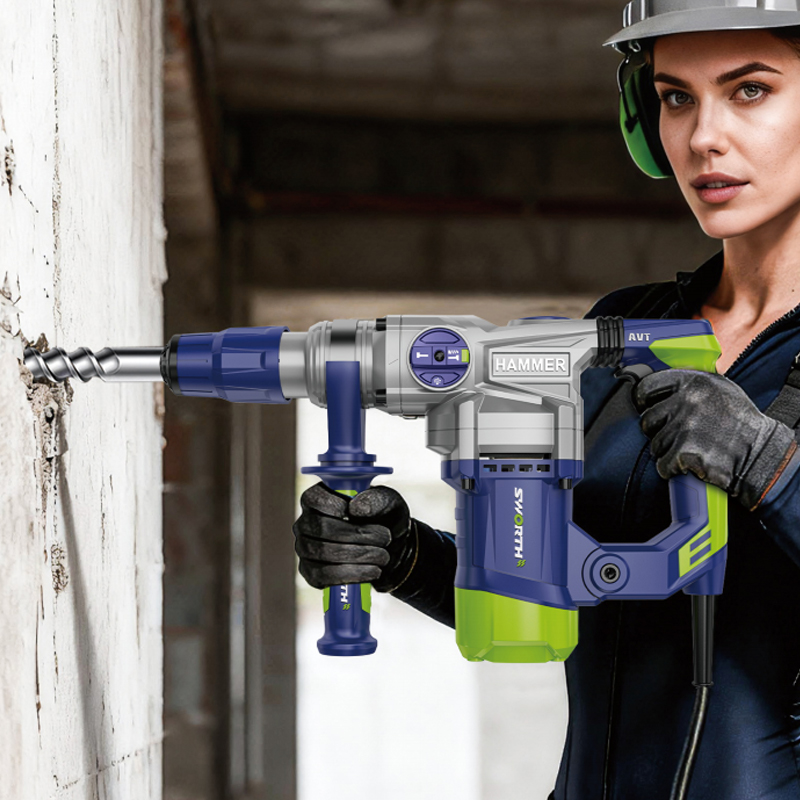
SW940 Enlarged Hole Rebar Hammer
-
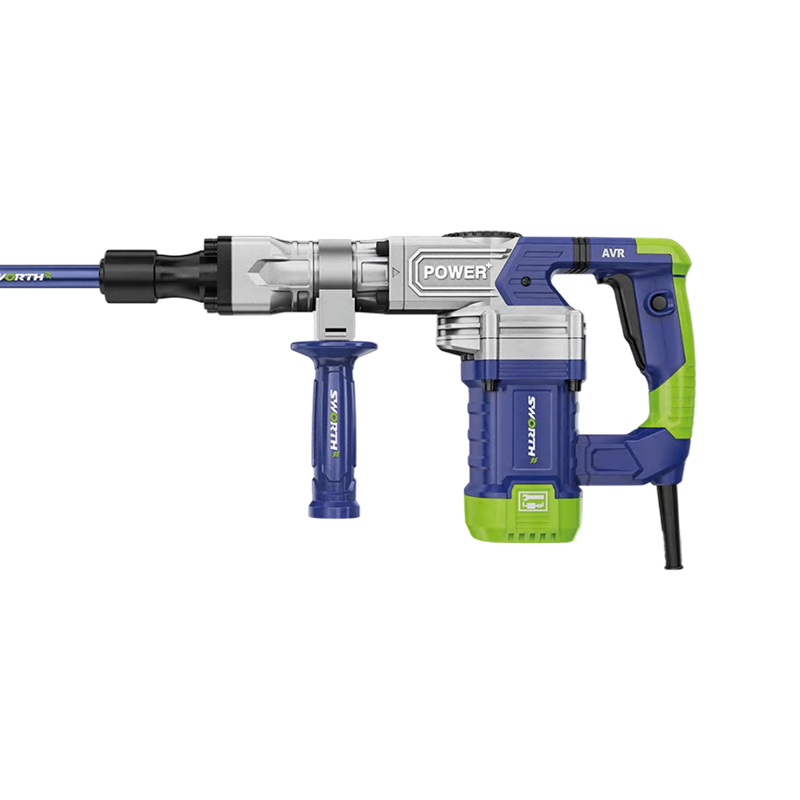
SW35S1 Powerful Demolition Hammer
-
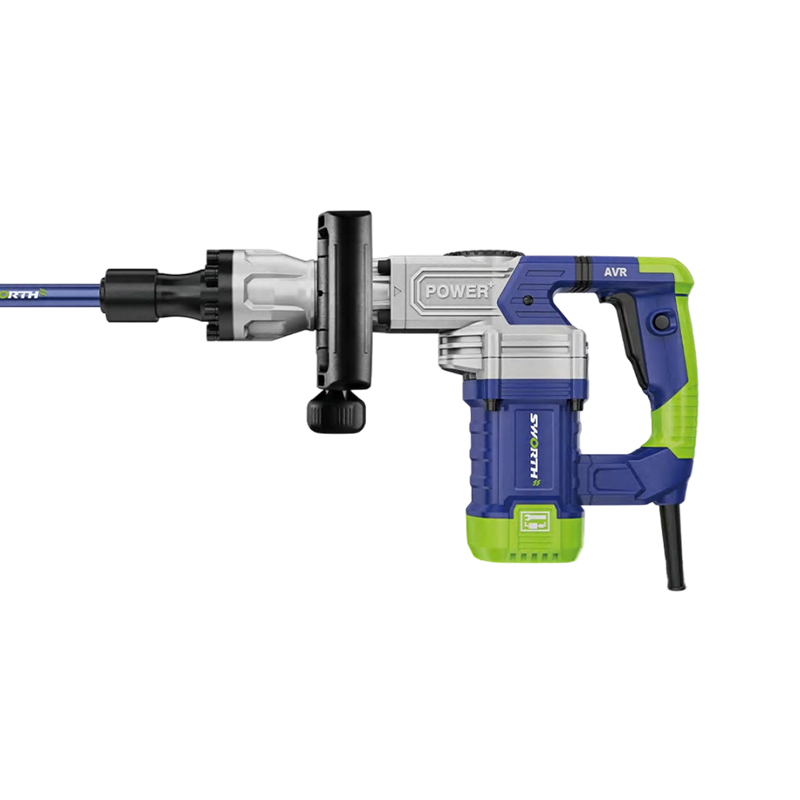
SW35S2 High-Efficiency Heat Dissipation Demolition Hammer
-
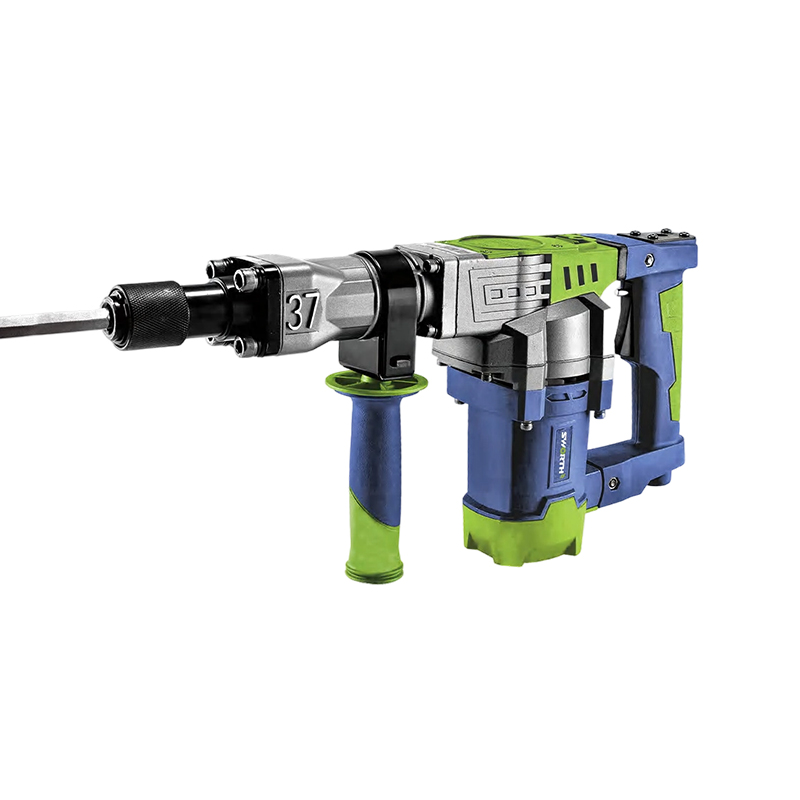
SW9371 High-Power Demolition Hammer
-
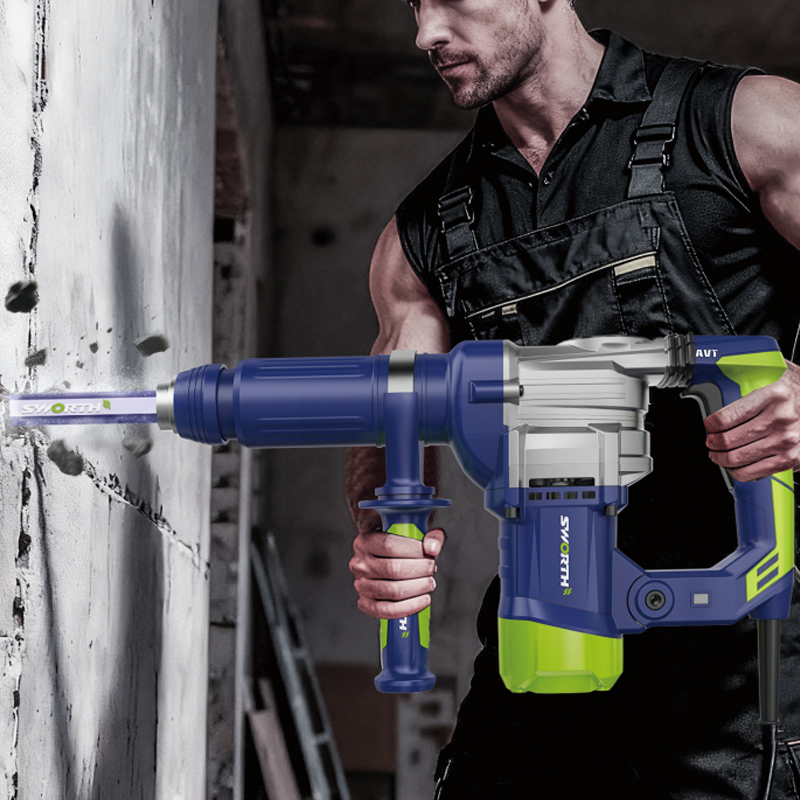
SW9373 Anti-Scalding Carbon Brush Holder Demolition Hammer
-
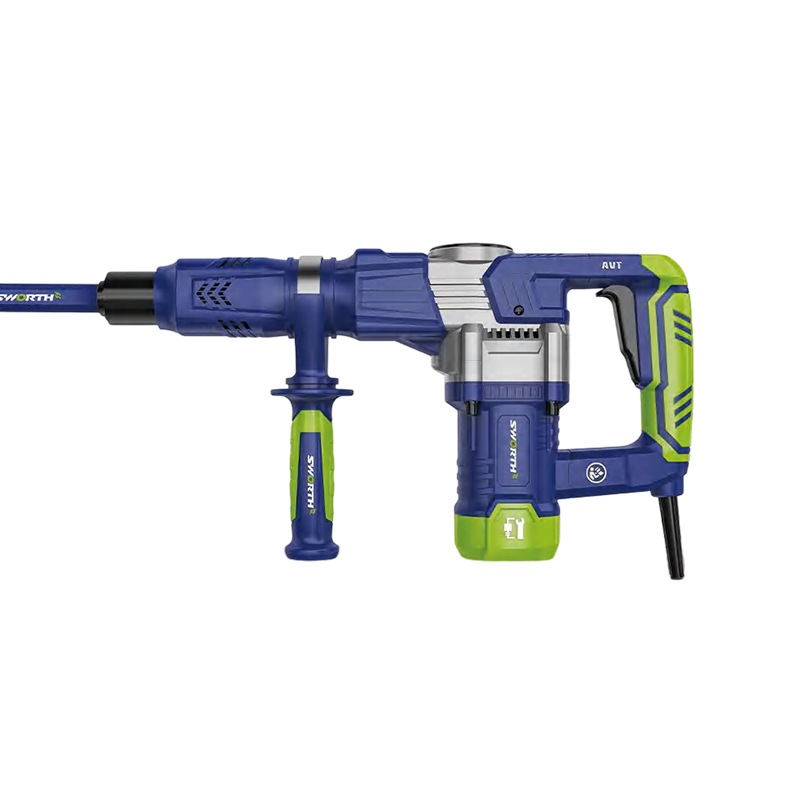
SW535 Powerful Anti-Scalding Demolition Hammer
-
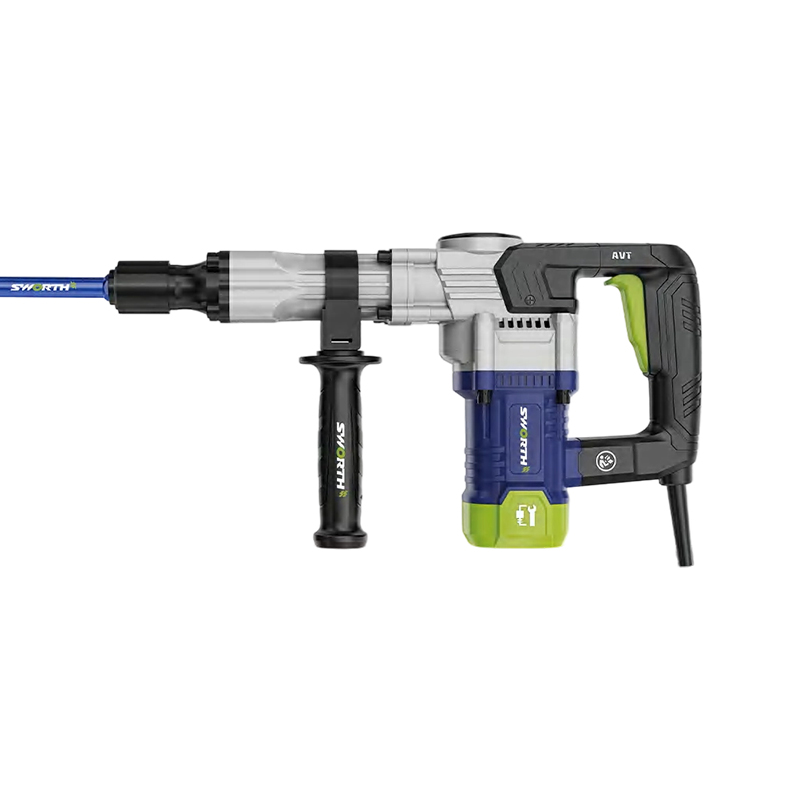
SW535-2 Durable Powerful Demolition Hammer
-
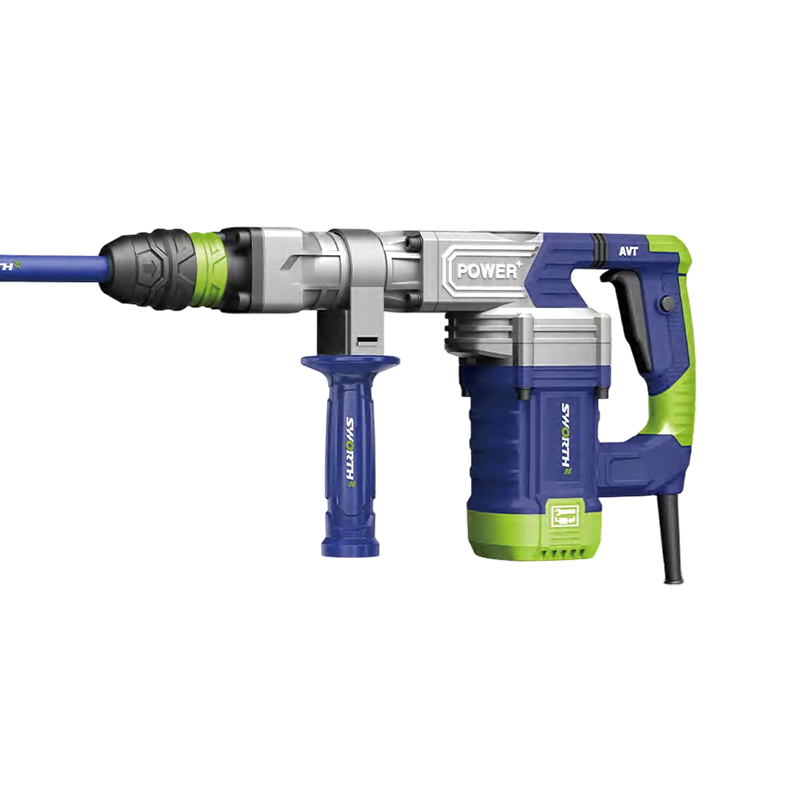
SW35S3 Five-Pipe Drill Bit Demolition Hammer
-

SW11E Five-Pipe Clamping Demolition Hammer
 +86-18314829275
 sale@sworthtools.com
 No. 101, Yugui Road, chengxi Industrial Zone, Yongkang City, Zhejiang Province, China
Copyright© Yongkang Siwei Technology Co., Ltd. All Rights Reserved

Hammer Tools & Cordless Garden Tools Manufacturer
