 English
 русский
 Español

1150W Professional Angle Grinder with Permanent Laser-Engraved Branding
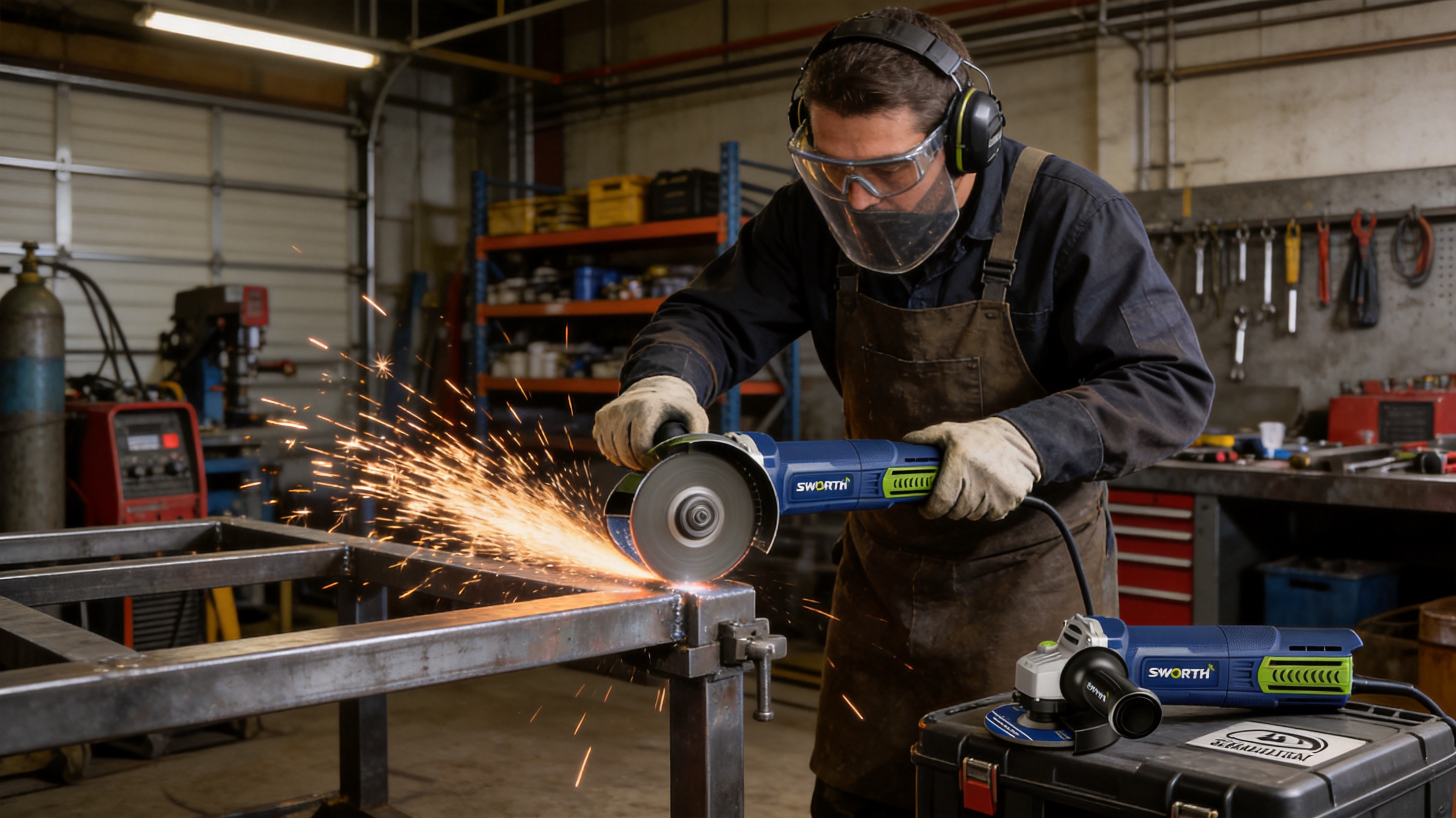
In professional metalworking, construction, fabrication, maintenance, and contractor tool supply, an angle grinder must do more than start and spin. It must deliver dependable power, maintain stable performance during demanding work, withstand heat and vibration, and remain practical for repeated daily use. The SW9600 angle grinder is designed around these requirements. With a 1150W motor, strengthened electrical components, tightly matched gears, an integrated head and gear housing, and a permanent laser-engraved logo, it combines working durability with a clear solution for branded tool programs.
The product is especially suitable for professional users who need a reliable 100 mm grinder for grinding, cutting, rust removal, weld smoothing, surface preparation, and general metal fabrication. Its construction focuses on the components that most directly influence service life: the motor winding, commutator, carbon brushes, gear transmission, and head housing. Instead of relying only on a high nominal power figure, the SW9600 is engineered to support consistent power transfer and improved resistance to the stresses associated with continuous heavy grinding.
For wholesalers, importers, contractors, rental fleets, and tool brands, the permanent laser-engraved logo provides another important advantage. Conventional labels and stickers can peel, fade, or become damaged by oils, dust, abrasion, and heat. Laser engraving creates a lasting mark directly on the tool body, helping maintain brand visibility throughout the product’s working life. This makes the grinder suitable not only as a workshop machine but also as part of a professional branded tool system.
Product Positioning and Professional Purpose
The SW9600 is a corded electric angle grinder rated for 220–240V at 50/60Hz, with a 1150W power input and a 100 mm blade size. These specifications place it in a practical category for workshop and construction applications where users need a compact tool with enough power for regular grinding and cutting operations.
A 100 mm grinder offers a useful balance between accessibility and working capacity. It is small enough to handle in restricted areas, around weld joints, along metal edges, and on components that cannot accommodate a larger machine. At the same time, the 1150W input rating gives the tool a meaningful power reserve for demanding applications. This combination allows the grinder to serve as a general-purpose machine rather than a tool limited to occasional light finishing.
The product is intended for professional use, including metal fabrication, construction-site maintenance, equipment repair, workshop production, and contractor tool sets. Its design also supports private-label and original-equipment programs because the laser-engraved body can display a customer’s branding without depending on a temporary adhesive label.
Professional users typically judge an angle grinder by several factors at once. They want cutting and grinding power, but they also need reliable electrical contact, controlled heat generation, durable gears, and housing strength. A grinder that performs well for only a short period can create more cost through downtime, replacement, and service work. The SW9600 addresses these concerns through a group of reinforced components rather than through a single isolated feature.
Key Technical Specifications
| Specification | SW9600 Configuration | Practical Significance |
|---|---|---|
| Product type | Angle grinder | Suitable for grinding, cutting, weld smoothing, rust removal, and surface preparation |
| Rated voltage | 220–240V~ | Designed for compatible mains power systems |
| Rated frequency | 50/60Hz | Compatible with common commercial and industrial electrical frequencies |
| Power input | 1150W | Provides a strong power platform for professional grinding and cutting work |
| Blade size | 100 mm | Offers compact handling and access around workpieces |
| Stator | Ø53 × 63H | Supports the motor’s electromagnetic power generation and thermal design |
| Rotor | Ø32 × 63H | Works with the stator to convert electrical energy into mechanical rotation |
| Commutator | 24.5 mm enlarged and heightened design | Improves electrical contact and supports stable motor operation |
| Carbon brushes | 6 × 11 mm extended design | Helps extend service intervals and maintain contact during use |
| Motor winding | 200°C high-temperature copper wire | Improves resistance to heat during demanding operating conditions |
| Brand marking | Laser engraving on the tool body | Creates a permanent visual identity without peeling or fading stickers |
Specifications should always be evaluated together with correct wheel selection, safe operating procedures, appropriate electrical protection, and the working conditions in which the tool will be used. The technical configuration of the SW9600 is intended to create a durable professional platform, while the actual result depends on suitable accessories, correct maintenance, and responsible operation.
Power Performance for Continuous Grinding
The 1150W power input gives the SW9600 a strong operating foundation for metalworking and construction tasks. Grinding and cutting create different loads, but both can place substantial demand on the motor. When an abrasive wheel contacts a hard weld, thick steel, rusted material, or an uneven surface, the motor must maintain useful speed while managing increased resistance.
A grinder with insufficient power may slow significantly under load. This can reduce productivity, make the operator apply excessive pressure, and increase the possibility of heat accumulation. By contrast, a properly matched power system gives the operator greater control over the work. The SW9600 is designed to provide the capacity needed for regular professional use without making the product unnecessarily large for a 100 mm platform.
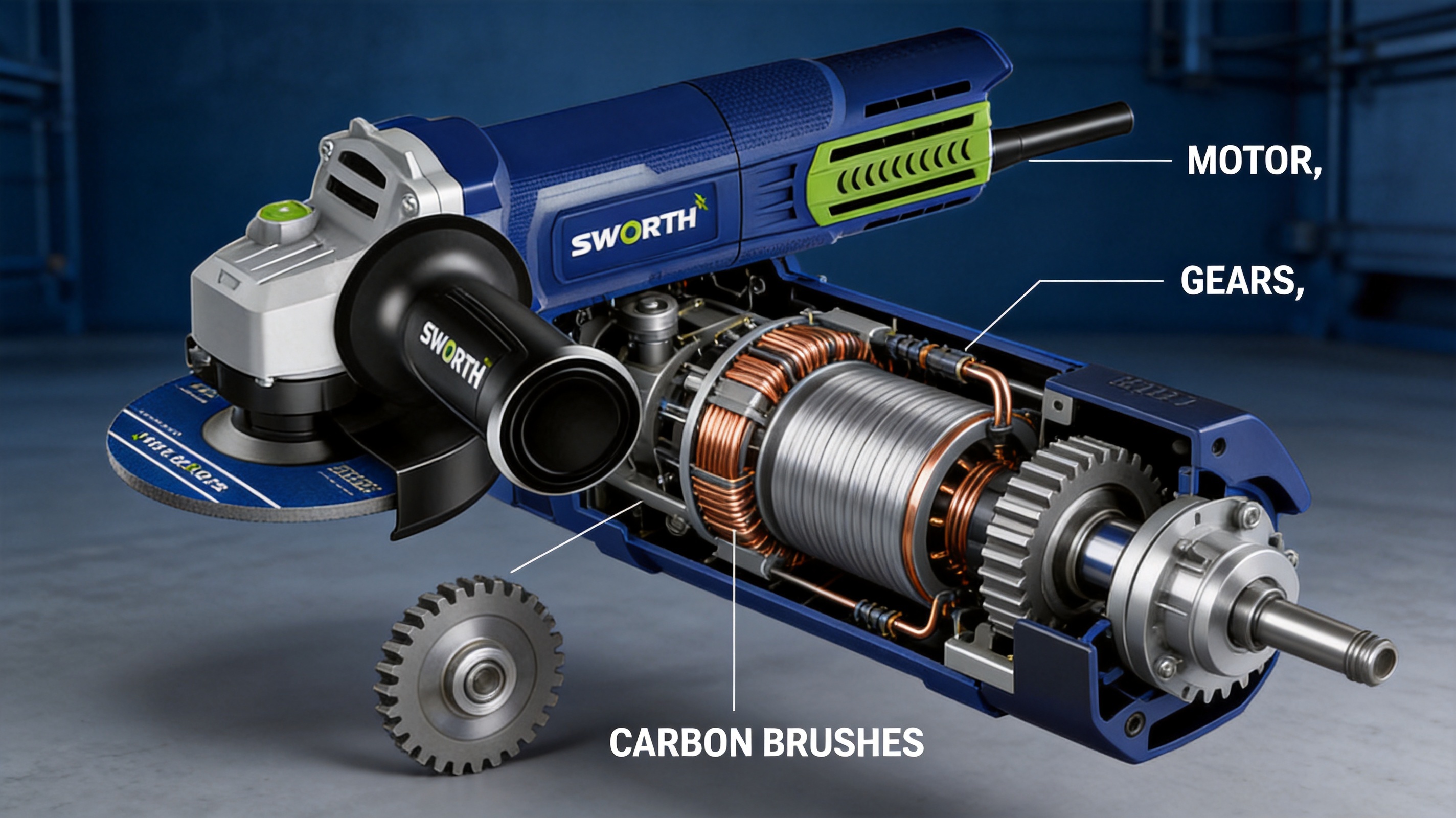
The motor is specified with a Ø53 × 63H stator and a Ø32 × 63H rotor. These dimensions form part of the product’s electromagnetic and mechanical configuration. The stator and rotor work together to produce rotation, while the winding, commutator, brush system, bearings, gears, and housing determine how effectively that rotational energy reaches the spindle.
The value of the motor design is not limited to peak output. Professional users also need repeatable behavior over multiple work cycles. A motor that can withstand routine starts, stops, grinding passes, and cutting operations is more useful than one that delivers a high figure only under ideal short-term conditions. The SW9600 therefore emphasizes overload capacity and component durability as part of its overall performance concept.
200°C High-Temperature Copper Wire
Heat is one of the main challenges in compact power tools. Electrical current passing through a motor winding generates heat, while mechanical friction, abrasive dust, environmental temperature, and prolonged loading add to the thermal burden. If the winding system is not appropriately specified, repeated high-temperature operation can contribute to insulation stress, loss of efficiency, and premature motor wear.
The SW9600 uses 200°C high-temperature copper wire in its motor. Copper provides effective electrical conductivity, while the high-temperature specification supports operation in demanding conditions. This design is intended to improve the motor’s ability to tolerate heat generated during heavy grinding and cutting work.
The high-temperature winding works together with the 63H motor configuration to provide strong overload capacity. Overload resistance is important because professional grinding is rarely performed under one constant, perfectly controlled load. Operators may encounter hard points, uneven material, thick sections, interrupted cuts, or temporary increases in contact pressure. A robust motor system is better prepared for these normal variations.
Compared with a basic grinder using less heat-resistant winding materials, the high-temperature copper wire can provide a stronger foundation for long-term professional operation. This does not mean that the machine should be forced beyond its intended capacity or used without cooling intervals. Instead, it means the motor has been designed with greater attention to the thermal stresses that occur in real workshops and construction environments.
Enlarged and Heightened Commutator
The commutator is a critical part of a brushed motor. It transfers electrical current between the stationary carbon brushes and the rotating armature. Its condition directly affects electrical contact, current transfer, motor smoothness, and brush wear.
The SW9600 uses a 24.5 mm enlarged and heightened commutator. Increasing the working dimensions of this component can support a more stable contact area between the commutator surface and the carbon brushes. Stable contact is important for reducing electrical irregularities and maintaining consistent motor operation during load changes.
A reinforced commutator is particularly valuable in a professional grinder because the motor may be operated for extended periods and subjected to frequent acceleration and deceleration. Every start and stop places electrical and mechanical demands on the motor system. During grinding, the load can also change rapidly as the wheel moves across different sections of material.
The enlarged and heightened design is one of the ways the product differs from a basic entry-level grinder. While many competing products may focus their specifications primarily on input wattage, the SW9600 also gives attention to the internal components that support power delivery. This broader engineering approach can help the motor maintain more reliable electrical contact over its service life.
Commutator durability also depends on correct brush installation, suitable operating conditions, and proper maintenance. Users should keep ventilation openings clean, avoid unnecessary pressure, and replace worn brushes according to service requirements. These practices allow the reinforced commutator to deliver its intended benefit.
Extended 6 × 11 mm Carbon Brushes
Carbon brushes are wear components that maintain electrical contact with the rotating commutator. Over time, friction gradually consumes the brush material. When brushes become too short, contact quality can deteriorate and the motor may become less efficient or less stable.
The SW9600 uses extended 6 × 11 mm carbon brushes. The extended configuration is intended to provide longer service intervals than a shorter brush design. For professional workshops, this can reduce the frequency of routine brush replacement and help keep tools available for production work.
Longer brushes are especially useful in applications where the grinder is used repeatedly throughout the day. In a workshop, reduced brush replacement frequency can simplify maintenance planning. In a contractor fleet, it can make inspection schedules easier to manage. In a rental fleet, it can help maintenance teams prepare tools for the next customer with fewer interruptions.
The brush and commutator should be considered as a matched system. The enlarged commutator provides a larger contact platform, while the extended brushes provide continued contact as normal wear occurs. Together, these features support the product’s objective of maintaining dependable power transmission during extended use.
Brushes are consumable parts and should not be treated as permanent components. Operators should watch for unusual sparking, power fluctuations, burning smells, or reduced performance. Timely inspection helps protect the commutator and prevents a low-cost wear component from developing into a more expensive motor repair.
Double Tight-Fit Gear Transmission
The motor produces rotational energy, but the gears transfer that energy to the spindle and abrasive wheel. Gear quality therefore has a direct influence on efficiency, noise, durability, and operating feel. A loose or poorly matched gear system may create excessive play, vibration, noise, and uneven power transmission.
The SW9600 uses double tight-fit gears. This design is intended to create a more secure engagement between the gear components and support smooth, reliable power transmission. Close-fitting gears help reduce unnecessary movement and allow the motor’s output to be transferred more effectively to the working spindle.
In a grinding application, the gear system must handle changing resistance. The wheel may experience intermittent contact, side loading, vibration, and repeated impact when the operator moves across a rough weld or irregular metal surface. A tight-fit gear arrangement provides a stronger mechanical foundation for this type of work.
Gear durability is also influenced by lubrication, housing alignment, bearing condition, wheel balance, and operating technique. The double tight-fit design is not a replacement for maintenance, but it gives the product a more robust starting point than a loosely assembled transmission. This is one of the features that can distinguish the SW9600 from lower-cost products built primarily for occasional light use.
For contractors and workshops, reliable gearing can translate into more predictable tool behavior. Smooth transmission makes it easier for the operator to maintain control, while reduced unnecessary movement may help limit vibration and mechanical stress. Over time, these advantages can support both productivity and tool longevity.
Integrated Head Shell and Gear Housing
The front section of an angle grinder is exposed to demanding conditions. It is close to the abrasive wheel, receives vibration from the gear system, and may encounter dust, impact, and accidental contact with the workpiece. The connection between the head shell and gear housing therefore plays an important role in product durability.
The SW9600 uses an integrated head shell and gear housing structure. Bringing these elements together supports a more unified front-end assembly. The design is intended to improve durability, strengthen the gear area, and provide a stable enclosure for the transmission components.
A more integrated housing can help reduce unnecessary joints and improve the structural relationship between the gear set and the exterior body. This is valuable during grinding and cutting, when the front housing experiences repeated vibration. It also supports easier product identification because the laser-engraved logo can be applied directly to the tool body rather than placed on a separate removable label.
The housing is part of the product’s protective system, but it should not be used as a substitute for safe guarding. Operators must always use the correct wheel guard, side handle, personal protective equipment, and work practices for the application. The grinder should never be operated with damaged housings, missing guards, or loose accessories.
Permanent Laser-Engraved Branding
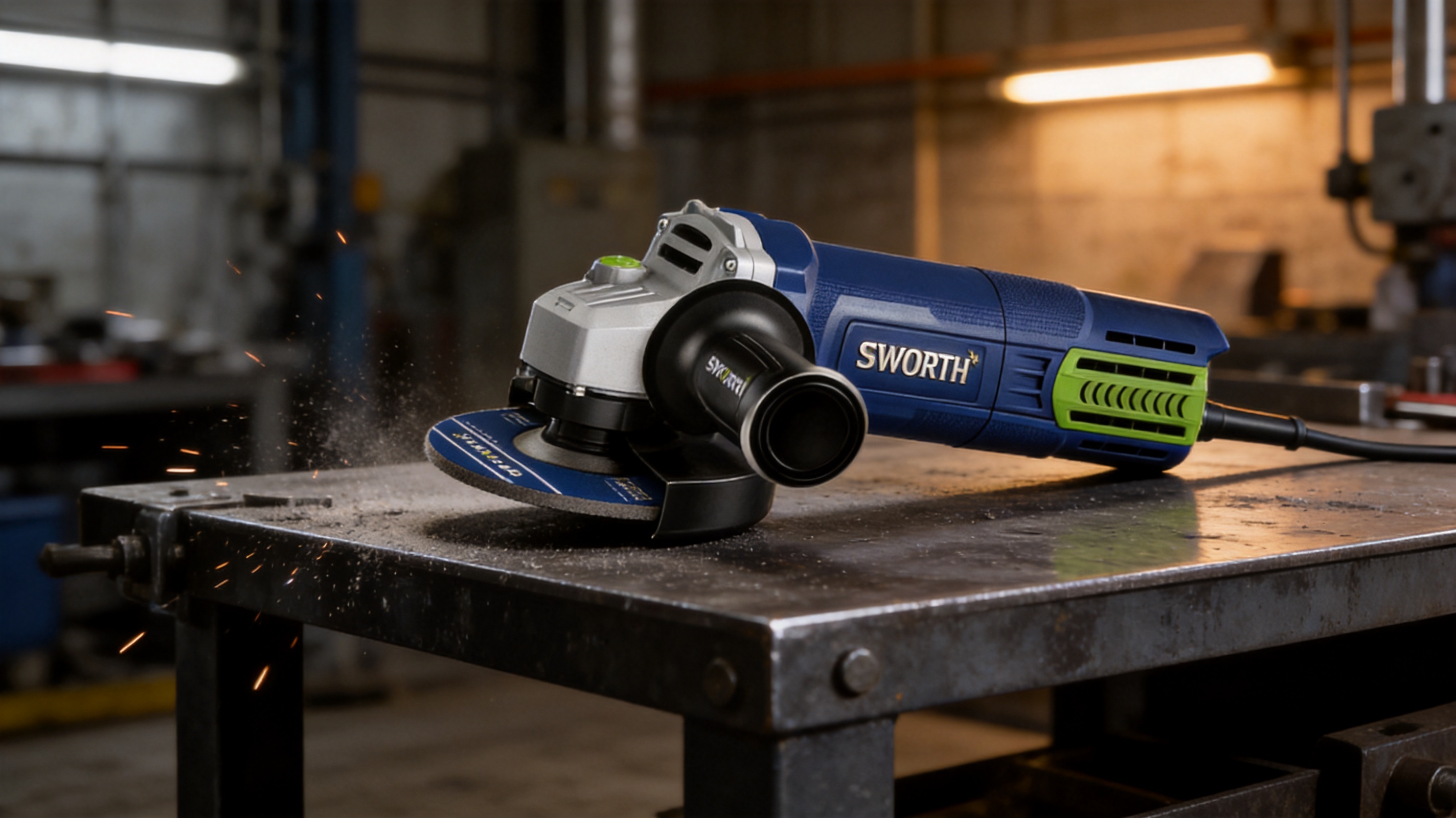
One of the most distinctive features of the SW9600 is the laser-engraved logo on the body. This provides a practical advantage for companies that distribute tools under their own brand or require permanent identification across a professional equipment fleet.
Traditional stickers and printed labels are vulnerable to peeling, fading, scratching, solvent exposure, and abrasion. Angle grinders operate in environments where these problems are common. Metal dust, grinding sparks, oil, grease, handling, and storage can quickly damage a conventional label. Once the label is removed or becomes unreadable, the tool loses part of its visual identity.
Laser engraving marks the body directly. Because the identification is created through a controlled engraving process rather than an adhesive layer, it is designed to remain visible for the life of the product. The result is a cleaner and more durable appearance that supports brand recognition in workshops, factories, construction sites, and rental operations.
For a tool brand, permanent engraving can improve product consistency. A group of grinders can carry the same visual identity without requiring additional stickers during packaging or service. For a rental fleet, the engraving can support ownership identification and help distinguish company equipment from customer tools. For contractors, it can create a unified appearance across job-site equipment.
The engraving also contributes to perceived product quality. A permanent mark communicates that branding is considered part of the product design rather than an afterthought. When combined with reinforced internal components, it creates a professional tool suitable for customers who care about both performance and presentation.

SW9600 Angle Grinder with Laserengraving Logo
Advantages Compared with Basic Competing Grinders
The angle grinder market includes a wide range of products, from occasional-use consumer models to heavy-duty professional machines. The SW9600 is positioned toward users who expect more than basic short-duration operation. Its advantages over simpler competing grinders are found in its complete construction concept.
More Than a Nominal Wattage Figure
Many product comparisons begin and end with motor wattage. Although input power is important, it does not fully describe how a grinder will perform. The SW9600 combines 1150W input with high-temperature copper wire, a 63H motor design, an enlarged commutator, and extended carbon brushes. This combination addresses power generation, heat tolerance, electrical contact, and service life together.
Improved Electrical Contact
The 24.5 mm enlarged and heightened commutator is designed to support reliable contact with the 6 × 11 mm carbon brushes. This can provide an advantage over basic grinder designs that use smaller or less robust motor components. Better contact supports stable current transfer and helps the motor respond more consistently under changing loads.
Stronger Support for Heavy Use
The high-temperature winding and overload-oriented motor design make the product suitable for demanding professional environments. A grinder used continuously in metal fabrication or construction must tolerate more stress than a tool used for a few minutes of occasional home maintenance. The SW9600 is built with this difference in usage patterns in mind.
More Durable Mechanical Transmission
Double tight-fit gears and an integrated head shell with gear housing provide a more durable transmission structure. These elements help the tool handle vibration and changing loads more effectively than a basic loosely assembled front-end design.
Permanent Identification
The laser-engraved logo offers a branding advantage that ordinary printed labels cannot match. It remains part of the body, helping the tool retain its identity even after repeated handling and exposure to workshop conditions.
Balanced Professional Value
The SW9600 is not defined by one expensive feature or an oversized specification. It offers a balanced package: practical 100 mm handling, strong 1150W input, reinforced motor components, durable gearing, and branding support. This balance makes it suitable for companies seeking dependable tools without moving to a much larger and less maneuverable grinder platform.
Applications in Metal Fabrication
Metal fabrication is one of the primary environments for the SW9600. Fabricators frequently need to remove weld spatter, smooth weld beads, prepare edges, clean rust, and cut metal components. These operations can place repeated loads on the motor and gear system, particularly when the grinder is used throughout a production shift.
For weld smoothing, the grinder can be used with a suitable abrasive wheel to level high spots and blend the weld into the surrounding material. The operator benefits from a stable power supply and a transmission that responds predictably as the wheel contacts different sections of the weld.
For rust removal and surface preparation, the tool can support work on steel frames, fabricated assemblies, machinery components, and maintenance parts. The compact 100 mm format allows access to edges, corners, brackets, and other areas where larger tools may be inconvenient.
For cutting, the correct cutting disc and guard must be selected for the material and operation. The 1150W motor provides a strong platform for cutting compatible metal sections, while the user remains responsible for controlling feed pressure and avoiding side loading of cutting discs.
Fabrication businesses can also benefit from the permanent branding feature. A set of grinders marked with a workshop or tool-distributor identity is easier to organize and less likely to be confused with equipment belonging to another department or contractor.
Applications in Construction and Site Maintenance
Construction sites require tools that can be transported, handled frequently, and used for varied tasks. The SW9600 is suitable for general metalwork associated with construction, including trimming metal components, cleaning welds, preparing supports, removing corrosion, and carrying out equipment maintenance.
At a construction site, tools may be exposed to dust, vibration, movement between work areas, and irregular operating schedules. The reinforced front housing and internal motor features are intended to provide greater durability under these conditions. The permanent logo can also help companies identify their equipment when several subcontractors are working in the same location.
For contractors, branded grinders can contribute to a consistent professional image. Equipment bearing a durable company mark remains identifiable in storage areas, transport vehicles, workshops, and job sites. This can simplify asset control and reinforce brand visibility without compromising the grinder’s working purpose.
Use in Professional Workshops
In a professional workshop, productivity depends on tool availability and predictable operation. A grinder that requires frequent repair can interrupt production and create scheduling problems. The SW9600 is designed to reduce these risks through attention to high-wear and high-stress components.
The extended carbon brushes can help lengthen routine service intervals. The high-temperature copper wire supports motor durability during demanding cycles. The enlarged commutator helps maintain electrical contact, while the tight-fit gears and integrated head housing support mechanical reliability.
Workshop managers can incorporate the grinder into planned maintenance programs. Regular inspection of brushes, guards, power cords, switches, bearings, and gear lubrication can identify problems before they become serious. Keeping abrasive accessories balanced and correctly installed also protects the transmission and reduces vibration.
The product can serve as a general-purpose grinder for fabrication benches, repair stations, maintenance departments, and production support teams. Its 100 mm format is convenient for frequent handling, while the 1150W input provides useful capacity for professional work.
Suitability for Branded Tool Sets and Rental Fleets
Tool distributors and equipment providers often need products that combine working performance with a clear visual identity. The SW9600 supports this requirement through its laser-engraved body. A brand can specify a permanent logo rather than relying on labels that must be replaced during servicing or after extended use.
For rental fleets, the engraving can help identify the equipment at return counters, service areas, storage locations, and job sites. It can also reduce confusion when several grinders have similar shapes and colors. Permanent markings are especially useful when tools are used by many different customers over time.
For contractor packages, the grinder can be included in a coordinated set of branded equipment. Matching identification across grinders, demolition tools, saws, and garden tools can create a more professional fleet appearance. The permanent mark remains visible even when the tool body becomes dirty or experiences ordinary surface wear.
For private-label programs, the product’s internal configuration offers a strong selling point. Buyers can present the tool as a professional model supported by reinforced components rather than as a basic commodity grinder with a customized exterior label.
Manufacturing Strengths of the Supplier
Yongkang Siwei Technology Co., Ltd. is a professional tool manufacturer integrating research and development, production, and sales. Its manufacturing approach is based on professional application requirements, material selection, process control, and product reliability.
The company follows the operating concept of focusing on professionalism and placing quality first. This philosophy is reflected in the SW9600 through the attention given to the motor winding, commutator, carbon brushes, gear system, and housing structure. Instead of treating the product as a simple motor-and-body assembly, the design addresses the component relationships that influence real-world durability.
Integrated research and development allows the manufacturer to evaluate product structure, electrical performance, mechanical transmission, and user requirements together. This is important for professional tools because the performance of one component often depends on the quality of another. A motor with high output requires suitable brushes, commutator dimensions, heat resistance, gearing, and housing support.
The company’s production experience also supports the development of customized tool programs. The laser-engraved logo feature demonstrates an understanding of the needs of distributors, contractors, and brands that require permanent product identification. Custom branding is integrated into the tool body rather than treated as a temporary packaging step.
Advanced Process and Material Considerations
The SW9600 demonstrates several process-oriented decisions. The use of 200°C copper wire requires attention to winding quality and insulation handling. The enlarged commutator must be correctly formed and aligned with the rotor assembly. The carbon brushes must be matched to the commutator and brush-holder arrangement. The double tight-fit gears require accurate assembly so that the transmission operates smoothly.
The integrated head shell and gear housing also require controlled dimensional relationships. The gear housing must provide proper support for the gears, bearings, spindle, and protective components. Accurate assembly helps maintain alignment and reduces unnecessary mechanical stress.
Laser engraving requires controlled positioning and consistent marking depth. A professional branding process must maintain logo clarity while preserving the appearance and integrity of the body. Repeatable engraving is important when producing a large quantity of tools for a customer’s private-label program.
These considerations illustrate why professional tool manufacturing is more complex than simply selecting a motor and installing it in a plastic shell. Reliable performance depends on material compatibility, assembly accuracy, inspection, and consistent process execution. The manufacturer’s integrated R&D and production structure provides a foundation for managing these requirements.
Quality-Oriented Product Development
A quality-oriented tool manufacturer must consider the full service life of the product. This includes initial performance, resistance to heat, wear of consumable components, mechanical stability, maintenance needs, and appearance after repeated use.
For the SW9600, the product development focus is visible in the decision to reinforce components that commonly affect grinder reliability. The motor winding is specified for high-temperature operation. The commutator is enlarged and heightened. The carbon brushes are extended. The gears are designed for tight fitting. The head shell and gear housing are integrated. The logo is permanently engraved.
Each decision supports a different requirement, but the overall objective is the same: to create a dependable professional tool with a useful service life and a clear market identity. This component-level approach can offer customers greater confidence than a product description based only on external appearance or nominal power.
Connection with Broader Product Expertise
The company specializes in demolition hammers and chisel-cutting tools, providing equipment for engineering construction and other professional applications. This background is relevant to the development of durable power tools because demolition and construction products must withstand demanding environments, vibration, impact, dust, and repeated use.
The company also develops cordless garden tools and has pursued expertise in brushless motors, electronic controls, and intelligent battery platforms since 2024. Its product range includes lithium-ion lawn mowers, string trimmers, lawn tractors, hedge trimmers, electric pruning shears, and high-speed chainsaws.
This broader product experience demonstrates an ability to work across several power-tool categories. Corded grinders, demolition hammers, saws, and cordless garden tools use different technologies, but all require attention to motors, control systems, structural design, ergonomics, safety, and serviceability.
The combination of traditional professional tool manufacturing and newer green-energy development supports a practical engineering culture. Customers seeking a supplier for multiple tool categories can benefit from a manufacturer capable of supporting both corded equipment and modern cordless platforms.
Recommended Operating Practices
The SW9600 should be used only with accessories that are suitable for the 100 mm grinder format, the material being processed, and the intended operation. Grinding discs, cutting discs, wire wheels, and other accessories must be inspected before use and installed according to their instructions.
Operators should wear appropriate eye and face protection, hearing protection, gloves suitable for the task, protective clothing, and safety footwear. Sparks and fragments can travel beyond the immediate work area, so bystanders and combustible materials should be kept at a safe distance.
The wheel guard must be installed correctly and positioned to provide appropriate protection. The side handle should be fitted and held securely. The workpiece should be supported so that it cannot move unexpectedly or pinch the wheel.
Users should allow the grinder to reach operating speed before contacting the workpiece and should avoid excessive pressure. Forcing the tool can overload the motor, create unnecessary heat, and increase the risk of accessory damage. Cutting discs should not be subjected to side pressure, while grinding wheels should be used at the correct angle for the task.
Ventilation openings should be kept clear of dust. The power cord, plug, switch, guard, handle, and housing should be inspected regularly. If the grinder develops unusual vibration, excessive sparking, burning odor, abnormal noise, or reduced performance, it should be removed from service for inspection.
Maintenance and Service Planning
Regular maintenance helps the reinforced design deliver its intended service life. Brushes should be checked periodically and replaced when worn. The commutator should be inspected during brush service. Excessive carbon dust, unusual arcing, or surface damage may indicate a need for professional repair.
The gear housing should be checked for damage, leakage, looseness, and abnormal noise. Gears and bearings depend on correct lubrication and alignment. Operators should not continue using a grinder that produces grinding noises from the transmission or exhibits unusual spindle movement.
Accessory condition also affects the tool. Unbalanced or damaged wheels can increase vibration and place additional stress on the bearings, gears, and operator. Accessories should be stored in a dry location and handled carefully to prevent cracks or deformation.
For fleet owners, a simple maintenance record can include the tool identification, operating department, inspection date, brush condition, cord condition, accessory condition, and service actions. The laser-engraved logo can make this identification system easier to manage because the marking remains on the tool even if packaging or external labels are lost.
Purchasing Considerations for Professional Buyers
Professional buyers should evaluate the SW9600 according to the tasks, operating environment, expected duty cycle, and required branding program. The product is particularly attractive when the buyer needs a compact 100 mm grinder with a meaningful power rating and durable internal components.
Buyers should confirm electrical compatibility with the intended market because the listed configuration is 220–240V at 50/60Hz. They should also define the preferred logo design, engraving position, packaging requirements, accessory configuration, and quantity when placing a branded order.
Distributors should consider how the product will be presented to customers. The most important selling points include the 1150W input, 200°C copper wire, 63H motor, enlarged commutator, extended carbon brushes, tight-fit gears, integrated head and gear housing, and permanent laser engraving.
Contractors and fleet managers should evaluate not only purchase price but also service intervals, downtime, asset identification, and expected working life. A tool with stronger components and permanent identification can deliver value through more predictable maintenance and easier fleet control.
Frequently Asked Questions
What type of tool is the SW9600?
The SW9600 is a corded electric angle grinder with a 100 mm blade size and a 1150W power input. It is designed for professional grinding, cutting, rust removal, weld smoothing, and surface preparation applications.
What voltage does the grinder use?
The listed configuration is rated for 220–240V at 50/60Hz. Buyers should confirm local electrical requirements and product configuration before ordering or operation.
What makes the laser engraving different from a sticker?
The logo is marked directly on the tool body through laser engraving. Unlike an adhesive sticker, it is designed not to peel or fade under ordinary handling, workshop abrasion, dust, and repeated use.
Is the product suitable for heavy grinding?
The grinder is designed for professional use and includes a 1150W motor, 200°C high-temperature copper wire, a 63H motor configuration, an enlarged commutator, extended carbon brushes, tight-fit gears, and an integrated head and gear housing. These features support continuous demanding work when the tool is used correctly and with suitable accessories.
Why is the commutator enlarged and heightened?
The 24.5 mm enlarged and heightened commutator is intended to provide improved electrical contact with the carbon brushes. Stable contact supports reliable current transfer and consistent motor operation.
What is the benefit of the extended carbon brushes?
The 6 × 11 mm extended carbon brushes are designed to support longer service intervals. They remain wear components and should still be inspected and replaced when necessary.
How do the tight-fit gears improve the product?
Double tight-fit gears are intended to support smooth and reliable power transmission. They can help reduce unnecessary movement and provide a stronger mechanical foundation for grinding and cutting loads.
What industries can use this grinder?
Typical applications include metal fabrication, construction, equipment maintenance, professional workshops, contractor fleets, rental operations, and branded tool programs.
Can the grinder be used for cutting metal?
It can be used for compatible metal-cutting applications with the correct cutting disc, guard, and operating procedure. Cutting accessories must be selected for the material and used without side loading.
Does the integrated head housing eliminate the need for safety equipment?
No. The integrated head shell and gear housing are structural durability features. Operators must still use the correct guard, side handle, eye and face protection, hearing protection, suitable clothing, and other required safety equipment.
Who can benefit from private-label production?
Tool brands, wholesalers, importers, contractors, rental companies, and distributors can benefit from permanent logo engraving. It provides lasting identification across branded tool sets and equipment fleets.
What company manufactures the product?
The product is manufactured by Yongkang Siwei Technology Co., Ltd., a professional tool manufacturer integrating research and development, production, and sales.
Does the manufacturer produce other tools?
Yes. The company specializes in demolition hammers and chisel-cutting tools and also develops cordless garden equipment, including lawn mowers, string trimmers, lawn tractors, hedge trimmers, electric pruning shears, and chainsaws.
How should the grinder be maintained?
Users should inspect the carbon brushes, commutator, cord, plug, switch, guard, handle, housing, spindle, bearings, and gears at suitable intervals. Ventilation openings should be kept clean, and damaged or unbalanced accessories should be replaced immediately.
Conclusion
The SW9600 angle grinder is designed for professional users who need dependable power, stronger internal components, and permanent tool identification. Its 1150W motor and 100 mm format provide a practical balance between capacity and maneuverability. The 200°C high-temperature copper wire and 63H motor support overload resistance, while the 24.5 mm enlarged and heightened commutator and 6 × 11 mm extended carbon brushes improve the foundation for reliable electrical contact and longer service intervals.
The double tight-fit gears and integrated head shell with gear housing strengthen the mechanical side of the product. Together, these features help the grinder handle the changing loads associated with grinding, cutting, weld smoothing, and rust removal. Compared with basic competing models that focus mainly on nominal wattage, the SW9600 takes a more complete approach to durability and service life.
Its laser-engraved logo adds a separate commercial advantage. Brands, distributors, contractors, and rental fleets can maintain clear visual identification without relying on labels that peel, fade, or become damaged. This makes the grinder suitable for professional tool programs in which performance and brand presentation are equally important.
Supported by a manufacturer with experience in professional power tools, demolition equipment, chisel-cutting tools, and cordless garden machinery, the SW9600 represents a practical combination of engineering, manufacturing capability, and customization potential. For customers seeking a durable, serviceable, and permanently identifiable angle grinder, it offers a strong platform for demanding workshop, construction, fabrication, and fleet applications.
References
1. Product technical information for the SW9600 angle grinder, including voltage, frequency, input power, blade size, motor dimensions, commutator, brush, gear, housing, and laser-engraving specifications.
2. Manufacturer-provided product overview describing the SW9600 applications, core features, professional use cases, and permanent branding advantages.
3. Manufacturer company profile describing integrated research and development, production, sales, professional tool manufacturing, and quality-oriented product development.
4. Manufacturer information regarding demolition hammers, chisel-cutting tools, cordless garden tools, brushless motors, electronic controls, and lithium-ion battery platforms.
5. General professional power-tool safety principles concerning abrasive wheels, guards, personal protective equipment, electrical inspection, accessory selection, and maintenance.
Product: SW9600 Angle Grinder with Laserengraving Logo

Recommended Products
-


SW528 Small Hole Rebar Hammer
-
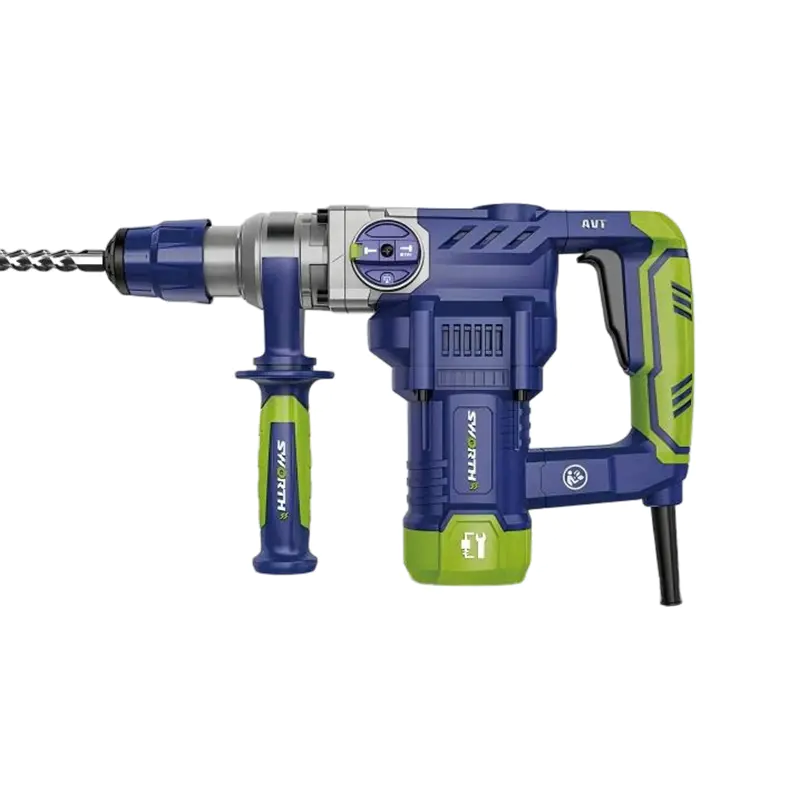
SW932 Groove Sandblasting Hammer
-
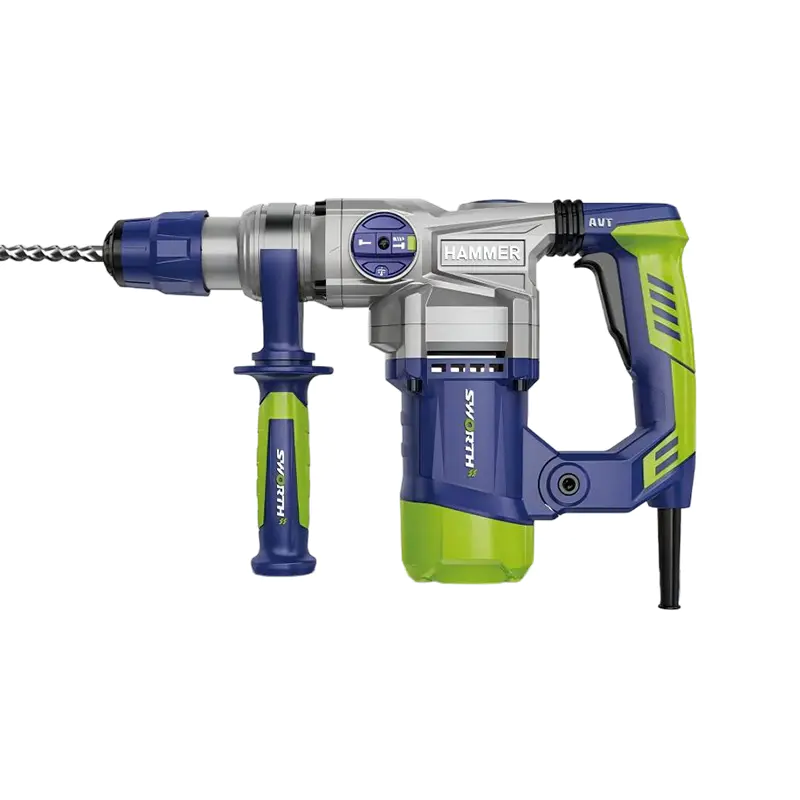
SW9362A Large Hole Rebar Hammer
-
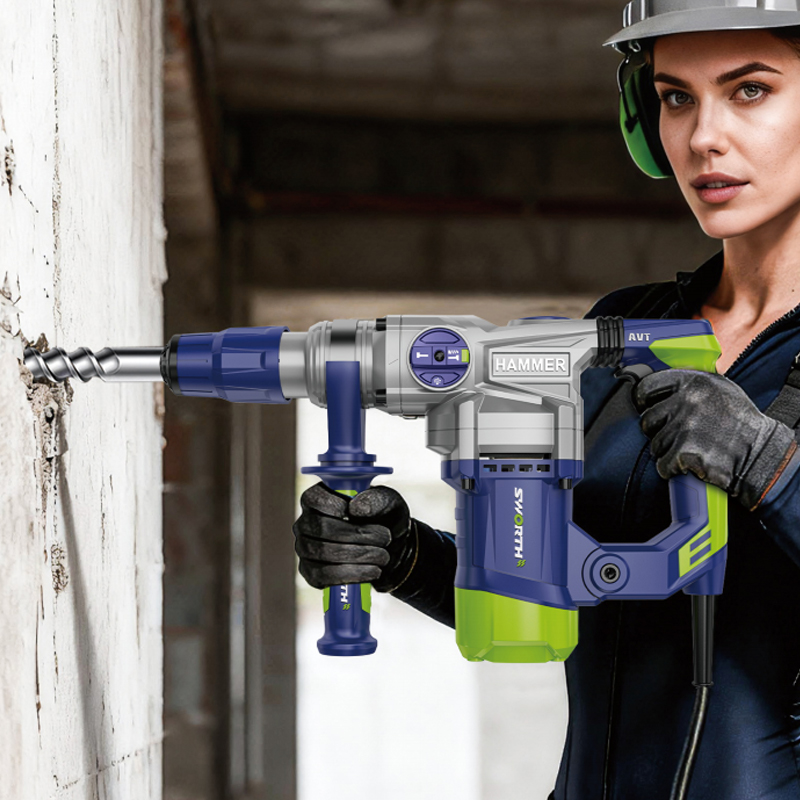
SW940 Enlarged Hole Rebar Hammer
-
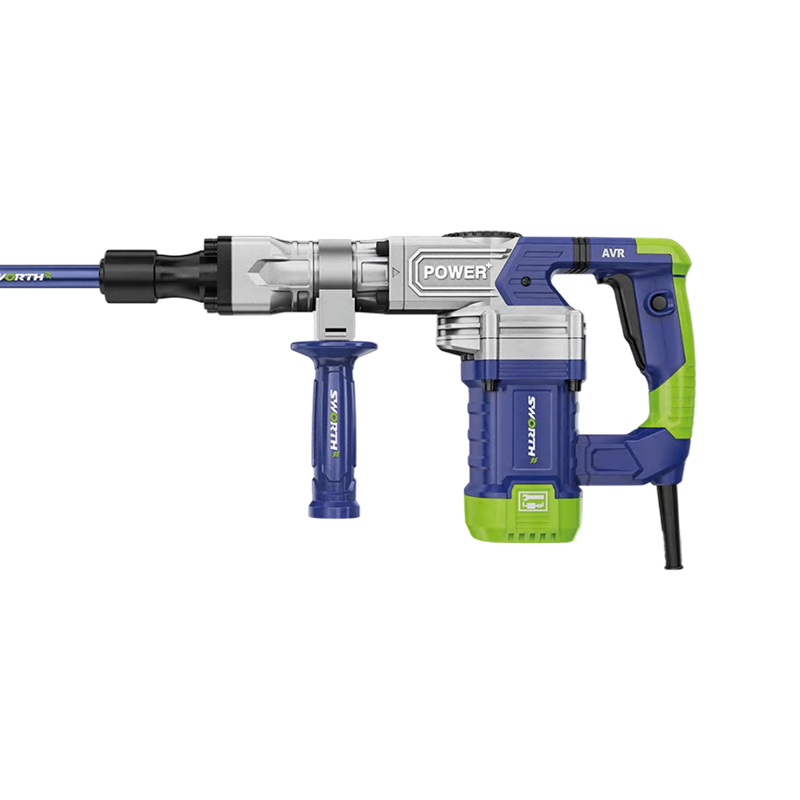
SW35S1 Powerful Demolition Hammer
-
SW35S2 High-Efficiency Heat Dissipation Demolition Hammer
-
SW9371 High-Power Demolition Hammer
-
SW9373 Anti-Scalding Carbon Brush Holder Demolition Hammer
-
SW535 Powerful Anti-Scalding Demolition Hammer
-
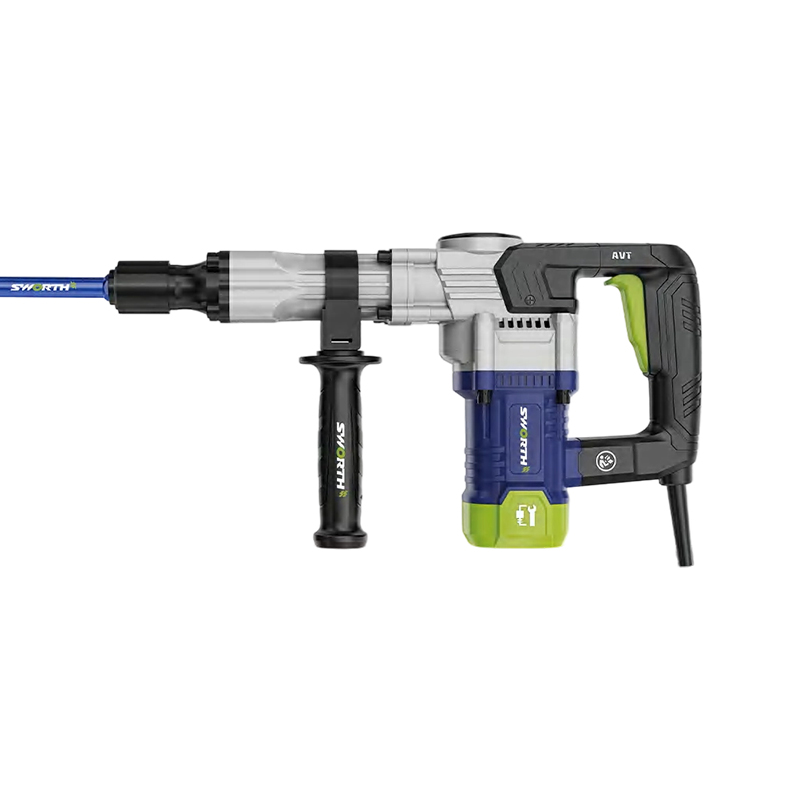
SW535-2 Durable Powerful Demolition Hammer
-
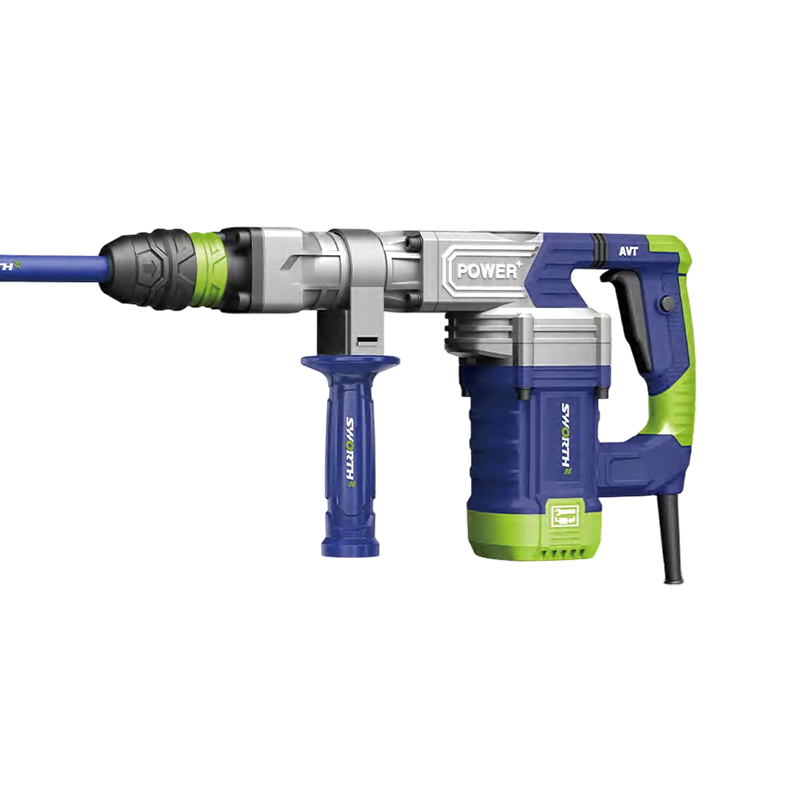
SW35S3 Five-Pipe Drill Bit Demolition Hammer
-

SW11E Five-Pipe Clamping Demolition Hammer
 +86-18314829275
 sale@sworthtools.com
 No. 101, Yugui Road, chengxi Industrial Zone, Yongkang City, Zhejiang Province, China
Copyright© Yongkang Siwei Technology Co., Ltd. All Rights Reserved

Hammer Tools & Cordless Garden Tools Manufacturer
