 English
 русский
 Español

SW5235 Soft Stone and Wood Circular Saw: High-Power Cutting for Professional Construction
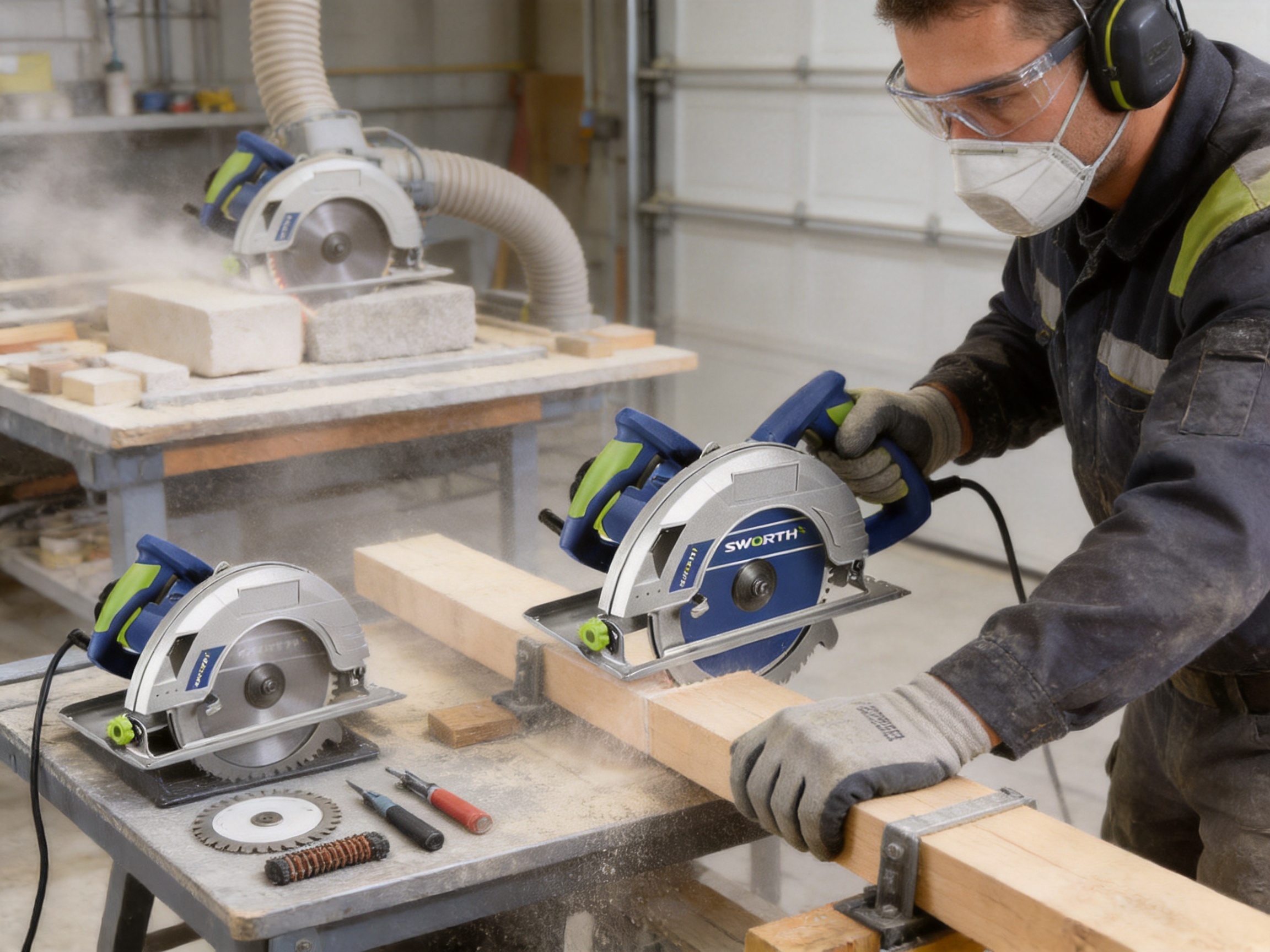
Cutting materials accurately and efficiently is one of the most demanding tasks on a construction site, workshop, renovation project, or installation job. Wood may be soft, fibrous, and prone to splintering, while stone and other mineral-based materials are dense, abrasive, and resistant to ordinary cutting equipment. A professional circular saw must therefore combine substantial motor output, structural durability, practical adjustment, operator comfort, and dependable safety characteristics.
The SW5235 Soft Stone and Wood Circular Saw is designed to address these requirements with a high-power electric motor, a 235 mm saw blade, a reinforced aluminum head shell, improved internal motor dimensions, dual soft-rubber handles, and a structure intended for demanding cutting operations. Its design is particularly suitable for users who need one robust machine for cutting wood, soft stone, and selected ground or construction materials.
Rather than focusing on a single narrow application, this machine is engineered as a versatile cutting platform. It offers the power necessary for high-intensity work while incorporating features that improve handling, service life, and daily productivity. For professional users, contractors, installers, builders, workshop operators, and serious renovators, this combination can reduce the need to maintain several separate cutting tools.
1. A Versatile Circular Saw for Demanding Materials
Many conventional circular saws are optimized primarily for timber. They may perform well on boards, panels, and framing materials, but their motors, housings, cooling arrangements, and internal components are not always intended for dense or abrasive materials. Conversely, specialized stone-cutting machines may be too limited for routine woodwork or less convenient for general construction use.
The SW5235 is positioned between these categories. It is developed for cutting wood and soft stone, while its high-power configuration also supports demanding ground and construction cutting applications when used with a suitable blade. This versatility gives professional users greater flexibility at the jobsite.
The saw uses a 235 mm blade size, providing a practical balance between cutting capacity, maneuverability, and motor load. A blade in this class is large enough for substantial work while remaining manageable for controlled handheld operation. The adjustable cutting-depth mechanism allows the user to adapt the saw to different material thicknesses and cutting requirements.
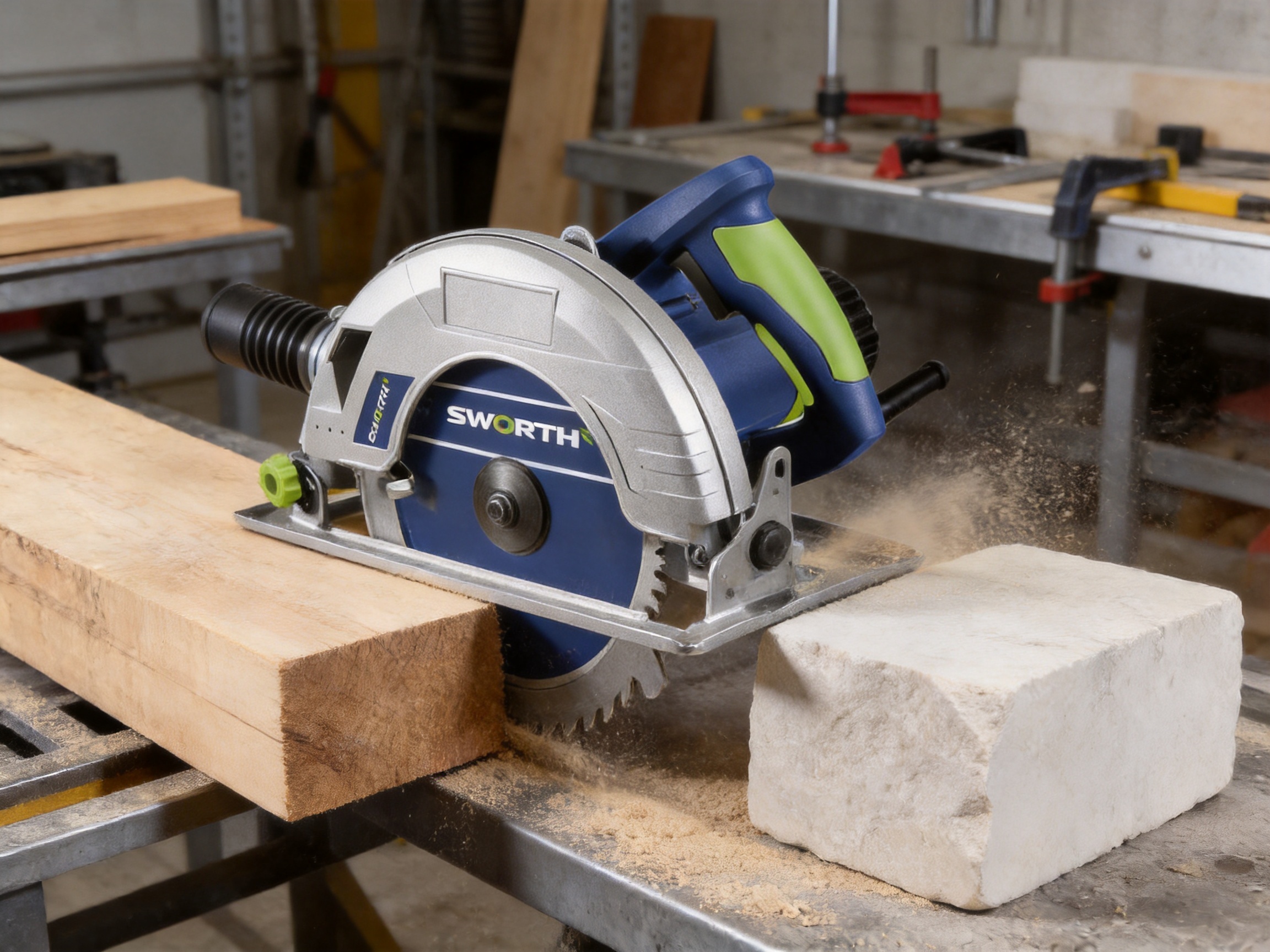
For woodcutting, the machine can support construction, remodeling, carpentry, framing, and general workshop applications. For soft stone and compatible mineral materials, the high-power motor and rigid construction provide the strength needed for more resistant work. The correct blade must always be selected according to the material, and the user should follow all applicable operating instructions.
2. High-Power Performance for Continuous Jobsite Demands
The central strength of the SW5235 is its powerful motor configuration. The product description identifies a 2400 W high-power motor, while the technical information lists a 2500 W power input. This indicates a high-output design intended to maintain cutting performance under demanding loads. Because product specifications can vary by market, production batch, or rating method, buyers should confirm the final nameplate and technical documentation before purchase.
High power is especially important when the cutting operation involves dense material, repeated passes, or extended use. A motor with insufficient reserve capacity may slow significantly when the blade encounters resistance. This can reduce productivity, increase the likelihood of rough cuts, and place additional thermal and mechanical stress on the tool.
With its high-power architecture, the SW5235 is designed to keep the blade moving effectively through demanding work. Strong motor output helps the operator complete cuts with fewer interruptions and reduces the need to force the machine through the material. In practice, smooth progress depends on the selected blade, feed rate, material condition, and correct operating technique, but a powerful motor provides an essential foundation.
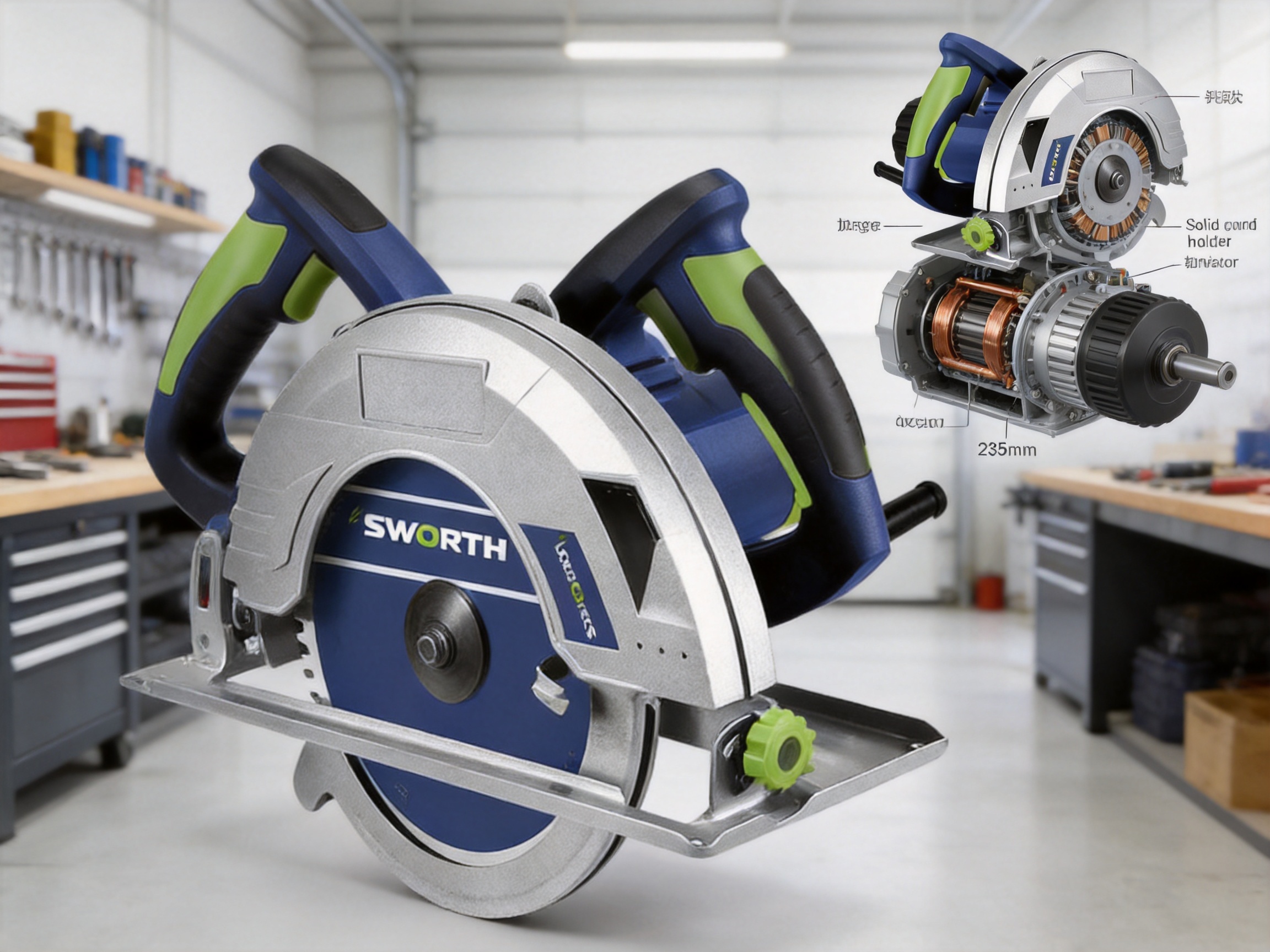
The motor design also includes a larger and taller rotor than those used in many regular motor configurations. The listed rotor diameter is 57 mm with a 55 mm height, while the stator is specified as 95 mm by 55 mm. These dimensions reflect an effort to achieve a stronger electromagnetic assembly and greater working capacity within the motor housing.
A larger rotor and stator arrangement can contribute to torque production and load-handling capability. This is valuable when the blade meets hard spots, knots in wood, dense sections, or resistant mineral material. It also supports the product’s positioning as a professional machine rather than a light-duty household saw.
Power reserve and cutting stability
Cutting quality is influenced not only by peak motor power but also by how consistently the machine delivers power during operation. When a saw maintains better rotational stability under load, the blade is less likely to stall or slow abruptly. This helps the operator maintain a more controlled feed rate and can improve the consistency of the finished cut.
The SW5235’s high-power motor, enlarged rotor, and reinforced internal design work together to provide a useful power reserve. Compared with smaller general-purpose circular saws, this configuration is better suited to professional users who regularly process thicker, denser, or more challenging materials.
3. Reinforced Aluminum Head Shell
The machine features a newly designed aluminum head shell. The head shell protects important internal components and contributes to the overall rigidity of the saw. Aluminum is valued in professional power-tool construction because it can provide a strong structural enclosure without the excessive weight associated with some heavier materials.
A rigid head housing helps maintain the alignment of the motor, drive system, and blade assembly. When the housing flexes excessively under load, the cutting action may become less stable and vibration may increase. A robust aluminum structure helps the tool maintain its geometry during demanding work.
The housing is also designed with a side exhaust arrangement. According to the product information, the exhaust wind is directed from the side to help prevent wood chips from scattering toward the operator during cutting. Managing airflow and debris is an important consideration in practical saw design. The side-exhaust concept can help guide discharged air and cutting residue away from the immediate cutting path.
Debris management benefits both visibility and comfort. When chips are blown directly into the user’s working area, the operator may need to stop frequently to clear the line of sight. A better-directed exhaust flow can help keep the cutting zone more manageable, particularly when working with wood.
The head shell also supports the machine’s long-term durability. Construction environments expose tools to dust, vibration, accidental contact, and repeated transport. A strong outer structure helps protect the motor and drive components from everyday jobsite stresses. Although no power tool is indestructible, a reinforced housing is an important advantage over lightweight tools designed only for occasional use.
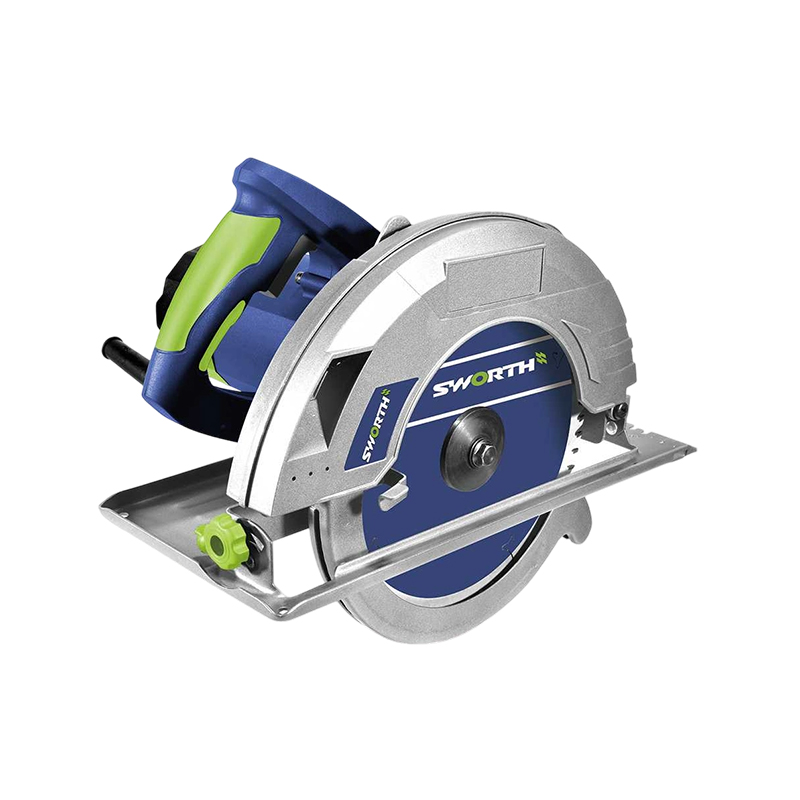
SW5235 Soft Stone and Wood Circular Saw
4. Motor Construction Designed for Extended Service
A professional circular saw must do more than produce a high power figure. Its internal components must be selected and assembled to tolerate repeated operation. The SW5235 includes several design details intended to improve electrical performance, durability, and maintenance intervals.
Solid copper brush holder
The product information identifies a solid copper brush holder. Copper is an effective electrical conductor, and a robust brush-holder structure can help support reliable current transfer between the stationary and rotating portions of the motor system.
A strong brush holder is particularly useful in a high-power tool because the motor may draw substantial current during acceleration and heavy cutting. A weak or poorly supported holder could be more vulnerable to heat, vibration, and mechanical wear. The solid copper design reflects a focus on dependable current-carrying performance.
Enlarged carbon brushes
The carbon brushes are specified as 7 by 18 mm and are described as enlarged for longer service life. Carbon brushes are wear components in brushed motors, and their condition directly affects motor performance. Larger brushes may provide greater contact area and more usable material before replacement becomes necessary.
Longer-lasting brushes can reduce maintenance interruptions for professional users. This is an important practical advantage over compact saws that use smaller brush components and may require more frequent servicing under heavy workloads. Brush condition should still be checked regularly, especially when the machine is used in dusty or high-load environments.
Users should replace worn brushes with compatible components and follow proper maintenance procedures. Regular inspection can help prevent damage to the commutator and reduce the risk of performance loss during important work.
Rotor and stator dimensions
The listed stator dimensions are Ø95 by 55H, and the listed rotor dimensions are Ø57 by 55H. These measurements indicate a substantial motor package intended to support high output. The rotor is described as larger and taller than that of regular motors, reinforcing the product’s emphasis on strong torque and load resistance.
A larger motor does not automatically guarantee superior results, because cutting performance also depends on blade quality, gear design, cooling, assembly precision, and operator technique. However, the motor dimensions demonstrate that this saw is not built around a minimal, low-duty power unit. It is configured for serious construction and cutting work.
5. Ergonomic Dual-Handle Design
Power and durability are only useful if the operator can control the tool safely and comfortably. The SW5235 uses both front and rear handles with soft rubber covering. This design supports a stable two-handed grip and helps reduce discomfort during prolonged operation.
The rear handle provides the primary operating position, while the front handle allows the operator to guide the saw and resist twisting forces. Two-handed control is especially important when cutting dense materials, because the blade can generate greater resistance than it would in light timber.
Soft-touch rubber improves grip comfort and can reduce the effect of vibration and pressure on the hands. It also helps maintain control when gloves are worn or when the user is working in a dusty environment. The non-slip feel is valuable when the operator must maintain a straight cutting path for an extended period.
Ergonomics can have a direct impact on productivity. An uncomfortable saw may encourage frequent breaks, poor posture, or excessive gripping force. These factors can lead to fatigue and reduced accuracy. By combining front and rear rubberized handles with a balanced overall structure, the SW5235 is designed to make demanding cutting more manageable.
Control during long cuts
Long cuts require the user to maintain a consistent feed rate and stable blade alignment. The dual-handle arrangement helps distribute control between both hands instead of placing all guidance responsibility on the rear grip. This can be particularly helpful when cutting wide boards, slabs, panels, or construction materials.
The operator should always stand in a stable position, keep both hands on the designated handles, and avoid reaching across the blade path. Ergonomic features support safe control, but they do not replace correct working practices or protective equipment.
6. Adjustable Cutting Depth for Different Applications
Construction work rarely involves only one material thickness. A contractor may cut thin boards in the morning, thicker timber later in the day, and then move to compatible soft stone or mineral-based work. A circular saw with adjustable cutting depth is better suited to these changing requirements.
The SW5235 allows cutting depth to be adjusted according to the material and application. This flexibility helps the operator set the blade to an appropriate depth rather than exposing more blade than necessary. A properly adjusted depth can support better control, reduce unnecessary resistance, and help limit the amount of material removed during the cut.
When cutting wood, the depth should be selected to suit the board or panel thickness and the desired cutting method. When cutting stone or other mineral materials, the user must consider the blade type, material hardness, dust generation, and the required pass depth. In some applications, several controlled passes may be preferable to forcing the blade through the entire thickness at once.
Depth adjustment also improves versatility for installation and renovation tasks. The same machine can be adapted for different construction components without requiring a separate tool for every thickness. This reduces equipment duplication and can improve transport efficiency for mobile crews.
7. Blade Size and Material Compatibility
The specified saw blade size is 235 mm. This blade diameter offers a useful working range for professional cutting. It is large enough for substantial construction materials but still compatible with a handheld circular-saw format.
Blade selection is one of the most important factors in achieving good results. Wood requires a blade designed for timber, with tooth geometry appropriate to the desired finish and cutting speed. Soft stone and mineral materials require a suitable abrasive or diamond-type blade, depending on the material and manufacturer’s recommendations. A blade intended for one material should not automatically be used on another.
The SW5235 provides the motor capacity and structure for demanding cutting, but it must be operated with blades that match the application. Using an unsuitable blade can cause poor performance, excessive heat, vibration, premature wear, or unsafe operating conditions.
Before installation, the operator should check the blade’s diameter, bore, rated speed, cutting purpose, and condition. The blade must be mounted securely, with the teeth or abrasive direction correctly oriented. Damaged, warped, excessively worn, or contaminated blades should not be used.
Wood applications
For wood, the saw can be used for construction framing, boards, panels, remodeling work, workshop projects, and general carpentry. Its power reserve is useful when working with thick timber or dense wood species. The side exhaust design may also help manage chips during cutting.
Soft stone and construction applications
For soft stone and compatible ground materials, the saw’s high-power motor and robust head shell provide a stronger platform than an ordinary wood-only circular saw. However, mineral cutting can create significant dust and heat. Appropriate dust-control procedures, ventilation, protective equipment, and blade selection are essential.
8. Competitive Advantages Over Ordinary Circular Saws
Professional buyers often compare a high-power multifunction saw with standard wood-cutting models. The SW5235 offers several advantages in this comparison.
| Feature | SW5235 Design | Practical Advantage |
|---|---|---|
| Motor output | High-power configuration with listed 2400 W motor description and 2500 W power input | Greater reserve for demanding cuts and dense materials |
| Blade size | 235 mm | Suitable for substantial construction and workshop cutting |
| Motor dimensions | Ø95 × 55H stator and Ø57 × 55H rotor | Supports a robust electromagnetic assembly and load handling |
| Housing | Newly designed aluminum head shell | Improves structural protection and durability |
| Airflow | Side exhaust arrangement | Helps direct chips away from the immediate cutting area |
| Brush system | Solid copper brush holder and enlarged 7 × 18 mm carbon brushes | Supports current transfer and longer brush service life |
| Handles | Front and rear soft-rubber handles | Improves grip, comfort, and two-handed control |
| Adjustment | Flexible cutting-depth adjustment | Adapts the saw to different thicknesses and tasks |
Compared with lower-powered tools, the SW5235 is better prepared for repeated high-load operation. Compared with a basic wood-only model, it provides broader material capability and a more reinforced structure. Compared with some specialized stone cutters, it offers greater usefulness for general wood and construction work.
Another competitive benefit is the attention given to service-oriented components. The solid copper brush holder and enlarged carbon brushes indicate that the design considers long-term use rather than only initial performance. Professional buyers often calculate the total cost of ownership, including downtime, maintenance, replacement parts, and productivity. A durable motor platform can provide value even when its initial purchase price is higher than that of a light-duty competitor.
9. Manufacturing Strengths and Quality-Oriented Production
The manufacturer is a professional power-tool company integrating research and development, production, and sales. This integrated structure can provide advantages in product coordination, process control, engineering feedback, and customer support.
When design, manufacturing, and sales teams work within a connected organization, information from real-world users can be fed back into product development more efficiently. Observations about motor performance, handle comfort, housing durability, brush wear, and application requirements can guide future improvements.
The company emphasizes professional focus and quality-first production. Its stated manufacturing approach uses advanced processes and high-quality materials to produce tools that can withstand harsh working conditions. For a circular saw intended for construction, this philosophy is relevant because the tool must tolerate repeated vibration, dust, high electrical loads, and physical handling.
Research and development capability
Research and development is important in power-tool manufacturing because performance depends on the relationship between many components. Motor output, housing geometry, heat management, handle placement, blade alignment, and electrical protection must work together. A change to one component can influence the entire machine.
The SW5235’s enlarged rotor and stator, redesigned aluminum head shell, side exhaust arrangement, brush system, and soft-rubber handles demonstrate a product-development approach that addresses both performance and usability. These features are not isolated decorations; they support the intended application as a powerful professional cutting tool.
Material selection and structural engineering
High-quality materials are essential for tools used in demanding environments. The aluminum head shell provides a rigid protective structure, while the copper brush holder supports current transfer. The enlarged carbon brushes are selected to improve wear life, and the rubber handle coverings are designed to improve comfort and grip.
Effective manufacturing also requires accurate machining, consistent assembly, secure fastening, and careful inspection. Blade alignment and housing fit are particularly important in circular saw production. Small deviations can influence vibration, noise, cut quality, and component wear.
Production consistency
Professional customers may purchase tools for a single project, a local workshop, or an international distribution program. Consistency between units is therefore essential. Reliable production should maintain stable motor specifications, repeatable assembly procedures, accurate electrical connections, and dependable accessory compatibility.
An integrated manufacturer is better positioned to coordinate these elements. It can monitor production feedback, adjust processes, and maintain closer control over the relationship between engineering specifications and finished products.
10. Applications Across Professional Work Environments
The SW5235 is suitable for a broad range of professional and semi-professional applications when fitted with the appropriate blade and operated correctly.
Construction and remodeling
Construction crews can use the saw for cutting timber, boards, panels, and compatible masonry or soft stone components. Its high power is useful when a project involves repeated cuts throughout the day. The adjustable depth also helps the operator move between different material thicknesses.
Carpentry and woodworking
Carpenters and workshop users can benefit from the machine’s strong motor and 235 mm blade size when processing thicker wood stock or construction-grade materials. The soft-rubber handles support controlled movement, while the side exhaust may help improve chip management.
Stone and installation work
Installers working with soft stone or compatible construction surfaces may value the saw’s ability to handle more resistant materials than a standard timber-only model. For these tasks, dust management and blade compatibility are especially important. The operator must confirm that the material and blade are appropriate for the machine.
Contractor and rental fleets
A versatile saw can be useful in contractor fleets because it supports multiple job categories. Instead of assigning a separate light-duty wood saw and a different general construction cutter, a high-power multifunction model can cover more applications. Fleet managers should maintain clear inspection procedures and ensure that each user understands blade selection and operating limits.
11. Safety and Responsible Operation
A powerful circular saw must be treated as professional equipment. Users should read the operating instructions, inspect the machine before use, and wear appropriate personal protective equipment. Safety glasses or a face shield can help protect against flying particles. Hearing protection is recommended because high-power cutting equipment can generate significant noise.
When cutting mineral materials, respiratory protection and effective dust control may be necessary. Stone and construction dust can be hazardous, and the specific control method should be selected according to the material, work environment, and applicable regulations.
The workpiece should be supported securely so that it does not shift, pinch the blade, or close around the cut. The operator should keep the cutting line clear, maintain a balanced stance, and avoid forcing the saw. Excessive force can reduce control and place unnecessary stress on the motor and blade.
Before connecting the tool to power, the operator should verify that the switch is in the off position. The blade guard and other protective components should be present and functioning correctly. The saw should not be used if the power cord, plug, housing, handle, guard, or blade assembly shows serious damage.
Because the saw is rated for 220–240 V at 50/60 Hz, the electrical supply must match the equipment requirements. Users should confirm local compatibility and use suitable extension cords where necessary. Cords should be positioned away from the blade path, sharp edges, heat, water, and moving equipment.
Kickback awareness
Kickback can occur when the blade binds, stalls, or becomes pinched. It may cause the saw to move unexpectedly toward the operator. Correct depth adjustment, secure workpiece support, suitable blades, controlled feed pressure, and proper body positioning can help reduce risk.
The operator should never place hands in front of or behind the blade path. The cutting area must remain visible, and the saw should be allowed to reach appropriate operating speed before entering the material. If the blade binds, the trigger should be released and the machine should be held securely until the blade stops.
12. Maintenance for Long-Term Performance
Regular maintenance helps preserve the SW5235’s power and reliability. After use, the machine should be cleaned according to the manufacturer’s instructions. Dust and chips should not be allowed to accumulate around ventilation openings, the blade guard, or the motor housing.
The blade should be inspected for dullness, damage, warping, missing segments, or excessive wear. A dull blade forces the motor to work harder and may produce rough cuts or increased heat. Replacing the blade at the appropriate time can improve both performance and safety.
Carbon brushes should be checked periodically, especially when the saw is used heavily. Signs of worn brushes may include intermittent operation, reduced power, unusual sparking, or difficulty starting. Replacement should be carried out using suitable components and appropriate service procedures.
The power cord and plug should be inspected for cuts, exposed conductors, loose connections, or heat damage. The aluminum head shell, handles, adjustment mechanisms, and fasteners should also be checked for cracks, looseness, or deformation.
Storage should take place in a dry, clean location away from excessive heat, moisture, and corrosive substances. The blade should be protected from impact, and the cord should not be tightly wrapped in a way that damages the conductors.
13. Purchasing Considerations for Distributors and Professional Buyers
Distributors and project buyers should evaluate more than the headline wattage. Important factors include motor construction, blade availability, service support, replacement brush access, housing durability, handle comfort, and intended material range.
The SW5235 offers a compelling combination for buyers who want a high-power circular saw with broader capability than a conventional wood-only product. Its 235 mm blade size and adjustable depth support different work requirements, while the aluminum housing and reinforced motor details are suited to professional use.
Before placing a large order, buyers should confirm final product specifications, packaging, included accessories, plug configuration, blade compatibility, warranty provisions, and regional electrical requirements. Since the provided product information lists both a 2400 W motor description and a 2500 W power input, the exact rating should be confirmed on the production nameplate and commercial documentation.
For international distribution, packaging should protect the aluminum head shell, handles, blade area, and adjustment components during transport. Clear user documentation is also valuable, particularly when the product may be used for both wood and mineral materials.
14. Why the Design Offers Strong Value
The value of a professional saw is determined by its ability to complete work reliably over time. A low-cost tool that struggles under load, overheats, requires frequent brush replacement, or becomes uncomfortable during long use may create greater costs through downtime and reduced productivity.
The SW5235 addresses value through several connected design decisions. Its high-power motor supplies cutting capacity. The enlarged rotor and stator support load handling. The aluminum head shell protects the internal assembly. The side exhaust helps manage cutting debris. The solid copper brush holder and enlarged carbon brushes support motor durability. The dual soft-rubber handles improve operator comfort, and the adjustable cutting depth expands application flexibility.
These features make the saw suitable for users who expect more from a handheld cutting machine than occasional light-duty performance. It is designed to function as a dependable part of a professional tool collection, supporting construction, remodeling, carpentry, and compatible stone-cutting work.
15. Frequently Asked Questions
What materials can the SW5235 cut?
The saw is designed for wood and soft stone, and its high-power configuration supports selected ground and construction materials when the correct blade is used. The blade must always be matched to the material, and the user should follow the applicable operating instructions.
What is the rated voltage?
The listed rated voltage is 220–240 V at 50/60 Hz. Users should verify local electrical compatibility and confirm the final rating on the product nameplate before operation.
Is the saw rated at 2400 W or 2500 W?
The product description refers to a 2400 W high-power motor, while the technical information lists a 2500 W power input. Because rating methods and market specifications may differ, buyers should confirm the final commercial specification and nameplate rating with the supplier.
What blade size does the saw use?
The specified saw blade size is 235 mm. The bore size, maximum permitted speed, and blade type should be confirmed before installation.
Can the cutting depth be adjusted?
Yes. The machine includes an adjustable cutting-depth mechanism so users can adapt the saw to different material thicknesses and cutting requirements.
Why is the aluminum head shell important?
The aluminum head shell provides a rigid protective structure for internal components. It can help support alignment, durability, and resistance to the physical demands of construction environments.
What is the advantage of the side exhaust design?
The side exhaust arrangement is designed to direct airflow away from the immediate cutting area and help prevent wood chips from scattering toward the operator. It may also help keep the cutting line more visible during woodwork.
Are the handles suitable for extended operation?
The front and rear handles are covered with soft rubber to provide a more comfortable, non-slip grip. This design supports two-handed control and may help reduce hand fatigue during prolonged work.
How do the larger carbon brushes improve the saw?
The listed 7 × 18 mm carbon brushes are enlarged to provide longer usable life compared with smaller brush designs. They remain wear components and should be inspected and replaced when necessary.
Is the saw suitable for professional contractors?
Yes. Its high-power motor, 235 mm blade, reinforced aluminum head shell, durable motor components, dual handles, and adjustable cutting depth make it suitable for professional construction, remodeling, woodworking, and compatible mineral cutting applications.
What safety equipment should be used?
Users should generally consider eye protection, hearing protection, appropriate gloves, suitable footwear, and respiratory protection where dust is generated. The precise requirements depend on the material and work environment.
Can any circular-saw blade be installed?
No. The blade must match the machine’s diameter, bore, rated speed, rotation direction, and intended material. A blade designed for wood should not be assumed suitable for stone, and damaged or unsuitable blades must not be used.
How can the motor be maintained?
Keep ventilation areas clean, inspect the power cord, monitor brush wear, remove dust and chips according to the instructions, and use only compatible replacement parts. Heavy users should establish a regular inspection schedule.
Does the product support international distribution?
The 220–240 V, 50/60 Hz rating is compatible with many markets, but distributors must verify regional electrical standards, plug requirements, certifications, packaging, documentation, and final product specifications before sale.
16. Conclusion
The SW5235 Soft Stone and Wood Circular Saw is designed for users who need more than a basic timber-cutting machine. Its high-power motor, large rotor and stator configuration, 235 mm blade, adjustable cutting depth, reinforced aluminum head shell, side exhaust arrangement, solid copper brush holder, enlarged carbon brushes, and soft-rubber dual handles form a comprehensive professional cutting solution.
Its main competitive advantage is versatility supported by substantial construction. The saw is capable of handling demanding woodwork while also offering the power and structural strength required for soft stone and compatible construction materials. This broader operating range can help contractors and workshops reduce equipment duplication and improve jobsite productivity.
The manufacturing approach further strengthens the product’s position. An integrated professional manufacturer with research and development, production, and sales capabilities can coordinate engineering, material selection, assembly, inspection, and customer feedback. The result is a tool designed around practical professional requirements rather than a single performance specification.
For construction professionals, carpenters, installers, remodeling teams, distributors, and demanding workshop users, the SW5235 represents a strong combination of power, durability, comfort, and application flexibility. When paired with the correct blade, proper maintenance, and responsible operating procedures, it can serve as a dependable cutting platform for a wide variety of demanding tasks.
References
1. Product specification sheet for the SW5235 Soft Stone and Wood Circular Saw.
2. Manufacturer-provided technical information covering rated voltage, power input, blade size, motor dimensions, brush system, housing design, and handle construction.
3. General professional power-tool maintenance principles for brushed electric motors.
4. General circular-saw operating and workplace safety practices.
5. General guidance on selecting cutting blades for wood, soft stone, and construction materials.
6. General principles of dust control, personal protective equipment, and material-specific cutting procedures.
Product: SW5235 Soft Stone and Wood Circular Saw

Recommended Products
-


SW528 Small Hole Rebar Hammer
-
SW932 Groove Sandblasting Hammer
-
SW9362A Large Hole Rebar Hammer
-
SW940 Enlarged Hole Rebar Hammer
-
SW35S1 Powerful Demolition Hammer
-
SW35S2 High-Efficiency Heat Dissipation Demolition Hammer
-
SW9371 High-Power Demolition Hammer
-
SW9373 Anti-Scalding Carbon Brush Holder Demolition Hammer
-
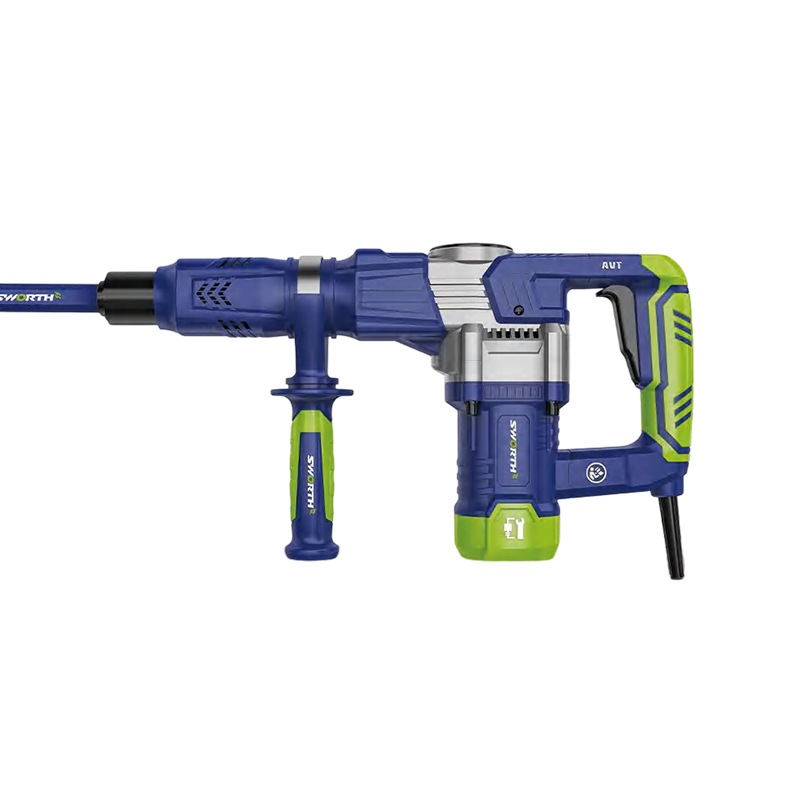
SW535 Powerful Anti-Scalding Demolition Hammer
-
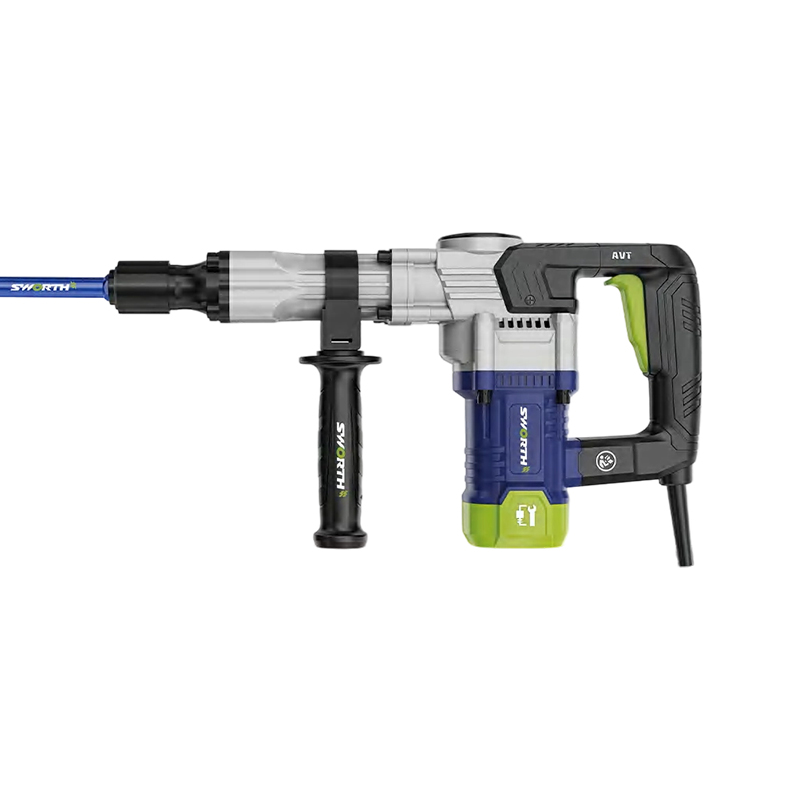
SW535-2 Durable Powerful Demolition Hammer
-
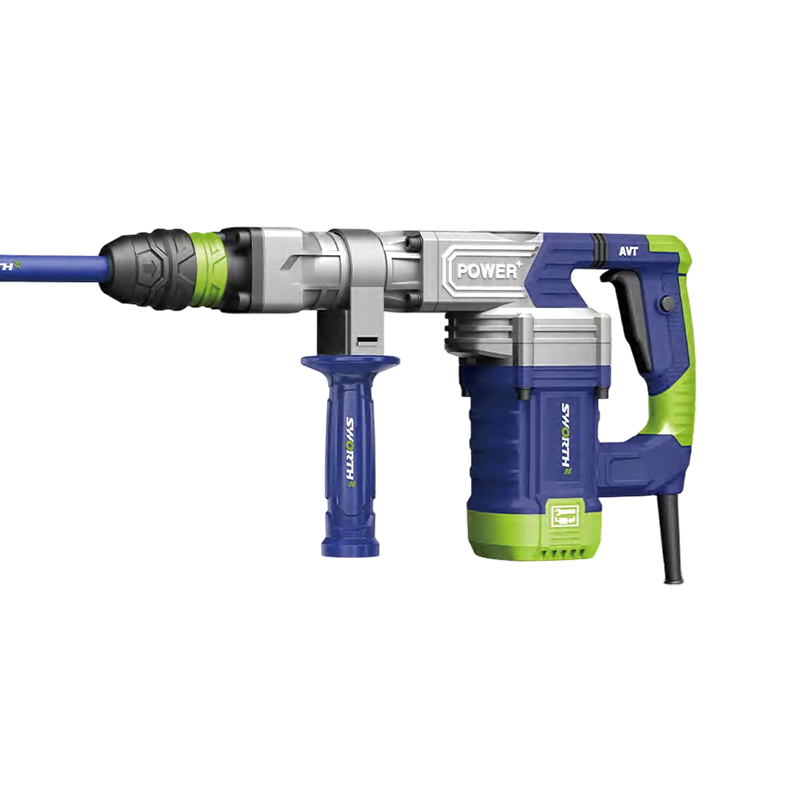
SW35S3 Five-Pipe Drill Bit Demolition Hammer
-

SW11E Five-Pipe Clamping Demolition Hammer
 +86-18314829275
 sale@sworthtools.com
 No. 101, Yugui Road, chengxi Industrial Zone, Yongkang City, Zhejiang Province, China
Copyright© Yongkang Siwei Technology Co., Ltd. All Rights Reserved

Hammer Tools & Cordless Garden Tools Manufacturer
