 English
 русский
 Español
Strong Break Hammer Factory: The Force That Needs Control
Break hammers are judged by what they destroy. Concrete. Rock. Asphalt. But the difference between a tool that breaks material efficiently and one that breaks the operator as well comes down to how the impact is generated, how the vibration is managed, and how long the tool can run before it needs to cool. A strong break hammer factory that balances these three things builds a hammer that lasts the shift.
The Numbers That Matter
Impact energy is measured in joules. It tells you how hard each strike hits. Blow rate is strikes per minute. A high joule number with a slow blow rate removes large chunks of thick concrete. A lower joule number with a faster rate works better for scaling and surface work. A strong break hammer factory publishes both numbers. A factory that prints only joules is hiding a slow hammer behind a big figure.
The drive mechanism sets the feel. Electro-pneumatic hammers use a motor and crank to compress an air cushion behind a striker piston. The piston hits the back of the chisel. The air cushion acts as a spring. Stroke length, piston mass, and drive pressure must be tuned together so the impact energy matches the blow rate without overheating.
Here is what matters in the impact system:
- Piston stroke and mass matched to drive pressure for consistent energy per blow
- Blow rate tuned to the impact energy—high joules with slow blows, lower joules with fast blows
- Air cushion sealed properly so the striker fires cleanly without pressure bleed
Where the Vibration Goes
Break hammers shake from the chisel tip to the handle. The operator absorbs that energy through the hands and arms. Over hours, fatigue. Over years, injury. A strong break hammer factory addresses vibration inside the tool before it reaches the grip.
Active vibration control uses a counterweight that oscillates opposite the piston. The opposing forces cancel inside the housing. What reaches the outer shell is already reduced. Rubber buffers between the housing and the main handle isolate the grip further. An adjustable side handle with dampening lets the operator find a stance that reduces the vibration passed through. A fixed handle forces a single grip and transmits every shock.
Duty Cycle and the Heat Problem
A breaker that delivers 50 joules looks powerful. If it can only run ten minutes before needing a cool-down, the real output over a day is low. The motor windings heat up. The hammer mechanism adds friction heat. Grease thins. Seals soften. A strong break hammer factory that rates the tool for continuous duty has designed a cooling system that keeps up—airflow paths through the motor housing, fins on the cylinder, vents positioned to pull clean air. An intermittent-duty tool is fine for occasional work. It is not fine for a demolition crew running hammers from morning to afternoon. The factory should state the duty cycle as a number, not a phrase like "heavy duty."
The Parts That Wear First
The tool retainer holds the chisel. Every impact tries to drive the chisel deeper while the material pushes back. A stamped steel retainer with a friction fit wears loose. The chisel wobbles. The wobble hammers the housing until it cracks. A forged steel retainer with a positive lock holds its shape.
The striker face takes millions of impacts. Unhardened steel mushrooms. The diameter grows. The striker binds in the cylinder. A strong break hammer factory induction-hardens the striker face and piston bore, then grinds them to final dimension. The hardness depth matters. Too shallow and it wears through. Too deep and the core cracks under impact.
The power cord on electric models drags across rubble. A thick, flexible jacket with reinforced strain relief at the housing entry survives. A thin, stiff cord cracks and shorts. The internal grease breaks down with heat. A factory that specs high-temperature grease and includes an accessible grease port expects the tool to be serviced.
A strong break hammer factory that balances impact energy with vibration control, states the real duty cycle, and hardens the wear surfaces builds a hammer that breaks concrete shift after shift. One that chases a peak joule number and neglects the rest builds a hammer that shakes itself apart and exhausts the operator. The difference is in the counterbalance, the heat treatment, and the handle mounts. Things the operator feels by mid-morning and measures in what is still standing at the end of the day.
Recommended Products
-
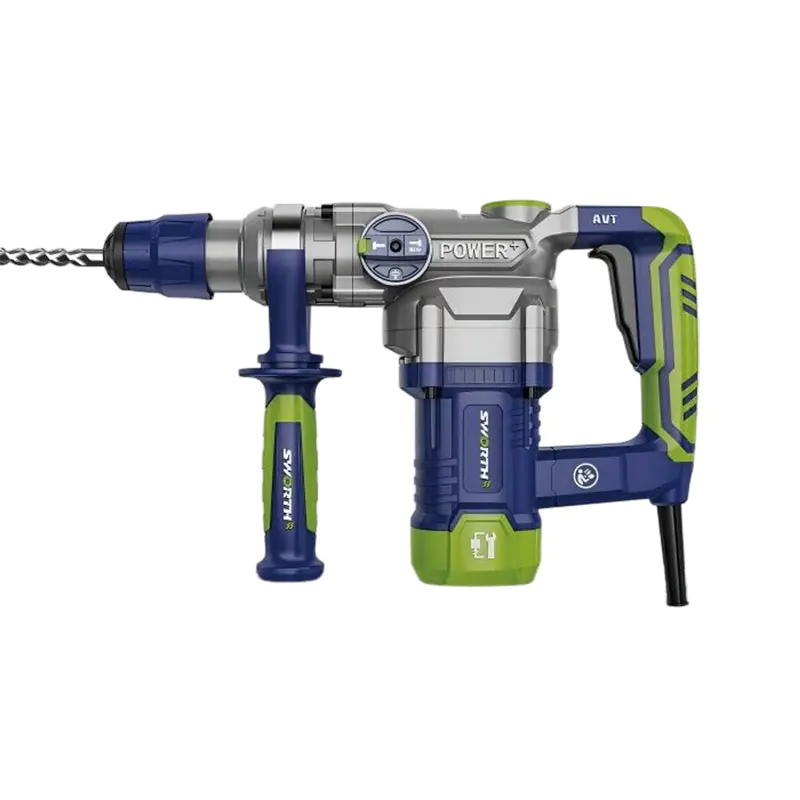


SW528 Small Hole Rebar Hammer
-
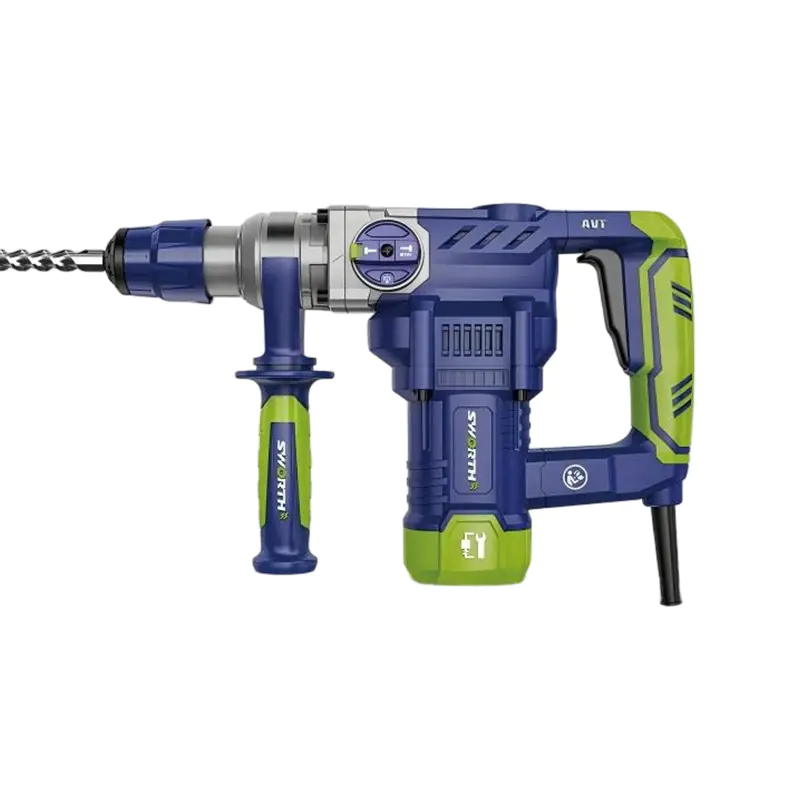
SW932 Groove Sandblasting Hammer
-
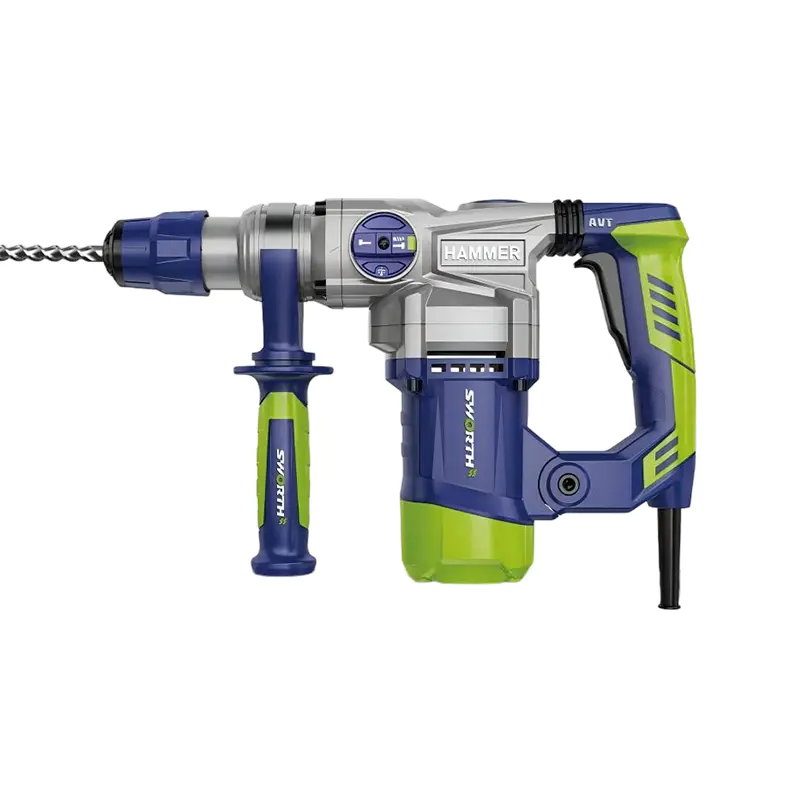
SW9362A Large Hole Rebar Hammer
-
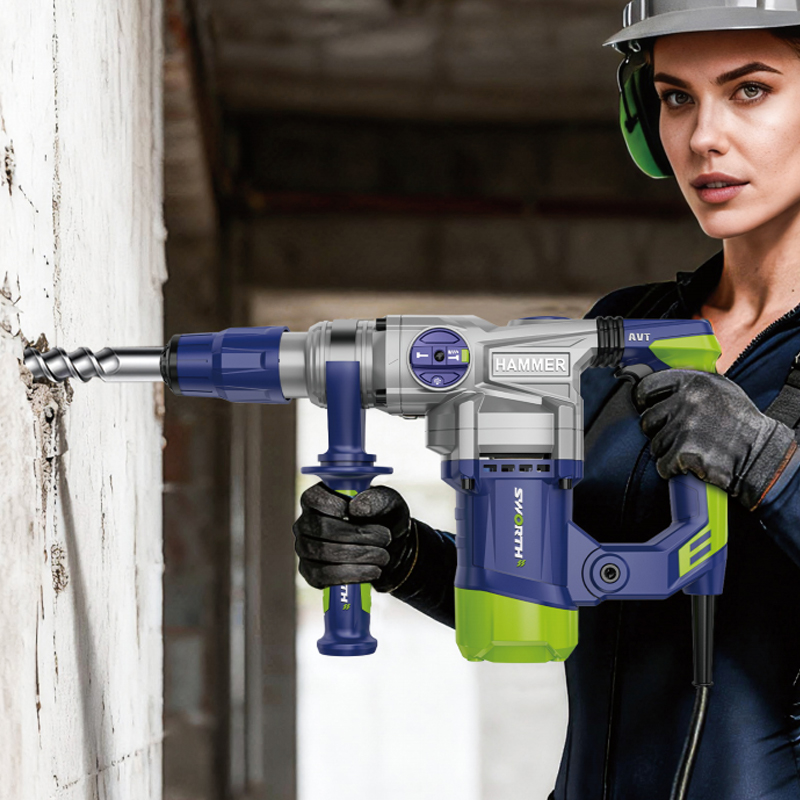
SW940 Enlarged Hole Rebar Hammer
-
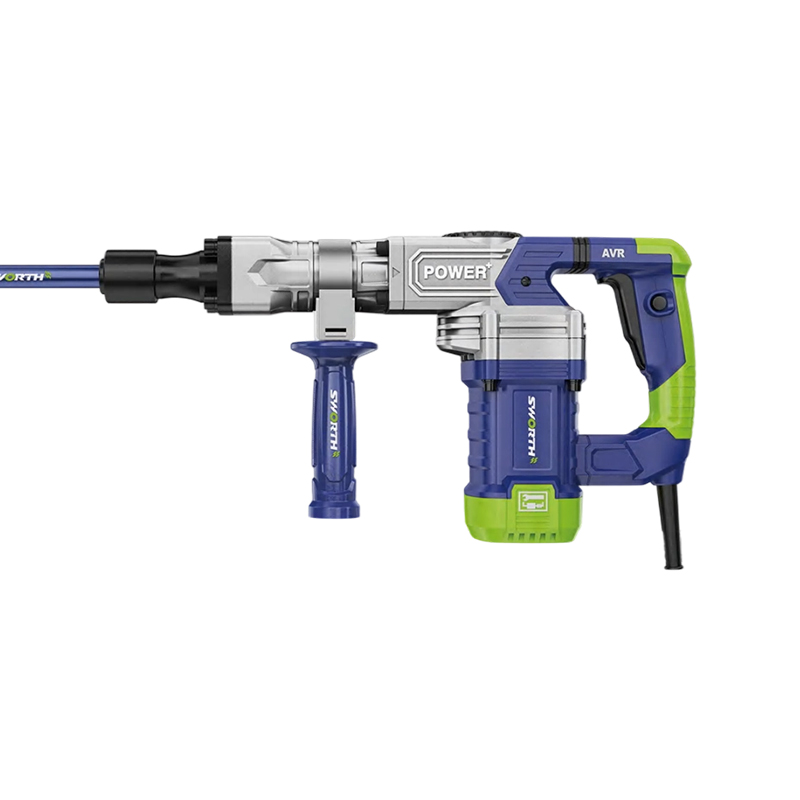
SW35S1 Powerful Demolition Hammer
-
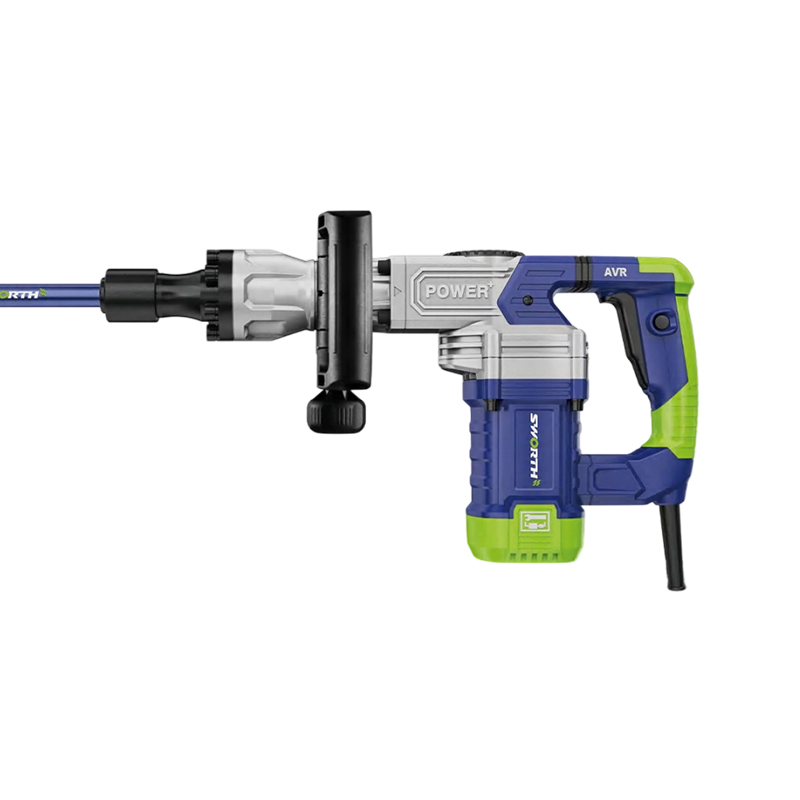
SW35S2 High-Efficiency Heat Dissipation Demolition Hammer
-
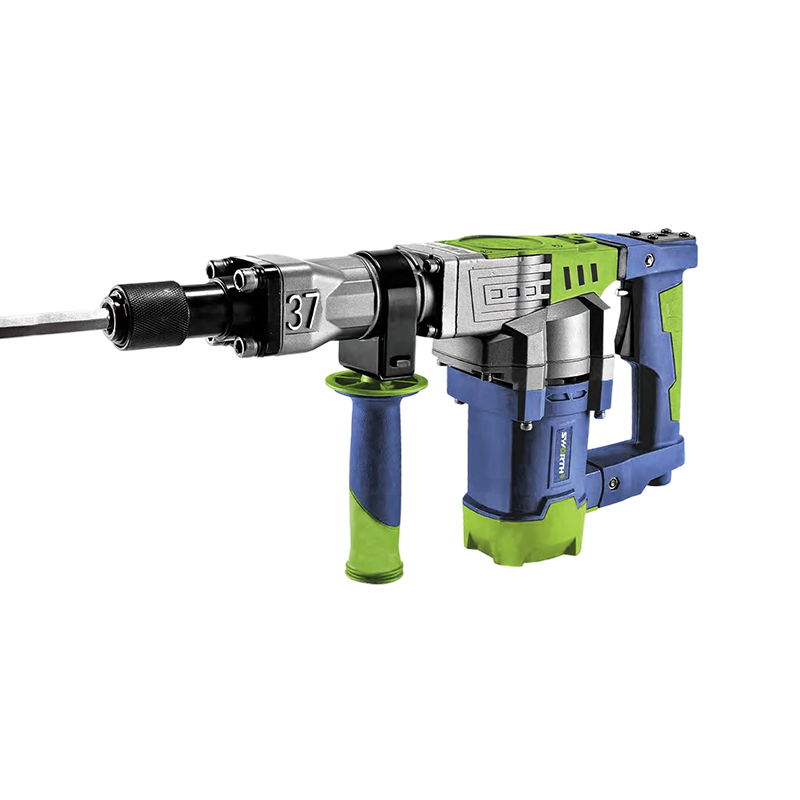
SW9371 High-Power Demolition Hammer
-
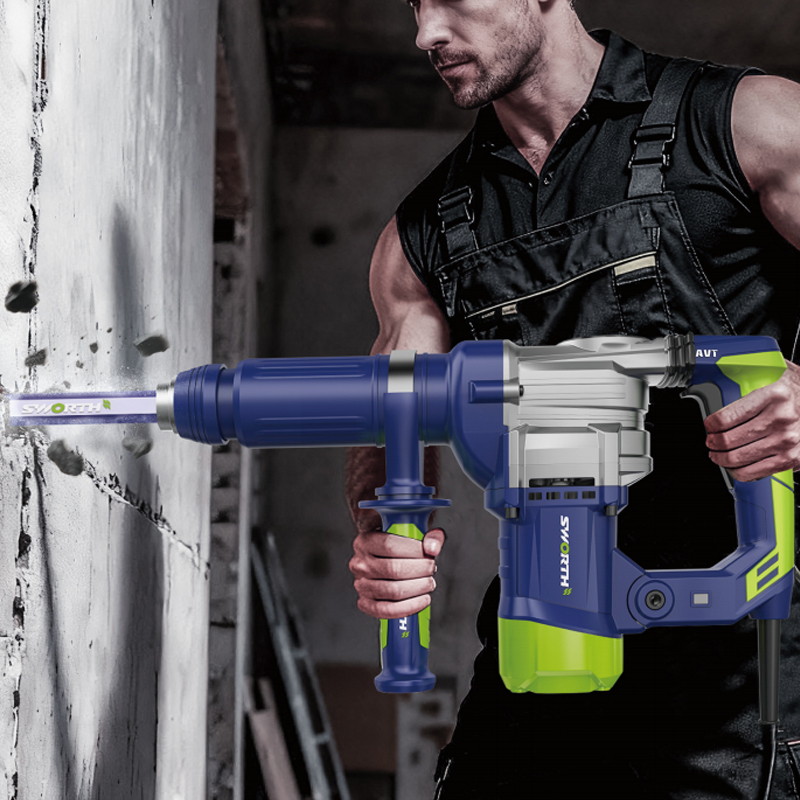
SW9373 Anti-Scalding Carbon Brush Holder Demolition Hammer
-
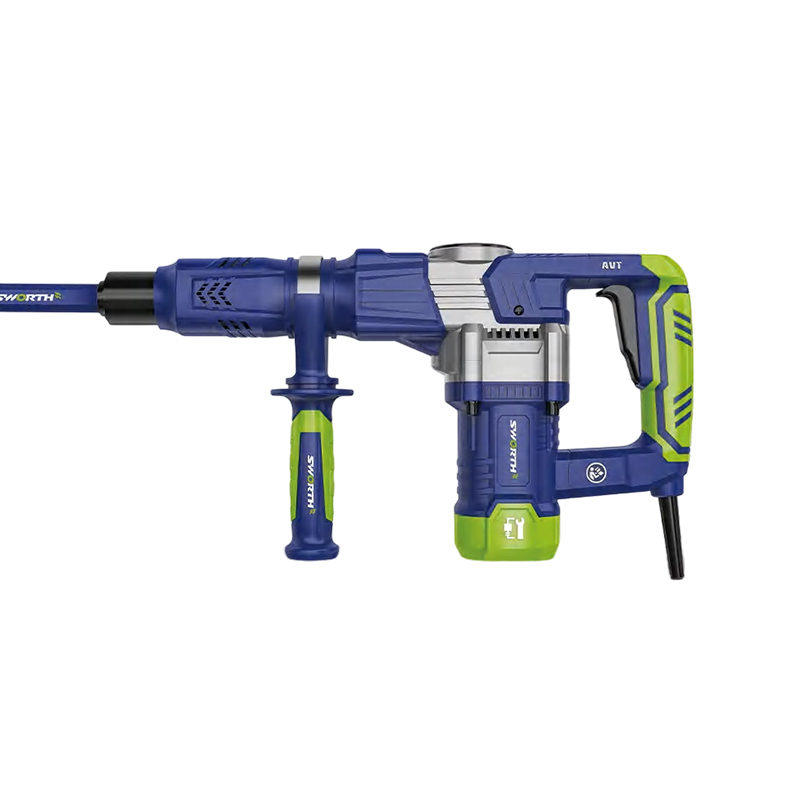
SW535 Powerful Anti-Scalding Demolition Hammer
-
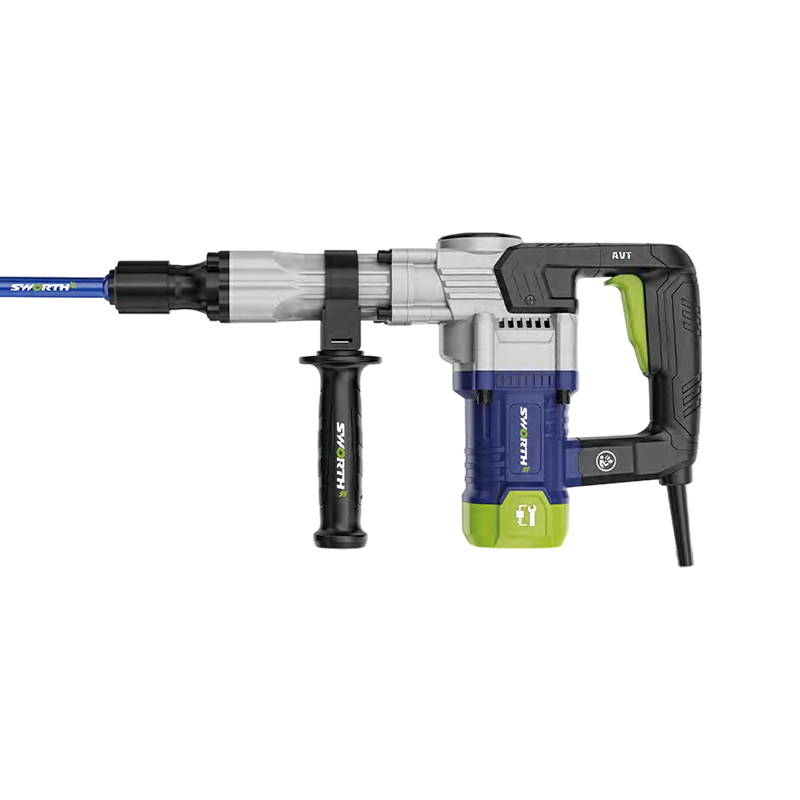
SW535-2 Durable Powerful Demolition Hammer
-
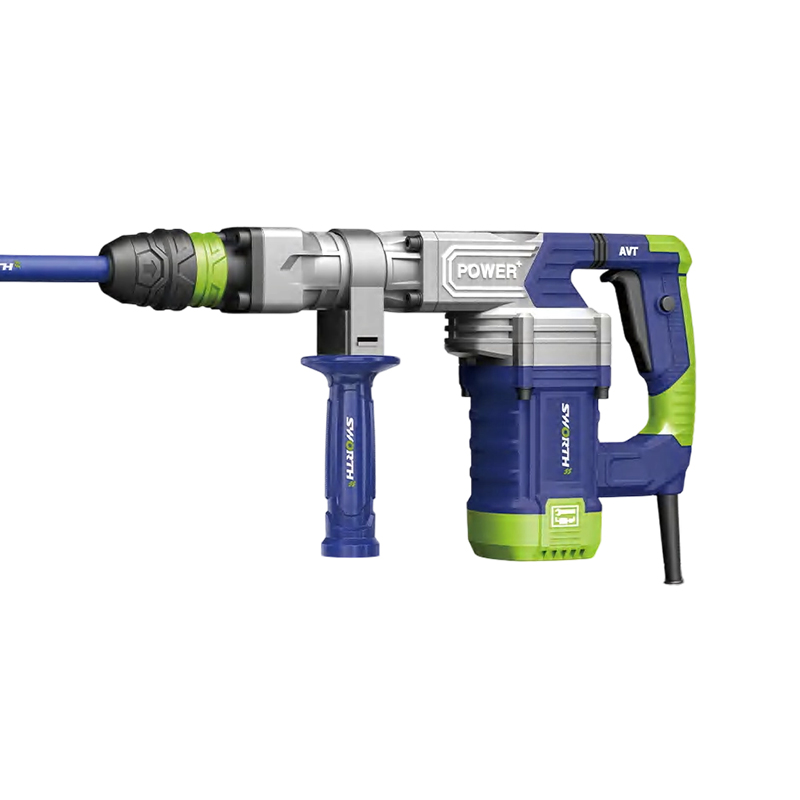
SW35S3 Five-Pipe Drill Bit Demolition Hammer
-

SW11E Five-Pipe Clamping Demolition Hammer
 +86-18314829275
 sale@sworthtools.com
 No. 101, Yugui Road, chengxi Industrial Zone, Yongkang City, Zhejiang Province, China
Copyright© Yongkang Siwei Technology Co., Ltd. All Rights Reserved

Hammer Tools & Cordless Garden Tools Manufacturer
