 English
 русский
 Español

SW9135-2 Hex 35CrMo Lock Rod Demolition Hammer: Built for High-Output Breaking
Professional demolition work demands more than a powerful motor. A demolition hammer must transfer impact energy efficiently, keep the bit securely engaged, resist heat and mechanical fatigue, and remain comfortable enough for operators to use throughout demanding shifts. The SW9135-2 Hex 35CrMo Lock Rod Demolition Hammer is designed around these requirements, combining a 1,750W electric drive system, a rated impact energy of 65J, a reinforced impact structure, and a lock rod engineered for extended service life.
Its most distinctive feature is the 35CrMo carburized lock rod. According to the supplied product specification, this component provides a working life increase of approximately 30% compared with the previous design. The lock rod is critical because it keeps the hex bit properly engaged during repeated high-force impacts. When this part wears prematurely, operators may experience bit movement, reduced energy transfer, interruptions for adjustment, or unnecessary component replacement. By strengthening this high-load connection, the SW9135-2 is intended to support more consistent demolition productivity.
The tool is also built around a 20CrMnTi alloy-steel cylinder, an extended iron head with a built-in impact hammer, an integral forged iron head, and dual anti-vibration handles. These features work together to address the primary challenges of heavy breaking: impact transmission, structural durability, operator fatigue, and maintenance-related downtime.
For construction contractors, infrastructure crews, quarry workers, and professional demolition teams, the value of a heavy-duty hammer is measured by productive output over time. A tool that delivers strong blows but requires frequent repairs can become an operational liability. The SW9135-2 approaches the problem differently by reinforcing wear-critical parts and improving the relationship between power, durability, and handling comfort.

SW9135-2 Hex 35CrMo Lock Rod Demolition Hammer
Product Positioning for Heavy Demolition
The SW9135-2 is a corded electric demolition hammer intended for demanding breaking applications. It is not positioned as a light-duty renovation tool or a compact drilling machine. Its design priorities are high impact energy, long-duration operation, and reliable bit retention in severe working conditions.
With a rated power input of 1,750W and an impact energy rating of 65J, the hammer is designed to deliver substantial force to concrete, masonry, stone, and other hard materials. The extended iron head and integrated impact hammer help place the impact mechanism closer to the working axis of the bit. This arrangement is intended to reduce unnecessary energy loss and deliver force directly to the attachment.
The hex bit interface is particularly suitable for heavy chiseling and breaking tasks. Hex shanks are widely used in high-impact demolition equipment because they provide a robust mechanical connection and can withstand repeated axial blows. However, the interface depends heavily on the condition and quality of the locking components. The SW9135-2 addresses this point with a 35CrMo lock rod treated through a carburizing process.
In practical use, the tool is suitable for breaking concrete slabs, removing foundations, opening bridge decks, reducing masonry structures, preparing quarry faces, and carrying out other high-force demolition operations. The product description specifically emphasizes work where bit slippage, lock rod failure, and repeated downtime can reduce productivity.
Core Technical Specifications
The specifications below summarize the principal electrical and mechanical data supplied for the SW9135-2.
| Item | Specification |
|---|---|
| Product type | Electric demolition hammer |
| Model | SW9135-2 |
| Bit connection | Hex |
| Rated voltage | 220–240V~, 50/60Hz |
| Power input | 1,750W |
| Impact frequency | 1,950 rpm, as specified |
| Impact energy | 65J |
| Stator diameter | Ø94 × 45H |
| Rotor diameter | Ø53 × 45H |
| Lock rod material | 35CrMo alloy steel with carburizing treatment |
| Cylinder material | 20CrMnTi alloy steel |
| Carbon brush size | 7 × 17 × 24mm |
Electrical compatibility should always be confirmed before operation. The stated voltage range is 220–240V at 50/60Hz, so users should verify that the local power supply, extension cable, plug, and protective devices are suitable for the rated input. Heavy demolition tools draw significant current, and an appropriately sized power supply is essential for stable performance and safe operation.
The impact energy rating indicates the force delivered by each impact cycle under the manufacturer’s testing conditions. Actual productivity depends on material hardness, bit condition, operator technique, supply voltage, working angle, and the type of work being performed. Nevertheless, the 65J rating places the SW9135-2 in a heavy-duty category designed for demanding breaking rather than minor surface work.
35CrMo Carburized Lock Rod Technology
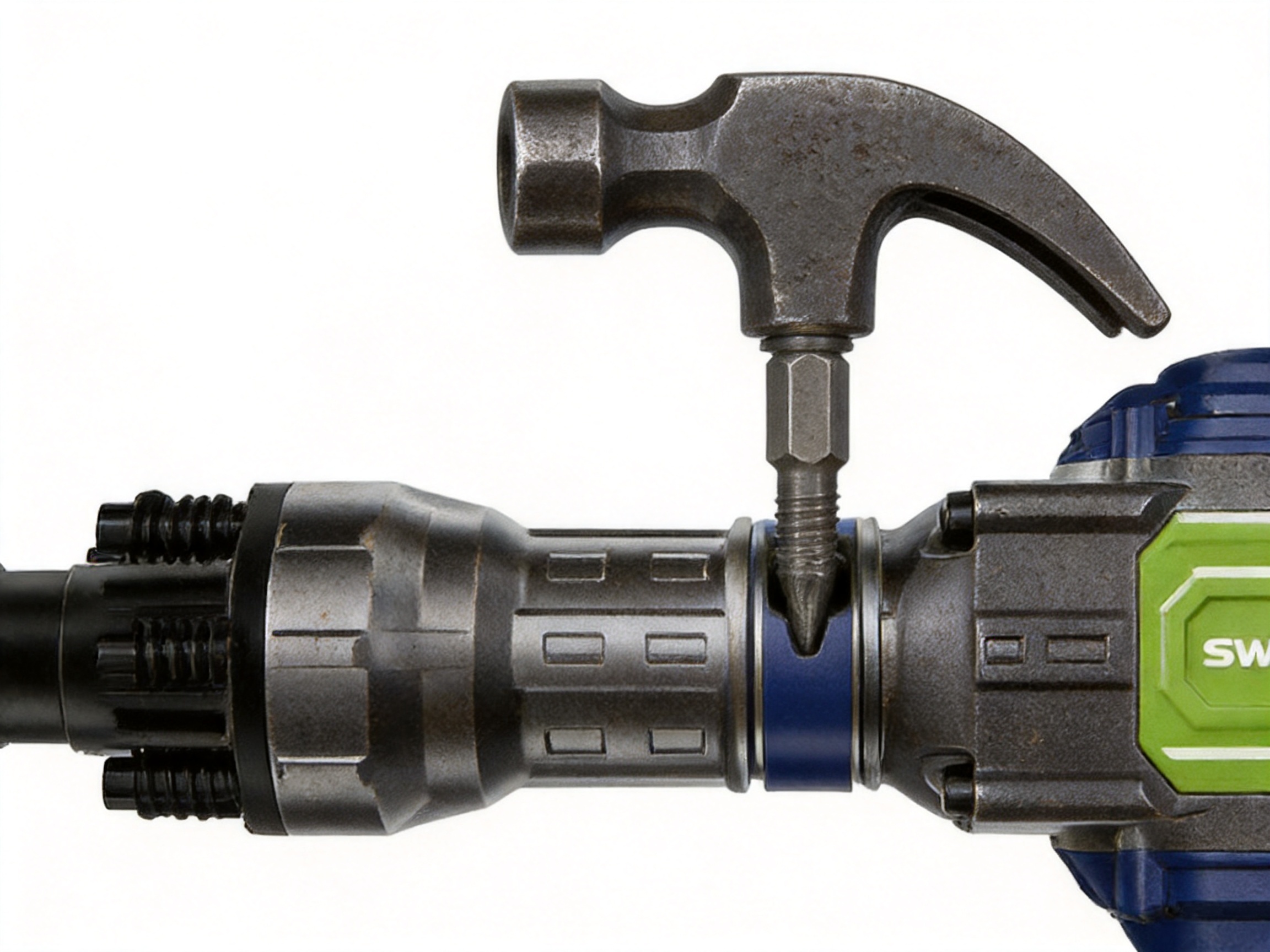
The lock rod is one of the most important wear components in a heavy demolition hammer. It operates in a high-load environment in which the bit is subjected to repeated shock, vibration, friction, and movement. If the rod becomes worn, deformed, or damaged, the bit may not remain securely seated. This can reduce impact efficiency and increase stress on adjacent components.
The SW9135-2 uses 35CrMo alloy steel for the lock rod. This material is selected for its combination of strength, toughness, and suitability for demanding mechanical applications. The additional carburizing process is designed to increase surface hardness while retaining a tougher internal structure. In principle, this creates a component with improved resistance to surface wear and repeated contact stress.
The supplied product information states that the carburized 35CrMo lock rod provides a 30% increase in working life. This improvement is significant in environments where the lock rod is a common source of maintenance downtime. Extending the service interval can reduce interruptions, lower replacement frequency, and help teams maintain a more predictable production schedule.
A durable lock rod also supports better energy transfer. When the bit is held firmly, more of the hammer’s impact force can travel into the working material. By contrast, excessive movement at the bit connection can dissipate energy through vibration, create noise, and accelerate wear. Secure engagement is therefore not only a maintenance advantage but also a productivity advantage.
Compared with a standard untreated locking component, a carburized alloy-steel rod is intended to offer better resistance to repeated mechanical loading. The benefit is especially relevant to continuous breaking on reinforced concrete, bridge decks, foundations, and quarry faces, where the hammer may operate for extended periods under intense load.
Why Bit Retention Matters
Bit retention affects several aspects of demolition performance. First, the bit must stay aligned with the impact axis. Second, it must remain sufficiently secure to prevent slippage during recoil and forward impact. Third, the locking system must tolerate repeated disassembly and reassembly without rapidly losing its functional accuracy.
When a lock rod wears too quickly, operators may need to stop work to inspect the bit, tighten the assembly, replace the rod, or correct abnormal movement. Each interruption affects labor utilization and equipment productivity. In large-scale demolition, these small delays can accumulate into substantial lost time.
The SW9135-2 is designed to reduce this type of interruption through the reinforced lock rod. It does not eliminate the need for inspection or correct maintenance. Instead, it gives the locking assembly a stronger foundation for reliable operation under the high loads associated with a 65J demolition hammer.
Extended Iron Head and Direct Impact Transmission
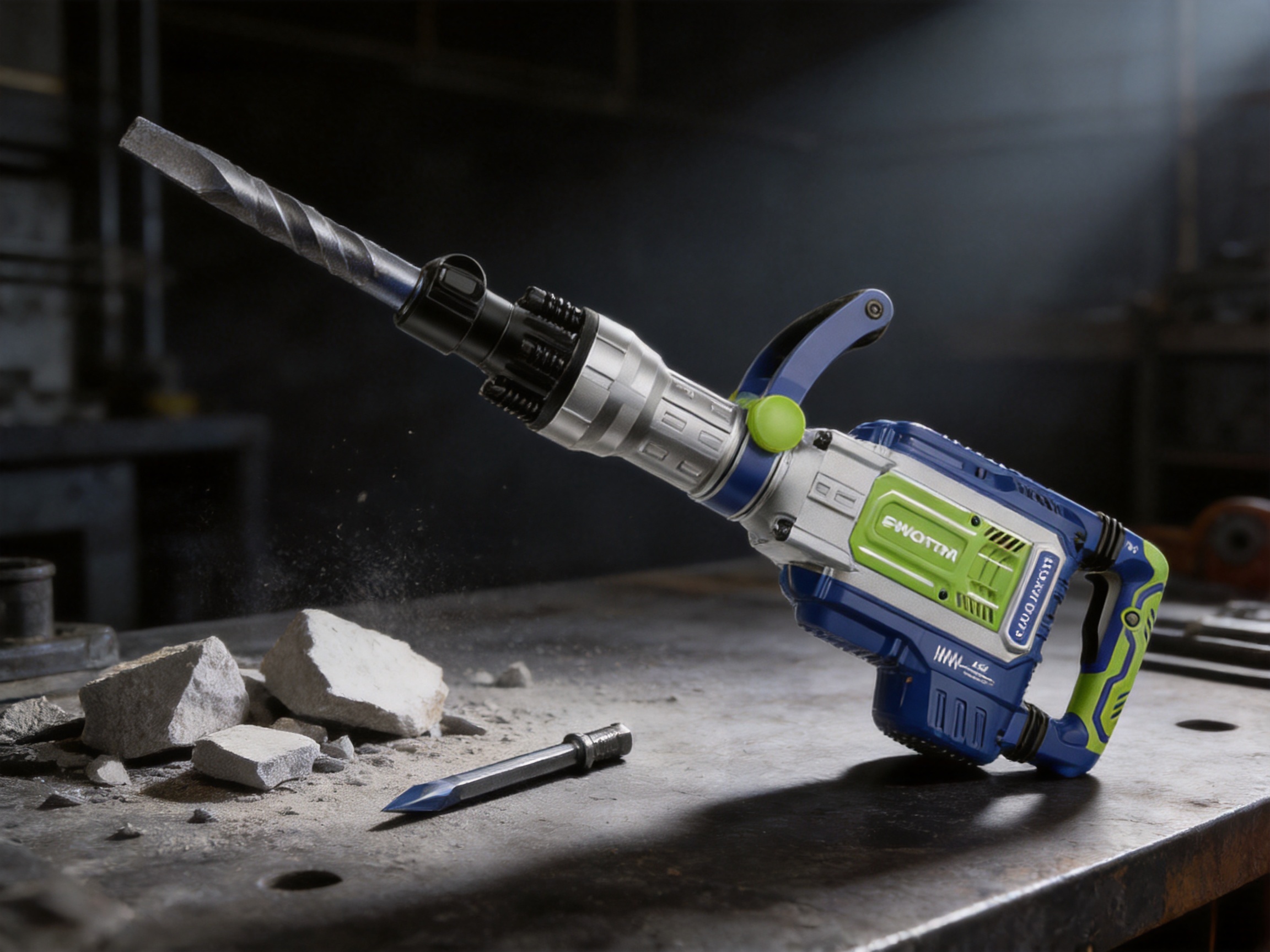
The product uses an extended iron head with a built-in impact hammer. This configuration is intended to deliver force directly to the bit while maintaining a robust external structure around the impact mechanism. The head is not simply a protective housing; it is part of the tool’s force-transmission system.
Direct impact transmission is important because every transition between moving components creates the possibility of energy loss, heat generation, or mechanical stress. A carefully integrated impact structure can help maintain a more efficient force path from the motor-driven mechanism to the working bit.
The extended head also provides a substantial housing for the impact assembly and lock mechanism. Heavy demolition imposes repeated shock loads on the front section of the machine, particularly when the bit encounters dense concrete, embedded aggregate, or hard stone. A reinforced head helps protect the internal parts and maintain alignment during this process.
The product information identifies the iron head as an integral forged structure and states that it is designed to resist cracking. Forging can provide a dense and continuous grain structure compared with some less robust manufacturing approaches. When combined with proper heat treatment, dimensional control, and inspection, a forged head can provide a reliable foundation for repeated impact service.
Integral Forged Construction
Cracks in a demolition hammer head can become serious safety and performance concerns. The front head is exposed to direct reaction forces, and a structural defect may grow under continuous impact. By using an integral forged iron head, the SW9135-2 is designed to provide greater resistance to cracking in this high-stress area.
The advantage of an integral structure is that it reduces dependence on weak joints or complex connections in the most heavily loaded portion of the tool. A solid forged body can also support more consistent alignment between the impact mechanism and the bit connection. This alignment contributes to more predictable force delivery and may help reduce uneven wear.
The head design should be evaluated together with the cylinder, lock rod, and internal hammer components. A strong front housing alone cannot compensate for weak internal parts. The SW9135-2 therefore combines the forged head with 20CrMnTi alloy steel in the cylinder and a carburized 35CrMo lock rod to create a more comprehensive durability package.
20CrMnTi Alloy-Steel Cylinder
The cylinder is another major wear component in a demolition hammer. It contains and guides elements of the impact mechanism while enduring repeated pressure, friction, vibration, and temperature changes. A cylinder that loses dimensional accuracy can affect impact consistency and accelerate wear across the internal assembly.
The SW9135-2 uses 20CrMnTi alloy steel for the cylinder. This material is commonly associated with components that require a strong, wear-resistant surface and a durable internal body. The supplied product information states that the cylinder’s working life is doubled compared with the previous design or reference structure.
A longer-lasting cylinder can provide several operational benefits. It may help maintain stable movement of the impact components, preserve internal alignment, and reduce the frequency of major service interventions. For contractors, this can improve equipment availability and make maintenance planning easier.
The cylinder works in combination with the impact hammer and motor system. If the cylinder remains stable under repeated loads, the tool can maintain a more consistent impact cycle. This is important when breaking thick concrete or hard masonry, where the machine may be subjected to high resistance for long periods.
Material selection is only one part of cylinder durability. Manufacturing accuracy, heat treatment, surface condition, lubrication, and assembly quality also influence service life. The company’s stated focus on research and development, production control, and high-quality materials supports the objective of delivering a cylinder suitable for harsh engineering conditions.
Motor and Electrical Design
The SW9135-2 has a rated power input of 1,750W. This power level is designed to support the demanding impact mechanism required for heavy demolition. The motor must convert electrical input into repeated mechanical impacts while resisting heat buildup and vibration.
The specified stator diameter is Ø94 × 45H, and the rotor diameter is Ø53 × 45H. These dimensions indicate a substantial motor architecture intended for a high-output tool. The relationship between the stator, rotor, magnetic circuit, cooling system, bearings, and transmission components affects the motor’s ability to maintain stable operation under load.
For high-impact equipment, the motor should not be considered separately from the mechanical impact system. A powerful motor is useful only when the transmission and impact components can accept and convert that power efficiently. The SW9135-2 is designed as an integrated system in which the motor, impact hammer, cylinder, head, and bit-locking structure support one another.
The enlarged carbon brushes measure 7 × 17 × 24mm. A larger brush structure can support greater contact area and may contribute to improved current transfer and service durability when properly matched to the motor. The upgraded brush holder is intended to maintain brush positioning and support more stable operation.
As with all brushed electric tools, carbon brushes are wear components. Their condition should be checked according to the maintenance schedule and operating conditions. Heavy use, dusty environments, long periods at high load, and improper ventilation can increase brush wear. Timely inspection helps protect the commutator and maintain motor performance.
Power for Continuous Breaking
The tool is intended for high-production demolition where the machine may be used repeatedly throughout the workday. Continuous breaking places greater demands on the motor than occasional short-duration use. It also increases the importance of operator technique, ventilation, extension-cable selection, and regular inspection.
The 1,750W input rating provides a strong electrical foundation for the 65J impact system. Users should avoid undersized extension cords or unstable power sources, since voltage drop can reduce motor performance and increase heating. The tool should also be allowed to operate within the manufacturer’s recommended duty cycle and maintenance requirements.
Dual Anti-Vibration Handle System
High-impact tools transmit reaction forces to the operator as well as to the work surface. Long exposure to vibration can cause discomfort, hand fatigue, reduced control, and numbness. The SW9135-2 addresses this challenge with anti-vibration handles positioned at both the top and bottom of the tool.
A dual-handle arrangement provides more than an additional gripping point. It allows the operator to distribute force between both hands and maintain control over the hammer’s direction. The top and bottom handle positions can also help the user stabilize the tool during vertical, horizontal, or angled breaking work.
The product information describes the handles as reducing numbness and rebound. This is especially valuable during long demolition cycles, where the operator must repeatedly control the tool against the resistance of concrete or stone. Reduced reaction transfer can support more comfortable working conditions and help the operator maintain a consistent position.
The handles use soft rubber grip surfaces. Rubber can improve contact comfort and help reduce slipping when the operator is wearing work gloves. The oversized trigger is designed to be easy to press and hold, reducing the need for excessive finger force during extended operation.
Handle design cannot replace safe work practices. Operators should still use suitable gloves, hearing protection, eye protection, protective footwear, and other personal protective equipment required by the work environment. The tool should be held securely with both hands, and the user should maintain a balanced stance away from unstable fragments and falling material.
Control During Difficult Breaking
Demolition materials rarely fail in a perfectly predictable manner. Concrete may contain reinforcing steel, voids, aggregate, or areas of different density. A bit can also encounter sudden changes in resistance. The anti-vibration handles and balanced grip positions help the operator respond to these changes while keeping the tool aligned.
Good control improves practical productivity. A hammer that can be positioned accurately allows the operator to focus impact on the intended breaking point rather than wasting energy through sliding or misalignment. Stable handling may also reduce unnecessary side loading on the bit and lock rod.
The tool should be used primarily for axial breaking. Excessive prying or sideways force can damage the bit, lock rod, head, or internal mechanism. A durable machine still requires correct technique to achieve its expected service life.
Advantages in Comparison with Conventional Heavy-Duty Designs
The SW9135-2’s competitive value comes from the way several reinforced features are combined. Many demolition hammers provide high power, but high power alone does not guarantee long service life. The SW9135-2 focuses on the areas that commonly determine whether a heavy hammer remains productive over time.
Its first advantage is the 35CrMo carburized lock rod, which is specified to last 30% longer. This directly addresses bit-retention wear and maintenance interruptions. A conventional lock rod may require more frequent replacement in severe applications, especially when used continuously on hard materials.
Its second advantage is the 20CrMnTi cylinder, which is specified to provide double the working life. A durable cylinder can help protect the internal impact mechanism and maintain more stable operation over a longer period.
Its third advantage is the integral forged iron head designed to resist cracking. The front head receives repeated impact reaction forces, so structural integrity in this area is essential. Forged construction supports the tool’s heavy-duty positioning.
Its fourth advantage is the extended head with a built-in impact hammer. This structure is intended to deliver more force directly to the bit and reduce unnecessary loss in the impact path.
Its fifth advantage is the dual anti-vibration handle system. A high-output tool must be manageable as well as powerful. The top and bottom handles, soft rubber grip, and large trigger support better control and more comfortable operation.
These features create a more complete solution than a design that focuses only on motor wattage. For professional users, the relevant comparison is not simply the initial power rating. It is the relationship between impact energy, wear life, maintenance requirements, operator control, and usable production time.
Applications and Suitable Work Environments
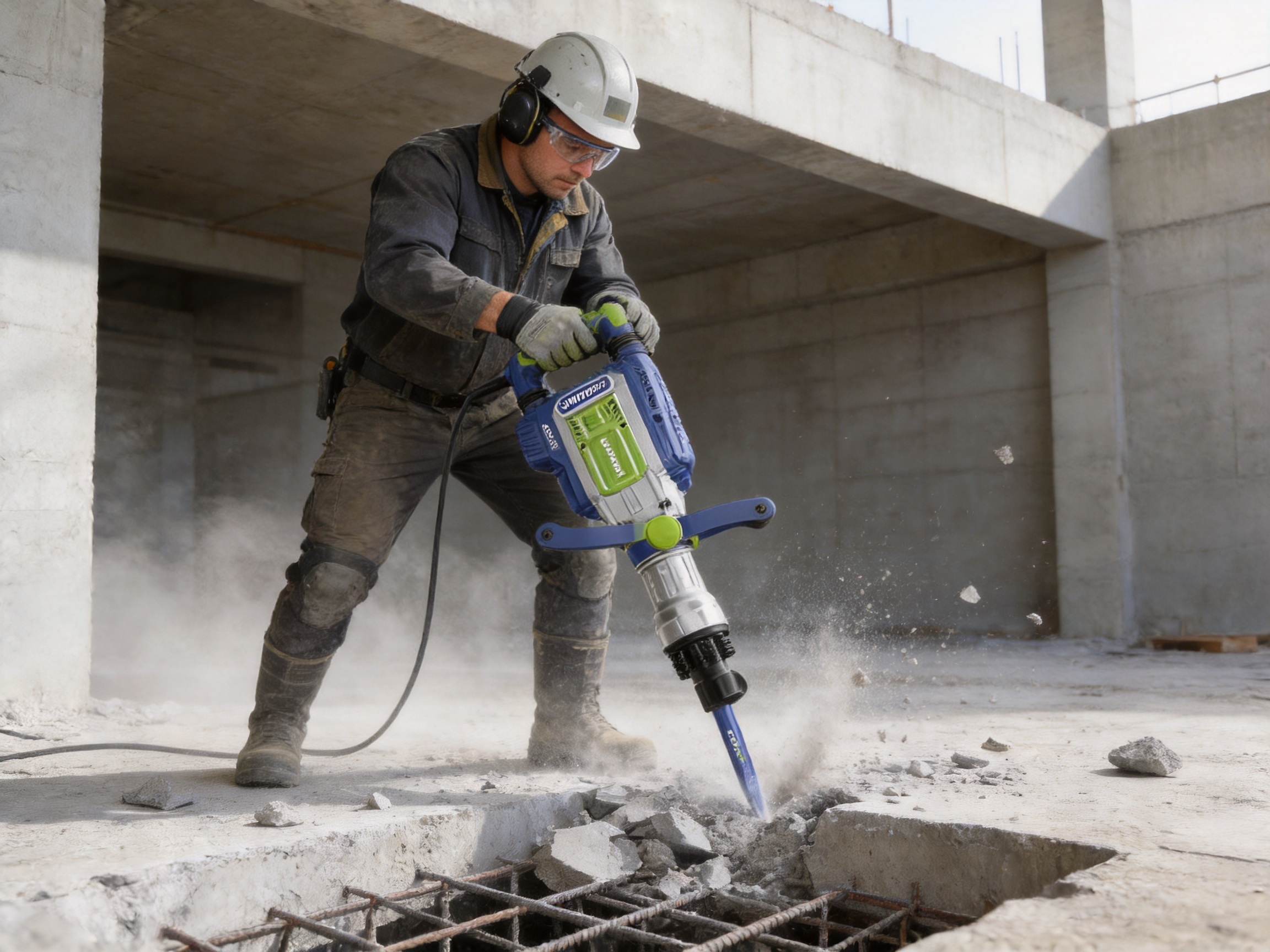
The SW9135-2 is suitable for heavy demolition where substantial impact energy is required. Its main applications include breaking concrete slabs, removing foundations, dismantling masonry, opening bridge decks, reducing large structural sections, and working on quarry faces.
Bridge-deck demolition is a demanding example. The operator may need to break thick concrete while working for extended periods and maintaining control around reinforcing structures. A secure lock rod helps keep the bit engaged, while the reinforced head and cylinder support repeated impact cycles.
Foundation removal is another appropriate application. Foundations often combine dense concrete, aggregate, embedded steel, and confined working conditions. The 65J impact rating provides the force needed for heavy breaking, while the two-handle design assists with positioning and control.
Quarry and stone work can place especially severe loads on the bit and front assembly. Hard material generates strong reaction forces and may require continuous operation. The carburized lock rod and forged head are relevant advantages in this environment because they target two components exposed to high mechanical stress.
The machine is also appropriate for high-production demolition contractors who value uptime. Where several crews or multiple tools are used across a project, reducing component replacement and inspection interruptions can help simplify equipment management.
Work Types to Avoid
The SW9135-2 should not be treated as a general-purpose drilling machine unless the specific attachment and operating instructions expressly permit that use. Its primary purpose is heavy demolition and chiseling. It should not be used for applications beyond its rated design, such as lifting, prying with excessive sideways force, or striking materials that create uncontrolled hazards.
Before starting work, users should inspect the material and identify hidden electrical cables, gas lines, water pipes, reinforcement, tensioned components, and unstable structural sections. Demolition should be performed according to an approved work plan and applicable safety regulations.
Manufacturing Strengths and Process Capability
Yongkang Siwei Technology Co., Ltd. is described as a professional tool manufacturer integrating research and development, production, and sales. Its stated manufacturing approach emphasizes professional specialization, quality-first production, advanced processes, and high-quality materials.
For a demolition hammer, this integrated capability is important because performance depends on the consistency of many individual operations. Material selection, forging, machining, heat treatment, component fitting, electrical assembly, inspection, and final testing all influence the finished tool.
The company’s focus on demolition hammers and chisel cutting tools provides product-specific experience. Specialization allows manufacturing teams to concentrate on the mechanical stresses, wear patterns, and user requirements associated with high-impact equipment. Rather than treating the demolition hammer as a generic electric product, the company positions it as a professional engineering tool.
The SW9135-2 reflects this approach through its combination of specialized materials and reinforced structures. The 35CrMo lock rod, carburizing process, 20CrMnTi cylinder, forged head, enlarged carbon brushes, and anti-vibration handles are not isolated marketing details. They represent attention to the parts most closely connected with service life and user experience.
Material and Heat-Treatment Control
Heat treatment is particularly important for components exposed to impact and friction. A lock rod needs a wear-resistant working surface, but it also requires sufficient internal toughness to withstand repeated shock. Carburizing is intended to create this balance by changing the surface characteristics while preserving a more resilient core.
The cylinder also requires controlled material properties and accurate finishing. Its internal surfaces must support smooth, consistent movement of the impact components. Dimensional deviation, surface damage, or inadequate hardness can contribute to early wear and unstable performance.
By specifying 35CrMo for the lock rod and 20CrMnTi for the cylinder, the company establishes material requirements for two essential internal components. These specifications provide a basis for procurement, process control, and quality inspection.
Forging and Structural Integrity
The integral forged iron head is designed to resist cracking in the front section of the tool. Forging is a manufacturing process in which metal is shaped under controlled force. The process can improve structural continuity and produce a robust form for high-load applications.
For a demolition hammer head, the benefits of forging depend on accurate process control, suitable material quality, correct heat treatment, and inspection. The company’s stated use of advanced processes supports the goal of producing a head that can endure repeated impact loading without premature structural failure.
Electrical Assembly and Component Matching
The motor system must be matched with the impact mechanism, brush holder, carbon brushes, switch, bearings, and protective housing. The upgraded 7 × 17 × 24mm carbon brushes and brush holder structure are intended to support stable electrical contact during demanding operation.
Component matching is critical in a high-power tool. A motor, switch, or brush system that is not correctly matched can create excessive heat, unstable current transfer, or premature wear. Integrated production and testing help manufacturers manage these relationships more effectively.
Quality, Reliability, and Production Consistency
Professional users need repeatable performance from one tool to the next. A demolition hammer may be used on a project site where downtime affects labor schedules, equipment allocation, and completion dates. Consistency in manufacturing is therefore as important as the design specification itself.
The company states that it uses advanced processes and high-quality materials to ensure that products can withstand harsh working conditions. In the case of the SW9135-2, this objective is supported by the use of reinforced parts in the impact and locking systems, as well as attention to grip and electrical components.
A quality-focused manufacturing process should include incoming material checks, dimensional inspection, heat-treatment control, assembly verification, electrical testing, and functional testing. These steps help identify defects before products reach the customer and support more reliable field performance.
Quality control is especially important for a hammer with a high impact rating. Small dimensional differences in the lock rod, cylinder, or head can affect alignment and wear. Electrical variations can influence motor temperature and brush life. Systematic inspection helps reduce these risks.
Maintenance Considerations
The SW9135-2 is designed for durability, but no demolition hammer is maintenance-free. Correct care protects the investment and helps the reinforced components achieve their intended service life.
Before each use, the operator should inspect the power cable, plug, switch, handle, housing, bit, lock rod, and visible fasteners. The bit should be checked for excessive wear, cracks, deformation, or damage. A damaged bit can transfer abnormal forces to the lock assembly and impact mechanism.
The bit should be correctly inserted and secured before the motor is started. The lock rod should hold the bit firmly without excessive looseness. If unusual movement, abnormal noise, reduced impact, burning odor, excessive sparking, or rapid heating is observed, the tool should be stopped and inspected by a qualified technician.
Ventilation openings should be kept free of dust and debris. Demolition work creates abrasive particles that can enter equipment if the tool is not kept clean. The external housing should be wiped after use, and the machine should be stored in a dry location protected from impact and contamination.
Carbon brushes are consumable parts. The enlarged brush specification may support longer operation, but brushes still require periodic inspection and replacement. Worn brushes can reduce motor efficiency, increase sparking, and damage the commutator if ignored.
Lubrication and internal servicing should follow the manufacturer’s service instructions. Opening the tool without appropriate knowledge may create safety risks or affect warranty coverage. Professional service personnel should inspect the cylinder, impact hammer, bearings, lock rod, seals, and electrical system at suitable intervals.
Maintaining the Locking System
The lock rod should be kept clean and correctly lubricated where required by the maintenance instructions. Dirt, metal particles, and inadequate lubrication can increase friction and accelerate wear. Operators should not force a damaged bit into the holder or continue working with a loose attachment.
Because the lock rod is a wear component, a 30% longer working life does not mean unlimited service. Its condition should be evaluated according to actual usage, material hardness, impact frequency, and maintenance practice. Replacing worn components before secondary damage occurs is generally more economical than waiting for a failure.
Operator Safety and Ergonomics
Heavy demolition work involves flying fragments, dust, noise, vibration, unstable structures, and hidden services. Operators should receive appropriate training and use protective equipment suitable for the task. Eye protection or a face shield helps protect against chips, while hearing protection is important because high-impact tools can generate intense noise.
Respiratory protection may be necessary when breaking concrete, masonry, or other materials that produce hazardous dust. Work areas should be ventilated or controlled using suitable dust-management methods. Protective footwear, gloves, head protection, and high-visibility clothing may also be required depending on the site.
The dual anti-vibration handles are designed to reduce numbness and rebound, but operators should still take reasonable breaks during long shifts. If the user experiences persistent numbness, pain, loss of grip strength, or unusual fatigue, work should stop and the cause should be assessed.
The tool should be held with both hands and kept under control. The operator should stand in a stable position and avoid placing any part of the body beneath the tool or near falling fragments. When working on walls, slabs, or elevated structures, the risk of falling material must be considered before the hammer is started.
Power cables should be routed away from the bit and from sharp edges. The operator should never carry the tool by its cable, pull the cable to disconnect the plug, or operate in wet conditions unless the equipment and work environment are specifically approved for that use.
Productivity and Total Operating Value
The economic value of a demolition hammer extends beyond its purchase price. Contractors should consider productivity, maintenance frequency, service availability, component life, operator comfort, and the cost of downtime.
The SW9135-2 is designed to contribute to total operating value in several ways. The 65J impact rating can support faster breaking of heavy materials. The extended head is intended to transfer force efficiently. The 35CrMo lock rod may reduce interruptions caused by bit-retention wear. The 20CrMnTi cylinder is specified to provide double the working life. The forged head is designed to resist cracking, and the anti-vibration handles support sustained operator control.
These advantages can be particularly important in high-production environments. If a crew spends less time replacing locking components or addressing premature cylinder wear, more of the paid workday can be devoted to productive breaking. Better control can also reduce wasted impacts and improve the accuracy of demolition work.
Total value depends on using the machine within its design limits. Overloading, inadequate maintenance, improper bit selection, unstable power supply, and excessive sideways force can reduce the benefits of even a well-engineered tool. The best results come from matching the hammer to the material, selecting an appropriate bit, and following a disciplined maintenance program.
Why Professional Users May Choose This Model
Professional users may choose the SW9135-2 when they require a powerful corded demolition hammer with reinforced wear components and a heavy-duty front structure. Its specification is well suited to contractors who prioritize impact output and durability in continuous breaking work.
The product is also appropriate for buyers who want a manufacturer with focused experience in demolition hammers and chisel cutting tools. Yongkang Siwei Technology Co., Ltd. combines product development, production, and sales within one organization and states that it serves domestic and international engineering markets.
The company’s manufacturing philosophy emphasizes professionalism and quality first. This is reflected in the use of specialized alloy steels, carburizing treatment, integral forging, upgraded brush-holder construction, and ergonomic anti-vibration features.
For distributors and project procurement teams, product consistency and technical support are also important. A clearly defined material structure and a focused product category can make it easier to evaluate the hammer for construction, infrastructure, quarry, and demolition applications.
Frequently Asked Questions
What type of tool is the SW9135-2?
The SW9135-2 is a corded electric demolition hammer with a hex bit connection. It is designed for heavy breaking and chiseling rather than light renovation or general drilling.
What is the rated impact energy?
The stated impact energy is 65J. Actual breaking performance depends on the work material, bit selection, operator technique, power supply, and operating conditions.
What voltage does the hammer use?
The specified electrical rating is 220–240V~, 50/60Hz. Users should confirm local compatibility and use an appropriately rated power supply and extension cable.
Why is the lock rod made from 35CrMo?
35CrMo alloy steel is used to provide strength and toughness in a high-load locking component. The rod also receives carburizing treatment to improve surface wear resistance.
How much longer is the carburized lock rod expected to last?
The product information states that the working life is increased by 30%. The actual service interval depends on usage intensity, bit condition, material hardness, maintenance, and operating technique.
What is the benefit of the 20CrMnTi cylinder?
The cylinder is made from 20CrMnTi alloy steel and is specified to provide double the working life. It is intended to support durable and stable operation of the internal impact mechanism.
Why does the hammer use an integral forged iron head?
The integral forged head is designed to provide a strong front structure and resist cracking under repeated impact. It also supports alignment between the impact mechanism and bit connection.
Does the hammer have vibration-reduction features?
Yes. It has anti-vibration handles at the top and bottom. The handles also use soft rubber grip material to improve comfort and control.
What size are the carbon brushes?
The specified carbon brush size is 7 × 17 × 24mm. The product also includes an upgraded brush-holder structure intended to support stable brush operation.
What materials can the SW9135-2 break?
It is intended for heavy breaking work involving concrete, masonry, foundations, bridge decks, stone, and similar hard materials. Users should evaluate the structure and work hazards before beginning demolition.
Can the hammer be used for sideways prying?
It should primarily be used for axial impact. Excessive sideways force or prying can damage the bit, lock rod, head, or internal mechanism and may create a safety hazard.
How should the hammer be maintained?
Inspect the bit, lock rod, handles, cable, switch, housing, and visible fasteners before use. Keep ventilation openings clean, monitor carbon-brush wear, follow lubrication instructions, and arrange professional service when abnormal noise, heat, vibration, or performance occurs.
Who manufactures the SW9135-2?
The product is manufactured by Yongkang Siwei Technology Co., Ltd., a professional tool manufacturer focused on research and development, production, and sales of demolition hammers, chisel cutting tools, and related equipment.
Conclusion
The SW9135-2 Hex 35CrMo Lock Rod Demolition Hammer is designed for demanding professionals who need strong impact performance and dependable operation over repeated work cycles. Its 1,750W motor, 65J impact energy, extended iron head, and integral forged construction establish a solid foundation for heavy demolition.
Its principal distinction is the attention given to high-wear components. The 35CrMo carburized lock rod is specified to provide 30% longer working life, while the 20CrMnTi alloy-steel cylinder is specified to double service life. These features directly address common causes of downtime in high-impact applications.
The tool also combines dual anti-vibration handles, soft rubber grips, an oversized trigger, enlarged carbon brushes, and an upgraded brush holder. Together, these details support operator comfort, control, electrical stability, and maintainability.
Backed by a manufacturer that integrates research and development, production, and sales, the SW9135-2 reflects a quality-first approach to professional tool manufacturing. For bridge, foundation, quarry, structural, and general heavy demolition work, it offers a focused combination of impact power, reinforced construction, bit retention, and long-term operating value.
References
1. SW9135-2 Product Specification and Technical Information, supplied product materials.
2. SW9135-2 Product Overview and Application Description, supplied manufacturer materials.
3. Technical notes on 35CrMo alloy steel and carburizing treatment for wear-resistant mechanical components.
4. Technical notes on 20CrMnTi alloy steel for durable transmission and impact-related components.
5. General occupational safety principles for electric demolition tools and high-impact construction equipment.
6. General maintenance principles for brushed electric motors, carbon brushes, impact mechanisms, and hex bit-retention systems.
Product: SW9135-2 Hex 35CrMo Lock Rod Demolition Hammer

Recommended Products
-


SW528 Small Hole Rebar Hammer
-
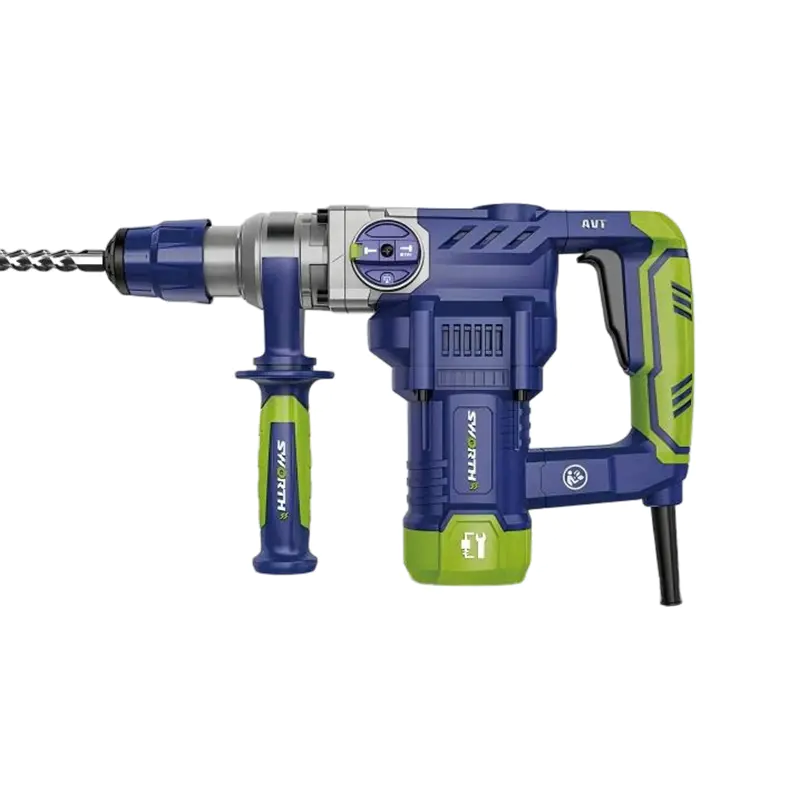
SW932 Groove Sandblasting Hammer
-
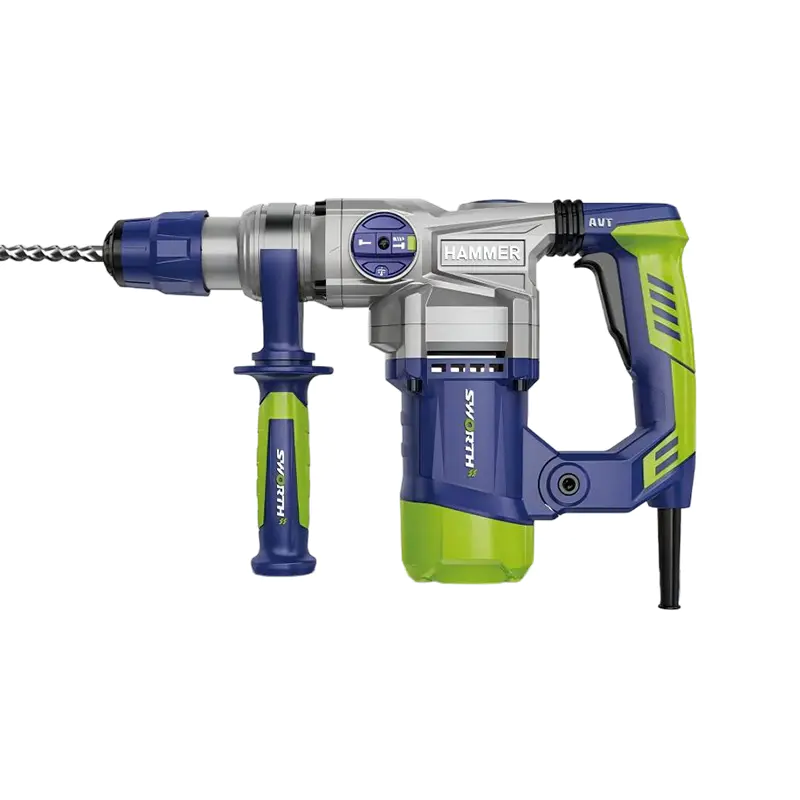
SW9362A Large Hole Rebar Hammer
-
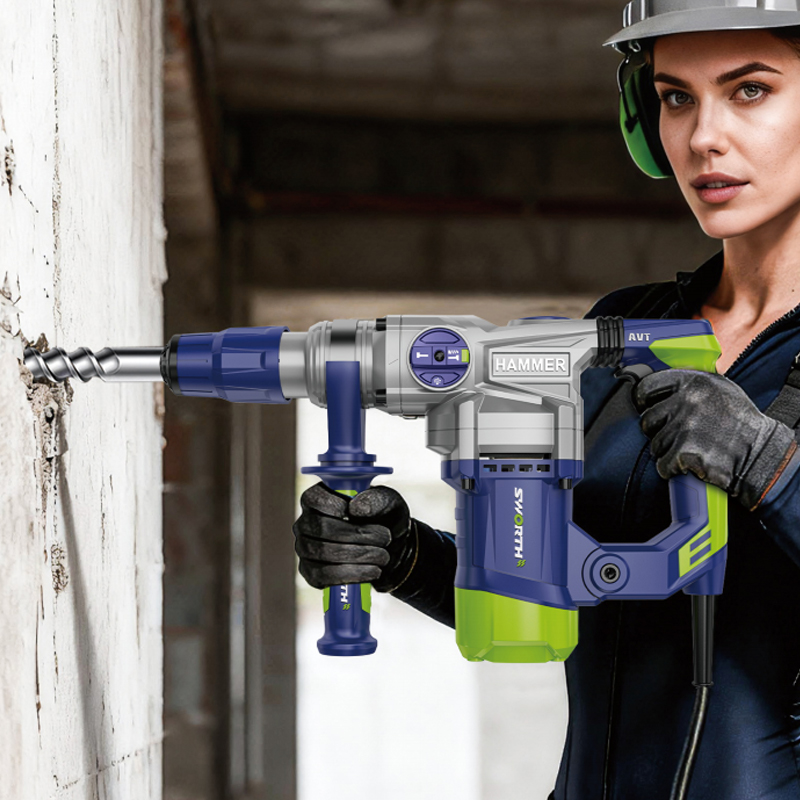
SW940 Enlarged Hole Rebar Hammer
-
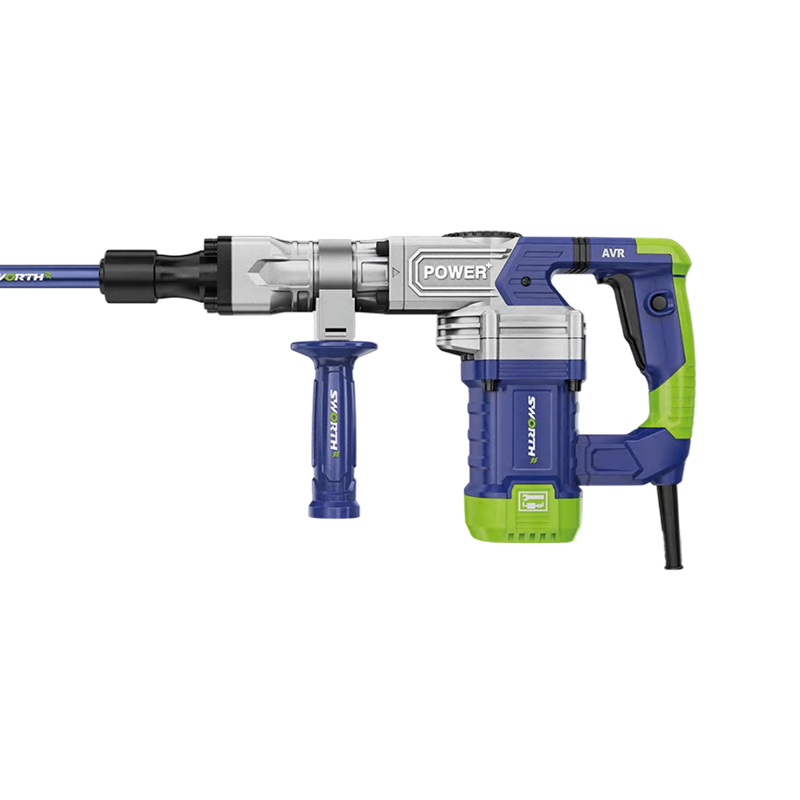
SW35S1 Powerful Demolition Hammer
-
SW35S2 High-Efficiency Heat Dissipation Demolition Hammer
-
SW9371 High-Power Demolition Hammer
-
SW9373 Anti-Scalding Carbon Brush Holder Demolition Hammer
-
SW535 Powerful Anti-Scalding Demolition Hammer
-
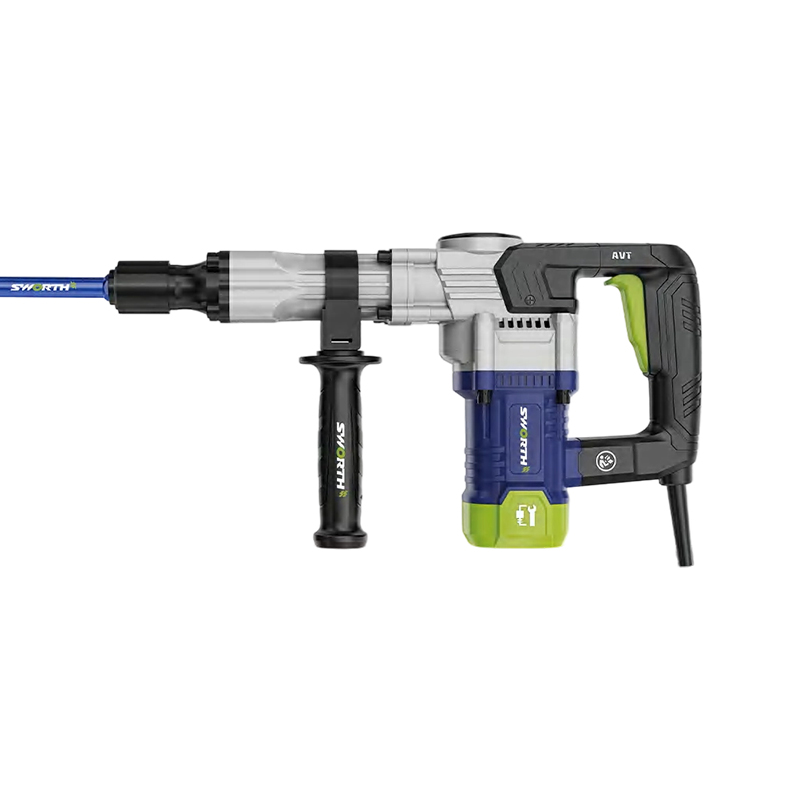
SW535-2 Durable Powerful Demolition Hammer
-
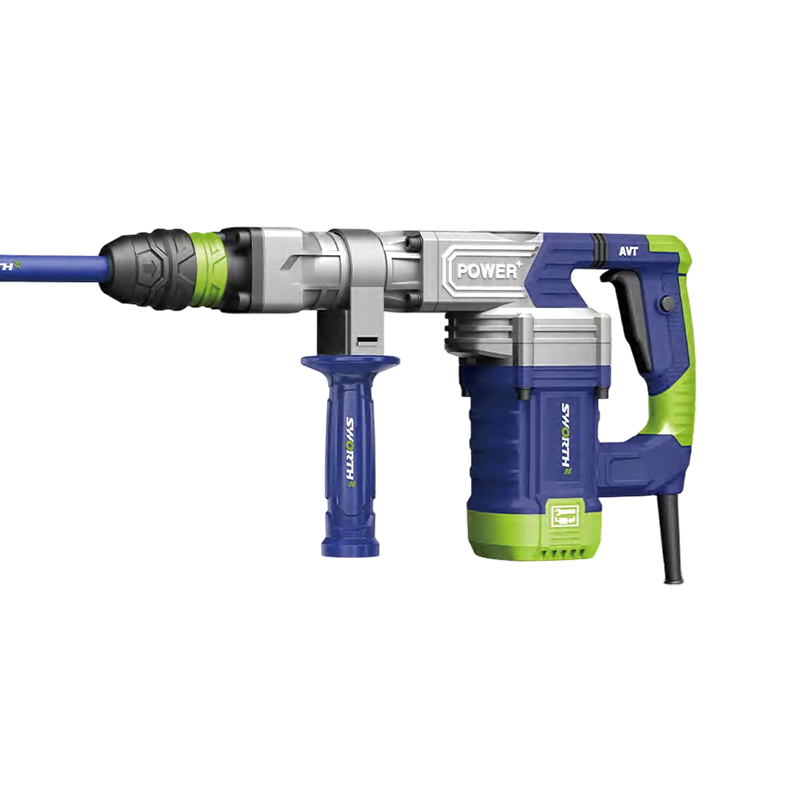
SW35S3 Five-Pipe Drill Bit Demolition Hammer
-

SW11E Five-Pipe Clamping Demolition Hammer
 +86-18314829275
 sale@sworthtools.com
 No. 101, Yugui Road, chengxi Industrial Zone, Yongkang City, Zhejiang Province, China
Copyright© Yongkang Siwei Technology Co., Ltd. All Rights Reserved

Hammer Tools & Cordless Garden Tools Manufacturer
