 English
 русский
 Español

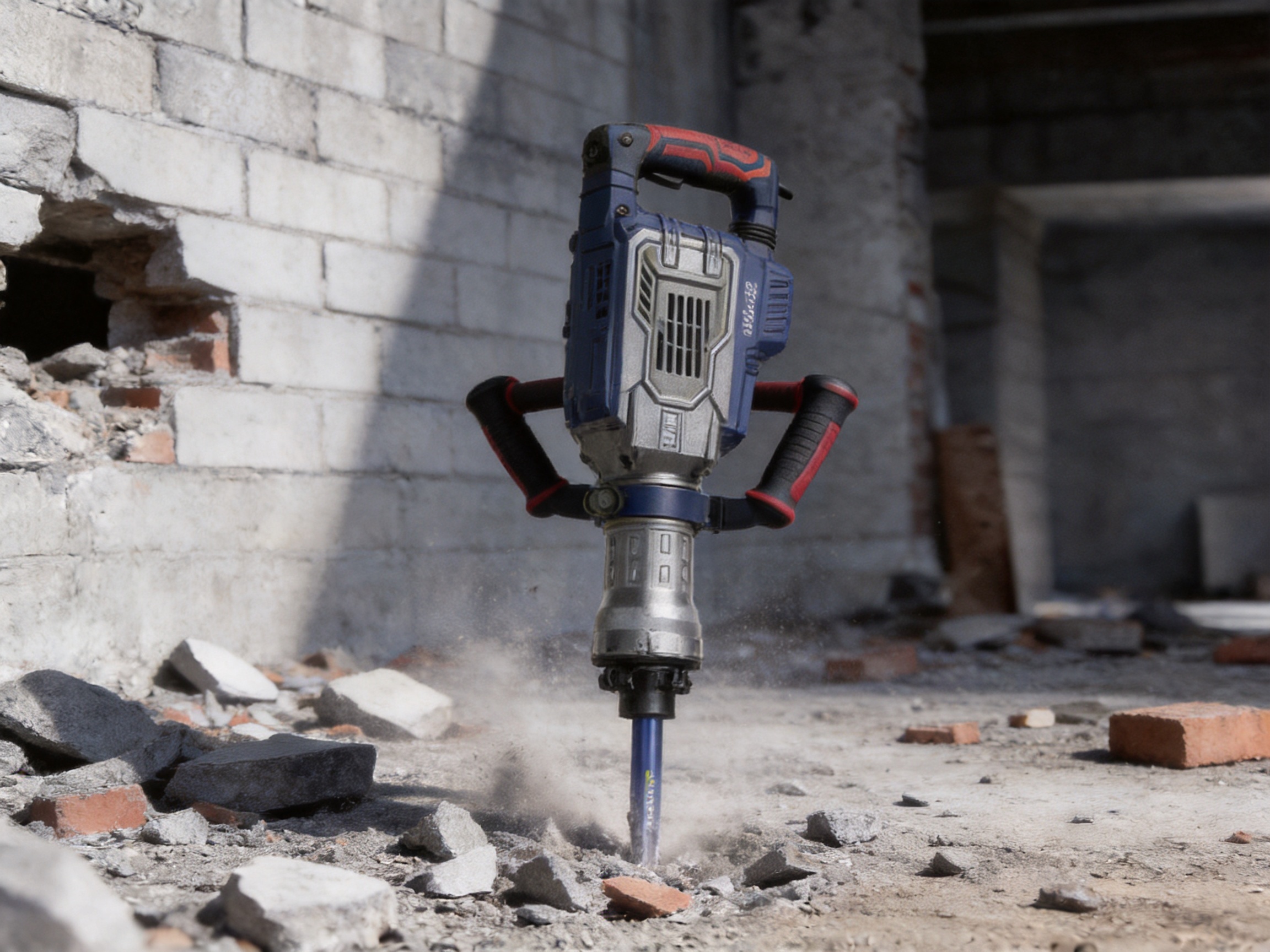
SW9128 Rubber-Coated Large Demolition Hammer: High-Impact Power for Professional Concrete and Brick Demolition
Heavy-duty demolition work demands more than a powerful motor. Professional operators need a demolition hammer that can transfer impact energy efficiently, resist heat and mechanical stress, remain stable during long working sessions, and reduce the fatigue caused by continuous vibration. The SW9128 Rubber-Coated Large Demolition Hammer is designed around these requirements. With an 1800W motor, a rated impact speed of 1950 blows per minute, and an impact energy of 55 joules, it is engineered for demanding work on concrete, brick, masonry, and other high-strength construction materials.
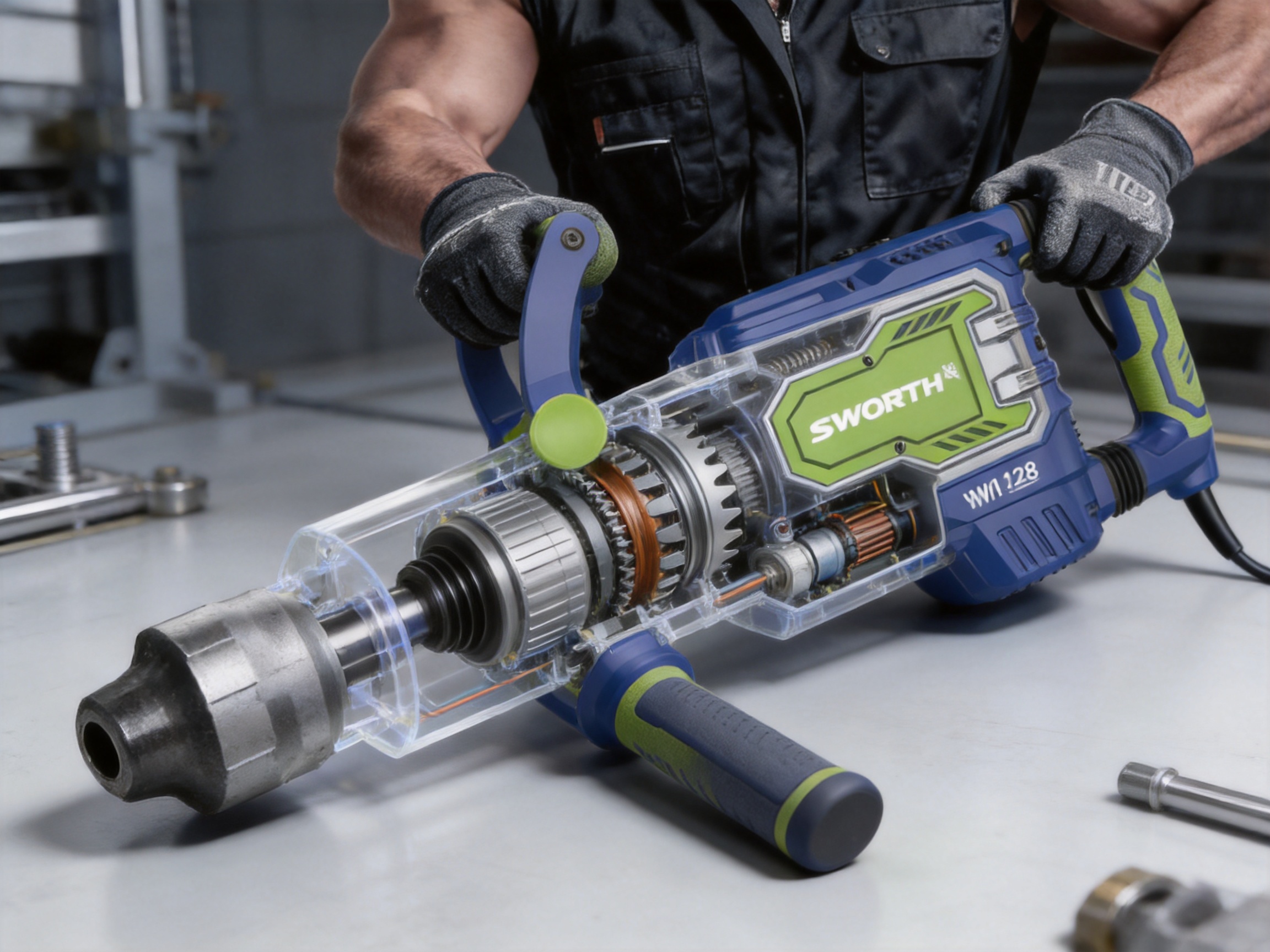
The SW9128 combines high output with a structural design focused on control, durability, and operator comfort. Its rubber-coated handles provide a secure grip, while the dual anti-vibration handle arrangement helps reduce the transmission of impact shock to the user. A six-tooth rotating gear system supports high torque, and the integral forged iron head is designed to withstand repeated impacts without cracking under normal professional use. These features make the tool suitable for contractors, renovation teams, infrastructure workers, and other professionals who require consistent demolition performance.
Unlike light-duty electric hammers intended for occasional household work, this large demolition hammer is built for repetitive and force-intensive applications. Its high-power motor, heavy-duty impact system, reinforced internal components, and carefully considered heat-dissipation design provide a stronger foundation for continuous construction work. The result is a tool that emphasizes practical productivity: powerful blows, controlled handling, improved durability, and dependable operation across demanding jobsite conditions.
1. The Role of a Heavy-Duty Demolition Hammer in Modern Construction
Demolition is often one of the most physically demanding stages of construction and renovation. Removing concrete floors, breaking masonry walls, opening channels, dismantling foundations, and clearing reinforced or high-strength structures all require equipment capable of delivering repeated impact energy. Manual tools can be slow and exhausting, while undersized electric hammers may overheat, lose efficiency, or suffer premature wear when exposed to hard materials.
A large demolition hammer addresses this challenge by converting motor power into repeated mechanical impacts. Each blow is transferred through the tool holder and chisel into the workpiece. When the impact system, gear train, motor, housing, and handle are properly matched, the operator can remove material more quickly while maintaining a practical level of control.
The SW9128 is designed for this type of professional workload. Its 1800W rated input provides a substantial energy reserve for heavy applications. The 55J impact rating places the tool in a high-impact category, giving it the force needed for breaking concrete and brick rather than merely drilling or performing light chiseling. Its 1950 blows-per-minute no-load impact rate further supports rapid material removal.
Demolition performance is not determined by impact energy alone. A tool that generates strong blows but has poor balance, inadequate vibration control, or insufficient heat management may be difficult to use effectively. For this reason, the SW9128 focuses on the complete operating system. The motor delivers power, the gear mechanism develops torque, the impact assembly transmits force, and the handle structure helps the user maintain control. These elements work together to create a more productive and reliable demolition platform.
2. Core Technical Specifications
The following specifications summarize the principal performance characteristics of the SW9128 Rubber-Coated Large Demolition Hammer.
| Specification | SW9128 Value |
|---|---|
| Product type | Large electric demolition hammer |
| Rated voltage | 220–240V, 50/60Hz |
| Power input | 1800W |
| No-load impact speed | 1950 blows per minute |
| Impact energy | 55J |
| Stator dimensions | 94 mm diameter × 45 mm height |
| Rotor dimensions | 53 mm diameter × 45 mm height |
| Handle design | Dual anti-vibration handles with soft rubber covering |
| Gear design | Six-tooth rotating gear system |
| Head construction | Integral forged iron head |
| Lock rod material and treatment | 35CrMo with carburizing process |
| Carbon brush specification | 7 × 17 × 24 enlarged carbon brushes |
These values indicate a machine designed for high-impact demolition rather than light chiseling. The 1800W input supports sustained electrical and mechanical output, while the large stator and rotor dimensions are intended to provide a solid electromagnetic foundation for torque generation. The 55J impact rating gives the operator substantial breaking force, particularly when the correct chisel and working technique are used.
The 220–240V, 50/60Hz electrical specification is suitable for compatible power systems in many commercial and construction markets. Users should always confirm local voltage, frequency, plug configuration, extension-cord requirements, and electrical safety regulations before operation.
3. High-Impact Power for Concrete, Brick, and Masonry
The most important advantage of a demolition hammer is its ability to remove hard material efficiently. The SW9128 is equipped with an 1800W motor and a 55J impact system to produce strong repeated blows. This combination is intended for concrete, brick, masonry, stone-like construction materials, and other applications where a smaller hammer may struggle.
High impact energy helps the chisel penetrate and fracture dense material. Instead of relying on the operator to apply excessive downward force, the machine produces the mechanical impact required to break the workpiece. This can improve productivity and reduce unnecessary physical strain. The operator’s role becomes one of positioning, guiding, and controlling the tool rather than forcing it into the material.
The 1950 blows-per-minute impact rate complements the high impact energy. A demolition hammer with only large individual impacts may be powerful but slow in certain applications. A suitable impact frequency allows the tool to continue breaking and loosening material at a productive pace. The SW9128 is therefore designed to combine force per blow with a consistent rhythm of impacts.
In practical work, performance will vary according to material density, moisture, reinforcement, chisel shape, working angle, power supply quality, and operator technique. Nevertheless, the machine’s power reserve provides a strong platform for demanding work. For thick concrete, the operator may begin by creating a controlled fracture line, then progressively remove the loosened sections. For brick and masonry, a pointed or flat chisel may be selected according to whether the priority is penetration, splitting, channeling, or surface removal.
The tool’s optimized impact transmission design is also important. Power that is lost through excessive internal movement, poor alignment, or inefficient mechanical components does not contribute to demolition. The SW9128 is designed to direct more of the motor’s output toward the impact assembly and working accessory. This supports faster material removal and smoother operation.
4. Six-Tooth Gear System for Torque and Mechanical Strength
The internal gear system plays a central role in transferring motor power to the impact mechanism. The SW9128 uses a six-tooth rotating gear configuration intended to provide higher torque and strong power transmission. A gear system must withstand repeated loads, vibration, temperature changes, and sudden resistance when the chisel meets dense material. Its geometry, material quality, surface treatment, and assembly accuracy all influence service performance.
Higher torque is valuable during demanding demolition because it helps the machine maintain mechanical force when the workpiece resists penetration. Instead of allowing the motor to lose effectiveness quickly under load, a properly designed gear train can support a more stable transfer of power. This is especially helpful when breaking compact concrete, hard brick, or thick masonry sections.
The six-tooth design is also associated with a robust engagement structure. In a professional tool, gears must be manufactured and assembled with appropriate tolerances. Excessive play can cause noise, vibration, impact losses, and accelerated wear. Insufficient clearance can increase friction and heat. Consistent production processes are therefore essential to ensure that the gear system operates smoothly.
For buyers comparing demolition hammers, the gear arrangement should be evaluated together with the motor rating and impact specification. A large electrical input does not automatically guarantee useful impact at the chisel. The complete transmission path must be strong enough to handle the output. The SW9128’s high-power motor and six-tooth gear design are intended to operate as a matched system rather than as isolated components.
5. Dual Anti-Vibration Handles for Better Control
Continuous impact work exposes the operator to repeated shock and vibration. Without appropriate handle design, this can cause rapid fatigue, discomfort, reduced control, and lower productivity. The SW9128 addresses this challenge with a dual anti-vibration handle structure positioned at the top and lower areas of the tool.
Both handles are covered with soft rubber. This material provides a more comfortable contact surface than bare metal or hard plastic, while also improving grip stability in dusty or demanding work environments. The rubber coating is designed to be non-slip and wear-resistant, allowing the operator to maintain a secure hold during forceful chiseling.
A stable grip is particularly important when the chisel encounters uneven material or changes direction inside a fracture. The operator must be able to guide the hammer without over-tightening the hands. A well-shaped, rubber-coated handle helps distribute contact pressure and provides a more controlled relationship between the machine and the user.
The dual anti-vibration arrangement also helps reduce the amount of impact shock transferred toward the hands and arms. It cannot eliminate all vibration, and appropriate work-rest practices remain essential, but it is intended to reduce the sensation of numbness and rebound during operation. This is especially valuable for professionals who use demolition equipment for extended periods.
Compared with basic demolition hammers using a single rigid grip, the SW9128 offers a more comprehensive handling system. The upper and lower support points help the operator control tool direction, resist twisting, and maintain a stable working angle. This can contribute to more accurate demolition and improved safety around nearby structures.
Handle Features at a Glance
The handle system includes two anti-slip soft-rubber grips, a large switch designed for easier pressing and holding, and a structure intended to reduce rebound and numbness. These details may appear simple, but they have a direct effect on daily usability. Professional users often operate a tool for many hours, so comfort and control can influence real productivity as much as the headline power rating.
6. Robust Forged Head Construction
The front head of a demolition hammer receives repeated mechanical stress. Each impact sends force through the working assembly, and the head must maintain alignment while resisting cracking, deformation, and wear. The SW9128 uses an integral forged iron head designed for structural strength and durability.
Forging can produce a dense and strong metal structure by shaping the material under controlled pressure. Compared with poorly formed or inadequately supported components, an integral forged head can provide a stronger foundation for heavy impact service. The stated design objective is to prevent cracking and preserve the head’s integrity during demanding work.
Head construction is directly connected to safety and tool life. If the head becomes damaged, distorted, or loose, impact transmission may become less efficient and the risk of component failure can increase. A robust head helps the tool maintain its intended geometry and supports consistent transfer of force to the chisel.
The head should still be inspected regularly. Users should check for cracks, unusual movement, abnormal noise, damaged retainers, and signs of overheating. No construction tool should be operated if a critical structural part is damaged. Proper inspection complements the strength of the manufacturing design and helps identify problems before they become serious.
7. 35CrMo Carburized Lock Rod for Extended Service
The lock rod is another important component in the front assembly. It helps retain and secure the working accessory while the hammer delivers repeated impacts. Because it is exposed to high mechanical loads, the lock rod requires suitable material properties and surface durability.
The SW9128 uses a 35CrMo lock rod treated through a carburizing process. 35CrMo is a chromium-molybdenum alloy steel commonly selected for components that require a combination of strength and toughness. Carburizing can increase surface hardness while maintaining a tougher internal core when performed correctly. This combination is useful for a part exposed to friction, impact, and repeated loading.
The product information indicates that this treatment increases the working life of the lock rod by approximately 30 percent compared with the prior design or reference condition. Actual service life depends on the accessory used, the material being demolished, lubrication, maintenance, operating technique, and jobsite conditions. However, the material and treatment choice demonstrate attention to a component that is sometimes overlooked in lower-grade hammers.
Secure accessory retention is essential. Before each work session, the user should confirm that the chisel is correctly inserted and locked. A damaged, incorrectly fitted, or excessively worn accessory can reduce performance and create a safety risk. The locking assembly should be kept clean and maintained according to the applicable operating instructions.
8. Enlarged Carbon Brushes and Electrical Serviceability
The SW9128 uses enlarged carbon brushes measuring 7 × 17 × 24 millimeters. Carbon brushes transfer electrical current to the rotating armature in a brushed motor. They are consumable components and gradually wear during operation. Brush dimensions, holder design, material composition, and contact quality can influence motor performance and service intervals.
The enlarged brush-holder structure is intended to support longer working periods and stable electrical contact. Larger brushes may offer additional wear capacity compared with smaller components, although actual life depends on load, operating hours, dust exposure, commutator condition, and maintenance quality.
A brush-holder design that allows practical inspection and replacement can also help simplify service. Professional tools benefit from maintainable construction because consumable components eventually require attention. Instead of treating brush wear as an unexpected failure, users can include inspection in a planned maintenance schedule.
Signs of worn or damaged brushes may include reduced power, excessive sparking, intermittent operation, unusual odor, or inconsistent motor speed. If these symptoms appear, the hammer should be disconnected from the power supply and inspected by a qualified technician. Carbon brush replacement should use compatible parts and follow appropriate electrical safety procedures.
9. Heat Dissipation and Continuous Work Efficiency
High-power demolition generates heat in the motor, gear train, bearings, and impact mechanism. Excessive heat can accelerate lubricant degradation, damage insulation, reduce component life, and cause thermal shutdown or performance loss. For this reason, heat management is an important part of a professional demolition hammer’s design.
The SW9128 incorporates an optimized heat-dissipation approach intended to improve operating efficiency. The objective is to help move heat away from critical components while maintaining stable performance during demanding use. Proper ventilation and internal airflow can support the cooling of the motor and electrical components, while suitable mechanical design can limit unnecessary friction in the transmission system.
Heat management does not mean the tool can be operated indefinitely without rest. The hammer should be used according to its operating instructions and allowed to cool when it becomes excessively hot. Ventilation openings must remain clear of dust and debris. Operators should avoid covering the housing with clothing, materials, or other objects during operation or storage.
Extension cords also affect heat and performance. An undersized or excessively long extension cord can create voltage drop and additional heating, reducing motor efficiency. Users should select a suitable cord according to the tool’s rated input, local electrical regulations, cord length, and jobsite conditions.
Compared with lower-cost demolition hammers that may prioritize a high nominal power number without sufficient thermal consideration, a tool with an integrated heat-dissipation design can offer more dependable operation under repeated workloads. The advantage is not only immediate performance but also the potential to protect internal components over time.
10. Manufacturing Strengths and Quality-Focused Production
Product performance depends on manufacturing quality as much as on the specification sheet. A demolition hammer contains many interacting parts: motor windings, stator and rotor assemblies, gears, bearings, impact components, handles, switches, brushes, lock rods, housings, and fasteners. Inconsistent materials or poor assembly can reduce the value of even a powerful design.
Yongkang Siwei Technology Co., Ltd. integrates research and development, production, and sales. This integrated structure can help connect product design with manufacturing feedback and market requirements. When engineers and production teams work closely, recurring field issues can be identified and addressed through material changes, structural improvements, process adjustments, or revised quality controls.
The company states that it follows a “Focus on Professionalism, Quality First” philosophy. In the context of demolition tools, this means paying attention to the parts that experience the greatest stress: the forged head, gear system, locking components, motor, impact mechanism, and anti-vibration handles. Professional quality is reflected in the consistency of these components, not simply in the appearance of the finished tool.
Advanced manufacturing processes are especially relevant to metal parts. Forged components require suitable material preparation, controlled forming, trimming, machining, and inspection. Heat-treated alloy steel parts require appropriate control of temperature, time, surface condition, and hardness. Gear components require accurate tooth geometry and proper finishing. Electrical components require reliable winding, insulation, assembly, and testing.
The SW9128’s specified details, including the integral forged iron head, carburized 35CrMo lock rod, six-tooth gear, enlarged carbon brushes, and dual anti-vibration structure, indicate a design approach that considers durability at the component level. These features are meaningful because they address common failure points in high-impact tools.
The company also reports experience in producing demolition hammers and chisel cutting tools for professional users. This specialization can support a deeper understanding of impact transmission, accessory retention, vibration control, and jobsite requirements than a general-purpose manufacturer may possess. Experience across related tool categories can help refine component selection and practical usability.
11. Advantages Compared with Basic or Lower-Power Competitors
When comparing the SW9128 with lighter or more basic demolition hammers, several advantages become clear. The first is output. An 1800W motor and 55J impact rating provide a substantial power platform for hard materials. A smaller hammer may be easier to carry, but it may require more time and more operator effort when working on thick concrete or dense masonry.
The second advantage is structural reinforcement. The SW9128 is not defined only by motor wattage. Its forged head, six-tooth gear system, 35CrMo carburized lock rod, and enlarged brush design show attention to the parts that must survive repeated impacts. Competitors that use less robust materials or less developed component structures may experience faster wear under similar workloads.
The third advantage is operator support. The dual anti-vibration handle system and soft rubber coating are designed to improve grip, reduce rebound, and make extended work more manageable. Basic rigid-handle tools may transfer more vibration to the user and become uncomfortable more quickly, particularly during long demolition sessions.
The fourth advantage is service-oriented design. Enlarged carbon brushes and a dedicated brush-holder structure can support inspection and maintenance. For contractors, serviceability may reduce downtime and make it easier to plan replacement of consumable parts.
The fifth advantage is balanced engineering. A tool with high impact energy must also control that energy. If the machine is too difficult to guide, its theoretical power may not translate into practical productivity. The SW9128 combines power, impact transmission, torque, handle control, and heat dissipation in one system.
| Evaluation Area | SW9128 Design Advantage | Practical Benefit |
|---|---|---|
| Motor power | 1800W input | Strong output reserve for demanding materials |
| Impact energy | 55J | Effective breaking force for concrete and masonry |
| Impact rate | 1950 blows per minute | Consistent material removal rhythm |
| Torque transmission | Six-tooth rotating gear | Supports strong power transfer under load |
| Front head | Integral forged iron construction | Improved resistance to cracking and deformation |
| Locking component | 35CrMo carburized lock rod | Enhanced surface durability and service potential |
| Operator comfort | Dual soft-rubber anti-vibration handles | Better grip and reduced perceived shock |
| Electrical service | Enlarged carbon brushes | Additional wear capacity and maintainability |
| Thermal performance | Optimized heat-dissipation design | More stable operation during demanding work |
Of course, a high-power demolition hammer is not automatically the best choice for every task. For small tiles, light surface work, or applications where portability is the primary concern, a compact tool may be more appropriate. The SW9128 is best matched with professional users who value impact power, durability, and productivity.
12. Applications for Professional Users
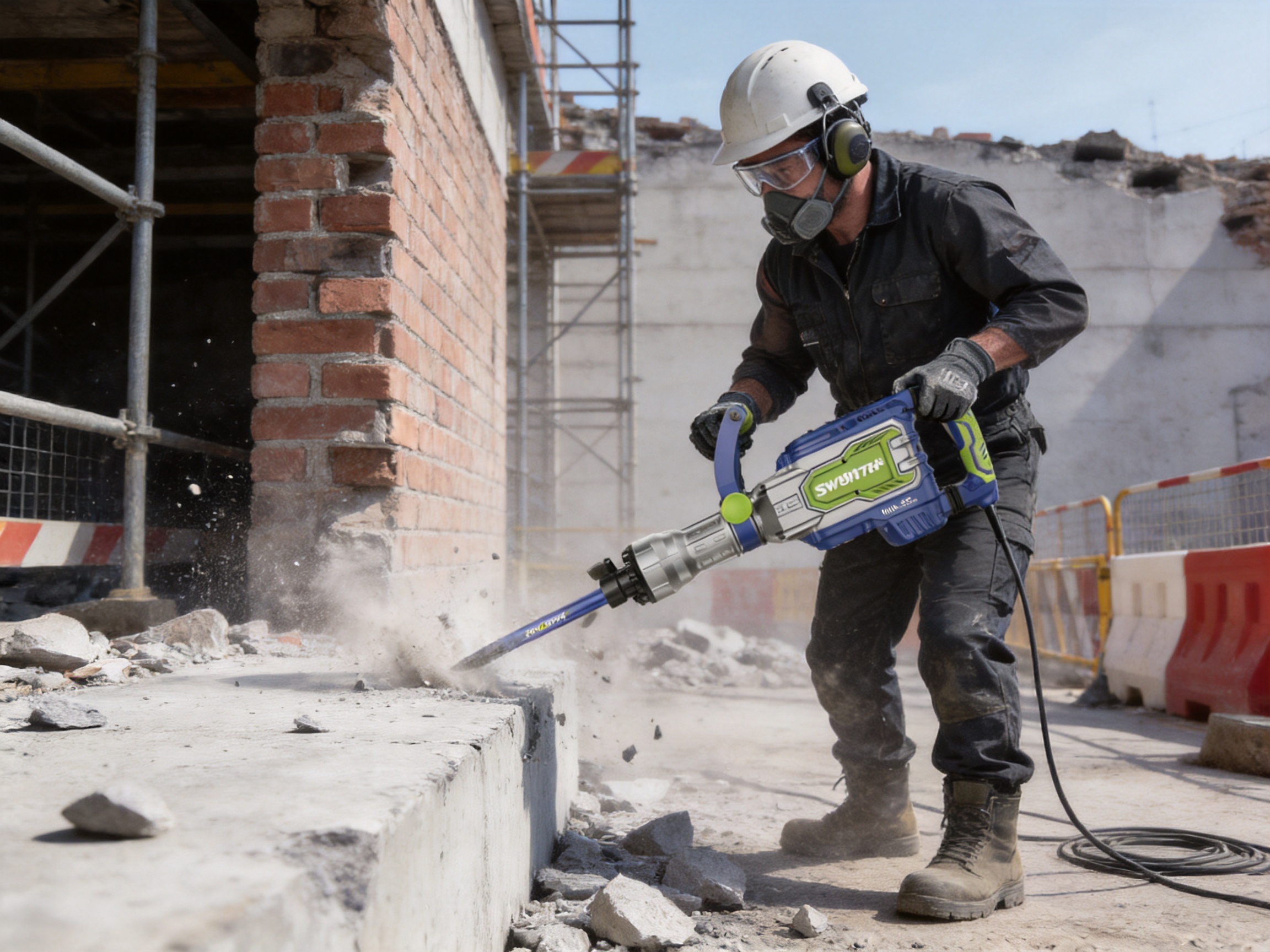
The SW9128 is suitable for a wide range of heavy-duty demolition operations. Construction contractors can use it to break concrete sections, remove masonry, open floor areas, and prepare structures for renovation. Its high impact energy is also useful when dismantling old foundations, removing hardened construction residues, or clearing damaged structural elements under controlled conditions.
Renovation professionals may use the hammer for wall opening, floor removal, concrete edge preparation, and large-scale masonry demolition. The tool can assist with removing old slabs and dense materials before new construction begins. The correct chisel should be selected for each task to improve control and reduce unnecessary wear.
Infrastructure and civil engineering teams may require demolition equipment for repair projects, roadwork, drainage construction, and utility access. In these applications, productivity and durability are important because the tool may be used in demanding outdoor environments. Dust, moisture, temperature variation, and difficult working angles make regular inspection and maintenance especially important.
Industrial maintenance teams may also benefit from a high-impact electric hammer when removing concrete surrounds, refractory material, heavy deposits, or damaged masonry. The tool should be used only for materials and conditions within its design purpose. It is not a substitute for specialized equipment in every industrial application.
Typical tasks include breaking concrete, demolishing brick walls, removing masonry sections, opening channels, stripping hardened surfaces, separating construction debris, and loosening material around repair areas. Operators should assess structural risks before demolition. Cutting or breaking load-bearing components can create serious hazards and should be performed only under qualified supervision and according to approved procedures.
13. Correct Operating Practices
Good operating technique improves both performance and tool life. The chisel should be aligned with the intended fracture direction, and the operator should maintain a firm but controlled grip. Excessive sideways pressure can place unnecessary stress on the accessory, lock rod, head, and impact system.
The tool should be allowed to deliver its own impact force. Pressing too aggressively may reduce the movement needed for effective impact and can increase vibration and heat. Light, consistent pressure is often more productive than forcing the machine into the material.
Operators should begin work from a stable position and keep both hands on the designated handles. Loose clothing, unstable footing, and crowded work areas can increase risk. The work zone should be cleared of unnecessary personnel and materials before starting.
Chisels must be selected according to the task and inspected for damage. A pointed chisel may be useful for initial penetration, while a flat chisel can support splitting and surface removal. Damaged or excessively worn accessories should be replaced. The locking mechanism must be checked before operation.
During extended use, the operator should monitor unusual noise, excessive heat, reduced impact, smoke, abnormal sparking, and changes in vibration. Any unusual condition should be investigated before continuing. Regular pauses can help reduce operator fatigue and allow the tool to cool.
14. Maintenance and Service Recommendations
Maintenance begins with cleaning. Dust and debris should be removed from ventilation openings, handle areas, the accessory holder, and the exterior housing. Construction dust can enter moving or electrical areas if cleaning is neglected. The tool should be disconnected from the power supply before cleaning or servicing.
Lubrication should follow the manufacturer’s instructions. The impact mechanism and gear system require suitable lubrication to reduce friction and control heat. Incorrect lubricant, insufficient lubricant, or excessive lubricant can all create problems. Users should not guess when a specific service procedure is required.
The power cord, plug, switch, housing, handles, and fasteners should be inspected regularly. A damaged cord or plug should be repaired or replaced by a qualified professional. Loose housing components may allow dust entry or create unsafe movement during operation.
Carbon brushes should be inspected according to operating hours and service guidance. Enlarged brushes may provide useful wear capacity, but they remain consumable parts. Replacing them before severe wear can help protect the commutator and maintain motor performance.
The lock rod and accessory holder should be checked for wear, deformation, cracking, or excessive clearance. Since the lock rod receives repeated loads, its condition is directly related to accessory security. Any suspected failure should be addressed before the hammer returns to service.
Storage should take place in a dry, clean location away from corrosive substances and extreme temperature. The tool should be stored with the accessory removed unless the operating instructions specify otherwise. Proper storage helps preserve rubber components, metal surfaces, electrical insulation, and internal lubrication.
15. Safety Considerations for Demolition Work
Demolition work involves risks from flying fragments, dust, noise, vibration, falling materials, hidden utilities, and structural instability. Operators should wear suitable eye protection, hearing protection, work gloves, safety footwear, and appropriate protective clothing. Respiratory protection may be necessary when concrete, brick, or other materials generate hazardous dust.
Before breaking a wall, floor, slab, or structural component, the work area should be assessed for electrical cables, plumbing, gas lines, reinforcement, and load-bearing functions. Unplanned damage to hidden services or structures can cause severe injury and property damage.
The SW9128 is a powerful tool and should not be operated by untrained personnel. The user must understand the tool’s controls, accessory system, electrical requirements, and emergency procedures. The hammer should never be pointed toward people, used with damaged components, or left running unattended.
Vibration exposure should be managed through sensible scheduling, appropriate rest periods, correct grip technique, and use of the anti-vibration handles. If the operator experiences persistent numbness, pain, or discomfort, work should stop and appropriate professional advice should be sought.
16. Why Manufacturing Experience Matters to Buyers
For a professional buyer, selecting a demolition hammer is not only a matter of comparing wattage and price. The manufacturer’s experience can influence consistency, spare-part support, engineering development, and quality control. A company that specializes in demolition hammers and chisel tools is more likely to understand the repeated stresses that define this product category.
Yongkang Siwei Technology Co., Ltd. describes itself as a professional manufacturer integrating research and development, production, and sales. Its focus on demolition hammers and chisel cutting tools provides a relevant technical foundation for products such as the SW9128. The company’s production philosophy emphasizes tough hammer heads, shock-absorbing grips, strong materials, and high-efficiency operation.
The company also states that its products are supplied to domestic and international markets and used in professional engineering projects. For international buyers, this orientation can be valuable because construction tools may need to satisfy different voltage systems, usage conditions, packaging requirements, and customer expectations. Export experience can encourage more systematic attention to product documentation and market-specific requirements.
In addition to demolition tools, the company reports experience in high-efficiency brushless motors, electronic control systems, intelligent battery platforms, and cordless garden equipment. Although these technologies serve a different product category, they demonstrate broader capabilities in motor development, electronic control, battery integration, and energy efficiency. Such capabilities may support future product development while complementing the company’s established expertise in corded heavy-duty tools.
17. Purchasing Guidance for Contractors and Distributors
Contractors should evaluate the SW9128 according to their actual workload. If the primary tasks involve thick concrete, hard brick, large masonry sections, and repeated demolition, the 1800W and 55J specifications provide a suitable starting point. If the work consists mainly of light chipping or occasional home maintenance, a smaller hammer may be more practical.
Distributors should consider the product’s positioning. The SW9128 is best presented as a professional large demolition hammer for high-impact applications. Its selling points include strong power, high impact energy, dual anti-vibration handles, forged head construction, six-tooth gear transmission, carburized lock rod, enlarged carbon brushes, and heat-dissipation design.
Buyers should also confirm available accessories, replacement carbon brushes, service procedures, packaging, warranty terms, electrical configurations, and technical documentation. These factors affect the total value of a tool over its working life. A reliable maintenance and parts system can be just as important as the initial purchase price.
For fleet purchasing, companies may compare the expected daily operating hours, material types, user training requirements, and maintenance schedules. A powerful tool can reduce demolition time, but it should be assigned to operators who understand how to use and maintain it correctly.
18. Frequently Asked Questions
Q1: What type of tool is the SW9128?
The SW9128 is a large corded electric demolition hammer designed for heavy-duty chiseling and demolition work. It is intended for concrete, brick, masonry, and other hard construction materials.
Q2: How powerful is the motor?
The hammer has an 1800W power input. This provides a substantial output platform for demanding professional applications.
Q3: What is the impact energy?
The stated impact energy is 55 joules. This high-impact specification is intended to support efficient breaking of hard materials such as concrete and brick.
Q4: How fast does it operate?
The no-load impact speed is 1950 blows per minute. Actual performance under load will depend on the material, accessory, power supply, and operating technique.
Q5: What voltage does the tool use?
The rated voltage is 220–240V at 50/60Hz. Users should confirm compatibility with the local electrical supply before operation.
Q6: Does the hammer have vibration reduction?
Yes. It uses upper and lower anti-vibration handles covered with soft rubber. The design is intended to reduce rebound, improve grip, and lower perceived hand and wrist fatigue during extended work.
Q7: What makes the handle suitable for professional work?
The handles combine a dual-support structure with soft, non-slip, wear-resistant rubber. A large switch is also provided to make pressing and holding more comfortable during operation.
Q8: What is the benefit of the six-tooth rotating gear?
The six-tooth gear system is designed to provide higher torque and stronger power transmission. This helps the tool maintain effective mechanical output when working against dense materials.
Q9: What is the front head made from?
The product uses an integral forged iron head. The design is intended to resist cracking and provide a durable foundation for repeated high-impact operation.
Q10: What is special about the lock rod?
The lock rod uses 35CrMo alloy steel and a carburizing process. This treatment is intended to improve surface durability and extend working life under repeated loading.
Q11: Does the tool use replaceable carbon brushes?
Yes. It uses an enlarged brush-holder structure with 7 × 17 × 24 millimeter carbon brushes. Carbon brushes are consumable parts and should be inspected and replaced according to service requirements.
Q12: Can the SW9128 be used continuously all day?
The hammer is designed for demanding professional work, but continuous operation must follow the manufacturer’s instructions and safe working practices. Operators should monitor heat, take suitable rest periods, keep ventilation openings clear, and stop if abnormal conditions occur.
Q13: What accessories can be used with the hammer?
Suitable demolition chisels, such as pointed and flat chisels, may be used according to the tool’s accessory system and operating instructions. Accessories must be compatible, correctly installed, and free from damage.
Q14: Is this hammer suitable for light household work?
It can perform heavy chiseling, but its large size and high impact output may be more than necessary for light household tasks. It is most appropriate for professional contractors, renovation teams, construction workers, and other users who require high-impact performance.
Q15: What safety equipment should be worn?
Users should wear eye protection, hearing protection, work gloves, protective footwear, and suitable work clothing. Dust protection and respiratory protection may also be necessary depending on the material and work environment.
Q16: What company manufactures the product?
The SW9128 is manufactured by Yongkang Siwei Technology Co., Ltd., a tool manufacturer focused on research and development, production, and sales, with specialization in demolition hammers and chisel cutting tools.
19. Overall Assessment
The SW9128 Rubber-Coated Large Demolition Hammer is designed for users who need more than occasional chiseling capability. Its 1800W motor and 55J impact energy provide the force required for demanding concrete and masonry demolition, while the 1950 blows-per-minute impact rate supports productive material removal.
Its advantages extend beyond power. The six-tooth gear system is intended to provide high torque, the forged iron head supports structural durability, and the 35CrMo carburized lock rod addresses the wear demands of accessory retention. The dual anti-vibration soft-rubber handles improve grip and control, while the enlarged carbon brushes and heat-dissipation design contribute to serviceability and operating stability.
For professional buyers, the product’s value also comes from the manufacturing experience behind it. Yongkang Siwei Technology Co., Ltd. combines product development, manufacturing, and sales, with a stated focus on professional tools, durable materials, and quality-oriented production. Its specialization in demolition equipment provides a relevant foundation for designing and producing high-impact tools.
The SW9128 is therefore a strong candidate for construction, renovation, masonry removal, infrastructure work, and other applications where reliable impact power is essential. When operated with the correct accessories, safe procedures, proper maintenance, and suitable work-rest practices, it can provide an efficient and durable solution for heavy-duty demolition operations.
References
1. Product technical information for the SW9128 Rubber-Coated Large Demolition Hammer, including rated voltage, motor power, impact rate, impact energy, motor dimensions, gear design, handle structure, lock rod treatment, and carbon brush specifications.
2. Yongkang Siwei Technology Co., Ltd. company information concerning research and development, production, sales, demolition hammer manufacturing, chisel cutting tools, and professional construction applications.
3. General occupational safety principles for electric power tools, including personal protective equipment, electrical inspection, vibration management, dust control, and safe demolition procedures.
4. General engineering references concerning forged metal components, carburized alloy steel, gear transmission, electric motor brush systems, and heat management in high-load tools.
5. General construction practice references concerning concrete breaking, masonry demolition, chisel selection, operator positioning, structural assessment, and worksite hazard control.

SW9128 Rubber-Coated Large Demolition Hammer
Product: SW9128 Rubber-Coated Large Demolition Hammer

Recommended Products
-


SW528 Small Hole Rebar Hammer
-
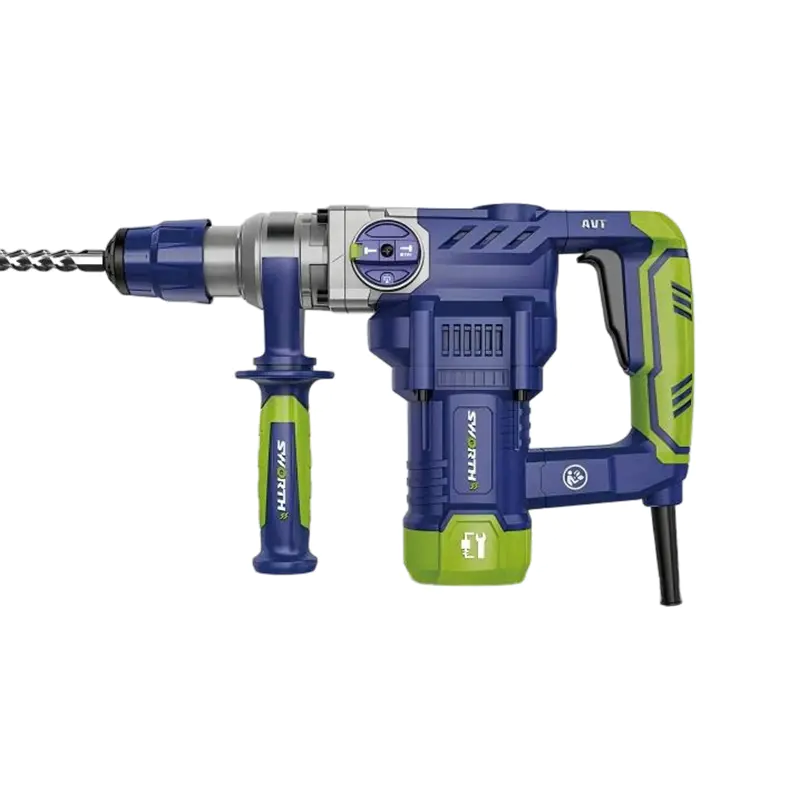
SW932 Groove Sandblasting Hammer
-
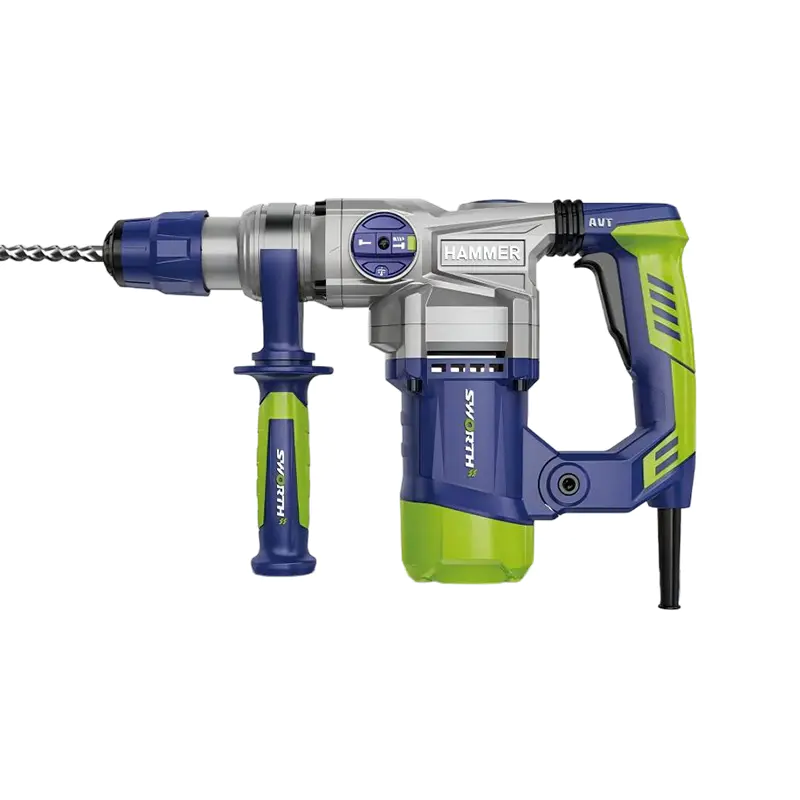
SW9362A Large Hole Rebar Hammer
-
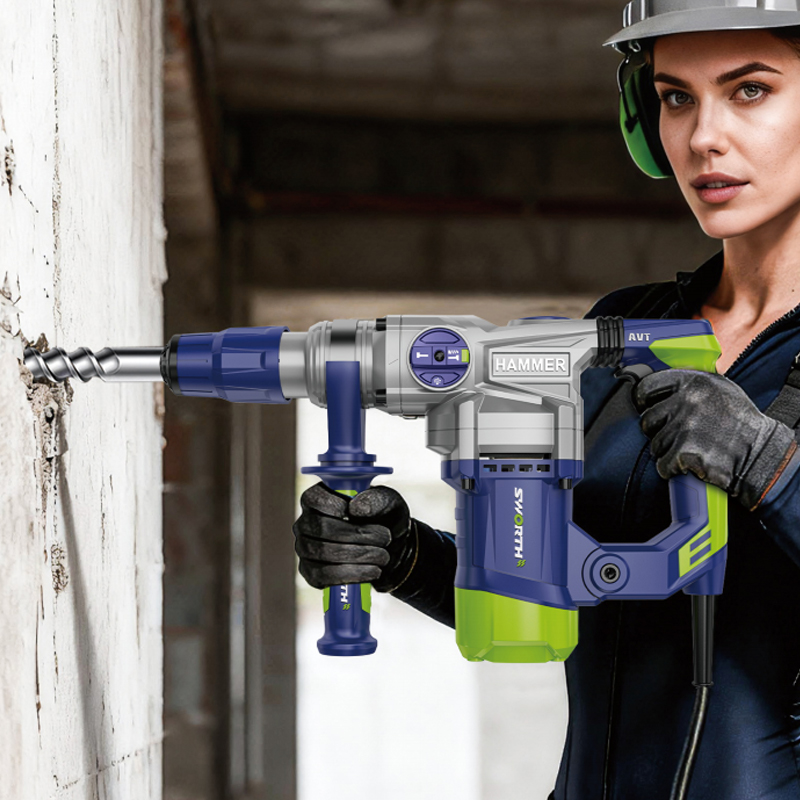
SW940 Enlarged Hole Rebar Hammer
-
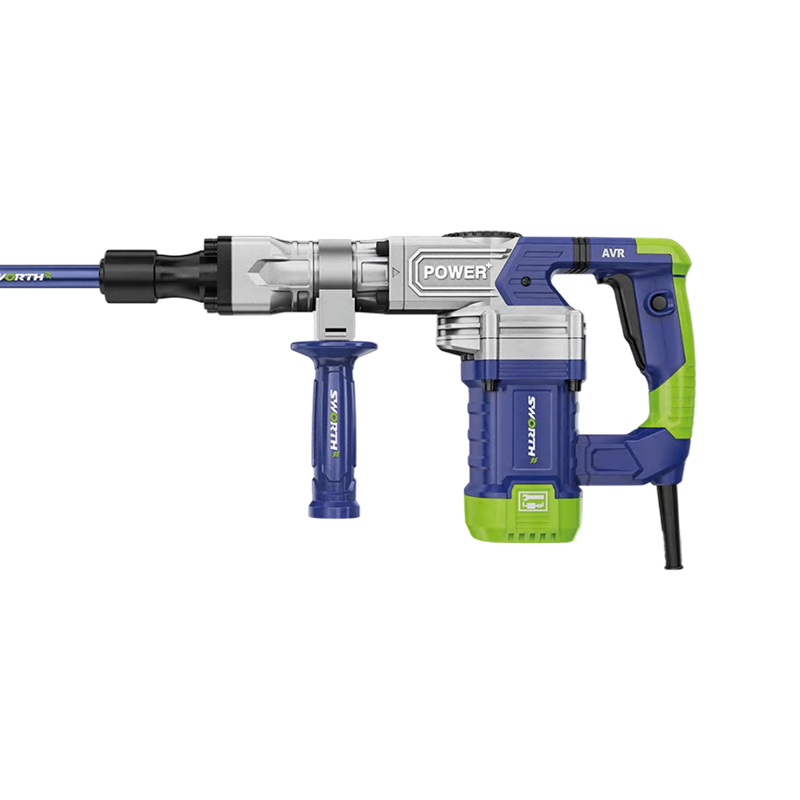
SW35S1 Powerful Demolition Hammer
-
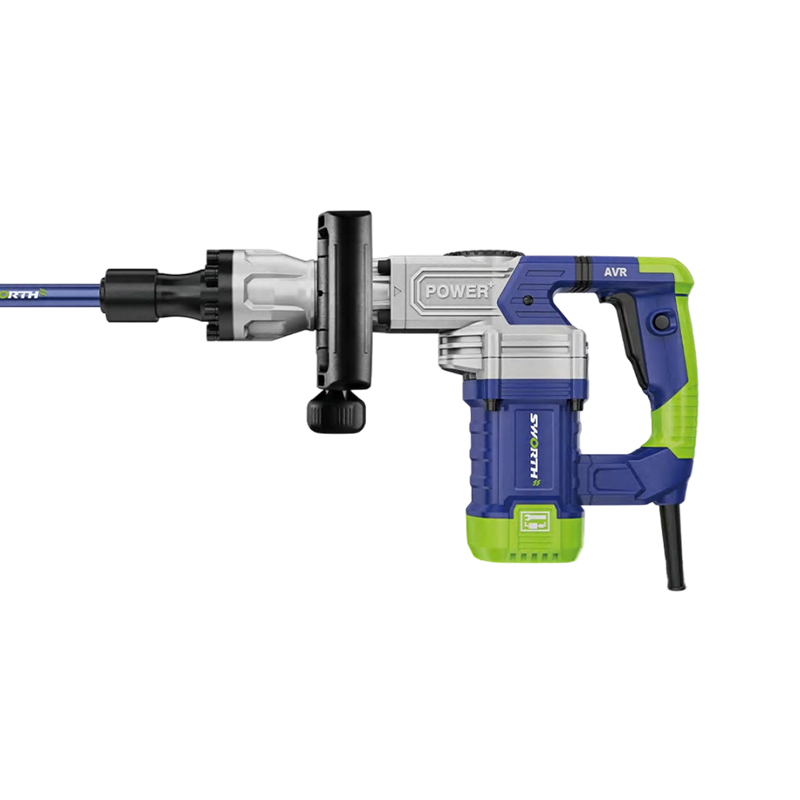
SW35S2 High-Efficiency Heat Dissipation Demolition Hammer
-
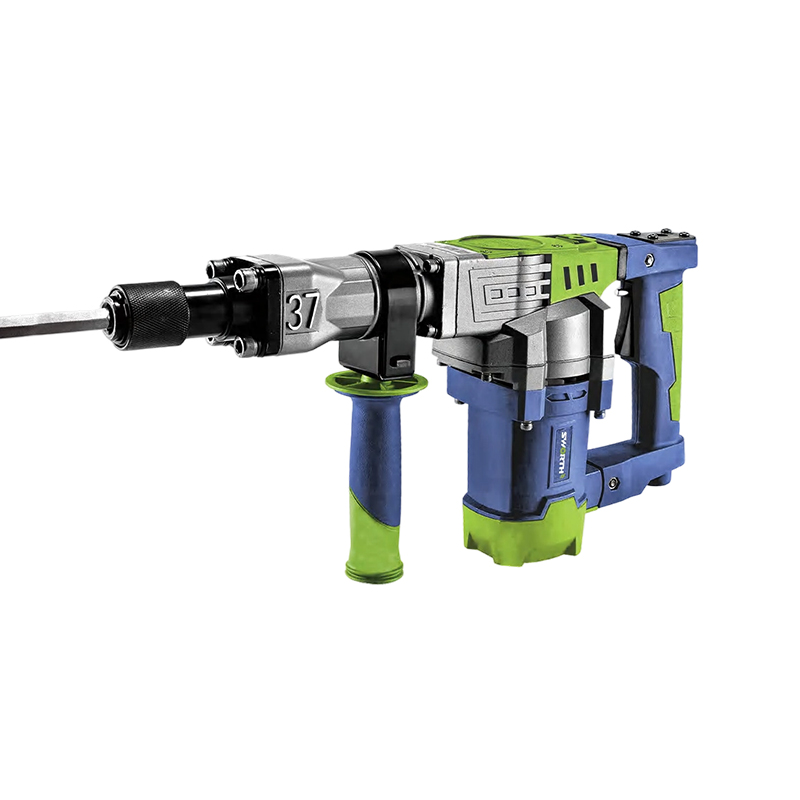
SW9371 High-Power Demolition Hammer
-
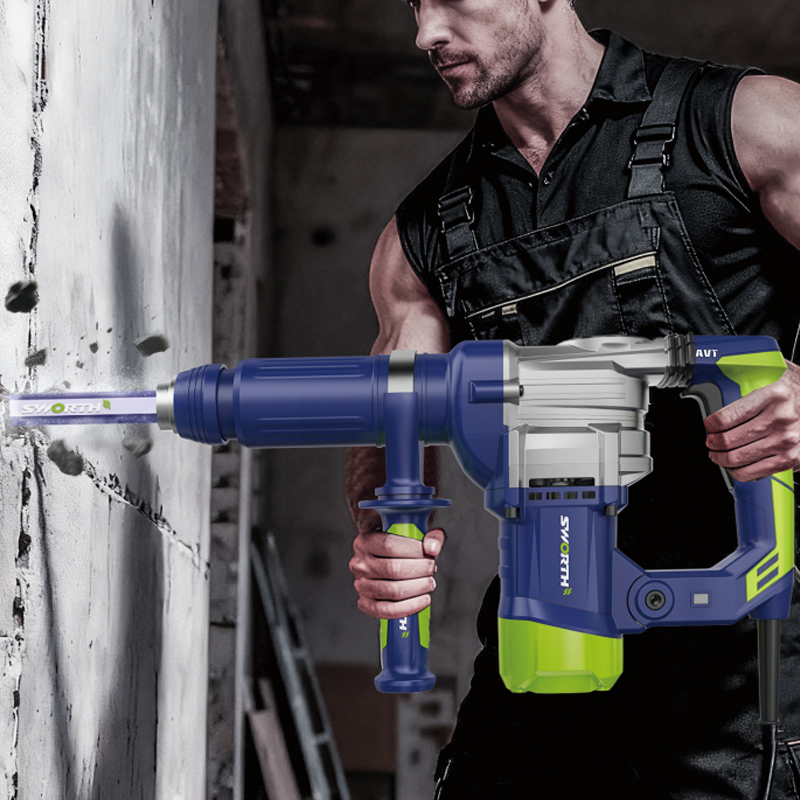
SW9373 Anti-Scalding Carbon Brush Holder Demolition Hammer
-
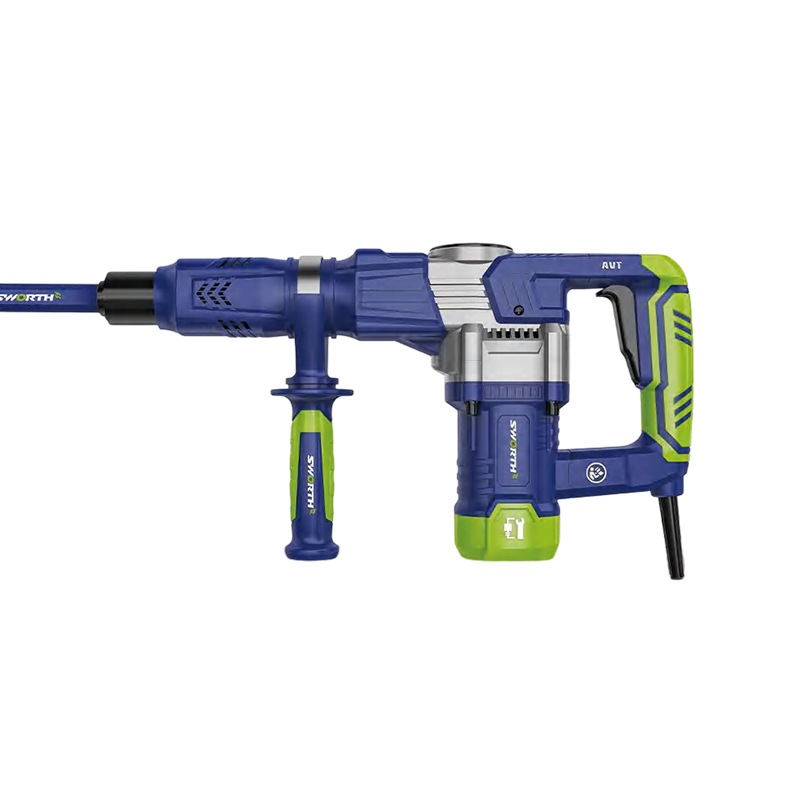
SW535 Powerful Anti-Scalding Demolition Hammer
-
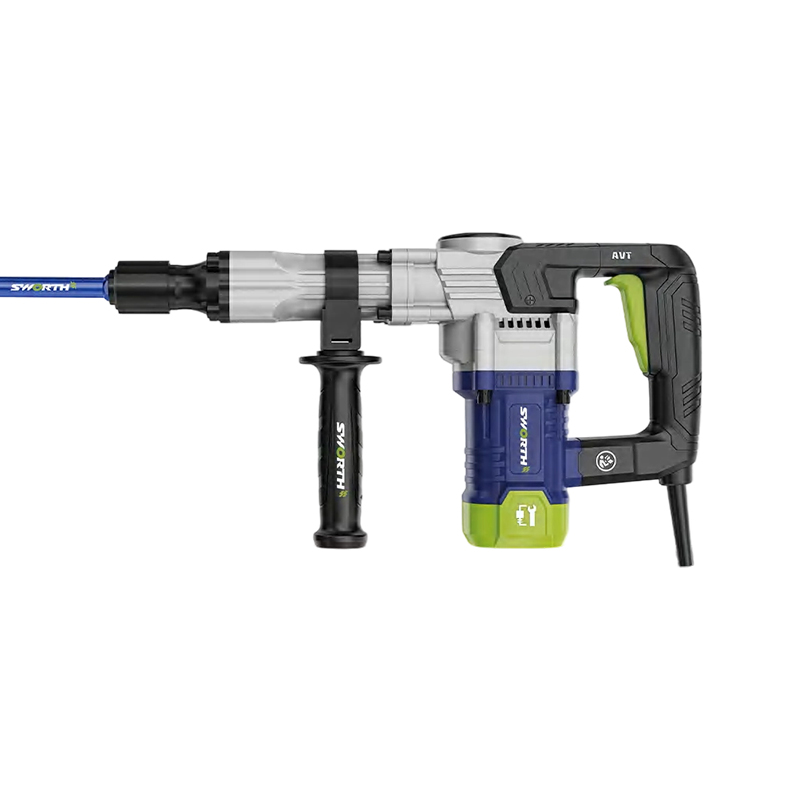
SW535-2 Durable Powerful Demolition Hammer
-
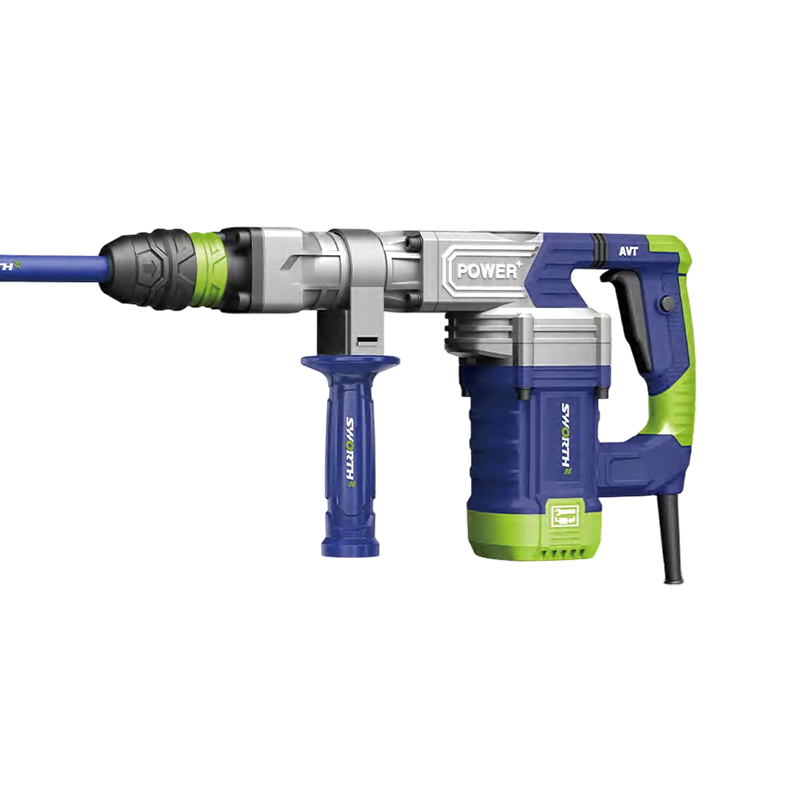
SW35S3 Five-Pipe Drill Bit Demolition Hammer
-

SW11E Five-Pipe Clamping Demolition Hammer
 +86-18314829275
 sale@sworthtools.com
 No. 101, Yugui Road, chengxi Industrial Zone, Yongkang City, Zhejiang Province, China
Copyright© Yongkang Siwei Technology Co., Ltd. All Rights Reserved

Hammer Tools & Cordless Garden Tools Manufacturer
