 English
 русский
 Español

SW9128 Hex 6-Tooth Rotating Gear Demolition Hammer: Mechanical Power for the Most Demanding Breaking Work
Introduction
Heavy demolition work demands more than a powerful motor. When operators break reinforced concrete, bridge decks, foundation structures, hard rock, or frozen ground, the tool must transfer energy efficiently, resist mechanical stress, remain stable during long shifts, and protect the user from excessive vibration and rebound. The SW9128 Hex 6-Tooth Rotating Gear Demolition Hammer is designed around these requirements. It combines a 1,750-watt electric motor, a six-tooth rotating gear system, a forged iron head, a hardened lock rod, and dual anti-vibration handles to deliver dependable impact performance in demanding professional environments.
The central design principle of this demolition hammer is straightforward: maximize mechanical power transmission while reducing the weak points that commonly limit heavy electric breakers. Instead of relying primarily on complex electronic features, the SW9128 uses a robust mechanical structure to deliver high torque and a rated impact energy of 55 joules. Its six-tooth rotating gear increases the contact area and transmission capability between the drive components, helping the tool send greater turning force to the impact mechanism.
For contractors, engineering companies, rental fleets, and professional demolition teams, this approach offers several practical benefits. The tool is suitable for severe work where a compact hammer may stall, overheat, or suffer accelerated wear. At the same time, its soft rubber grip, oversized switch, and top-and-bottom anti-vibration handle arrangement are intended to make powerful operation more manageable for the user.
This article examines the structure, performance, manufacturing strengths, application range, maintenance considerations, and competitive advantages of the SW9128. It also explains how the manufacturing capabilities of Yongkang Siwei Technology Co., Ltd. support the development of professional demolition hammers and related construction tools.

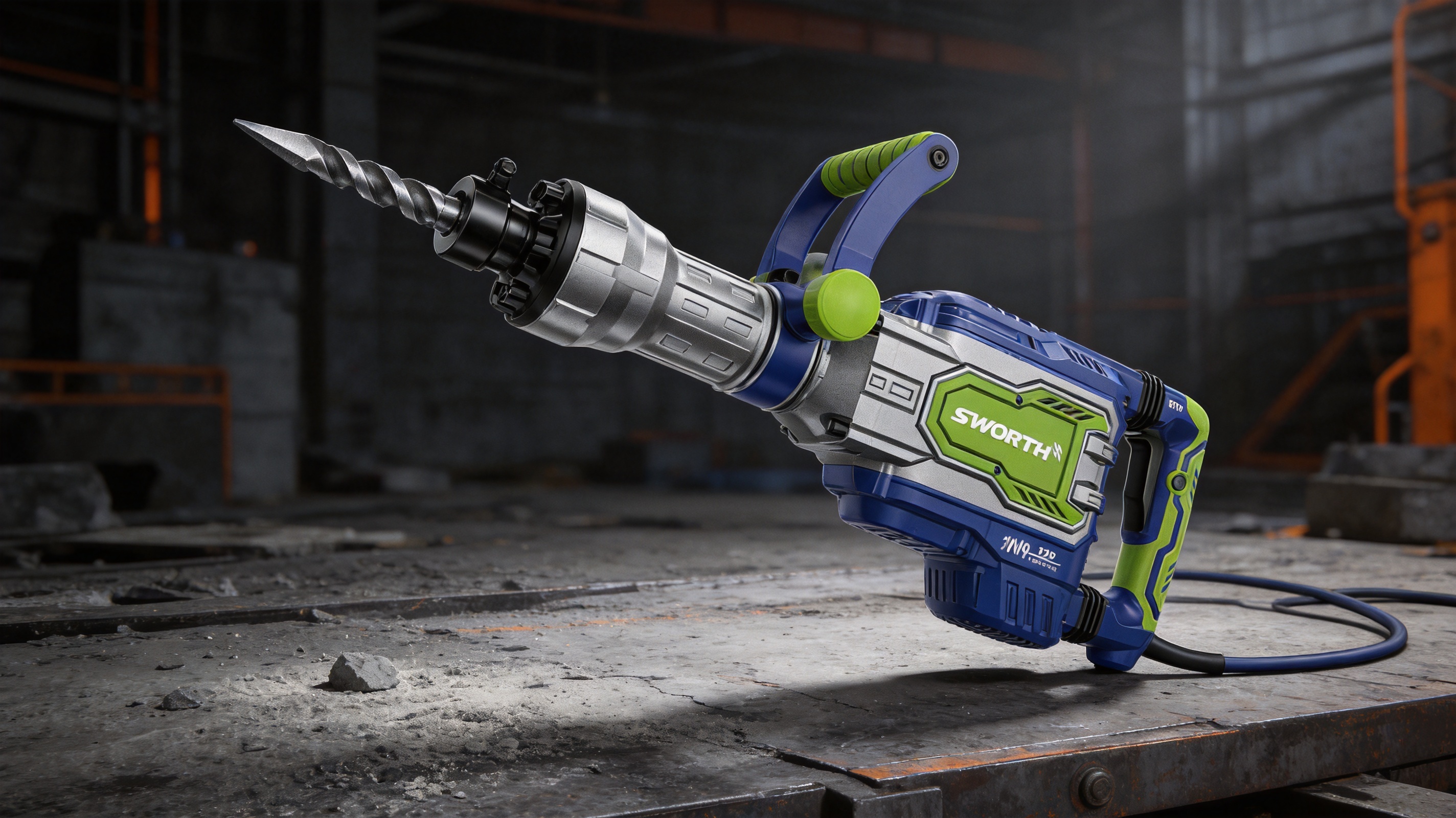
SW9128 Hex 6-Tooth Rotating Gear Demolition Hammer
Product Overview
The SW9128 is a corded electric demolition hammer designed for high-load breaking applications. It operates on a rated voltage of 220–240 volts at 50 or 60 hertz and has a power input of 1,750 watts. The no-load speed is rated at 1,950 revolutions per minute, while the stated impact energy reaches 55 joules. These specifications place the tool in a heavy-duty category intended for substantial demolition and breaking work rather than light chiseling or occasional household renovation.
The hammer uses a hex tool interface, allowing it to work with compatible hex shanks, chisels, points, and other demolition accessories. A hex system is particularly appropriate for high-impact work because it provides a solid connection between the tool holder and the accessory. Properly matched accessories can transfer repeated impact energy while supporting stable alignment under load.
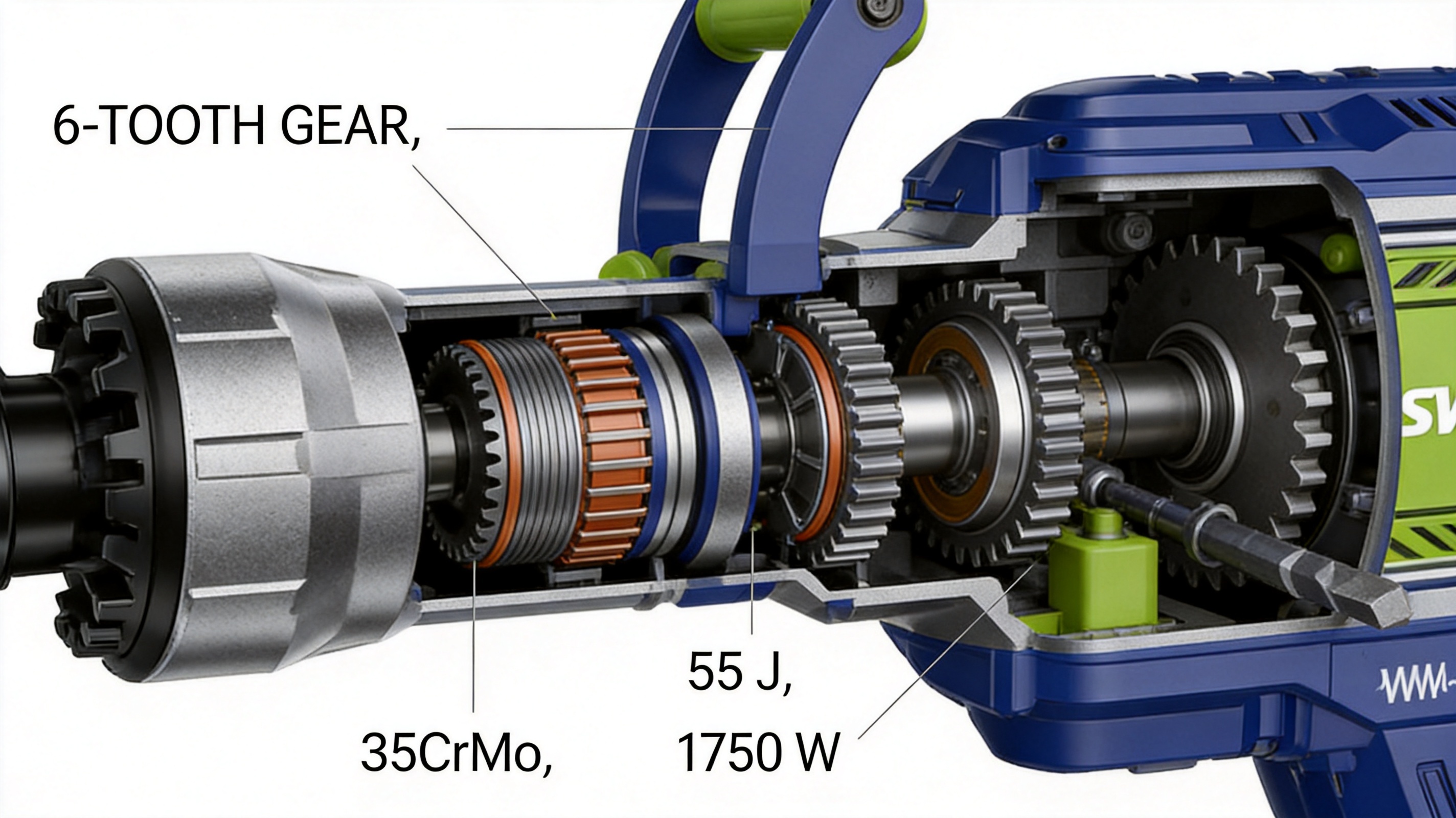
At the center of the product is the six-tooth rotating gear. This component is designed to improve torque transmission and support the delivery of force from the motor into the impact mechanism. In a demolition hammer, power is not determined only by the motor’s input rating. The internal gearing, bearings, shafts, impact piston, lubrication system, and housing must all work together. If one part cannot withstand the transmitted load, the theoretical motor power cannot be converted into practical breaking performance. The six-tooth arrangement is therefore an important part of the overall mechanical design.
The SW9128 also uses an integral forged iron head. Unlike a head assembled from welded sections, an integral forged structure does not depend on weld seams in the primary high-stress area. This supports structural continuity and helps reduce concerns related to cracking at weld joints. The head is one of the most heavily loaded parts of a demolition hammer, so its material integrity is essential for long-term reliability.
Another important component is the lock rod, manufactured from 35CrMo material and treated through a carburizing process. According to the supplied product information, this treatment increases working life by 30 percent. Carburizing creates a harder surface layer while maintaining a tougher core, a useful combination for a component exposed to repeated contact, pressure, and impact-related stress.
The handle system includes upper and lower anti-vibration handles. A second handle position gives the operator more control over tool alignment, while the anti-vibration structure helps reduce the transmission of vibration and rebound toward the hands and arms. The soft rubber grip and large trigger are designed to support comfortable operation and easier control during extended work.
Key Specifications
| Specification | Value |
|---|---|
| Product model | SW9128 |
| Product type | Hex demolition hammer |
| Gear configuration | Six-tooth rotating gear |
| Rated voltage | 220–240 V |
| Frequency | 50/60 Hz |
| Power input | 1,750 W |
| No-load speed | 1,950 rpm |
| Impact energy | 55 J |
| Stator diameter | 94 mm × 45 mm |
| Rotor diameter | 53 mm × 45 mm |
| Lock rod material | 35CrMo |
| Carbon brush size | 7 mm × 17 mm × 24 mm |
| Handle arrangement | Top and bottom anti-vibration handles |
These specifications should be considered together rather than individually. The 1,750-watt input provides the electrical foundation for heavy operation, while the 55-joule impact rating describes the energy delivered during each impact cycle under the applicable testing conditions. The 1,950-rpm no-load speed supports the movement of the internal drive system before material resistance is introduced. In actual work, performance will also depend on the bit type, material density, operator technique, supply voltage, extension cable selection, ambient temperature, lubrication, and maintenance.
Six-Tooth Rotating Gear for Higher Torque Transmission
The six-tooth rotating gear is the defining feature of the SW9128. In a high-impact tool, the gear system must transfer motor rotation into a mechanism capable of producing repeated linear impacts. This conversion creates substantial loads on the teeth and adjacent components. A gear with a suitable tooth design can distribute contact forces and support stable torque transfer when the tool encounters hard resistance.
The purpose of the six-tooth configuration is to provide greater mechanical engagement than a simpler or less robust arrangement. Increased engagement can help the tool transmit turning force to the impact mechanism more consistently. When the chisel meets reinforced concrete or hard rock, the motor must continue driving the mechanism without excessive slipping, distortion, or loss of useful energy. The rotating gear is therefore not merely a speed-reduction component; it is a central power-transmission element.
Compared with generic demolition hammers that may use lighter internal gearing, the SW9128 is positioned for users who prioritize torque and impact strength over a compact, lightweight design. A tool built for the hardest breaking tasks must be evaluated by how it handles resistance in real material, not just by its motor wattage. The six-tooth design helps create a stronger mechanical path between the motor and the impact assembly.
High torque is especially valuable when the accessory is partially embedded or when the working surface contains dense aggregate and reinforcement. The hammer must repeatedly restart and recover from resistance without excessive bogging. Although no demolition hammer can eliminate the effects of unsuitable accessories, excessive side loading, or incorrect operation, a robust drive system gives the operator a better foundation for difficult work.
The gear system also illustrates the product’s general engineering philosophy. The SW9128 emphasizes durable mechanical components that can be inspected, maintained, and understood by professional users. This can be an advantage in jobsite environments where simple, serviceable construction is often preferred over unnecessary complexity.
Forged Iron Head and Structural Reliability
The head of a demolition hammer experiences repeated shock, vibration, and reaction forces. It supports the tool holder and helps contain the impact mechanism, so any weakness in this area can affect safety, service life, and operating stability. The SW9128 uses an integral forged iron head rather than a head dependent on welded seams.
Forging forms metal under controlled pressure, encouraging a continuous structure with reduced dependence on joints. An integral forged head can provide a strong foundation for high-load work because it avoids weld seams in a critical stress area. The product information specifically identifies the design as resistant to cracking, reflecting the importance of maintaining structural integrity during repeated demolition cycles.
Compared with a low-cost housing assembled with poorly controlled joins, a forged head can offer a more reliable solution for professional applications. This does not mean that the component is immune to damage. Operators must still avoid dropping the tool, using it as a pry bar, applying excessive sideways force, or continuing operation after detecting cracks or abnormal noise. However, the forged construction gives the tool a significant structural advantage from the beginning.
The head material and manufacturing process also influence dimensional stability. The tool holder must remain correctly aligned with the impact mechanism. Misalignment can increase wear on the bit, lock rod, bearings, and internal sliding surfaces. A strong and accurately produced head helps maintain the relationship between these components under load.
For contractors working on foundations, bridge structures, retaining walls, and other reinforced concrete applications, the head design is an important purchasing consideration. These jobs can expose equipment to long periods of shock and dust. A structurally reinforced head helps support reliable use when the machine is operated according to its intended purpose.
35CrMo Carburized Lock Rod
The lock rod holds the hex accessory in position and is exposed to repeated impact, friction, and contact pressure. Its working condition is demanding because it must retain the tool securely while allowing the accessory to transfer impact energy efficiently. A worn or weakened lock rod can cause excessive movement, poor energy transfer, accelerated accessory wear, and potential operational hazards.
The SW9128 uses 35CrMo steel for the lock rod. This alloy is commonly associated with strength and toughness in mechanically loaded components. The product further specifies a carburizing process. During carburizing, carbon is introduced into the surface of the steel and the component is heat-treated to create a hardened exterior layer. The result is intended to combine surface wear resistance with a tougher internal core.
This combination is particularly useful for demolition tools. The surface must resist repeated contact and abrasion, while the core must tolerate shock without becoming excessively brittle. A component that is hard but fragile may crack under impact; a component that is tough but too soft may deform or wear quickly. Proper heat treatment aims to balance these competing requirements.
The stated service-life improvement of 30 percent gives the lock rod a clear advantage over an untreated or inadequately treated component, provided that the comparison is made under equivalent operating conditions. Actual life will depend on accessory fit, lubrication, dust contamination, impact load, work duration, and operator handling. Even a hardened lock rod can wear if the wrong accessory is used or if the tool is forced sideways.
Professional users should inspect the lock mechanism routinely. The accessory should fit correctly, move as designed, and remain securely retained. Any unusual looseness, visible deformation, severe scoring, or difficulty inserting and removing the accessory should be treated as a maintenance signal. Replacing a worn retaining component early can help prevent damage to more expensive internal parts.
High-Impact Performance for Severe Applications
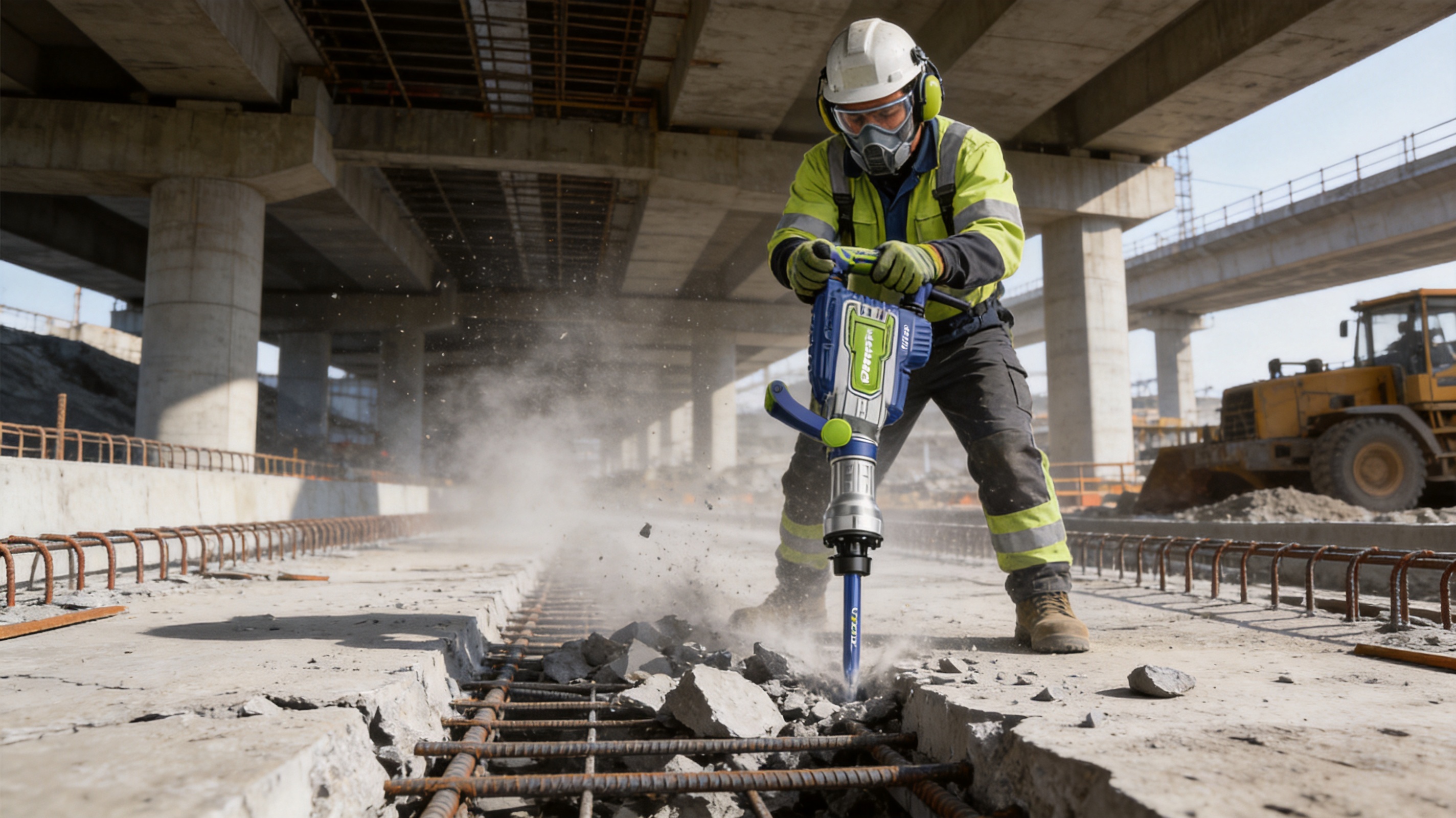
With a stated impact energy of 55 joules, the SW9128 is intended for severe material-breaking tasks. Its application range includes heavily reinforced concrete in foundation work, bridge decks, columns, retaining walls, hard rock in quarry and mining operations, and compacted or frozen ground.
Breaking reinforced concrete is one of the most demanding uses for an electric demolition hammer. Concrete provides resistance through its compressive strength, while embedded steel reinforcement can interrupt the fracture path and create additional rebound. A high-energy tool helps the operator remove material more efficiently, especially when paired with an appropriate pointed or flat chisel.
Bridge decks, columns, and retaining walls present similar challenges but may introduce additional requirements for access, work positioning, and controlled material removal. The dual-handle configuration can be helpful when the operator needs to maintain alignment against a vertical or angled surface. It also gives the user more control when the bit catches on reinforcement or when broken material shifts unexpectedly.
In quarrying and mining environments, the tool may be used for hard rock breaking, secondary reduction, trench preparation, or localized removal work. Rock varies greatly in density and fracture behavior, so productivity depends on selecting the correct accessory and working pattern. Operators should avoid forcing the hammer into a position where the tool is acting as a lever. The machine is designed to deliver axial impact, not to replace a pry bar or lifting device.
Frozen ground and compacted soil can also require substantial impact energy. In cold conditions, operators should allow the tool to reach a suitable operating state and pay attention to cable flexibility, lubrication condition, and material brittleness. Frozen ground can transmit sharp reaction forces, making proper stance and handle control particularly important.
Anti-Vibration Design and Operator Control
Powerful demolition hammers generate vibration as an unavoidable result of impact operation. The engineering objective is not to eliminate all vibration, which is not realistic for this class of tool, but to reduce unnecessary transmission to the operator while maintaining control and productivity.
The SW9128 uses anti-vibration handles at both the top and bottom of the tool. This arrangement provides two points of control and helps isolate the hands from some of the vibration and rebound created during operation. A top handle can help with downward pressure and positioning, while the lower handle supports guidance and stability. The separation between the handles also allows the operator to maintain a more balanced stance.
The soft rubber grip contributes to comfort and handling security. Demolition work often involves dust, gloves, sweat, and changing body positions. A textured or rubberized grip can help reduce hand slippage and improve control. The oversized trigger is designed to be easier to press and hold, which may be beneficial during long breaking cycles when precise trigger operation is difficult with gloved hands.
Reduced vibration can improve working comfort, but it should not be interpreted as eliminating the need for safe work practices. Operators should follow applicable exposure-control procedures, take suitable breaks, rotate tasks where possible, maintain a secure stance, and avoid gripping the tool more tightly than necessary. The hammer should be allowed to perform the impact work without excessive downward force.
Compared with a single-handle or poorly balanced demolition hammer, the SW9128’s dual-handle arrangement can offer better control during high-resistance applications. Better control may also support more accurate bit placement, reducing accidental contact with adjacent structures or unnecessary damage to surrounding material.
Motor and Electrical Configuration
The SW9128 is equipped with a 1,750-watt motor system. The supplied stator specification is 94 millimeters in diameter by 45 millimeters in height, while the rotor specification is 53 millimeters in diameter by 45 millimeters in height. These dimensions indicate a substantial motor architecture intended to support high-load operation.
The 220–240-volt rating makes the model suitable for electrical systems within that range, at either 50 or 60 hertz. Users should verify site voltage before operation and use a suitable power supply. A long or undersized extension cable can cause voltage drop, reduced performance, excess heat, and difficulty starting. Cables should be selected according to the tool’s power input, jobsite distance, local regulations, and environmental conditions.
The no-load speed of 1,950 rpm describes the operating speed without material resistance. Under load, actual behavior will change according to the material, bit condition, contact pressure, and internal temperature. Users should not interpret no-load speed as a guaranteed speed during concrete or rock breaking. Instead, it helps describe the basic operating range of the drive system.
The SW9128 uses carbon brushes and an upgraded brush holder structure. The carbon brushes are enlarged to 7 by 17 by 24 millimeters. Larger brushes can provide a greater contact area and may support longer service intervals when correctly matched to the motor and commutator. Because brushes are wear components, they should be inspected and replaced according to operating conditions and maintenance guidance.
The brush holder is also important. It must keep the brushes correctly aligned and maintain stable contact as the tool vibrates. A reinforced holder structure can help reduce irregular contact, arcing, and premature motor wear. This is especially relevant in a demolition hammer that may operate under dust, vibration, and repeated high load.
Advantages Over Generic Competitor Designs
The SW9128 competes in a demanding market that includes conventional demolition hammers with different motor sizes, gear structures, handle arrangements, and housing materials. Its main advantages are concentrated in mechanical durability, impact transmission, structural construction, and service-oriented design.
Higher Mechanical Engagement
The six-tooth rotating gear is intended to transmit higher torque and deliver greater breaking power. Compared with a basic gear system designed primarily for lower-load applications, this configuration is better aligned with reinforced concrete, hard rock, and compacted ground. It helps the motor maintain a stronger mechanical connection to the impact mechanism when resistance increases.
Forged Head Construction
The integral forged iron head avoids weld seams in a key high-stress location. This offers a structural advantage over housings that rely on weaker joins or lower-grade cast sections. For professional users, the head’s ability to withstand repeated shock is a major factor in total ownership cost.
Hardened Locking Component
The 35CrMo carburized lock rod is designed to resist wear while maintaining toughness. The stated 30 percent improvement in working life gives it an advantage over untreated or less carefully processed components. Longer service life can reduce downtime and the frequency of replacement during intensive work.
Dual Anti-Vibration Handles
Many basic demolition hammers use a simpler handle arrangement that may provide less control or transfer more vibration to the operator. The SW9128 includes both upper and lower anti-vibration handles, supporting control and comfort during heavy breaking cycles.
Serviceable Carbon Brush System
The enlarged carbon brushes and upgraded brush holder create a service-oriented electrical design. While brushless technology offers advantages in some tool categories, a professional corded demolition hammer may benefit from a straightforward, inspectable brushed motor system. Brushes can be replaced as wear components, and the motor architecture is familiar to many tool service technicians.
Practical Controls
The large trigger and soft rubber grip support operation with work gloves and in dusty construction environments. These features may appear simple, but they influence how easily the operator can maintain control throughout a long shift.
Competitor comparisons should always consider the complete application. A lighter hammer may be preferable for overhead or precision work, while a smaller model may be more suitable for tile removal and limited renovation. The SW9128 is most advantageous when the priority is high-impact mechanical power, structural robustness, and performance in hard materials.
Manufacturing Strengths and Engineering Capabilities
Yongkang Siwei Technology Co., Ltd. is described as a professional tool manufacturer integrating research and development, production, and sales. This integrated structure can provide important advantages in product development. When engineering, manufacturing, quality management, and customer feedback are connected within one organization, design improvements can be evaluated and introduced more efficiently.
The company emphasizes the concept of professionalism and quality first. Its product approach focuses on high-quality materials, advanced processes, and designs intended to withstand harsh working conditions. For a demolition hammer, this philosophy must be reflected in practical details such as material selection, forging, heat treatment, gear accuracy, brush-holder design, housing strength, assembly control, and final inspection.
The company specializes in demolition hammers and chisel cutting tools. This specialization gives it a focused understanding of professional breaking applications. Experience with hammer heads, chisels, impact components, and shock-absorbing grips can support better coordination between the accessory and the power tool. A manufacturer that understands the full impact chain is better positioned to optimize the tool holder, lock rod, gear system, and handle design as a complete assembly.
Advanced manufacturing is not limited to one machine or one process. It involves controlling the entire sequence from raw material selection to finished-product testing. Forged heads require suitable forming equipment, controlled heating, die management, and inspection. Carburized lock rods require controlled heat-treatment parameters, surface-hardness verification, dimensional checks, and protection against distortion. Gear components require accurate machining, appropriate material treatment, tooth-profile control, and assembly inspection.
Motor manufacturing also demands process discipline. The stator and rotor must be dimensionally compatible, the winding system must be properly insulated, and the commutator and carbon brushes must maintain reliable electrical contact. The brush holder must be positioned accurately and secured against vibration. Final assembly should include checks for abnormal noise, current behavior, no-load operation, mechanical movement, and insulation performance according to applicable requirements.
The manufacturer’s research and development capability also extends to newer energy technologies. Since 2024, the company has worked on high-efficiency brushless motors, electronic control systems, and intelligent battery platforms for cordless garden tools. Although the SW9128 is a corded demolition hammer, this experience demonstrates broader capabilities in motor design, power management, electronic controls, and user-oriented product development.
The company’s cordless garden tool range includes lithium-ion lawn mowers, string trimmers, lawn tractors, hedge trimmers, electric pruning shears, and high-speed chainsaws. This product diversity can support cross-category engineering knowledge. Brushless motor development, battery management, thermal control, and ergonomic design all require systematic research and manufacturing experience.
For buyers evaluating a supplier, the ability to develop both heavy corded construction tools and modern cordless equipment can be valuable. It suggests that the manufacturer is not limited to one legacy product type but is also building capabilities in efficient motors, electronic systems, and environmentally conscious equipment.
Quality and Process Considerations
For a demolition hammer to perform reliably, quality must be controlled at several levels. Incoming materials should be verified for grade, dimensions, and consistency. Forged components should be inspected for surface defects, dimensional accuracy, and structural integrity. Heat-treated parts should be checked for hardness and, where necessary, case depth and distortion. Gears should be evaluated for tooth accuracy, contact pattern, and smooth engagement.
Assembly quality is equally important. Bearings, shafts, seals, gears, and impact components must be installed with the correct fit and alignment. Excessive clearance can cause noise, vibration, and energy loss, while insufficient clearance can create heat and premature seizure. Lubrication must be applied in the correct quantity and to the correct locations. Too little lubricant increases wear; too much may raise internal temperature or affect movement.
Electrical testing should include insulation checks, grounding verification where applicable, switch operation, brush contact, and no-load running behavior. A professional manufacturer should also pay attention to cord strain relief, housing fasteners, handle attachment, and the security of the tool-retention mechanism.
Functional testing under representative conditions can help identify abnormal vibration, impact irregularities, overheating, or excessive noise before shipment. While no production test can reproduce every jobsite condition, a structured inspection system improves consistency and supports customer confidence.
The company’s focus on harsh working conditions is particularly relevant to this product category. Demolition tools encounter concrete dust, metal fragments, vibration, shock, and long operating periods. Manufacturing processes must therefore prioritize robust materials and controlled assembly rather than appearance alone.
Recommended Applications and Operating Practices
The SW9128 is suitable for foundation demolition, bridge and road infrastructure work, structural concrete removal, retaining-wall modification, quarry applications, mining-related rock breaking, trench preparation, and frozen-ground work. It may also be used for large-scale renovation and industrial maintenance where substantial masonry or concrete must be removed.
Before starting, the operator should inspect the hammer, power cord, plug, handle attachments, tool holder, lock rod, and accessory. The chisel or point should be compatible with the hex holder and should not show cracks, severe wear, or deformation. The work area should be checked for electrical cables, gas lines, water pipes, reinforcement hazards, unstable structures, and falling debris.
The operator should select an accessory that matches the material and task. A pointed accessory may be useful for initial penetration and concentrated breaking, while a flat chisel may be suitable for cutting or separating material. Accessories should be kept sharp and in suitable condition. A damaged or incorrectly shaped accessory can increase vibration and reduce productivity.
During operation, the hammer should be held with both hands and kept aligned with the intended direction of impact. Excessive sideways pressure should be avoided. If the accessory becomes stuck, the operator should release the trigger and follow an approved removal procedure rather than twisting the entire machine as a lever.
Operators should allow the hammer to work at its own impact rate. Heavy downward pressure is not always beneficial and can increase vibration, heat, and component stress. Correct positioning, suitable accessory selection, and controlled movement generally produce better results than forcing the tool.
Maintenance and Service Guidance
Regular maintenance helps preserve the performance advantages of the SW9128. Before maintenance, disconnect the power supply and wait for moving parts to stop. The exterior should be cleaned regularly to prevent dust accumulation around ventilation openings, switches, and handle joints.
The carbon brushes should be inspected at appropriate intervals. Brush wear can lead to reduced performance, sparking, intermittent operation, or commutator damage. Replacing brushes as a matched set and using components of the correct size helps maintain balanced electrical contact.
The gear and impact mechanism require suitable lubrication. Lubricant should be checked and renewed according to the manufacturer’s service recommendations. If the tool becomes unusually hot, noisy, or difficult to operate, it should be removed from service for inspection rather than operated until failure.
The lock rod and tool holder should be kept clean and checked for wear. Dust and fragments can interfere with accessory retention. A loose accessory, excessive movement, or visible damage requires prompt attention. The use of compatible accessories is essential for safe and efficient operation.
The power cord should be checked for cuts, crushed sections, exposed conductors, or damaged strain relief. Cords damaged during demolition work should not be repaired with temporary tape and returned to service without proper evaluation.
Professional fleets may benefit from maintenance records that document operating hours, brush replacement, lubrication, accessory changes, and inspection results. These records can help identify wear patterns and support preventive maintenance planning.
Safety Considerations
Heavy demolition work creates hazards from flying fragments, falling material, dust, noise, vibration, electrical energy, and unstable structures. Operators should wear appropriate personal protective equipment, including eye protection, hearing protection, gloves suitable for the task, protective footwear, and respiratory protection where dust control requires it.
Work areas should be isolated from bystanders. Concrete fragments can travel unexpectedly, especially when reinforcement or embedded objects are encountered. In structural demolition, a competent person should evaluate load paths and determine whether temporary support or a controlled sequence is required.
The SW9128 should not be used in wet conditions unless the work environment and electrical protection system are specifically suitable for such use. The power supply should include appropriate protection, and local electrical requirements should be followed. Users should never modify the tool’s electrical components or bypass safety devices.
Vibration exposure should be managed through appropriate work planning. Breaks, task rotation, correct grip, and maintaining the tool in good condition can help reduce unnecessary exposure. A worn accessory or damaged internal component may create more vibration than a properly maintained tool.
Because the hammer produces high impact energy, operators should maintain a stable stance and keep their body away from the likely path of movement if the accessory slips. The large trigger should be released whenever the tool is not actively engaged with the work surface.
Purchasing Value for Professional Users
The value of a demolition hammer depends on more than its purchase price. Downtime, accessory consumption, maintenance frequency, operator fatigue, and jobsite productivity all influence total cost of ownership. A tool that costs less initially but suffers frequent gear, head, or lock-rod failures may become more expensive over time.
The SW9128 is designed to address these ownership concerns through its six-tooth gear, forged head, carburized lock rod, enlarged carbon brushes, and anti-vibration handle system. These components target common sources of failure or discomfort in heavy demolition work.
For contractors, the product may be especially useful when one tool must handle multiple severe applications. It can support concrete breaking, structural demolition, rock reduction, and trench preparation without requiring a separate machine for every task. The 55-joule impact rating gives it the capacity for large material removal, while the hex interface supports a range of compatible accessories.
For rental businesses, durability and serviceability are important. A rental tool must tolerate use by different operators and remain easy to inspect. The SW9128’s mechanical construction and replaceable brush system may simplify routine servicing, although rental companies should establish their own inspection intervals based on usage intensity.
For engineering projects, supplier reliability is also significant. A manufacturer with research, production, and sales capabilities can potentially provide technical communication, product customization, accessory coordination, and after-sales support more efficiently than a trading-only supplier.
Q&A
What type of tool is the SW9128?
The SW9128 is a corded electric hex demolition hammer designed for high-impact breaking applications. It is intended for professional users working with reinforced concrete, hard rock, frozen ground, and other difficult materials.
What is the impact energy?
The stated impact energy is 55 joules. Actual jobsite productivity will depend on material type, accessory selection, operating technique, and the condition of the tool.
What makes the six-tooth gear important?
The six-tooth rotating gear is designed to improve torque transmission from the motor to the impact mechanism. It helps the hammer deliver greater mechanical force when the accessory encounters hard resistance.
Why is the head forged instead of welded?
The integral forged iron head avoids weld seams in a highly stressed structural area. This supports strength and helps reduce the risk of cracking associated with weak or poorly controlled joints.
What is the purpose of the 35CrMo lock rod?
The lock rod secures the hex accessory in the tool holder. The use of 35CrMo steel and carburizing is intended to provide a hard, wear-resistant surface while preserving a tougher internal structure. The supplied information states that its working life is increased by 30 percent.
Does the hammer have vibration-reduction features?
Yes. It has anti-vibration handles at both the top and bottom of the tool. It also includes a soft rubber grip to support handling comfort and control.
What are the electrical requirements?
The hammer is rated for 220–240 volts at 50 or 60 hertz and has a power input of 1,750 watts. Users should verify the jobsite supply and use an appropriately rated cable and electrical protection system.
Are the carbon brushes replaceable?
The tool uses a brushed motor with enlarged 7 × 17 × 24 millimeter carbon brushes. As wear components, the brushes should be inspected and replaced when necessary using compatible parts.
Can the SW9128 be used for rock breaking?
Yes. Hard rock breaking in quarry and mining operations is listed as one of its intended applications. The correct accessory, stable positioning, and suitable work procedures remain essential.
Is it suitable for light household renovation?
It may be used for heavy renovation tasks, but its 55-joule impact energy and 1,750-watt motor are more suited to professional and severe applications. A smaller hammer may be more convenient for light tile removal or limited indoor work.
What maintenance is most important?
Important maintenance tasks include checking the tool holder and lock rod, inspecting carbon brushes, maintaining lubrication, cleaning ventilation areas, checking the power cord, and investigating unusual noise, heat, vibration, or reduced impact performance.
What manufacturing capabilities support this product?
The manufacturer integrates research and development, production, and sales, and specializes in demolition hammers and chisel cutting tools. Its processes include forged structural components, carburized wear parts, motor assembly, brush-holder development, and product inspection. The company also develops brushless motors, electronic controls, and battery platforms for cordless garden tools.
Conclusion
The SW9128 Hex 6-Tooth Rotating Gear Demolition Hammer is engineered for users who need substantial mechanical force and dependable construction in difficult breaking environments. Its 1,750-watt motor and 55-joule impact rating provide the foundation for demanding work, while the six-tooth rotating gear is designed to convert motor power into higher torque and effective impact transmission.
The product’s advantages extend beyond headline power. The integral forged iron head supports structural durability, the carburized 35CrMo lock rod is designed for longer wear life, and the enlarged carbon brushes and upgraded brush holder support a serviceable motor system. The top-and-bottom anti-vibration handles, soft rubber grip, and oversized trigger address the practical requirements of professional operation.
Compared with generic demolition hammers designed for lighter or less demanding work, the SW9128 offers a stronger focus on heavy-duty mechanical performance, structural integrity, and maintainability. It is best suited to contractors, infrastructure teams, quarry operators, mining users, rental fleets, and other professionals who regularly work with reinforced concrete, hard rock, compacted ground, or frozen soil.
Behind the product is a manufacturer with experience in demolition hammers, chiseling tools, motor systems, and cordless garden equipment. Its integrated research, production, and sales capabilities provide a foundation for process control and product development. By combining traditional heavy-tool expertise with newer brushless and battery technologies, the company is positioned to serve both demanding construction applications and the growing market for efficient cordless equipment.
For the intended users, the SW9128 represents a practical combination of high impact energy, torque-focused gearing, forged construction, hardened wear components, operator control, and professional manufacturing experience.
References
1. Product specification sheet for the SW9128 Hex 6-Tooth Rotating Gear Demolition Hammer.
2. Internal product description covering applications, construction features, handle design, gear configuration, and maintenance-related components.
3. Manufacturer information concerning research and development, production capabilities, demolition tools, chisel products, brushless motors, electronic controls, and cordless garden equipment.
4. General engineering principles for forged iron components, carburized alloy-steel parts, gear-driven impact mechanisms, and carbon-brush electric motors.
5. General occupational safety principles for electric demolition tools, concrete breaking, vibration exposure, dust control, electrical protection, and personal protective equipment.
Product: SW9128 Hex 6-Tooth Rotating Gear Demolition Hammer

Recommended Products
-


SW528 Small Hole Rebar Hammer
-
SW932 Groove Sandblasting Hammer
-
SW9362A Large Hole Rebar Hammer
-
SW940 Enlarged Hole Rebar Hammer
-
SW35S1 Powerful Demolition Hammer
-
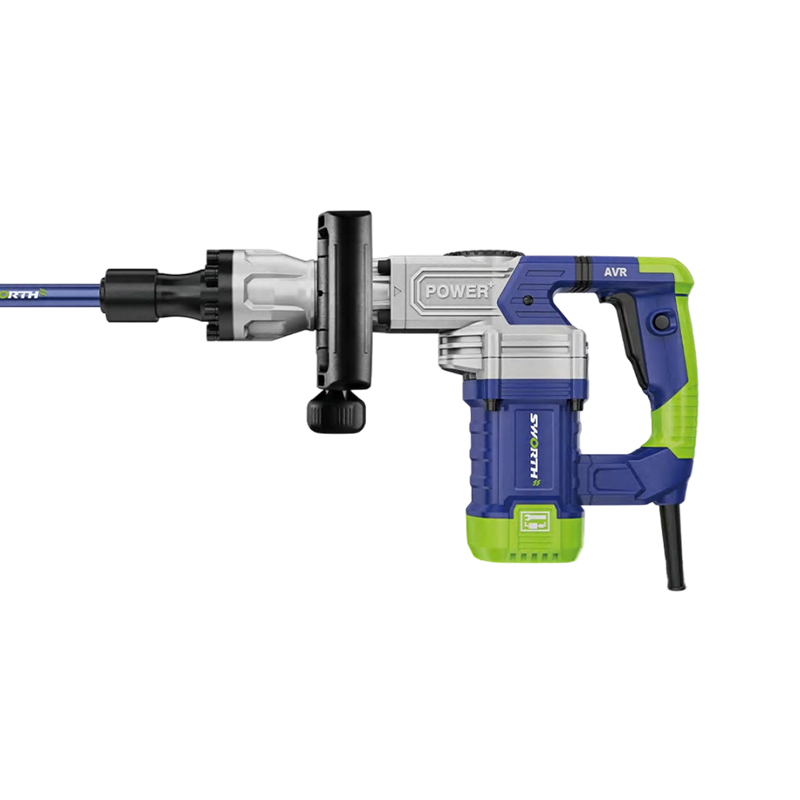
SW35S2 High-Efficiency Heat Dissipation Demolition Hammer
-
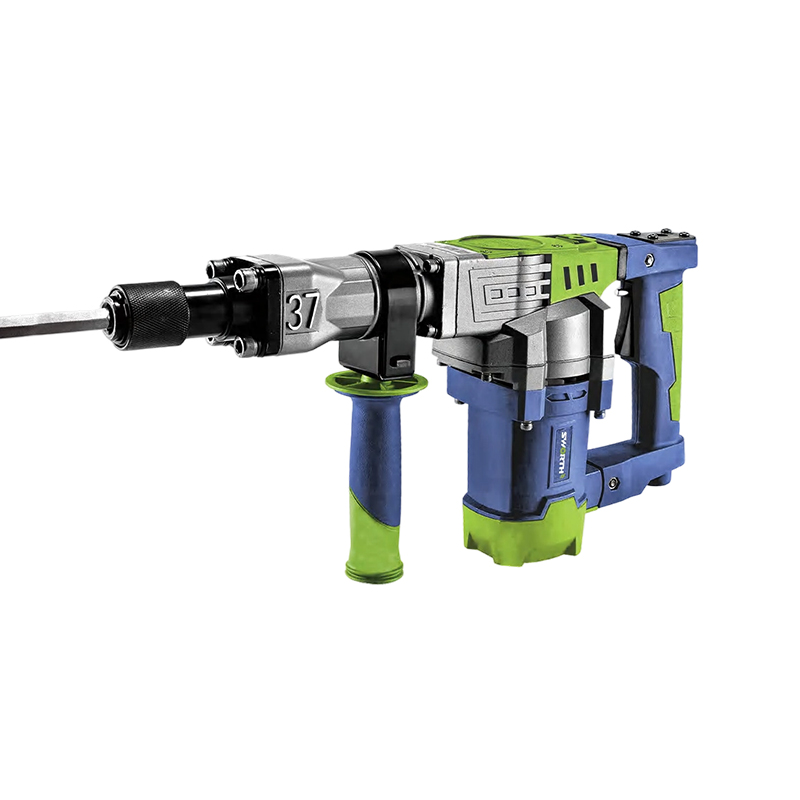
SW9371 High-Power Demolition Hammer
-
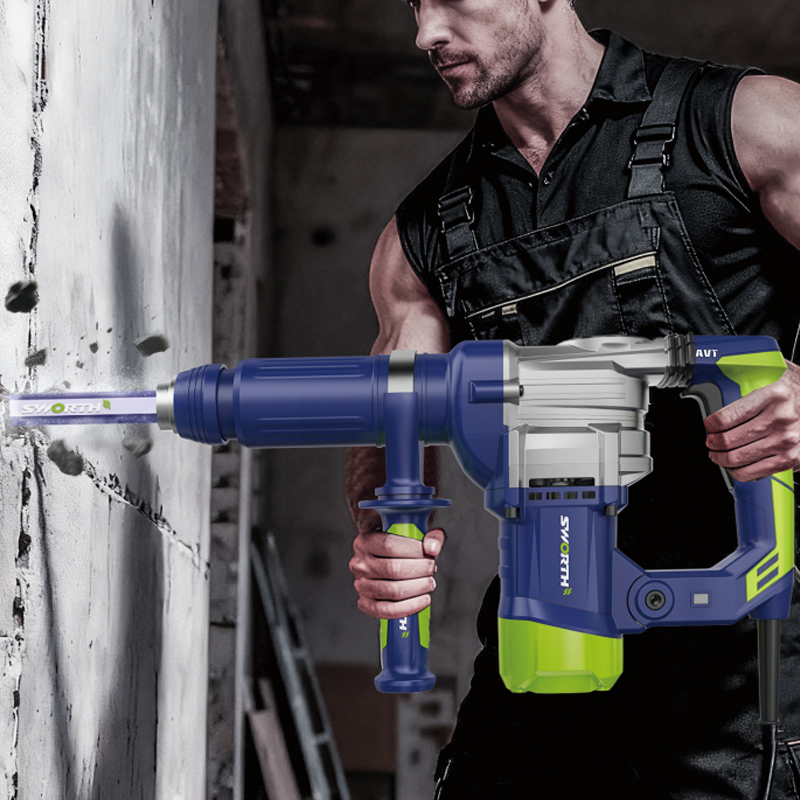
SW9373 Anti-Scalding Carbon Brush Holder Demolition Hammer
-
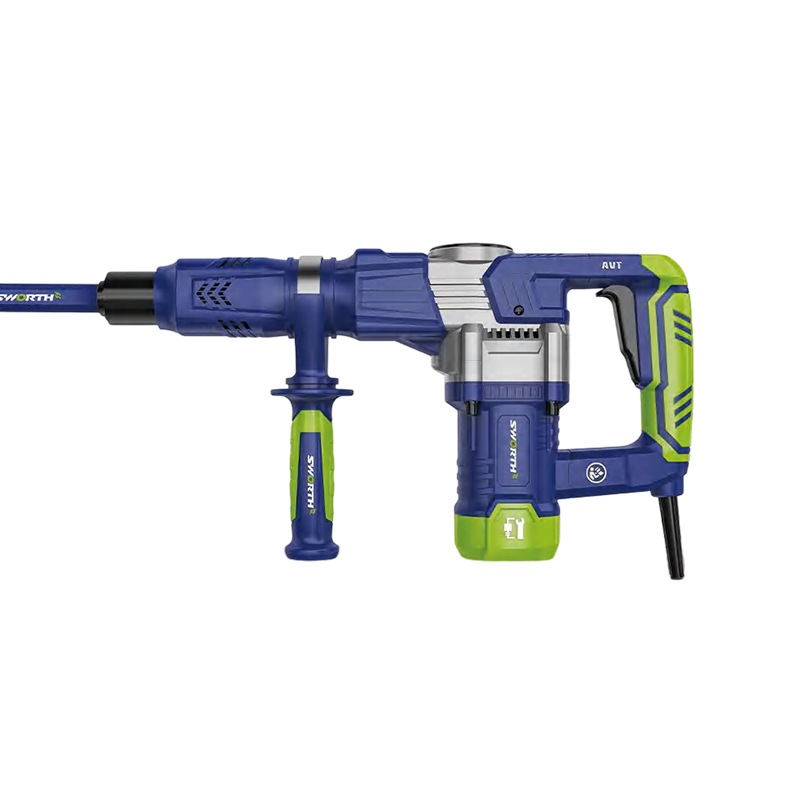
SW535 Powerful Anti-Scalding Demolition Hammer
-
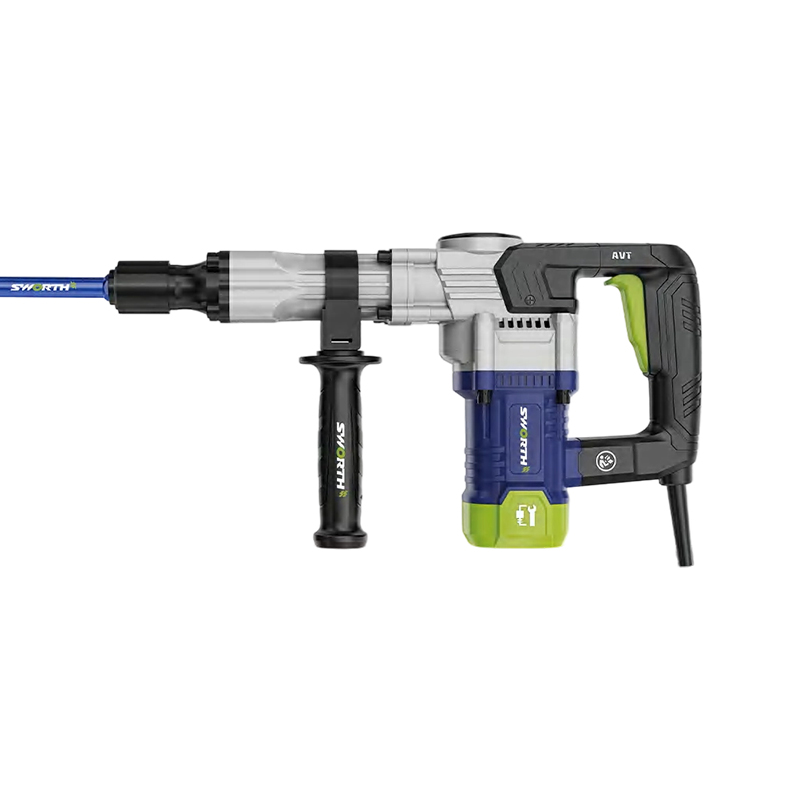
SW535-2 Durable Powerful Demolition Hammer
-
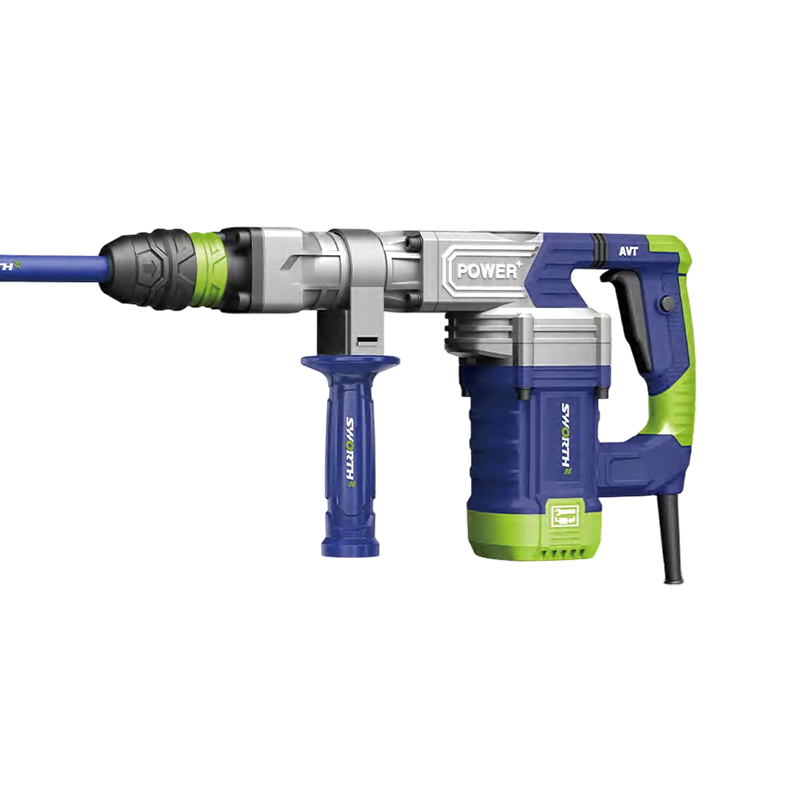
SW35S3 Five-Pipe Drill Bit Demolition Hammer
-

SW11E Five-Pipe Clamping Demolition Hammer
 +86-18314829275
 sale@sworthtools.com
 No. 101, Yugui Road, chengxi Industrial Zone, Yongkang City, Zhejiang Province, China
Copyright© Yongkang Siwei Technology Co., Ltd. All Rights Reserved

Hammer Tools & Cordless Garden Tools Manufacturer
