 English
 русский
 Español

SW89600 Dust-Proof Cutting and Grooving Angle Grinder: High-Torque Performance for Demanding Work
Cutting and grooving applications place unusually high demands on an angle grinder. The tool must deliver sufficient power without excessive heat, maintain stable performance when the workload increases, protect its internal components from abrasive dust, and remain comfortable enough for operators who use it for long periods. A grinder that performs well during short, light-duty tasks may struggle when used continuously on masonry, metal, concrete-related materials, or other demanding workpieces.
The SW89600 Dust-Proof Cutting Grooving Angle Grinder is designed around these practical challenges. It combines a 1150W high-torque motor, a multi-layer dustproof structure, optimized heat management, tightly fitted gears, reinforced motor components, and a compact 100 mm cutting system. The result is a professional-oriented electric angle grinder intended for cutting and grooving work where dependable power and durability are essential.
Rather than focusing only on peak output, the design addresses the complete operating cycle of a grinder: power delivery, overload resistance, heat dissipation, protection against dust, transmission reliability, operator control, and service life. This balanced approach makes the SW89600 suitable for construction professionals, renovation teams, installation contractors, fabrication workshops, maintenance personnel, and serious users who require more than a basic intermittent-use tool.
This article examines the product’s construction, working advantages, manufacturing strengths, application value, maintenance requirements, and position relative to ordinary cutting and grooving grinders.

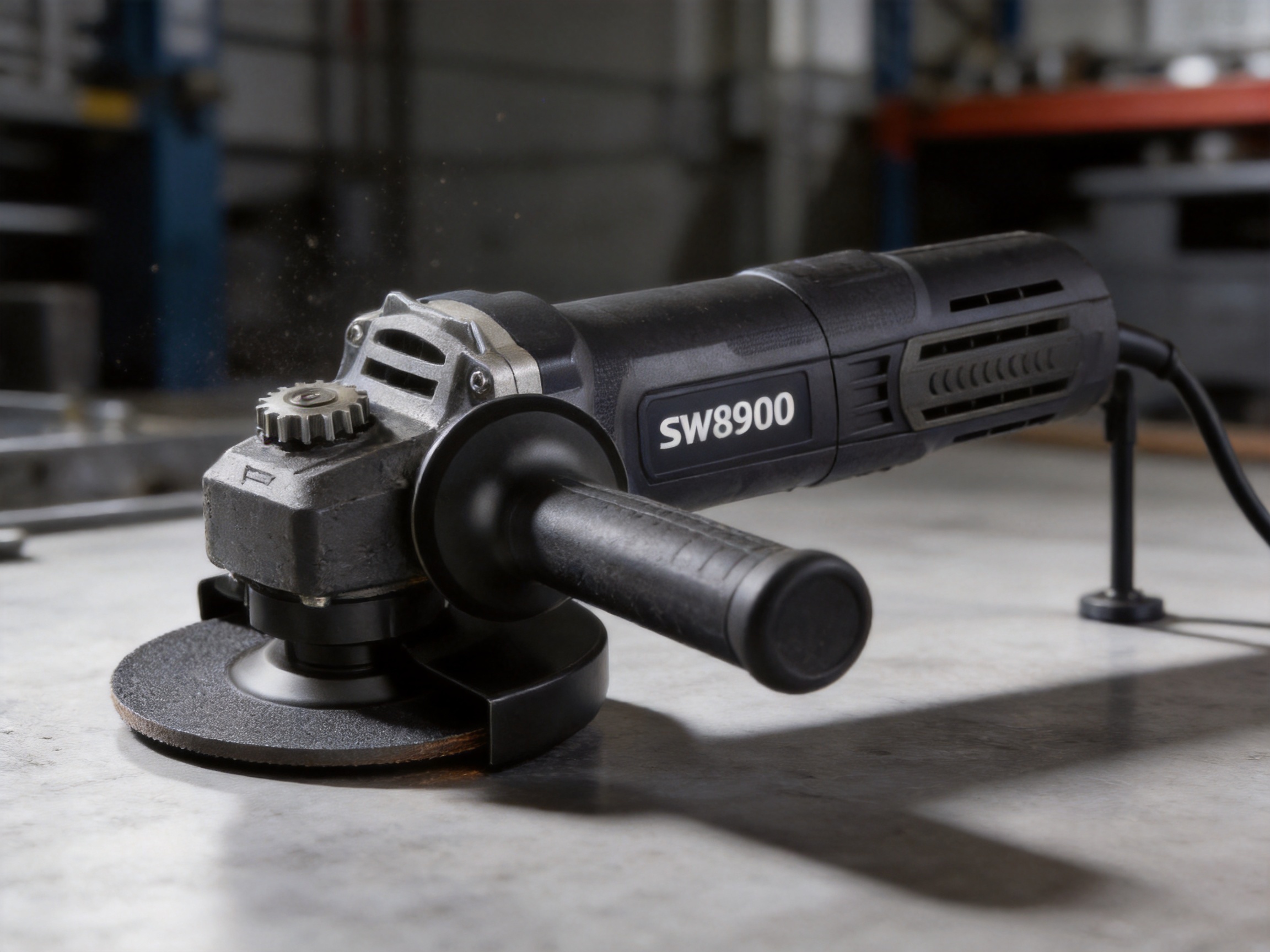
SW89600 Dust-proof Cutting Grooving Angle Grinder
1. Product Overview
The SW89600 is an electric cutting and grooving angle grinder rated for 220–240V at 50/60Hz. Its 1150W power input provides a substantial reserve for demanding tasks, while the 100 mm blade size supports a compact and maneuverable working format. This combination is practical for users who need a tool that can work in restricted spaces while still supplying strong cutting performance.
The grinder is engineered for high-intensity operation. Its optimized structural design helps control the temperature of the machine during extended use. Temperature control is particularly important in a compact power tool because the motor, commutator, brushes, bearings, gears, and housing all operate in close proximity. If heat accumulates too quickly, electrical efficiency can decline and component wear can accelerate.
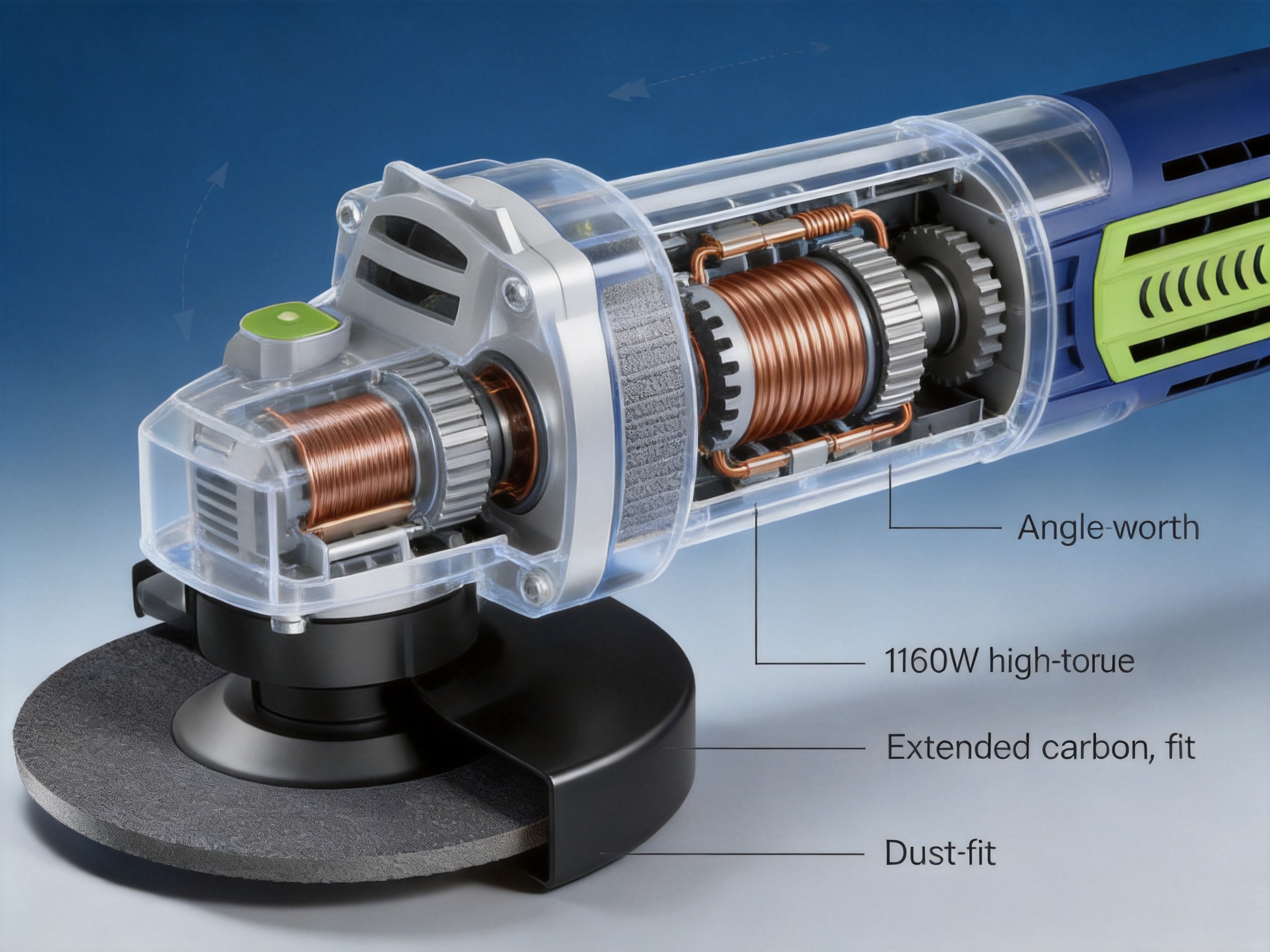
To address this issue, the SW89600 incorporates a motor configuration built around a Ø53 × 63H stator and a Ø32 × 63H rotor. These dimensions are part of the product’s internal motor design and support the tool’s high-torque operating characteristics. The motor also uses 200-degree high-temperature copper wire, helping it withstand the thermal demands associated with intense cutting and grooving work.
The machine is also designed with dust resistance in mind. Cutting and grooving can generate fine particles that may enter ventilation openings and accumulate around the motor or critical electrical components. The SW89600 uses a multi-layer dustproof system intended to reduce the penetration of abrasive dust and help preserve internal cleanliness.
Its transmission system includes double tight-fit gears. A secure gear fit helps reduce unwanted movement within the drive system, supports consistent power transfer, and can contribute to a more controlled working feel. The head shell and gear housing are integrated into the product structure, creating a robust front assembly designed to tolerate the vibration and mechanical stress associated with cutting operations.
| Specification | Details |
|---|---|
| Product model | SW89600 |
| Product type | Cutting and grooving angle grinder |
| Rated voltage | 220–240V, 50/60Hz |
| Power input | 1150W |
| Blade size | 100 mm |
| Stator dimensions | Ø53 × 63H |
| Rotor dimensions | Ø32 × 63H |
| Motor wire | 200-degree high-temperature copper wire |
| Commutator | 24.5 mm enlarged and heightened commutator |
| Carbon brushes | 6 × 11 mm extended carbon brushes |
| Gear construction | Double tight-fit gears |
| Housing design | Head shell integrated with gear housing |
2. Why Power Matters in Cutting and Grooving
Cutting and grooving are not identical to light grinding. During grinding, the operator may remove material gradually across a relatively broad surface. Cutting requires the abrasive wheel or blade to maintain a narrow path through the workpiece, while grooving requires controlled material removal to create a channel or recess. Both operations can create significant resistance at the working edge.
A motor with inadequate torque may slow dramatically when the blade meets a harder section of material. This can lead to reduced productivity, uneven cutting, increased vibration, and greater stress on the motor and transmission. In contrast, a high-torque motor can maintain more stable rotational behavior when the load rises, allowing the operator to work with greater consistency.
The SW89600 uses a 1150W motor to provide power for high-load applications. The motor is not designed simply to produce a high number on a specification sheet. Its supporting components—including the stator, rotor, copper winding, commutator, carbon brushes, gears, and housing—are selected and arranged to support practical power delivery under demanding conditions.
Its overload resistance is one of the central advantages of the design. The 200-degree high-temperature copper wire is intended to withstand elevated operating temperatures, while the 63H motor configuration contributes to the machine’s ability to deal with heavy workloads. Together with the cooling structure, these features help the grinder remain more dependable during repeated cutting and grooving cycles.
For professional users, stable performance is often more valuable than short bursts of maximum output. A tool that maintains useful power through a series of cuts can reduce interruptions and help improve workflow. It also allows the operator to apply a more consistent feed rate rather than repeatedly stopping to allow the machine to recover.
Compared with basic low-power grinders, the SW89600 offers a stronger operating reserve. This does not eliminate the need to select the correct blade, use an appropriate feed speed, or follow safe working procedures. However, it gives the user a more capable platform for tasks where material resistance changes frequently.
Power for demanding materials
Cutting and grooving work may involve masonry products, construction materials, metal components, tiles, stone-related materials, and other workpieces, depending on the selected accessory and application. Each material creates a different cutting response. Dense sections, embedded particles, surface irregularities, and changes in thickness can all increase the load on the tool.
The high-torque configuration helps the grinder respond to these changes more effectively than a lightweight tool intended only for occasional low-load work. This is especially useful in renovation and construction environments, where the operator may need to work through several types of material during the same project.
Power with control
More power must be supported by a stable housing and reliable transmission. The SW89600’s integrated head shell and gear housing provide a firm front structure, while its double tight-fit gears support efficient mechanical transfer. These elements help convert motor output into useful cutting action without making the tool dependent on an unnecessarily large body.
3. Dust Resistance and Internal Protection
Dust is one of the most significant long-term threats to power tools used for cutting and grooving. Fine particles can migrate through gaps, ventilation paths, and moving interfaces. Once inside the machine, dust may settle on the motor, commutator, brushes, bearings, or electronic and electrical parts. Abrasive particles can also combine with lubricants to create a grinding effect on moving components.
The SW89600 incorporates a multi-layer dustproof system to reduce the likelihood of dust entering the motor and other critical areas. This design is intended to support longer service life by helping keep the internal working environment cleaner. It also helps protect performance consistency when the grinder is used in dusty construction or renovation conditions.
Dust resistance is especially relevant during grooving. Creating a groove can generate a concentrated stream of fine particles, often directed toward the front of the tool. A grinder that lacks adequate protection may experience faster contamination of its internal components. By treating dust control as part of the overall architecture, the SW89600 is better suited to applications where airborne debris is unavoidable.
The dustproof system does not mean that the machine can be used without cleaning or inspection. No portable electric tool should be treated as completely immune to dust. Regular removal of external debris, correct storage, and inspection of air passages remain important. Nevertheless, built-in protection gives the tool an advantage over ordinary designs that rely only on a basic housing and unprotected motor openings.
Protection that supports productivity
Internal cleanliness affects more than long-term durability. Dust accumulation can contribute to overheating, inconsistent brush contact, restricted airflow, and increased friction. By reducing the amount of contamination entering the critical areas, the SW89600’s dust-resistant construction supports more stable operation and may help reduce maintenance interruptions.
For contractors, this can have a direct practical benefit. A tool that remains reliable through repeated work cycles is easier to include in a daily production schedule. It also reduces the likelihood that a small amount of dust exposure will immediately lead to performance problems.
4. Thermal Management for Extended Operation
Heat is a natural by-product of electrical and mechanical work. In an angle grinder, heat is generated by current flowing through the motor windings, friction within the bearings and gears, contact between the carbon brushes and commutator, and resistance created by the cutting process. When the tool is pushed hard, all of these heat sources may increase at the same time.
The SW89600 uses an optimized structural design to control machine temperature during high-intensity operation. Its heat management approach works together with the motor materials, internal layout, housing construction, and ventilation strategy. The objective is to reduce excessive temperature accumulation and help the grinder operate more consistently during longer work periods.
The use of high-temperature copper wire is significant because the winding system is one of the motor’s primary heat-sensitive areas. Copper has excellent electrical conductivity, and the specified high-temperature wire is intended to tolerate elevated working conditions. When combined with a suitable stator and rotor arrangement, it supports reliable energy transfer through the motor.
The enlarged and heightened 24.5 mm commutator also contributes to the motor’s durability design. The commutator is a critical interface in a brushed motor, transferring current between the stationary brushes and rotating armature. Its size and construction influence contact stability, heat behavior, and service life.
Extended 6 × 11 mm carbon brushes provide a substantial contact element for the motor. Brush length is relevant because brushes gradually wear during use. The specified extended brush design supports the motor’s service-oriented construction and provides a practical basis for inspection and replacement when necessary.
Why temperature control improves tool life
Excessive heat can accelerate insulation aging, reduce lubricant effectiveness, increase brush wear, and affect the dimensional stability of mechanical parts. Over time, repeated thermal stress may reduce the performance margin of a tool even if it continues to operate.
By managing heat more effectively, the SW89600 is designed to maintain stable and reliable operation over extended periods. Users should still apply sensible operating practices, including avoiding excessive force, using a suitable accessory, allowing airflow around the housing, and following appropriate duty cycles. Thermal management is most effective when supported by correct operation.
5. Transmission Strength and Mechanical Stability
The gear system is the link between motor output and the cutting accessory. If the gears are poorly aligned, loosely fitted, or insufficiently supported, power transmission can become inefficient and mechanical vibration may increase. Gear movement can also create additional noise, wear, and heat.
The SW89600 features double tight-fit gears. This construction is intended to maintain a secure relationship between the drive components, helping the grinder deliver power with less unwanted movement. A tight-fitting gear system supports a more direct operating response and contributes to the overall durability of the front assembly.
The head shell is designed together with the gear housing rather than being treated as an isolated decorative cover. This integrated construction provides a robust support structure around the transmission. It can help distribute mechanical forces through the front of the tool and reduce weak points in an area that experiences substantial vibration during cutting.
For the operator, mechanical stability can make a noticeable difference. A stable transmission helps the blade follow the intended path more predictably. This is valuable when creating grooves, where width and depth consistency affect the quality of the final installation or finish.
Reduced movement during high-load work
Cutting forces are not always uniform. The blade may encounter harder areas, edges, inclusions, or changes in material thickness. These conditions can generate sudden resistance. A well-supported gear and housing structure helps the tool tolerate these changes and provides the operator with a more controlled response.
The design does not replace proper technique. The accessory must be correctly installed, the workpiece must be secured, and the grinder must be held with both hands whenever the application requires it. However, a strong mechanical platform gives these safe working practices a more reliable foundation.
6. Advantages Compared with Ordinary Cutting Grinders
The SW89600’s main advantages become clearer when it is compared with basic grinders intended for occasional light work. Many entry-level tools can complete simple tasks, but they may offer less power reserve, less protection against dust, simpler motor construction, and a housing that is not optimized for prolonged high-load use.
Higher practical power reserve
With a 1150W motor, the SW89600 is positioned for more demanding cutting and grooving tasks than low-power models. The extra reserve can help maintain working speed when resistance increases and reduce the need for repeated pauses during a project.
More deliberate thermal construction
The combination of high-temperature copper wire, a reinforced motor configuration, an enlarged commutator, extended carbon brushes, and optimized structural heat control demonstrates a more comprehensive approach to thermal performance than a basic motor design.
Improved protection in dusty environments
The multi-layer dustproof system gives the SW89600 an advantage in applications where fine particles are continuously produced. While routine cleaning remains necessary, the grinder is designed to limit contamination of its most important internal components.
More robust front-end construction
Double tight-fit gears and the integrated head shell and gear housing create a stronger transmission foundation. This is particularly relevant for grooving, where consistent control and resistance to vibration affect the accuracy of the work.
Suitable compact blade format
The 100 mm blade size offers a useful balance between maneuverability and cutting capability. The compact format allows the operator to work in areas where a larger machine may be difficult to position, while the 1150W motor provides strong support for the selected accessory.
Designed for repeated professional use
The product’s construction shows that it is intended for users who value durability and stable performance rather than only the lowest purchase price. Its components and structural features are oriented toward regular use in construction, renovation, workshop, and maintenance environments.
7. Applications in Professional and Everyday Work
The SW89600 is suitable for cutting and grooving operations across a range of professional settings. The exact application depends on the selected blade, the material being processed, and the operating method. Users must always confirm that the accessory is rated for the intended material and speed.
Construction and renovation
Construction and renovation teams often need to create channels, openings, or cut lines in building materials. A compact high-power grinder can be useful when work must be performed in a confined area or when a larger cutting machine is impractical.
The SW89600’s dust-resistant structure is valuable in renovation environments because cutting and grooving commonly generate airborne debris. Its stable motor output also supports repeated work cycles during installation preparation and finishing operations.
Electrical and plumbing preparation
Grooves are frequently required when preparing routes for conduits, cables, pipes, and related installations. In these applications, control and consistency are important. A stable front assembly and high-torque motor can help the operator maintain a more predictable cutting path.
The grinder should be used only by trained personnel who understand the risks associated with hidden utilities, embedded reinforcement, and dust exposure. Before cutting into an existing surface, the work area should be checked carefully for electrical wiring, water lines, gas lines, structural components, and other hazards.
Metal fabrication and maintenance
With a suitable cutting disc, the grinder may be used for certain metal cutting and maintenance tasks. These can include trimming, sectioning, removing damaged portions, and preparing surfaces for further fabrication. The 1150W motor gives the tool useful capacity for work that creates changing resistance.
Metalworking introduces additional hazards, including sparks, hot fragments, sharp edges, and possible disc damage. Appropriate eye, face, hearing, hand, and body protection is essential, and combustible materials must be kept away from the work area.
Tile, stone, and masonry-related work
Depending on the accessory, the grinder may support certain tile, stone, or masonry cutting tasks. These applications can produce very fine dust, making the dustproof design especially relevant. Wet or dry cutting procedures must be selected according to the accessory, machine suitability, and site requirements. Water must never be introduced into an electrical tool unless the complete system is specifically designed for that purpose.
Workshop and maintenance use
In workshops, a versatile angle grinder can support repair, adjustment, preparation, and fabrication work. The SW89600’s compact format allows it to be stored and transported relatively easily, while its robust construction makes it appropriate for users who require regular access to a dependable cutting tool.
8. Manufacturing Strengths Behind the Product
The manufacturer, Yongkang Siwei Technology Co., Ltd., integrates research and development, production, and sales. This integrated structure provides a foundation for coordinating product design, component selection, assembly, inspection, and market feedback.
The company follows a stated focus on professionalism and quality. Its manufacturing approach uses advanced processes and high-quality materials to create tools intended to withstand demanding working conditions. For a product such as the SW89600, this philosophy is reflected in the attention given to the motor, gear system, dust protection, housing, and user-oriented structure.
Integrated research and development
In-house research and development enables the company to study tool performance as a complete system. Instead of treating the motor, transmission, and housing as unrelated parts, an integrated development process can evaluate how these elements interact under load.
This is important for cutting and grooving tools because performance depends on more than motor wattage. Gear alignment, heat movement, brush contact, housing rigidity, dust control, and operator handling all influence the user’s experience. A coordinated development process helps address these factors together.
Material and component selection
The SW89600 specification identifies several component details that demonstrate deliberate material selection. The use of 200-degree high-temperature copper wire, an enlarged commutator, extended carbon brushes, and a reinforced motor structure indicates attention to the conditions created by high-intensity operation.
Material selection is also important in the transmission. Double tight-fit gears require suitable dimensional control and assembly accuracy. The integrated head and gear housing require a stable manufacturing process so that the front assembly can provide reliable support during use.
Process control and assembly consistency
A professional power tool depends on repeatable assembly. Motor components must be positioned correctly, gears must be fitted accurately, brushes must contact the commutator properly, and housings must be assembled with appropriate alignment. Consistency in these processes helps reduce variation between units.
The company’s combined R&D and manufacturing capabilities support a production approach in which design requirements can be translated into controlled assembly procedures. This is particularly valuable for products sold into professional markets, where users expect predictable performance across repeated purchases.
Attention to product details
The SW89600 includes laser engraving on the body. Although this is a visual and identification feature, it also reflects attention to product presentation and traceable product identity. Clear model marking can help users, distributors, and service personnel identify the correct product during ordering, maintenance, and support.
Experience in professional tools
The company specializes in demolition hammers and chisel cutting tools, providing equipment for engineering construction. This experience is relevant to the SW89600 because demanding construction tools must be designed around durability, impact resistance, vibration, heat, and harsh working conditions.
The company also develops cordless garden tools and has expanded its expertise in brushless motors, electronic controls, and intelligent battery platforms since 2024. Although the SW89600 is a corded angle grinder, this broader technical experience demonstrates an ongoing commitment to motor systems, control technologies, and efficient power delivery.
9. Ergonomics, Handling, and User Confidence
Performance is not determined by power alone. An angle grinder must also be manageable in the hands of the operator. Cutting and grooving require attention to alignment, feed pressure, workpiece position, and reaction forces. A tool that is difficult to control can reduce productivity and increase fatigue.
The SW89600’s compact 100 mm blade format supports maneuverability. Its robust but practical structure is intended to provide stability without making the machine unnecessarily cumbersome. The integrated front assembly helps create a firm relationship between the motor, gears, and accessory, giving the operator a more predictable tool response.
Users should always select and install the appropriate guard and auxiliary handle for the application. The workpiece should be securely supported, and the operator should maintain a balanced stance. The grinder should be held firmly, with both hands when required by the task, and the cutting path should be planned before the motor is started.
Controlling feed pressure
High motor power does not mean that excessive force should be applied. The accessory should be allowed to remove material at an appropriate rate. Pressing too hard can overload the motor, increase heat, accelerate accessory wear, and raise the risk of binding.
The SW89600’s high-torque design provides useful resistance to load changes, but good technique remains essential. A steady feed rate helps maintain a clean cut and supports better thermal behavior. If the tool begins to slow excessively, the operator should reduce pressure, check the accessory, and assess whether the material or application is appropriate.
Reducing fatigue during extended work
Heat, vibration, awkward posture, and repeated high-force handling can all contribute to operator fatigue. The grinder’s stable power delivery and mechanical structure are intended to make work more manageable, but users should still take planned breaks and change position where possible.
Fatigue can affect judgment and reaction time. Professional productivity is improved when the operator remains alert, uses proper protective equipment, and avoids rushing the final part of a task.
10. Recommended Operating Practices
Before use, inspect the grinder, power cord, plug, guard, auxiliary handle, spindle, and accessory. Do not operate the tool if any essential component is damaged, loose, or missing. Confirm that the rated voltage of the tool matches the available electrical supply.
Use only cutting or grooving accessories that are suitable for the grinder and the intended material. Check the accessory for cracks, chips, distortion, excessive wear, or other defects. Do not use an accessory that exceeds the machine’s rated speed or is not designed for the selected operation.
Secure the workpiece firmly. Unsupported material can move, close around the cutting accessory, or create an unpredictable reaction. Plan the cut before starting, and make sure there is a clear path for the tool and sufficient space for the operator.
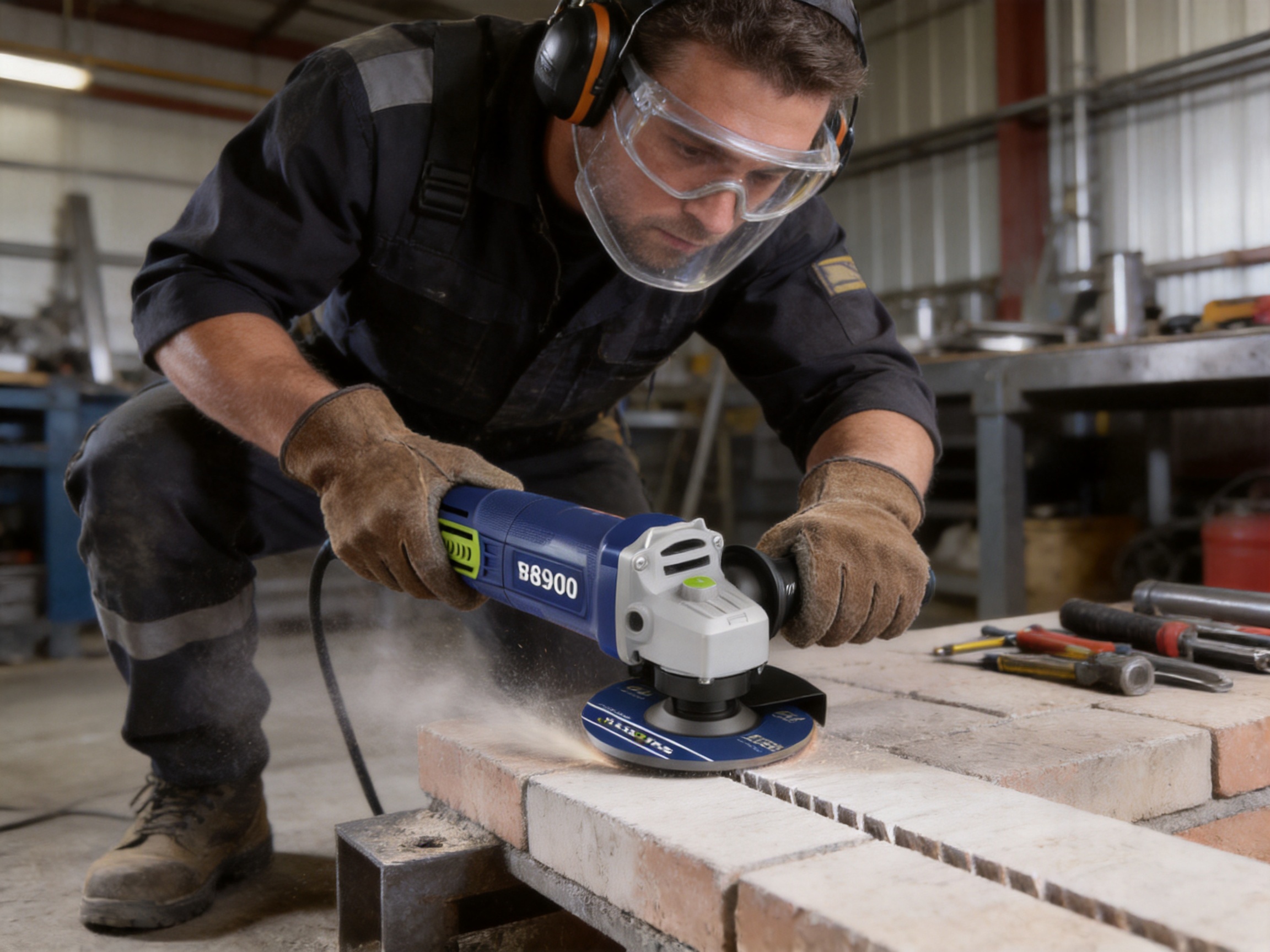
Wear suitable eye protection and face protection. Depending on the material and working environment, hearing protection, respiratory protection, gloves, protective clothing, and safety footwear may also be required. Dust extraction or suitable ventilation should be used where practical.
Allow the grinder to reach operating speed before beginning the cut. Apply moderate, controlled pressure and avoid twisting the accessory in the cut. If the accessory binds, release the trigger and hold the tool securely until it stops. Do not pull the machine backward while the accessory is still rotating unless the procedure is specifically safe for the operation.
After completing the task, switch off the grinder and place it down only after the accessory has stopped completely. Disconnect the power supply before changing accessories, cleaning the machine, inspecting the brushes, or carrying out maintenance.
11. Maintenance and Service Considerations
Regular maintenance helps preserve the SW89600’s performance and supports its intended service life. After use, remove dust and debris from the exterior, guard, vents, and accessory area. Compressed air may be used only in a controlled manner and with appropriate eye protection, because blowing dust can create a respiratory and eye hazard.
Do not allow dust to accumulate around the ventilation openings. Restricted airflow can reduce cooling effectiveness and increase operating temperature. The grinder should be stored in a clean, dry location away from moisture, corrosive substances, and unauthorized access.
Carbon brushes are wear components. The extended 6 × 11 mm brushes are designed to provide a useful service interval, but they should be inspected according to the intensity of use. Uneven wear, excessive sparking, intermittent operation, or a noticeable reduction in motor performance may indicate that the brushes or commutator require attention.
Gears and bearings should be checked by qualified service personnel if the grinder develops unusual noise, excessive vibration, overheating, or irregular rotation. The user should not attempt to open the housing without appropriate technical knowledge, because incorrect reassembly can affect electrical safety and mechanical reliability.
Power cords and plugs should be inspected frequently. A damaged cable can create a serious shock or fire risk. Repairs and replacement of electrical components should be performed by qualified personnel using suitable parts.
Maintenance advantages of a well-designed structure
A tool designed with durable components and protection against dust can reduce the frequency of major service interruptions. This does not eliminate wear, but it may help the grinder preserve its working condition for longer periods when it is maintained correctly.
For professional users, maintenance should be included in the work schedule rather than treated as an emergency response. A short inspection at the beginning or end of a shift can identify problems before they affect a major project.
12. Quality, Reliability, and Purchasing Value
The value of an angle grinder should be evaluated through its complete working life rather than only its initial price. A low-cost tool may appear attractive if it is used rarely and under light conditions. However, users who cut or groove frequently may benefit more from a machine with stronger power, better dust protection, more robust transmission components, and improved thermal durability.
The SW89600 is designed for this type of user. Its value comes from the relationship between its 1150W motor and supporting features: high-temperature copper wire, reinforced motor dimensions, enlarged commutator, extended carbon brushes, dust protection, tight-fit gears, and integrated housing construction.
These features can help reduce productivity losses caused by overheating, unstable operation, premature contamination, or repeated tool replacement. The actual service life will depend on workload, accessory selection, operating technique, maintenance, and environmental conditions, but the product is built with demanding applications in mind.
For distributors and professional buyers, consistent specifications are also important. A clearly identified model with defined voltage, power, blade size, motor dimensions, and structural features is easier to evaluate for project requirements and inventory planning.
13. Frequently Asked Questions
What is the SW89600 designed for?
The SW89600 is designed for cutting and grooving applications using a 100 mm accessory. It is intended for professional construction, renovation, maintenance, workshop, and everyday tasks that require a compact but powerful electric angle grinder.
What is the rated power of the grinder?
The grinder has a rated power input of 1150W. This high-power motor provides a strong operating reserve for high-load cutting and grooving work.
What voltage does the tool use?
The rated voltage is 220–240V at 50/60Hz. Users should verify that the local electrical supply matches the product rating before operation.
What blade size does the SW89600 use?
The specified blade size is 100 mm. Only compatible accessories with suitable speed and application ratings should be installed.
How does the grinder resist dust?
The machine uses a multi-layer dustproof system designed to reduce dust entry into the motor and critical internal components. The system supports durability in dusty working conditions, although regular cleaning and maintenance are still required.
Can the grinder be used continuously?
The SW89600 is designed for stable operation during extended work, with an optimized structure for heat control and a motor intended to resist high-load conditions. Continuous use must still follow appropriate operating practices, accessory requirements, ventilation conditions, and reasonable duty cycles.
What makes the motor suitable for heavy work?
The motor uses a 1150W power input, 200-degree high-temperature copper wire, a Ø53 × 63H stator, a Ø32 × 63H rotor, a 24.5 mm enlarged and heightened commutator, and extended 6 × 11 mm carbon brushes. These features are intended to support power delivery, overload resistance, and durability.
What are double tight-fit gears?
Double tight-fit gears are designed to maintain a secure mechanical relationship within the transmission. This can support efficient power transfer, reduce unwanted movement, and improve the stability of the front assembly during high-load operation.
Is the tool suitable for professional contractors?
Yes. Its high-torque motor, dust-resistant structure, reinforced transmission, thermal management, and compact 100 mm format make it suitable for professional construction, renovation, maintenance, and fabrication users who require repeated performance.
Does dustproof construction eliminate the need for cleaning?
No. Dustproof construction reduces the entry of dust but does not make the tool maintenance-free. The exterior, vents, guard, accessory area, power cord, and brushes should be inspected and cleaned regularly.
When should the carbon brushes be checked?
Brushes should be checked according to workload and use frequency. Signs such as excessive sparking, intermittent operation, unusual motor behavior, or reduced performance may indicate brush wear or a commutator problem.
Can any 100 mm disc be used with the grinder?
No. The accessory must be compatible with the grinder, suitable for the material, rated for the machine’s operating speed, and approved for the intended cutting or grooving operation. Damaged or unsuitable accessories must not be used.
What safety equipment is recommended?
Eye and face protection are essential. Hearing protection, respiratory protection, gloves, protective clothing, and safety footwear should be selected according to the material, dust level, sparks, noise, and site conditions.
Who manufactures the SW89600?
The SW89600 is manufactured by Yongkang Siwei Technology Co., Ltd., a tool manufacturer integrating research and development, production, and sales. The company specializes in professional construction tools and also develops cordless garden equipment and related motor and electronic control technologies.
14. Final Assessment
The SW89600 Dust-Proof Cutting Grooving Angle Grinder is a purpose-built solution for users who need reliable power in demanding cutting and grooving work. Its 1150W high-torque motor supplies a strong foundation for high-load applications, while the 200-degree copper wire and reinforced motor components support overload resistance and thermal durability.
Its advantages extend beyond motor power. The multi-layer dustproof system helps protect internal components in abrasive environments. Double tight-fit gears support stable transmission, and the integrated head shell and gear housing create a robust front structure. The enlarged commutator and extended carbon brushes further demonstrate attention to motor longevity and serviceability.
Compared with ordinary low-power grinders, the SW89600 is better positioned for repeated professional use. It combines compact 100 mm accessory compatibility with a substantial power reserve, making it practical for construction, renovation, metal maintenance, masonry-related work, installation preparation, and workshop applications.
The manufacturer’s integrated R&D, production, and sales capabilities provide additional support for product consistency and development. Its focus on professional tools, high-quality materials, advanced manufacturing processes, motor technology, and practical engineering requirements is reflected in the product’s overall construction.
For the best results, users should match the accessory to the material, secure the workpiece, use appropriate protective equipment, control feed pressure, keep ventilation paths clean, and follow a regular maintenance program. When operated responsibly, the SW89600 offers a durable and efficient cutting and grooving experience for demanding users.
References
1. Product specification sheet for the SW89600 Dust-Proof Cutting Grooving Angle Grinder.
2. Manufacturer-provided technical information on motor construction, gear design, dust protection, and housing structure.
3. General professional guidance for safe operation of electric angle grinders and abrasive cutting tools.
4. General maintenance principles for brushed electric motors, carbon brushes, commutators, gears, and power-tool ventilation systems.
5. General occupational safety guidance for cutting, grooving, grinding, dust exposure, sparks, noise, and rotating accessories.
Product: SW89600 Dust-proof Cutting Grooving Angle Grinder

Recommended Products
-


SW528 Small Hole Rebar Hammer
-
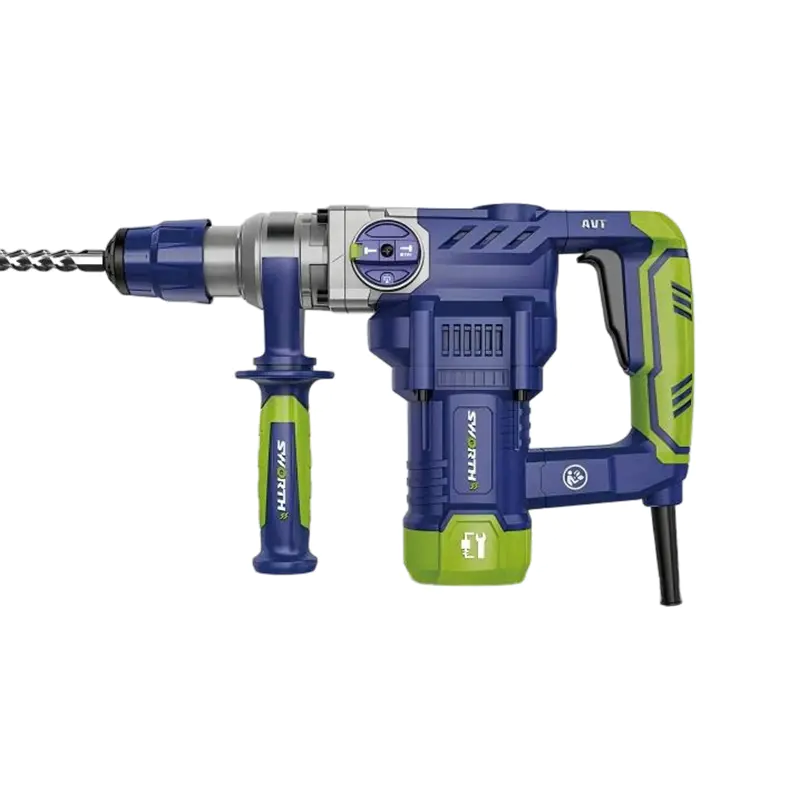
SW932 Groove Sandblasting Hammer
-
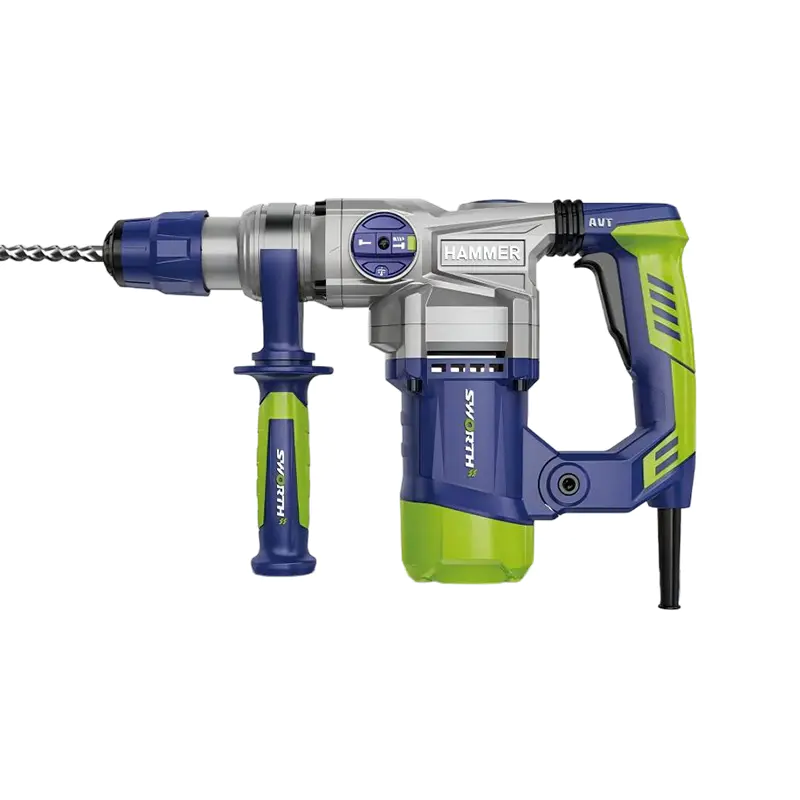
SW9362A Large Hole Rebar Hammer
-
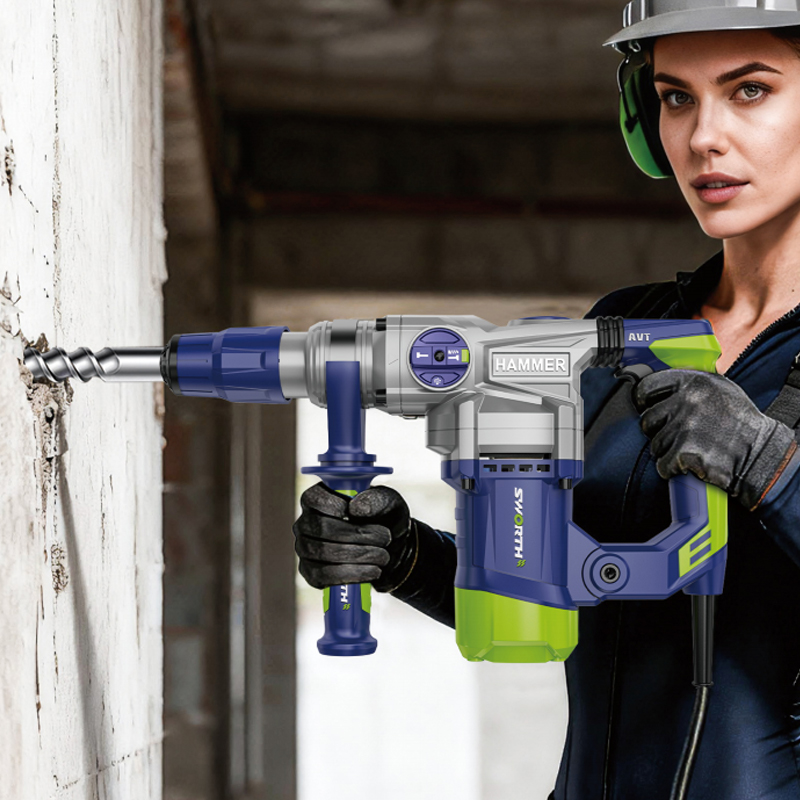
SW940 Enlarged Hole Rebar Hammer
-
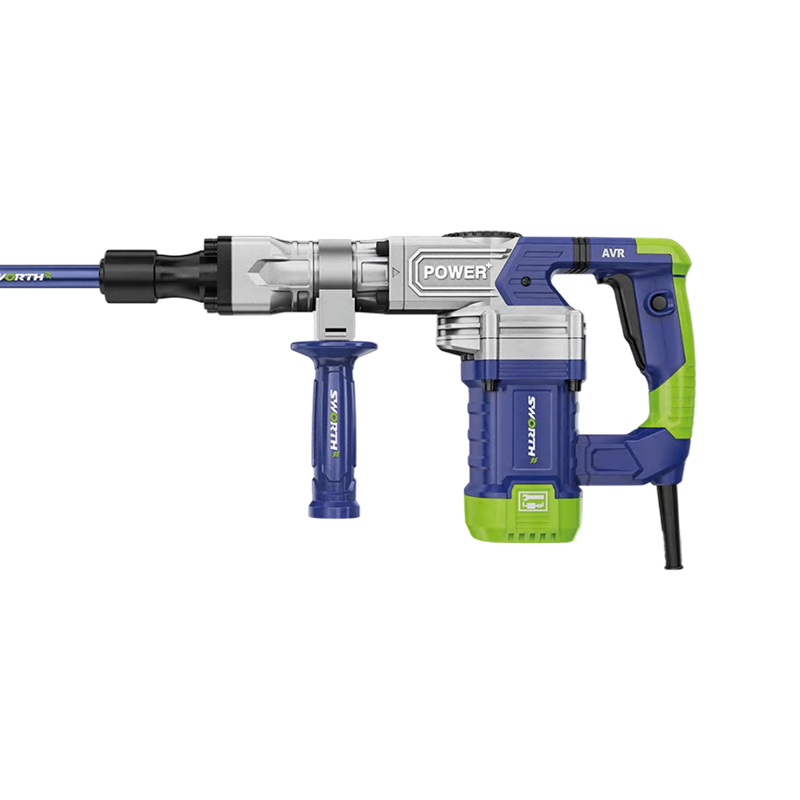
SW35S1 Powerful Demolition Hammer
-
SW35S2 High-Efficiency Heat Dissipation Demolition Hammer
-
SW9371 High-Power Demolition Hammer
-
SW9373 Anti-Scalding Carbon Brush Holder Demolition Hammer
-
SW535 Powerful Anti-Scalding Demolition Hammer
-
SW535-2 Durable Powerful Demolition Hammer
-
SW35S3 Five-Pipe Drill Bit Demolition Hammer
-

SW11E Five-Pipe Clamping Demolition Hammer
 +86-18314829275
 sale@sworthtools.com
 No. 101, Yugui Road, chengxi Industrial Zone, Yongkang City, Zhejiang Province, China
Copyright© Yongkang Siwei Technology Co., Ltd. All Rights Reserved

Hammer Tools & Cordless Garden Tools Manufacturer
