 English
 русский
 Español

SW125 Double Spring Large Demolition Hammer: High-Impact Power, Vibration Control, and Professional Durability
Demolition work demands more than raw motor power. A professional demolition hammer must convert electrical energy into concentrated impact force, withstand repeated high-load operation, remain controllable in difficult working positions, and protect the operator from excessive vibration. When these requirements are combined in one tool, productivity improves, fatigue is reduced, and demanding construction tasks become more manageable.
The SW125 Double Spring Large Demolition Hammer is designed for users who need strong and dependable performance when breaking concrete, brick, masonry, and other high-strength materials. Its 1800W motor, 55J impact energy, dual-spring shock absorption system, reinforced internal components, and ergonomic rubber-coated handles create a demolition tool intended for heavy-duty applications. With a no-load impact rate of 1950 blows per minute, the machine provides a practical balance between impact strength, operating speed, and structural durability.
Manufactured by Yongkang Siwei Technology Co., Ltd., the SW125 reflects a production philosophy centered on professional engineering, material quality, and continuous design improvement. The company specializes in demolition hammers and chisel cutting tools while also developing brushless motor systems, electronic controls, battery platforms, and cordless garden equipment. This combination of mechanical manufacturing experience and newer electronic engineering capabilities supports a broader understanding of power-tool design, reliability, user safety, and long-term performance.
Overview of the SW125 Demolition Hammer
The SW125 is a large electric demolition hammer developed for intensive chiseling and breaking operations. It is particularly suitable for concrete demolition, brick removal, masonry work, renovation projects, construction-site preparation, and other applications where a high-impact tool is required. The machine is built around a powerful 1800W motor that drives a high-energy striking mechanism capable of delivering 55 joules of impact energy.
Unlike a light rotary hammer intended primarily for drilling and occasional chiseling, the SW125 is focused on demolition performance. Its design emphasizes impact force, structural strength, operator control, and resistance to repeated high-intensity use. The tool is suitable for professional users who require a reliable electric pick for jobs that would be inefficient or excessively tiring with smaller equipment.
The product uses a dual-spring shock absorption structure. This system is positioned around the operating handles to help reduce the vibration transmitted to the user. The top and bottom anti-vibration handles work together with soft rubber surfaces to improve grip comfort and reduce the effects of rebound. This is important because demolition work often involves long operating periods, awkward body positions, and continuous impact against hard materials.
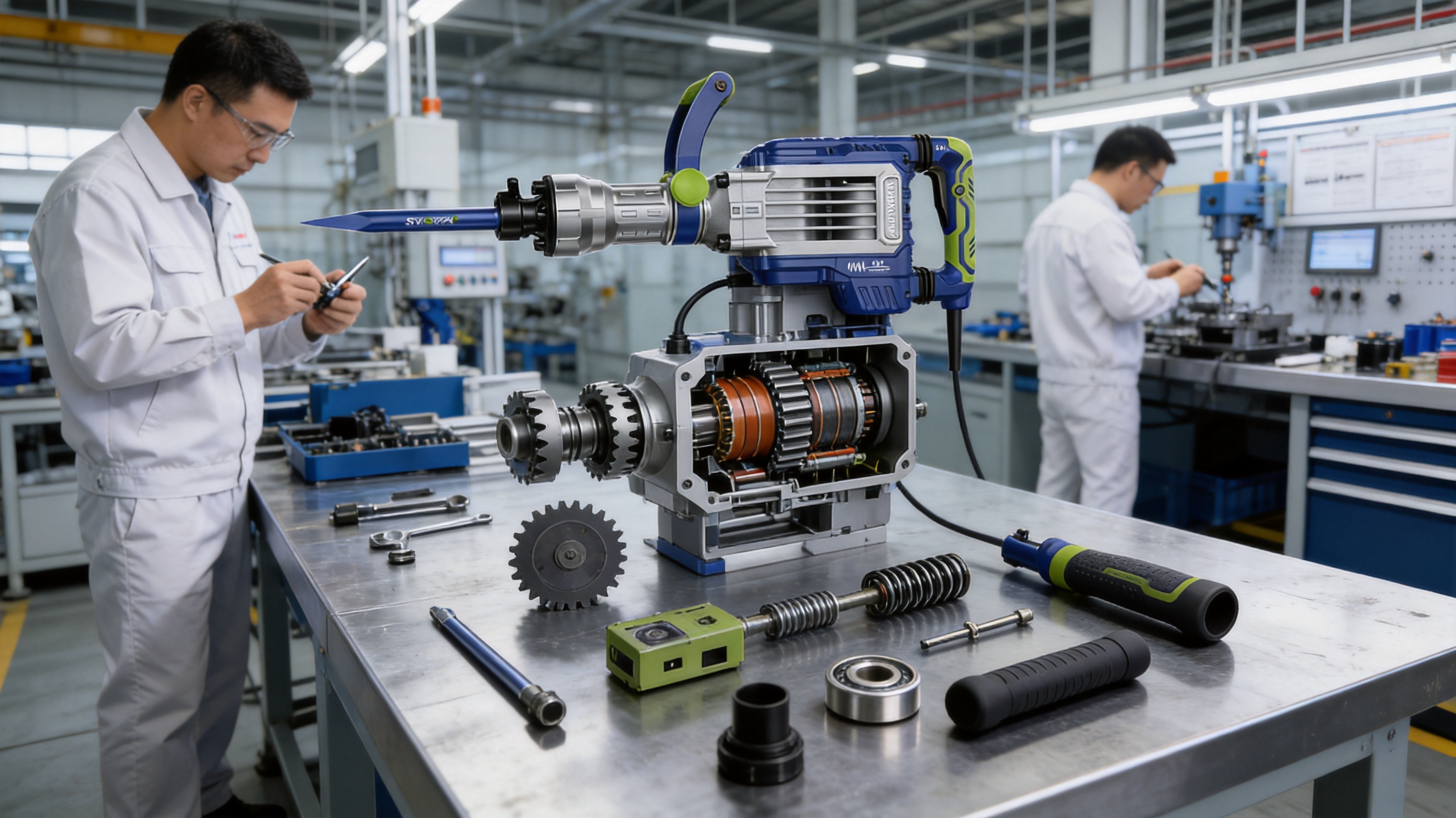
The machine also incorporates a six-tooth rotating gear structure. This gear arrangement is designed to provide higher torque and strong power transmission inside the tool. A stable gear system helps the motor transfer energy to the impact mechanism more effectively, supporting consistent performance under demanding loads.
| Product | SW125 Double Spring Large Demolition Hammer |
| Product category | Demolition Hammer |
| Rated voltage | 220–240V, 50/60Hz |
| Power input | 1800W |
| No-load impact speed | 1950 blows per minute |
| Impact energy | 55J |
| Stator dimensions | 94 mm diameter × 45 mm height |
| Rotor dimensions | 53 mm diameter × 45 mm height |
| Handle design | Top and bottom dual anti-vibration handles |
| Primary applications | Concrete, brick, masonry, renovation, and heavy demolition |
1800W Motor for Heavy-Duty Demolition
The power input of a demolition hammer directly influences its ability to maintain impact performance under load. With an 1800W motor, the SW125 is engineered to deliver substantial power for high-strength materials. The motor provides the energy necessary to operate the striking mechanism at a consistent rate while the chisel is pressed against concrete, brick, or masonry.
For users, high motor power offers several practical benefits. First, it helps the tool maintain working momentum when the material becomes denser or more reinforced. Second, it enables the hammer to remove material more quickly than lower-powered tools in suitable applications. Third, it reduces the need for excessive downward pressure from the operator. The machine is designed to do the work through impact energy rather than relying only on physical force from the user.
A high-power motor must be supported by appropriately sized electrical and mechanical components. The SW125 specifications include a 94 mm diameter by 45 mm height stator and a 53 mm diameter by 45 mm height rotor. These dimensions indicate a motor structure designed for the demands of a large demolition tool. A properly matched stator and rotor help support efficient electromagnetic conversion and stable power delivery during operation.
The motor is also supported by a larger carbon-brush design measuring 7 × 17 × 24 mm. Larger brushes can offer improved contact capacity and may help support reliable current transmission in a high-power motor, provided that the brush holder, commutator, cooling, and maintenance procedures are properly managed. The product information also highlights an improved brush-holder structure, showing that the motor design is not based on power alone but on the supporting components required to operate that power reliably.
Compared with smaller demolition hammers, the SW125 is better positioned for demanding jobs involving thick concrete slabs, hard brickwork, foundation sections, flooring, and renovation materials. The actual performance will depend on the chisel type, material density, reinforcement, operator technique, and working environment, but the combination of 1800W input and 55J impact energy gives the product a strong specification for professional demolition work.
55J Impact Energy and 1950 Blows per Minute
Impact energy is one of the most important specifications for a demolition hammer. It indicates how much energy is delivered during each blow and helps users understand the tool’s ability to break hard materials. The SW125 provides 55J of impact energy, placing it in a heavy-duty class for large-scale chiseling and demolition tasks.
A high impact-energy rating allows the chisel to fracture material more effectively. When the tool is correctly positioned and the appropriate chisel is used, each blow creates concentrated force at the contact point. Repeated impacts form cracks, loosen sections, and separate material from the work surface. This process is especially useful for concrete removal, brick demolition, tile and masonry preparation, and breaking hard surfaces during construction or renovation.
The no-load impact speed is rated at 1950 blows per minute. This rate provides a steady sequence of impacts while maintaining the force associated with a large demolition hammer. A slower rate with high energy may remove material effectively but can reduce working speed, while a very high rate with insufficient impact energy may produce rapid surface abrasion without deep fracture. The SW125’s impact characteristics are designed to provide forceful and consistent demolition rather than simply maximizing the number of blows.
In practical use, the operator should allow the tool’s impact mechanism to work rather than forcing the body of the machine aggressively into the material. Excessive pressure can restrict the movement of the mechanism, increase heat, accelerate wear, and reduce efficiency. A controlled feed pressure allows the chisel to strike, fracture, and advance through the material more effectively.
The impact system is also influenced by the condition of the tool holder, the selected accessory, lubrication, and the type of material being demolished. Regular inspection and correct maintenance are essential for preserving the intended impact performance. When used under suitable conditions, the SW125 can provide an efficient alternative to smaller hammers that require more passes, more operator pressure, or longer working periods.

SW125 Double Spring Large Demolition Hammer
Dual-Spring Vibration Absorption
Vibration is an unavoidable part of impact-tool operation, but the way vibration is managed has a significant effect on comfort, control, and user endurance. The SW125 uses a dual-spring shock absorption system with anti-vibration handles positioned at the top and bottom of the machine. This arrangement is intended to absorb and isolate part of the impact vibration before it reaches the operator’s hands and arms.
The dual-spring structure offers a broader approach than a single cushioning component. When the hammer generates a strong impact, the springs help accommodate movement and reduce the direct transmission of shock. The two handle positions also provide multiple control points, allowing the operator to guide the tool more securely and distribute gripping pressure between both hands.
Reduced vibration can contribute to less hand fatigue during prolonged work. It may also make it easier to maintain a stable chisel position, especially when working on vertical surfaces, floor sections, steps, walls, or uneven masonry. Better control can improve the accuracy of demolition by helping the user focus the impact where it is needed instead of allowing the tool to move unpredictably after each blow.
The rubber-coated handle surfaces add another layer of comfort. Soft rubber can improve grip friction, reduce slipping caused by perspiration or dust, and provide a more comfortable contact area during long work sessions. The anti-slip design is particularly valuable when the user must hold the tool at an angle or adjust position frequently.
Vibration control does not eliminate the need for safe operating practices. Users should still take regular breaks, wear suitable protective equipment, keep both hands on the tool, and avoid operating the hammer in unstable positions. The tool should be held firmly but not with unnecessary tension. A relaxed and balanced stance can help reduce the transfer of vibration through the body.
Why Vibration Control Matters to Productivity
Vibration management is often discussed as a comfort feature, but it also has a direct relationship with productivity. A tool that is difficult to control may require frequent repositioning and may produce uneven results. If the operator becomes tired quickly, work speed can decline and the risk of mistakes can increase. By supporting more stable handling, the SW125’s dual-spring design can help users maintain a more consistent working rhythm.
For contractors and professional teams, this may result in more practical working time and fewer interruptions. The value is not only measured by the number of blows per minute but also by how effectively the operator can keep the hammer engaged with the material. A strong machine with a comfortable control system can outperform a theoretically powerful tool that causes excessive fatigue or poor handling.
Six-Tooth Rotating Gear for Torque Transmission
The internal gear system plays a critical role in converting motor rotation into usable impact force. The SW125 uses a six-tooth rotating gear structure designed to provide higher torque and strong power transmission. This structure supports the demanding relationship between the motor, gear train, and striking mechanism.
Torque is important when the tool encounters resistance. During demolition, the chisel may strike material that is dense, uneven, or partially reinforced. The gear system must transfer motor energy consistently without excessive slipping or instability. A suitable gear design helps maintain the mechanical connection between the motor and the impact components, supporting reliable performance under load.
The six-tooth configuration is one of the product’s highlighted design features. Its purpose is to contribute to greater torque and more effective power delivery. The gear must work together with appropriate materials, machining accuracy, lubrication, bearing support, and housing strength. These factors influence noise, heat, service life, and overall reliability.
For users comparing demolition hammers, it is useful to look beyond motor wattage. Two tools may have similar power-input ratings but perform differently because of their gear construction, impact mechanism, internal tolerances, and heat-management design. The SW125’s gear and motor specifications indicate an effort to develop the entire power-transfer system rather than focusing on a single headline number.
Reinforced Mechanical Construction
Heavy demolition places substantial stress on the tool body, head, gear system, lock rod, bearings, and handles. The SW125 is designed with reinforced mechanical features intended to support long-term operation in demanding environments.
The tool uses an integral forged iron head. Forging can create a dense and strong metal structure suitable for components exposed to repeated shock and mechanical stress. The product design emphasizes resistance to cracking, which is particularly important in a demolition hammer because the head area receives continuous impact-related loads.
The lock rod is made from 35CrMo material and uses a carburizing process. 35CrMo is an alloy steel commonly selected for applications requiring strength and toughness. Carburizing increases surface hardness while preserving a tougher internal structure. This combination can improve resistance to wear, friction, and repeated loading in the working connection. According to the product information, the treatment is intended to increase working life by 30 percent.
A durable lock-rod design is important because the accessory-retention area experiences repeated contact, movement, and impact. If this part wears prematurely, the chisel may become loose, the impact may become less efficient, and safe operation can be compromised. The use of treated alloy steel shows attention to a component that is sometimes overlooked when buyers focus only on motor power.
Durability also depends on the housing and internal support structure. A high-impact tool must keep the motor, gears, bearings, and striking components aligned while absorbing repeated mechanical shock. Proper assembly, dimensional control, lubrication, and inspection are therefore as important as the raw materials selected for individual parts.
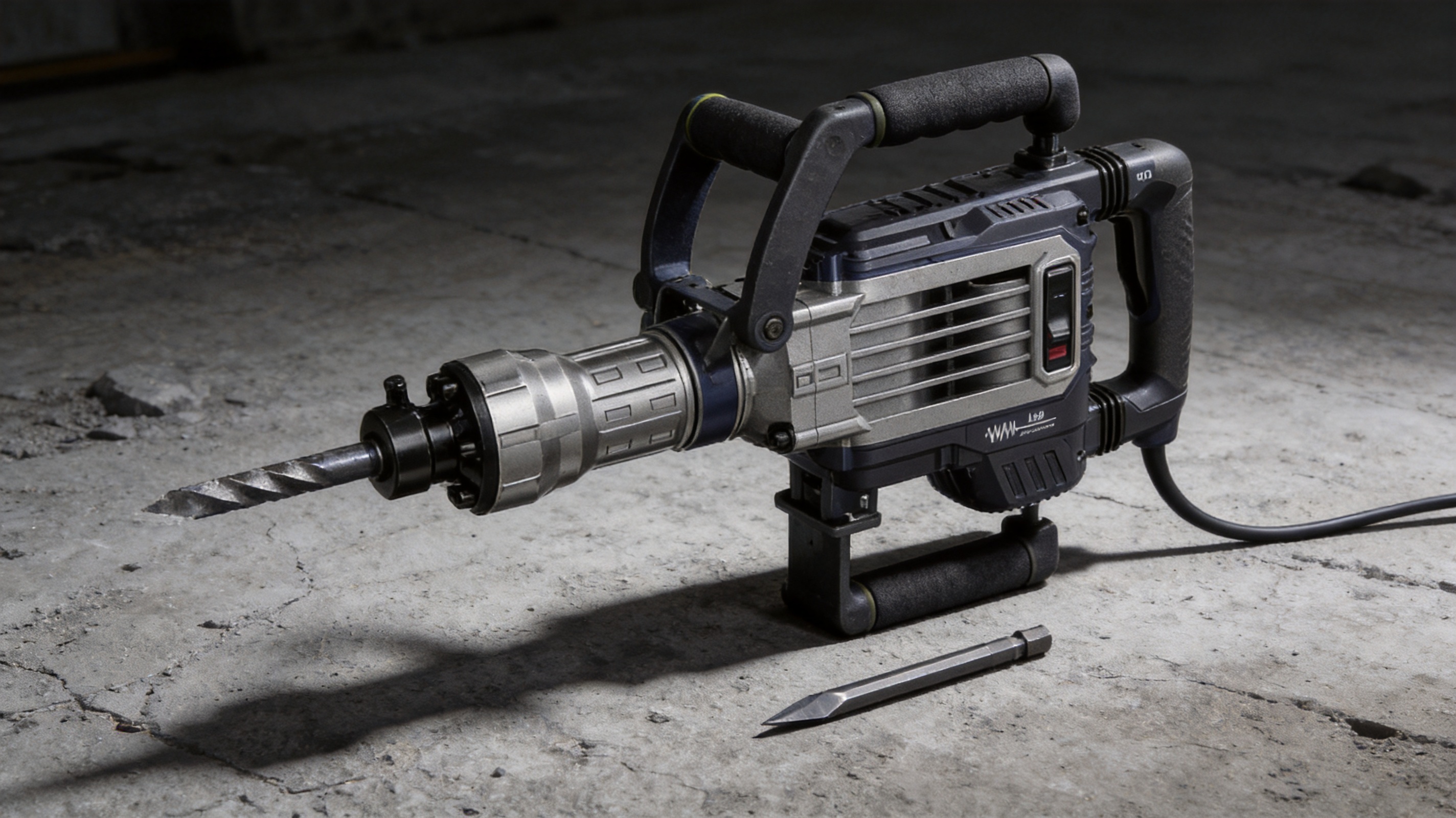
Ergonomic Handle and Control Design
Demolition hammers are often used in positions that require substantial physical control. The operator may work downward on floors, horizontally on walls, or at an angle around corners and restricted areas. The SW125 uses a top-and-bottom handle arrangement to accommodate these working conditions and provide more secure two-handed control.
The rubber-coated handle is designed to be soft, comfortable, and anti-slip. A secure grip helps the operator resist rebound and maintain the chisel’s position. The handle surface also reduces the discomfort associated with gripping a rigid metal or plastic surface for extended periods.
The machine is fitted with a large switch that is comfortable to press and hold. A clearly accessible switch is useful when the user needs to start, stop, or pause the tool quickly. It can also reduce finger strain compared with a small or poorly positioned control. Operators should always confirm that the switch is in the off position before connecting the tool to the power supply, changing accessories, or carrying out maintenance.
Good ergonomics are especially valuable in professional environments where several workers may use the tool across different tasks. The design should allow users to hold the hammer with both hands, position their feet securely, and maintain their balance without relying on excessive grip force. This combination of handle shape, rubber material, switch placement, and vibration reduction supports a more controlled operating experience.
Performance Advantages over Basic Demolition Tools
The SW125 offers several advantages over basic or lightly built demolition tools. The first is its combination of 1800W electrical input and 55J impact energy. This provides the machine with the capacity to tackle large and high-strength materials rather than limiting it to light renovation work.
The second advantage is its focus on vibration management. Many entry-level tools provide impact power but offer limited protection against shock and rebound. The SW125’s dual-spring handle structure is designed to reduce this disadvantage, helping the operator remain comfortable and in control during longer periods.
The third advantage is its reinforced construction. The integral forged iron head, treated 35CrMo lock rod, six-tooth gear, improved brush holder, and larger carbon brushes address different points of mechanical and electrical stress. This broad approach can be more valuable than a tool that advertises high power but uses undersized or less durable supporting parts.
The fourth advantage is its suitability for professional work. The machine is not presented as a compact occasional-use hammer. Its design, impact rating, and structure are oriented toward demanding construction and demolition conditions. Contractors, renovation teams, building-maintenance workers, and equipment distributors can position it as a heavy-duty solution for applications that require substantial breaking force.
The fifth advantage is serviceability through a conventional corded electric platform. A corded tool does not require battery charging or the purchase of multiple battery packs. For fixed-site construction work where electrical power is available, the SW125 can provide continuous operation without interruptions caused by battery capacity. This is particularly useful for large demolition projects where the work area remains in one location for an extended period.
Of course, no demolition hammer is ideal for every application. A cordless model may be more suitable where mobility and access are the primary concerns, while a smaller rotary hammer may be preferable for drilling and lighter chiseling. The SW125 is strongest where high impact force, sustained electrical operation, and heavy-duty construction are more important than compact size or cordless portability.
Applications for Construction and Renovation
Concrete Demolition
The SW125 is suitable for breaking concrete sections during renovation, structural preparation, floor removal, and construction-site clearing. Its high impact energy can help fracture concrete into manageable pieces when the operator uses the appropriate pointed, flat, or scaling chisel. Before demolition begins, users should check for hidden electrical cables, plumbing, gas lines, reinforcement, and structural hazards.
Brick and Masonry Removal
Brick walls, blockwork, mortar joints, and masonry surfaces can be removed using controlled impact. The high-power motor allows the tool to work through hard sections while the dual handles help the operator control direction. For precise removal, users should begin near joints or weakened sections and avoid applying unnecessary force that could damage adjacent structures.
Floor and Tile Preparation
During renovation, the hammer can assist with removing old flooring, thick adhesive, tile beds, and other hard surface layers. A flat chisel or wide scaling accessory can improve coverage, while a pointed chisel may be more effective for breaking through dense areas. The correct accessory helps convert the machine’s impact energy into a more efficient work pattern.
Foundation and Site Preparation
Construction crews may use a large demolition hammer to remove small concrete foundations, steps, curbs, and other non-structural sections. The tool can also assist with preparing surfaces before repair or modification. Users must determine whether the material is structural before demolition and follow all applicable site-safety procedures.
Utility and Maintenance Work
Maintenance teams may require a powerful electric pick for opening concrete surfaces, removing damaged masonry, or creating access around buried components. The machine’s corded operation is practical in workshops, industrial facilities, and construction areas equipped with appropriate electrical distribution.
Manufacturing Strengths and Quality Approach
Yongkang Siwei Technology Co., Ltd. is a professional tool manufacturer integrating research and development, production, and sales. Its stated manufacturing philosophy emphasizes professionalism and quality. This integrated structure allows product development, production planning, component selection, assembly, and customer feedback to be considered as connected parts of the same process.
For a high-impact demolition hammer, manufacturing quality must be controlled at several levels. Metal parts require suitable material selection and processing. Forged components must have consistent shape and strength. Heat-treated parts must achieve an appropriate balance between surface hardness and internal toughness. Gear teeth must be formed and finished accurately. Motor components must be assembled with suitable alignment and electrical clearances. Handles and springs must be fitted securely so that vibration-control performance remains consistent.
The company’s focus on demolition hammers and chisel cutting tools gives it specialized experience in the mechanical demands of impact equipment. Rather than treating demolition tools as a minor extension of a general power-tool line, specialization allows engineers and production teams to concentrate on striking mechanisms, impact transfer, accessory retention, vibration control, and high-load durability.
The use of an integral forged iron head and carburized 35CrMo lock rod demonstrates a manufacturing approach that combines material engineering with structural design. These features are meaningful because they target the high-stress points of the machine. The improved brush-holder structure and larger carbon brushes similarly show attention to electrical durability and motor support.
Manufacturing strength is also reflected in the company’s broader development activities. Since 2024, the company has worked on green new-energy technologies, high-efficiency brushless motors, electronic controls, and intelligent battery platforms. Although the SW125 is a corded electric demolition hammer, experience in brushless motor systems and electronic control can contribute to the organization’s overall engineering knowledge. It indicates an ability to work with both traditional mechanical power tools and newer energy-efficient platforms.
Research and Development Capabilities
Research and development is important in a category where small design changes can have a major effect on performance. Handle geometry, spring placement, gear dimensions, brush-holder structure, material treatment, and switch design all influence the user’s experience. A manufacturer that combines product development with production can test these relationships more directly and apply improvements to future models.
The company’s product portfolio includes demolition hammers, chisel cutting tools, electric pruning shears, string trimmers, lawn mowers, lawn tractors, hedge trimmers, and high-speed chainsaws. This range exposes the engineering team to different power systems, operating environments, ergonomic requirements, and durability challenges.
Demolition hammers require strong mechanical impact systems, while cordless garden tools require efficient battery use, motor control, and lightweight handling. Experience across both areas can encourage the development of better materials, improved motor efficiency, more reliable controls, and more user-centered product structures.
For distributors and professional buyers, a supplier’s research capability can be as important as the specification of an individual model. A manufacturer with in-house development experience may be better prepared to discuss customization, packaging, accessory compatibility, product improvements, and future product planning. This is particularly useful for importers, construction-equipment suppliers, and regional tool brands that need consistent technical support.
Production Process Considerations
The manufacturing process for a professional demolition hammer generally begins with engineering design and component specification. The motor, gear system, striking mechanism, handles, springs, housing, lock rod, and electrical components must be matched to one another. The objective is not simply to increase impact force but to create a balanced system that can transmit energy without causing unnecessary damage to internal parts.
Metal components are then produced through appropriate machining, forging, drilling, grinding, and finishing operations. The integral forged iron head requires a process capable of producing a strong and consistent form. The 35CrMo lock rod must undergo the specified carburizing treatment and be checked for dimensional accuracy and surface condition. Gear components require careful tooth formation and inspection to support smooth torque transmission.
Motor assembly includes stator and rotor fitting, winding or component preparation, brush-holder installation, commutator contact, bearing placement, and alignment. The use of larger carbon brushes requires a suitable holder structure that maintains contact while allowing controlled movement and replacement. Electrical components should be inspected for insulation, connection integrity, and operating stability.
Vibration-control components must also be assembled accurately. Springs need suitable positioning and preload. Rubber handles must be fitted securely so that they do not rotate or loosen during use. The top and bottom handle structure must maintain enough strength to resist the repeated pulling and pushing forces generated during demolition.
Final assembly is followed by functional checks. These may include no-load operation, switch response, abnormal-noise inspection, impact-mechanism verification, electrical safety checks, housing inspection, and accessory-retention testing. For a product intended for professional applications, consistent testing is essential because performance depends on the interaction of many components rather than one individual part.
Safety and Responsible Operation
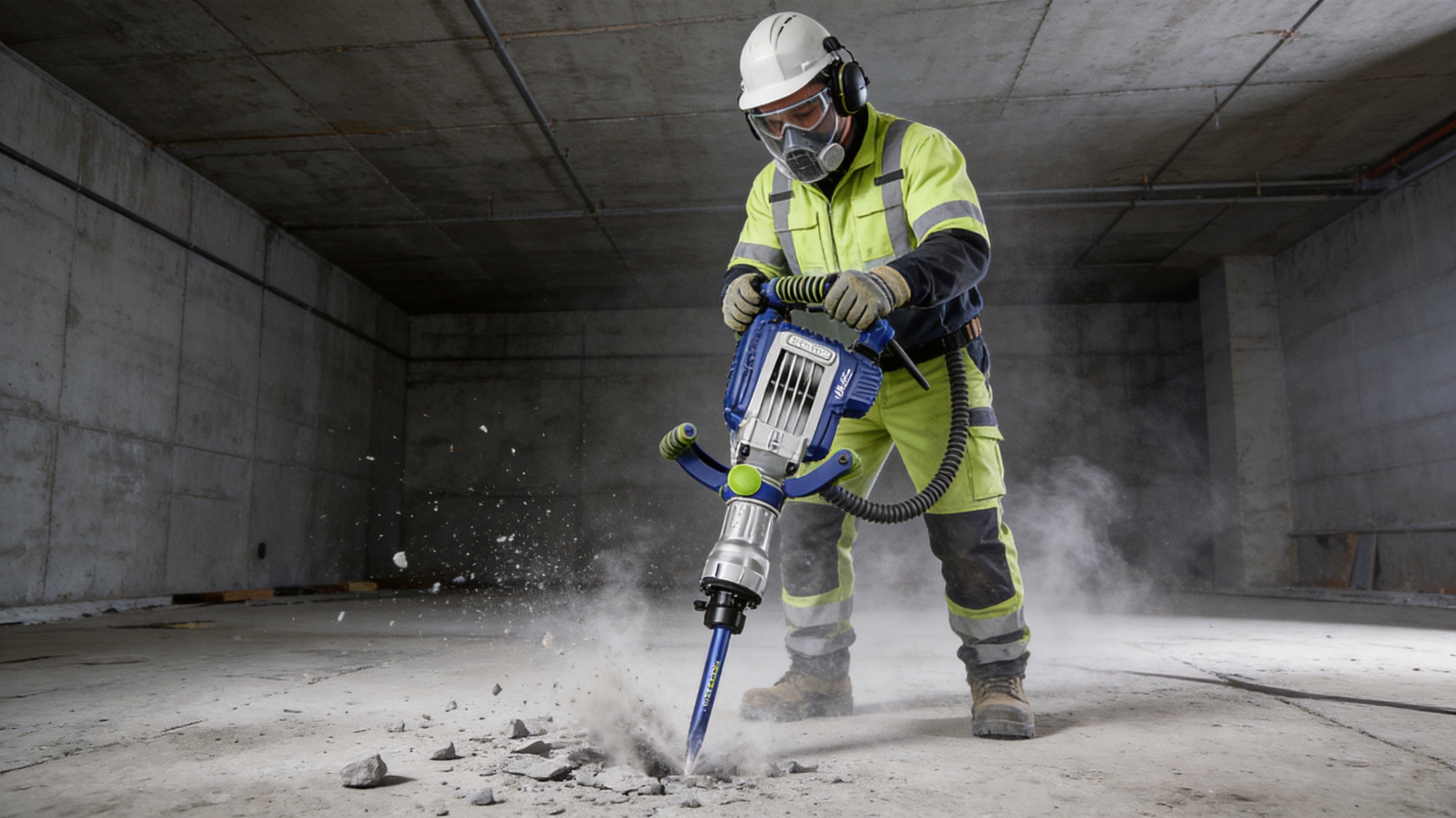
A large demolition hammer must be used responsibly. The SW125 produces powerful impacts and should only be operated by trained users who understand the material, environment, and hazards involved. Eye protection, hearing protection, gloves, safety footwear, and suitable work clothing should be worn. Depending on the material and location, respiratory protection may also be necessary to control dust exposure.
Before connecting the tool, inspect the power cable, plug, housing, handle, chisel-retention area, and switch. Do not use the machine if the cable is damaged or if any structural component is loose or cracked. Check that the selected accessory is suitable, properly installed, and securely retained.
The work area should be cleared of unnecessary personnel and objects. Dust, flying fragments, falling masonry, concealed wiring, pipes, and unstable structures can create serious risks. When removing concrete or brick, establish a safe direction for debris and ensure that nearby workers are protected.
Hold the hammer with both hands and maintain a stable stance. Do not use the tool from a ladder or unstable platform unless the working method has been specifically assessed and made safe. Avoid placing hands near the chisel, tool holder, or moving parts. Disconnect the power supply before changing accessories, carrying out cleaning, or performing maintenance.
Users should not force the hammer by applying excessive body weight. The impact system is designed to perform the breaking action. Excessive pressure can reduce impact movement and increase stress on the motor and internal components. Allow the chisel to work gradually and reposition it when the material stops breaking efficiently.
Maintenance for Long-Term Performance
Regular maintenance helps preserve the performance and safety of a demolition hammer. After use, remove dust and debris from the housing, air openings, handle areas, and accessory-retention components. Accumulated dust can obstruct cooling and may contribute to overheating.
Inspect the carbon brushes according to the manufacturer’s maintenance recommendations. Brushes are wear components and should be replaced when they reach the service limit or show signs of abnormal wear. The brush holder, commutator, and electrical connections should also be checked by a qualified technician when necessary.
Lubrication is important for gears, bearings, and the impact mechanism. Use only the correct lubricant and follow the recommended service interval. Too little lubricant can increase friction and heat, while an unsuitable or excessive lubricant may impair operation or damage seals.
Inspect the lock rod, tool holder, retaining components, and chisel shank regularly. Excessive wear can reduce impact efficiency and create unsafe movement. Replace worn accessories rather than continuing to use them beyond their practical service life. Chisels should be kept in suitable condition because a damaged or excessively blunt accessory can increase the load on the machine.
Store the tool in a dry and clean location. Protect it from moisture, corrosive chemicals, extreme temperatures, and unnecessary impact during transport. A suitable storage case or protected packaging can reduce damage to the housing, cable, handles, and accessory area.
Selection Guidance for Professional Buyers
When choosing a demolition hammer, buyers should consider more than the rated power. Impact energy, impact rate, vibration control, gear construction, accessory compatibility, handle design, service support, and intended application all influence the total value of the tool.
The SW125 is appropriate for buyers who need a powerful corded machine for heavy demolition. It may be a strong choice for construction contractors, renovation companies, property-maintenance teams, equipment rental businesses, and tool distributors. Its 220–240V, 50/60Hz rating is suitable for compatible electrical systems, but buyers should confirm local electrical requirements before purchase.
For rental fleets, durability and straightforward maintenance are particularly important. A tool that includes reinforced high-stress components and a practical carbon-brush motor can be easier to inspect and service than a more complex platform. Rental operators should still establish inspection procedures, accessory-control policies, and user training before placing the machine into circulation.
For distributors, the product’s selling points are clear and easy to communicate: 1800W power, 55J impact energy, 1950 blows per minute, dual-spring vibration absorption, a forged iron head, a treated 35CrMo lock rod, and an ergonomic rubber-coated handle. These features provide a balanced sales message centered on power, durability, comfort, and professional use.
For contractors, the most important question is whether the tool matches the worksite. If the job requires repeated high-impact demolition and electrical access is available, the SW125 offers a practical heavy-duty configuration. If the work requires drilling precision, overhead operation for extended periods, or cordless mobility, a different tool category may be more appropriate.
Commercial and OEM Partnership Potential
A professional tool manufacturer can provide value beyond the product itself. Importers and distributors often need technical documents, packaging coordination, stable specifications, production scheduling, quality inspection, and responsive communication. An integrated manufacturer is better positioned to coordinate these needs because research, production, and sales are managed within one organization.
Yongkang Siwei Technology Co., Ltd. presents itself as a supplier for professional engineering users and international markets. Its experience in demolition tools and garden equipment creates opportunities for buyers seeking a broader product range from one manufacturing partner. A supplier with several categories can support mixed purchasing programs that include demolition hammers, chisels, grinders, saws, pruning shears, and cordless garden tools.
For private-label or OEM projects, the key considerations include product configuration, logo and color requirements, packaging, documentation, minimum order quantities, inspection standards, replacement parts, and after-sales support. These details should be confirmed directly during the purchasing process. The SW125’s defined technical structure provides a clear foundation for professional product positioning while allowing commercial buyers to evaluate their own market requirements.
International buyers should also confirm plug type, voltage compatibility, certification requirements, labeling, warranty terms, spare-parts availability, and transportation packaging. These factors affect the final usability of the tool in different countries and markets.
Practical Work Method for Efficient Demolition
Efficient demolition begins with preparation. Identify the section to be removed, determine whether it is structural, select the appropriate chisel, and establish a safe working area. Marking the boundary can help prevent unnecessary damage to surrounding surfaces.
Start with a controlled position rather than immediately applying maximum pressure. Allow the pointed chisel to create a fracture or opening. Once the material begins to break, move the tool gradually along the planned line. For broad surface removal, change to a flat or scaling chisel where appropriate.
Maintain a balanced stance and keep the hammer aligned with the intended direction of impact. Avoid twisting the tool during operation because lateral force can increase wear on the chisel, lock rod, and tool holder. If the chisel becomes stuck, stop the machine and follow a safe removal procedure rather than forcing or striking the tool body.
Take short rest periods during extended work. Even with the dual-spring vibration absorption system, continuous high-impact use places physical demands on the operator. A planned work rhythm can help maintain accuracy and reduce fatigue.
After completing the task, disconnect the power supply, inspect the tool, clean the housing and accessory area, and store the machine safely. This routine supports both immediate safety and long-term tool performance.
Frequently Asked Questions
What type of tool is the SW125?
The SW125 is a large corded electric demolition hammer designed for heavy chiseling and breaking work. It is intended for materials such as concrete, brick, masonry, flooring, and other high-strength construction materials.
How powerful is the motor?
The tool has an 1800W power input. This high-power motor is designed to provide strong energy for demanding demolition applications and to support the machine’s 55J impact rating.
What is the impact energy?
The rated impact energy is 55J. This specification indicates the force delivered by each impact and helps position the tool for heavy-duty demolition rather than light chiseling.
What is the no-load impact speed?
The no-load impact speed is 1950 blows per minute. The impact rate works together with the 55J impact energy to provide repeated and powerful blows against hard materials.
Does the hammer include vibration reduction?
Yes. The SW125 uses a dual-spring shock absorption system and top-and-bottom anti-vibration handles. These features are designed to reduce transmitted impact vibration, improve grip comfort, and support more stable operation.
What materials can it demolish?
The hammer is suitable for concrete, brick, masonry, flooring materials, mortar, and other high-strength construction surfaces. The actual result depends on material density, thickness, reinforcement, accessory selection, and operating technique.
Is the SW125 cordless?
No. The SW125 is a corded electric demolition hammer rated for 220–240V at 50/60Hz. Its corded design is suitable for work areas with compatible electrical power and allows continuous operation without battery charging.
What makes the gear system different?
The tool uses a six-tooth rotating gear structure designed to provide higher torque and stronger power transmission. The gear system is part of the overall mechanical design that transfers motor power to the impact mechanism.
What is the lock rod made from?
The lock rod uses 35CrMo alloy steel and is treated through a carburizing process. This treatment is intended to improve surface wear resistance and extend the working life of the component. The product information states an expected working-life increase of 30 percent for this design improvement.
What is the purpose of the forged iron head?
The integral forged iron head is designed to provide a strong and durable structure in an area exposed to repeated impact-related stress. Its construction is intended to resist cracking and support the long-term reliability of the machine.
Are carbon brushes replaceable?
The machine uses carbon brushes, which are wear components that require inspection and eventual replacement. Servicing should follow the manufacturer’s recommendations and should be performed by a qualified person when electrical or internal components need attention.
Who is the tool best suited for?
The SW125 is best suited for professional contractors, renovation teams, construction workers, maintenance departments, rental companies, and distributors seeking a high-impact corded demolition hammer.
Can it be used for drilling?
The SW125 is primarily a demolition hammer rather than a general drilling tool. Users should select a rotary hammer or drill for applications that require regular drilling. The SW125 should be used with compatible demolition accessories and according to its intended function.
How can users reduce fatigue while operating it?
Users should maintain a balanced stance, keep both hands on the handles, avoid excessive downward pressure, take regular breaks, and allow the impact mechanism to work at its own rate. The dual-spring handles and rubber grip also support more comfortable operation.
What should be checked before use?
Inspect the cable, plug, switch, handles, housing, tool holder, lock rod, and chisel. Confirm that the accessory is correctly installed and that the work area is free from hidden utilities, unstable structures, and unnecessary personnel.
Conclusion
The SW125 Double Spring Large Demolition Hammer is designed to meet the demands of serious demolition work. Its 1800W motor and 55J impact energy provide strong breaking performance, while the 1950-blow-per-minute impact rate supports a consistent work rhythm. The six-tooth rotating gear contributes to torque transmission, and the integral forged iron head and carburized 35CrMo lock rod address the durability requirements of high-impact operation.
The tool’s most important user-focused feature is its dual-spring vibration absorption system. Combined with top-and-bottom anti-vibration handles and soft rubber grip surfaces, this structure is designed to reduce hand fatigue and improve control. The large switch, improved brush-holder structure, and larger carbon brushes further support practical professional use.
Behind the product is a manufacturer with experience in research, production, and sales, along with specialized knowledge of demolition hammers and chisel cutting tools. Its development of brushless motors, electronic controls, intelligent battery platforms, and cordless garden equipment demonstrates broader engineering capabilities and a commitment to continued product development.
For professional buyers seeking a high-impact corded demolition tool, the SW125 offers a balanced combination of power, structural reinforcement, vibration management, and manufacturing specialization. With correct accessories, safe operating practices, and regular maintenance, it is positioned as a dependable solution for concrete, brick, masonry, renovation, and construction-site demolition tasks.
References
1. Product specification sheet for the SW125 Double Spring Large Demolition Hammer, including motor rating, impact energy, impact speed, gear design, handle structure, and material information.
2. Manufacturer-provided technical information concerning forged iron heads, 35CrMo lock rods, carburizing treatment, carbon-brush dimensions, and anti-vibration construction.
3. General principles of electric motor construction, stator and rotor sizing, carbon-brush operation, and power transmission in corded power tools.
4. General occupational safety practices for electric demolition hammers, impact tools, construction dust, flying debris, vibration exposure, and electrical equipment.
5. General maintenance principles for high-impact construction tools, including accessory inspection, lubrication, brush replacement, cooling, storage, and preventive servicing.
Product: SW125 Double Spring Large Demolition Hammer
Recommended Products
-
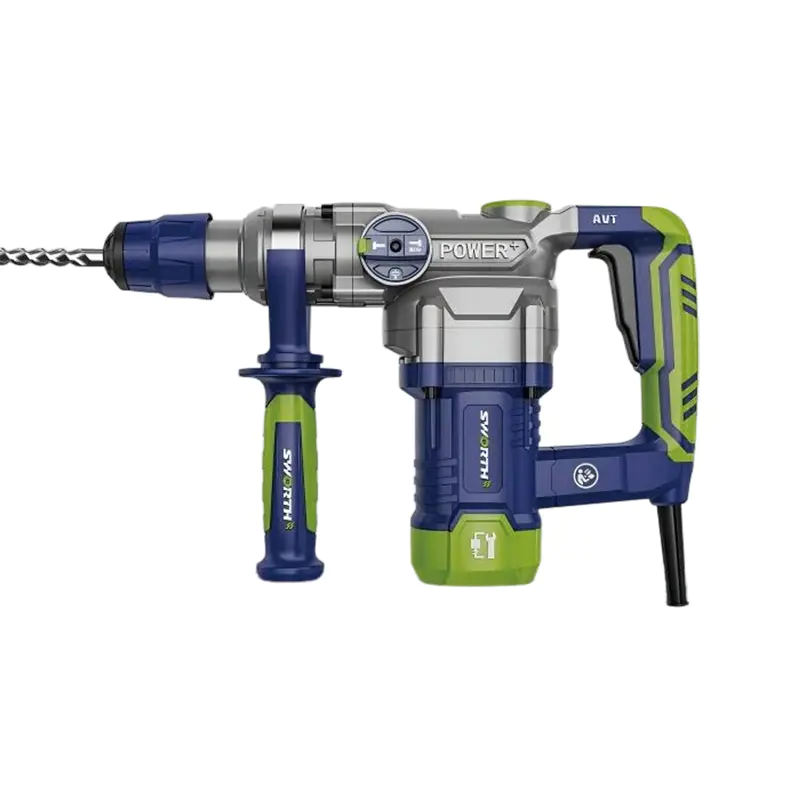


SW528 Small Hole Rebar Hammer
-
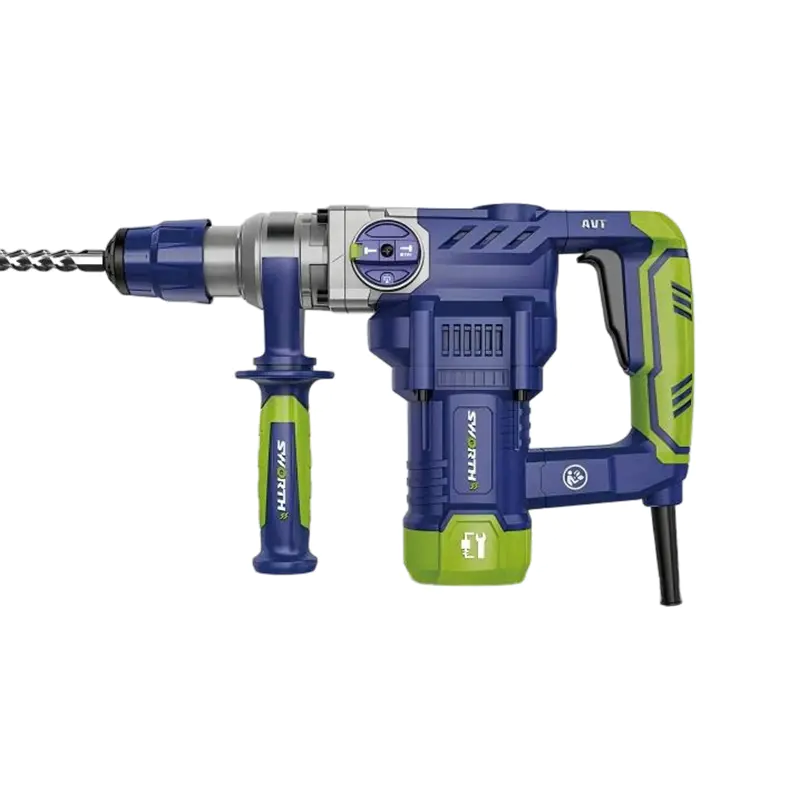
SW932 Groove Sandblasting Hammer
-
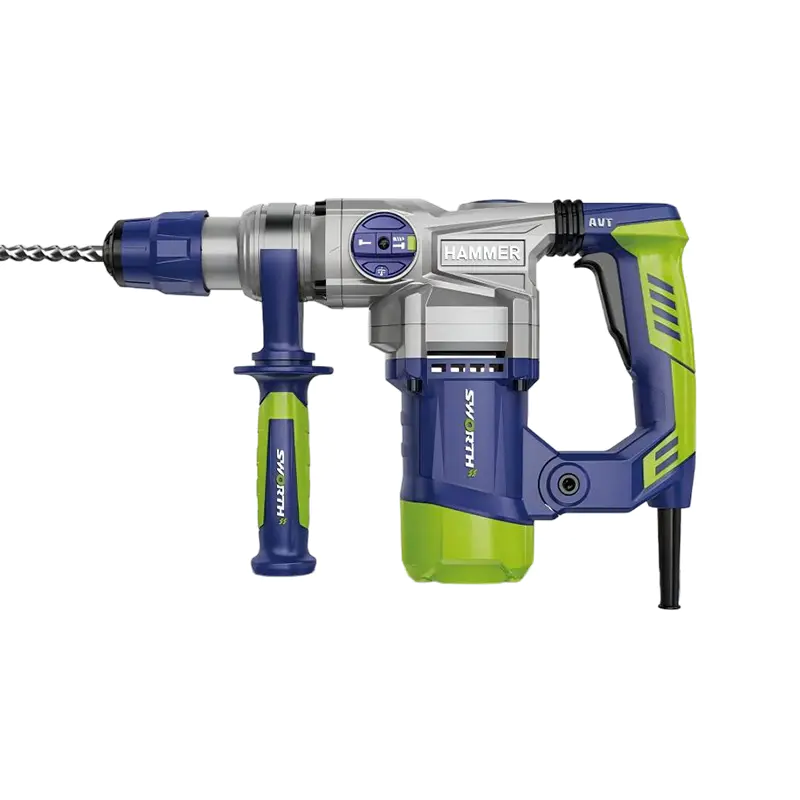
SW9362A Large Hole Rebar Hammer
-
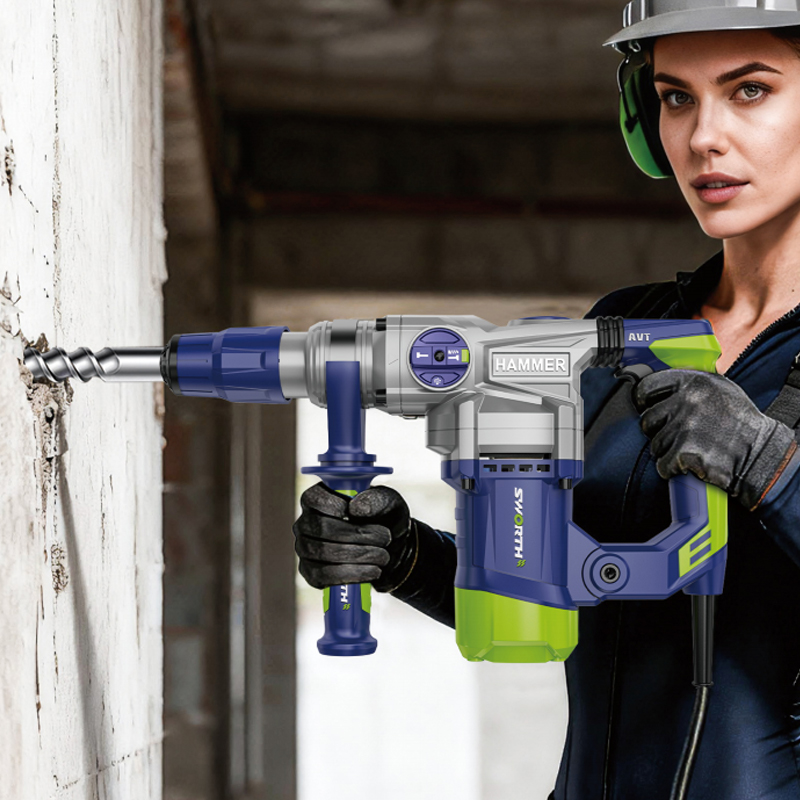
SW940 Enlarged Hole Rebar Hammer
-
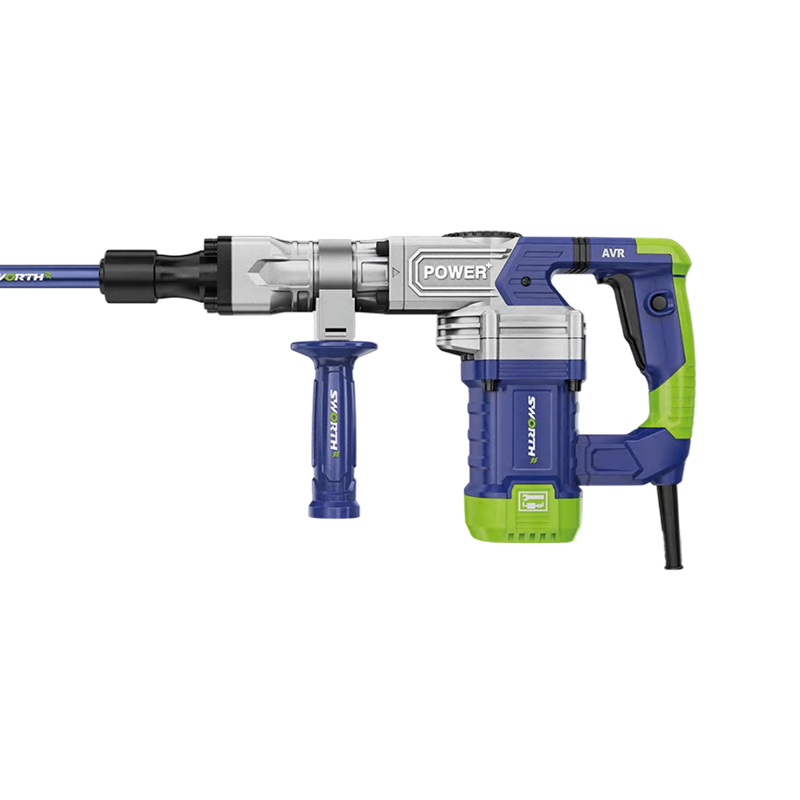
SW35S1 Powerful Demolition Hammer
-
SW35S2 High-Efficiency Heat Dissipation Demolition Hammer
-
SW9371 High-Power Demolition Hammer
-
SW9373 Anti-Scalding Carbon Brush Holder Demolition Hammer
-
SW535 Powerful Anti-Scalding Demolition Hammer
-
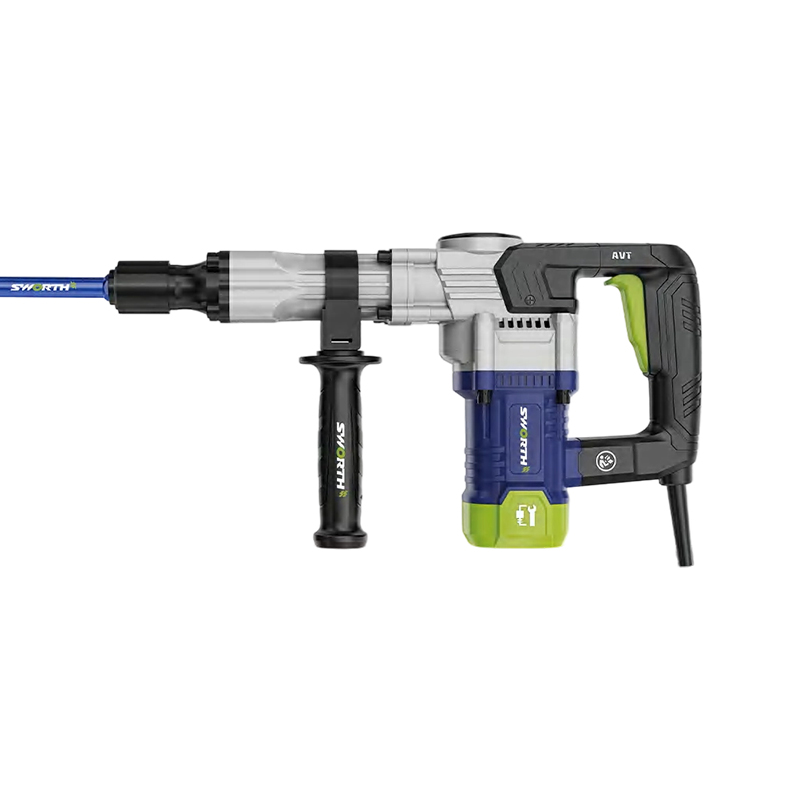
SW535-2 Durable Powerful Demolition Hammer
-
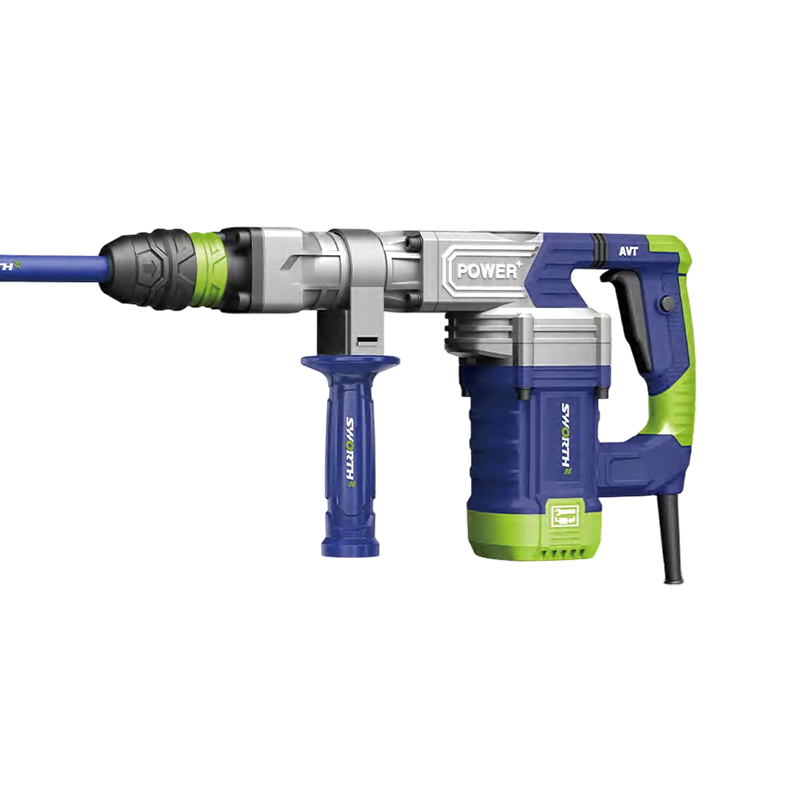
SW35S3 Five-Pipe Drill Bit Demolition Hammer
-

SW11E Five-Pipe Clamping Demolition Hammer
 +86-18314829275
 sale@sworthtools.com
 No. 101, Yugui Road, chengxi Industrial Zone, Yongkang City, Zhejiang Province, China
Copyright© Yongkang Siwei Technology Co., Ltd. All Rights Reserved

Hammer Tools & Cordless Garden Tools Manufacturer
