 English
 русский
 Español

High-Performance Demolition Hammer for Controlled, Heavy-Duty Concrete Removal
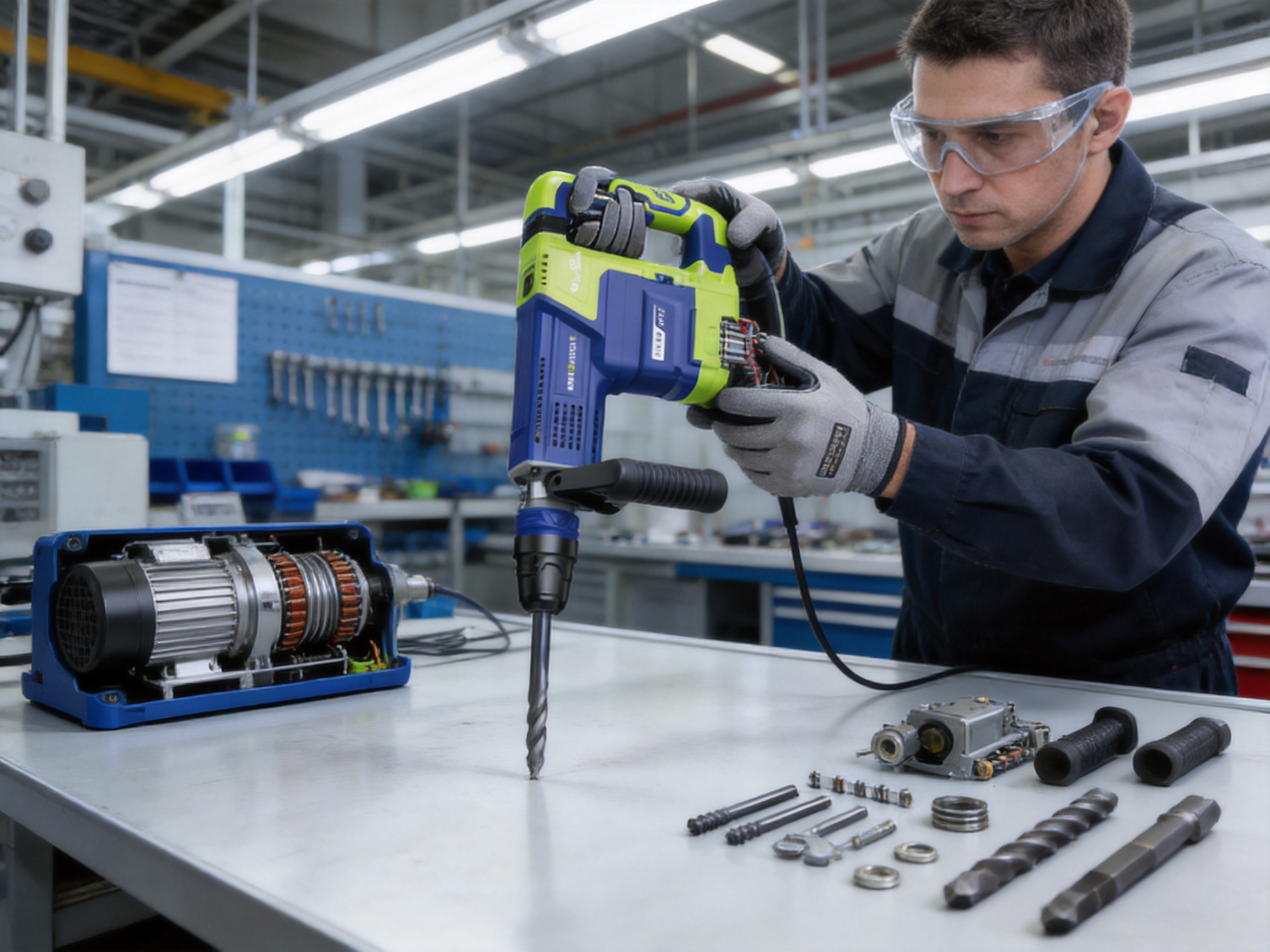
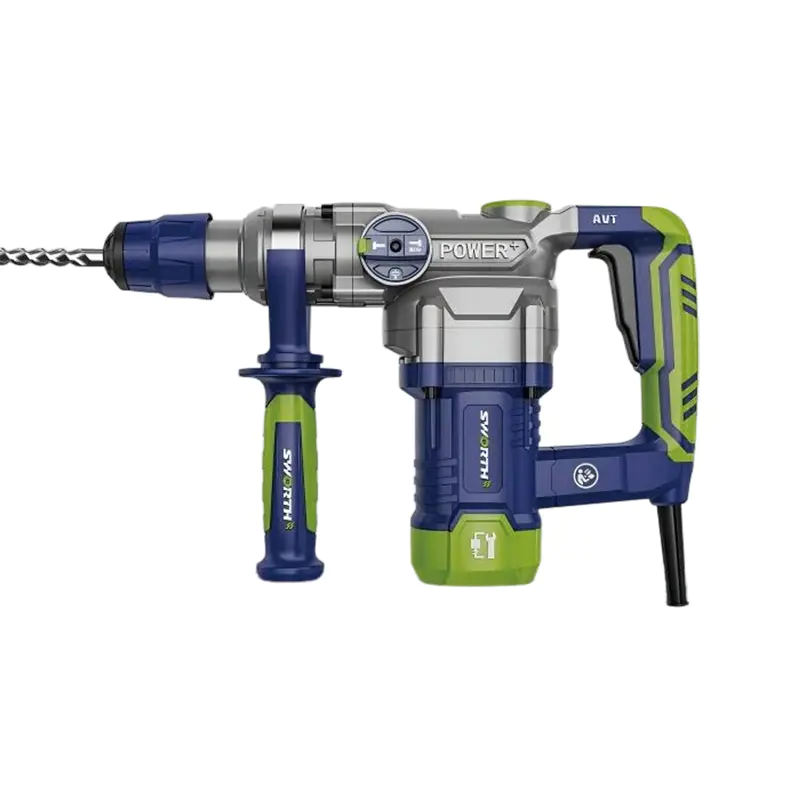
Heavy-duty demolition work demands more than a powerful motor. Contractors, renovation specialists, maintenance teams, and professional tradespeople need a demolition hammer that can transfer impact energy efficiently, hold accessories securely, remain comfortable during long working periods, and provide enough control for different materials and applications. The SW11E Five-Pipe Clamping Demolition Hammer is designed around these practical requirements. It combines a 1,550-watt electric motor, 35-joule impact energy, adjustable impact frequency, an SDS-MAX five-pit clamping device, a D-shaped handle, an anti-vibration grip, and a carbon-brush service indicator in one professional demolition platform.
Unlike a basic electric pick that offers only maximum power and a fixed operating speed, this model gives the user greater control over the relationship between impact force, operating speed, accessory behavior, and working material. Its adjustable range of 950 to 2,050 blows per minute allows the operator to select a more suitable setting for dense concrete, masonry, tile removal, pavement repair, channel cutting, or precision demolition. This flexibility helps the same machine handle both demanding removal tasks and operations where excessive impact could damage surrounding structures.
The hammer is also designed with long-term serviceability in mind. A carbon-brush end-of-life indicator helps the operator recognize when brush replacement is required before motor performance becomes unreliable. The motor structure uses a 40-millimeter cylinder and a stator and rotor arrangement selected for strong output under demanding loads. In addition, the internal structure is described as fully interchangeable with the Bosch 11E, giving professional users and service technicians a familiar maintenance reference when handling compatible internal components and repair procedures.
Manufactured by Yongkang Siwei Technology Co., Ltd., the SW11E reflects a production philosophy centered on professional tool development, durable construction, and practical field performance. The company integrates research and development, manufacturing, and sales, while also developing electronic controls, brushless motor systems, and intelligent battery platforms for its wider tool portfolio. This combination of traditional high-impact tool experience and newer electronic control expertise supports a product that is powerful, adjustable, maintainable, and suitable for demanding construction environments.
Designed for Real Demolition Conditions
Demolition work is rarely uniform. A contractor may begin by breaking a thick concrete slab, move to removing a masonry partition, and then use a narrower chisel to clean a channel around reinforcement or pipework. Each operation places different demands on a hammer. Maximum impact energy may be desirable for the first stage, while a lower and more controlled setting may be more appropriate for detail work. The SW11E addresses this variation through its adjustable electronic control system.
The machine operates at an adjustable no-load speed of 950 to 2,050 blows per minute. This range gives the operator the ability to match the hammer's behavior to the job rather than relying on one fixed setting. At a lower setting, the tool can offer more measured operation when working near edges, finished surfaces, embedded services, or fragile masonry. At a higher setting, it can deliver faster repeated impacts for aggressive removal of concrete and other hard materials.
This adjustability is particularly valuable in renovation and repair work. Demolition inside an existing building often requires selective removal instead of uncontrolled destruction. The operator may need to take out a small section of floor, expose reinforcement, remove old tile adhesive, or open a passage for wiring and plumbing without unnecessarily damaging the surrounding structure. A variable electronic system gives the user a better chance of maintaining that boundary.
The 35-joule impact rating places the SW11E in a class intended for serious demolition rather than occasional light-duty chiseling. Impact energy determines how effectively the tool can fracture resistant materials, but impact energy alone does not define performance. The hammer must also deliver that energy through a stable tool holder, robust internal components, and a grip that allows the operator to maintain control. The SW11E is designed as a complete system in which power, clamping, handling, and service indicators support one another.
Core Technical Specifications
| Specification | Value | Practical Significance |
|---|---|---|
| Product type | Electric demolition hammer | Designed for high-impact chiseling and heavy material removal |
| Rated voltage | 220-240 V, 50/60 Hz | Suitable for compatible mains power systems |
| Power input | 1,550 W | Provides substantial electrical input for demanding applications |
| No-load impact rate | 950-2,050 blows per minute | Allows operating speed and impact behavior to be adjusted |
| Impact energy | 35 J | Supports aggressive demolition of hard materials |
| Stator dimensions | 98 millimeters by 40 millimeters | Indicates a substantial motor stator configuration |
| Rotor dimensions | 54 millimeters by 40 millimeters | Supports a motor design intended for strong output |
| Tool holder | SDS-MAX five-pit clamping system | Provides secure accessory retention and quick tool changes |
| Handle design | D-shaped main handle with anti-vibration support | Improves leverage, positioning, and operator comfort |
| Service notification | Carbon-brush end-of-life indicator | Helps users plan maintenance before brush wear affects operation |
The specifications show that this is not simply a high-wattage machine. Its power input, impact energy, speed range, tool holder, and service features have been combined to meet the needs of professional demolition. A specification sheet cannot predict every field result, because performance also depends on the bit, material, operator technique, and working conditions. Nevertheless, the overall configuration indicates a tool intended to handle repeated, demanding work rather than occasional household use.
Power Where It Matters
The 1,550-watt motor provides the electrical input needed for sustained high-impact operation. In demolition applications, a motor must convert electrical power into repeated mechanical impacts while coping with vibration, dust, heat, and changing resistance from the material being broken. A robust motor assembly is therefore essential to maintaining useful output when the chisel encounters dense concrete or embedded aggregate.
The listed 40-millimeter cylinder contributes to the machine's power-generating system. A larger cylinder can support stronger air compression and impact movement inside the hammer mechanism, helping the tool produce substantial impact energy. In practical terms, this supports faster fracture of resistant material when the accessory is correctly selected and the operator applies suitable pressure.
The 35-joule impact rating is especially relevant for jobs where a light rotary hammer may be too slow or inefficient. Thick concrete, hard masonry, foundation repairs, road maintenance, and heavy floor removal can require repeated high-energy blows. With the appropriate chisel, the SW11E is positioned to reduce the amount of manual effort required from the operator and to improve progress on large areas.
Power should not be confused with the need to force the machine into the material. Professional demolition hammers work most effectively when the chisel is allowed to perform the impact action while the operator guides the tool and maintains stable contact. Excessive downward pressure can reduce the efficiency of the impact mechanism, increase vibration, and accelerate accessory or component wear. The SW11E's power is intended to support controlled work, not to eliminate the need for proper technique.
Electronic Six-Speed Stepless Control
One of the principal advantages of the SW11E is its electronic six-speed stepless speed regulation. The control allows the user to move through a broad range rather than being restricted to a single maximum setting. This feature is useful because construction materials vary significantly in hardness, thickness, structure, and sensitivity to vibration.
For aggressive removal of thick concrete, the operator may select a higher impact rate to increase the number of blows delivered over a given period. For brickwork, blockwork, tile adhesive, or work close to a finished surface, a lower setting may provide more manageable behavior. The ability to change the speed also helps the user adapt when the material changes during the same task. A surface layer may be relatively easy to remove, while the substrate beneath it may be substantially harder or more brittle.
Electronic control also improves the relationship between tool and accessory. Wide chisels, scaling tools, pointed chisels, and channeling accessories do not behave in exactly the same way. A broad chisel may benefit from a controlled rate that keeps the cutting edge engaged across a large area. A pointed chisel may be used at a more forceful setting when penetrating a dense section. Adjusting the hammer to suit the accessory can help improve productivity and reduce unnecessary shock to both the tool and the operator.
The adjustable system can also be valuable for precision demolition. Selective removal requires the operator to stop a cut at a defined boundary, protect nearby surfaces, and avoid disturbing structural or service elements that must remain in place. While no speed control can replace professional judgment, a variable setting gives the user an additional means of controlling the process.
Secure SDS-MAX Five-Pit Clamping
The tool holder is a critical part of any demolition hammer. A high-energy mechanism is only useful if the chisel remains properly retained and can transfer the impact into the working material. The SW11E uses an SDS-MAX five-pit clamping device designed to provide a secure grip on compatible drill bits and chisels.
The five-pit configuration supports stable accessory positioning during repeated impacts. Demolition subjects the holder and accessory interface to rapid shock loads, and an insecure or poorly maintained connection can reduce efficiency and create a safety concern. A secure clamping arrangement helps keep the accessory aligned with the machine and reduces the likelihood of unwanted movement during operation.
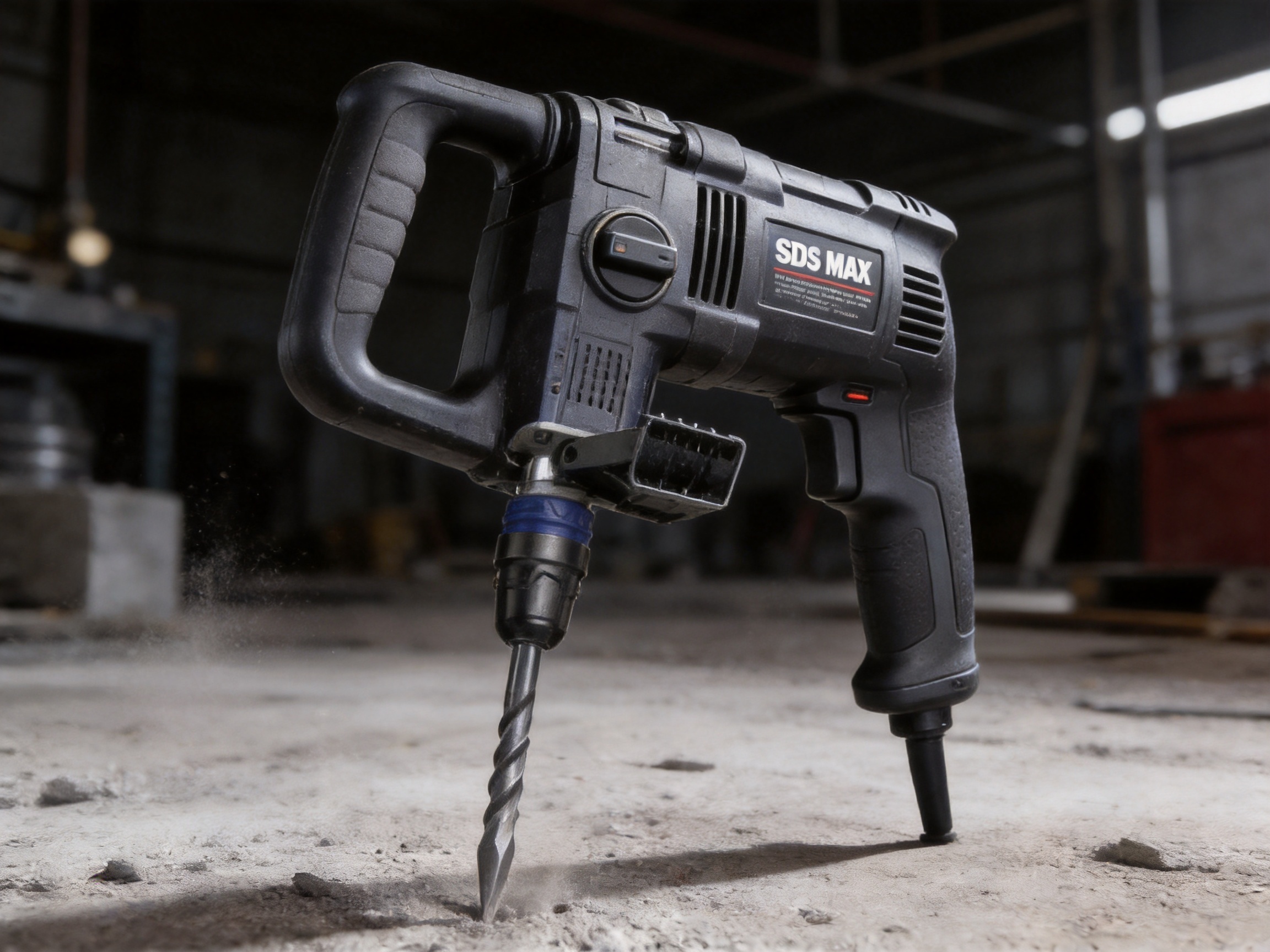
The SDS-MAX format is widely recognized in professional concrete and masonry work because it is designed for larger accessories than lighter-duty tool-holder systems. This makes it suitable for pointed chisels, flat chisels, scaling tools, clay spades, channeling tools, and other accessories used for heavy material removal. The exact accessory should always be selected according to the application and the manufacturer's operating requirements.
The quick-release design also improves work efficiency. Demolition tasks frequently involve changing from a pointed tool for penetration to a flat tool for separation or a scaling tool for surface removal. A practical quick-release chuck can reduce downtime between operations and make it easier for a worker to use the correct accessory instead of continuing with an unsuitable one.
Regular inspection remains important. The operator should keep the holder clean, check that accessories are correctly seated, inspect shanks for excessive wear, and follow the recommended lubrication and maintenance schedule. A strong clamping system performs best when the accessory and holder are both maintained properly.
Operator Comfort and Vibration Management
Demolition hammers generate unavoidable vibration because they produce repeated impacts. The design challenge is to transmit useful energy into the material while limiting unnecessary vibration at the handles. The SW11E incorporates an anti-vibration handle with soft rubber, giving the operator a more comfortable and secure contact surface.
The soft rubber grip helps reduce the harsh sensation associated with prolonged impact work. It also supports a non-slip hold, which is important when the tool is used in dusty environments or when the operator's gloves become damp from heat or perspiration. A stable grip allows the user to guide the chisel more accurately and reduces the need to grip the machine excessively tightly.
The D-shaped handle provides additional convenience for demolition positions. It can give the operator more leverage when working vertically, horizontally, or at an angle. This shape is useful when the hammer must be positioned close to a wall, floor, slab edge, or structural opening. It also offers a practical gripping area for controlling the direction of the tool while the chisel works through the material.
The large switch is designed to be comfortable to press and hold. This is a small but important detail because demolition operations may continue for extended periods. A switch that is difficult to operate can increase hand fatigue and make it harder to maintain a stable grip. A clearly accessible control allows the operator to start, stop, and adjust the tool as working conditions change.
Ergonomics do not replace safe work practices. Operators should take regular breaks, use suitable gloves and hearing protection, wear eye and respiratory protection where required, and maintain a balanced stance. The hammer should be held with both hands when the application requires it, and the user should avoid working from an unstable ladder or unsuitable platform.

SW11E Five-Pipe Clamping Demolition Hammer
Carbon-Brush End-of-Life Indicator
Many professional electric tools use carbon brushes to transfer electrical current to the rotating armature. These components gradually wear during normal operation. If brush wear is ignored, the motor may lose performance, produce excessive sparking, overheat, or stop unexpectedly. The SW11E includes an indicator light that informs the operator when the carbon brushes should be replaced.
This service notification is an important advantage over simpler demolition hammers that provide no clear warning. Without an indicator, users may continue operating until the tool suddenly stops or the motor suffers avoidable stress. With the SW11E, maintenance can be planned around the work schedule. A contractor can inspect the machine, obtain suitable replacement brushes, and complete service before the next major project.
Preventive maintenance improves equipment availability. In professional construction, unexpected tool failure can interrupt a crew's workflow, delay a project, and increase labor costs. A visible indicator helps turn brush replacement from an emergency repair into a routine service task.
The indicator does not mean that other maintenance can be ignored. The hammer should still be inspected for damaged cords, loose fasteners, worn accessories, blocked ventilation openings, unusual noise, excessive sparking, and changes in impact performance. Any abnormal condition should be investigated by a competent technician before the tool is returned to service.
Construction Quality and Internal Compatibility
The SW11E is built around a durable structure intended for high-intensity demolition. Heavy-impact equipment must withstand repeated mechanical loads, and the outer housing, motor supports, impact mechanism, tool holder, and handles must work together as a coherent assembly. A strong external appearance is not enough; internal alignment, material selection, machining accuracy, and assembly control are also important.
The product information states that its internal structure is fully interchangeable with Bosch 11E. This compatibility reference can be valuable to professional users who already understand that platform's service layout and operating characteristics. It may also help technicians identify familiar maintenance procedures and evaluate replacement components. Any parts replacement should nevertheless be completed with components that meet the correct specifications and by personnel qualified to service the equipment.
Interchangeable internal architecture can also support manufacturing efficiency. When a tool platform uses proven component dimensions and established assembly relationships, production teams can standardize inspection points, improve parts management, and maintain consistency across units. This can contribute to more predictable quality and more efficient after-sales support.
The motor dimensions listed for the SW11E include a 98-millimeter by 40-millimeter stator and a 54-millimeter by 40-millimeter rotor. These dimensions indicate that the motor has been configured for substantial output within the body of a dedicated demolition hammer. The value of these components depends on the quality of the copper windings, insulation, lamination materials, balancing, assembly accuracy, and thermal management. A professional manufacturing process must control all of these factors rather than focusing on size alone.
Advanced Manufacturing Strengths
Yongkang Siwei Technology Co., Ltd. operates as a professional tool manufacturer integrating research and development, production, and sales. This integrated structure allows product design decisions to be connected more closely with manufacturing feedback and customer requirements. In a specialized power-tool business, that connection is important because field performance often reveals opportunities for improving housing design, control systems, service access, accessory retention, or operator comfort.
The company's stated manufacturing philosophy emphasizes professional focus and quality first. For a demolition hammer, this philosophy should be reflected in several practical production controls. Motor components need consistent winding and insulation quality. Rotating parts require accurate balancing. Impact components need suitable heat treatment and dimensional control. Tool-holder parts need reliable machining and surface quality. Housing components must fit correctly and protect the internal mechanism from common job-site conditions.
Assembly quality is equally important. A demolition hammer contains components that must be aligned correctly to transfer impact energy efficiently. Incorrect fastening, poor lubrication, misaligned supports, or inconsistent electrical connections can affect reliability even when individual parts meet their design dimensions. A controlled assembly process, combined with inspection at critical stages, helps reduce variation between production units.
Quality assurance should also include functional testing. A finished unit can be checked for no-load impact rate, switch operation, speed-control response, abnormal noise, vibration behavior, brush-indicator function, and tool-holder operation. Electrical safety checks are essential for a mains-powered product, including insulation and grounding-related inspections appropriate to the applicable market requirements.
The company's experience in demolition hammers and chisel-cutting tools gives it a focused understanding of high-impact applications. Its products are intended for engineering construction and professional users, where reliability, durability, and ease of service are more important than decorative features. This specialization can help the manufacturer prioritize the details that directly affect job-site performance.
Since 2024, the company has also developed expertise in green new-energy technologies, high-efficiency brushless motors, electronic controls, and intelligent battery platforms. Although the SW11E is a corded demolition hammer, this electronic and motor-development experience is relevant to the company's broader technical capabilities. Electronic control knowledge can support better understanding of speed regulation, motor protection, switching behavior, and control-system reliability across different tool categories.
Advantages Over Basic or Fixed-Speed Demolition Hammers
The SW11E offers several functional advantages when compared with basic demolition hammers that provide only a fixed impact setting and a simpler tool holder. The first is control. A fixed-speed machine may perform well in one material but feel too aggressive or difficult to manage in another. The SW11E's adjustable 950 to 2,050 blows per minute range allows the operator to select a more appropriate working behavior.
The second advantage is service awareness. A basic machine without a carbon-brush indicator leaves the operator to estimate brush wear or wait for symptoms to appear. The SW11E provides a direct visual notification, supporting planned maintenance and reducing the risk of unexpected interruption.
The third advantage is handling. The D-shaped handle, anti-vibration soft rubber grip, non-slip surface, and large switch are designed around the realities of prolonged demolition. These features can improve comfort and control compared with a tool that treats the handle as a simple housing extension.
The fourth advantage is accessory retention. A professional SDS-MAX five-pit clamping system is better suited to large demolition accessories than lighter systems designed for small drilling or light chiseling. Secure retention helps the user transfer the hammer's energy into the workpiece while supporting efficient tool changes.
The fifth advantage is the combination of high impact energy and electronic adjustment. Some tools emphasize force but provide little control, while others are easy to adjust but lack the energy required for heavy demolition. The SW11E attempts to balance both needs by offering 35 joules of impact energy with a flexible operating range.
These advantages should be considered in relation to the application. A compact rotary hammer may be more suitable for drilling anchor holes or occasional light chiseling, while a cordless tool may be preferable where no mains supply is available. The SW11E is specifically positioned for users who need the sustained output of a corded, heavy-duty demolition hammer and who value control and serviceability.
Applications Across Construction and Renovation
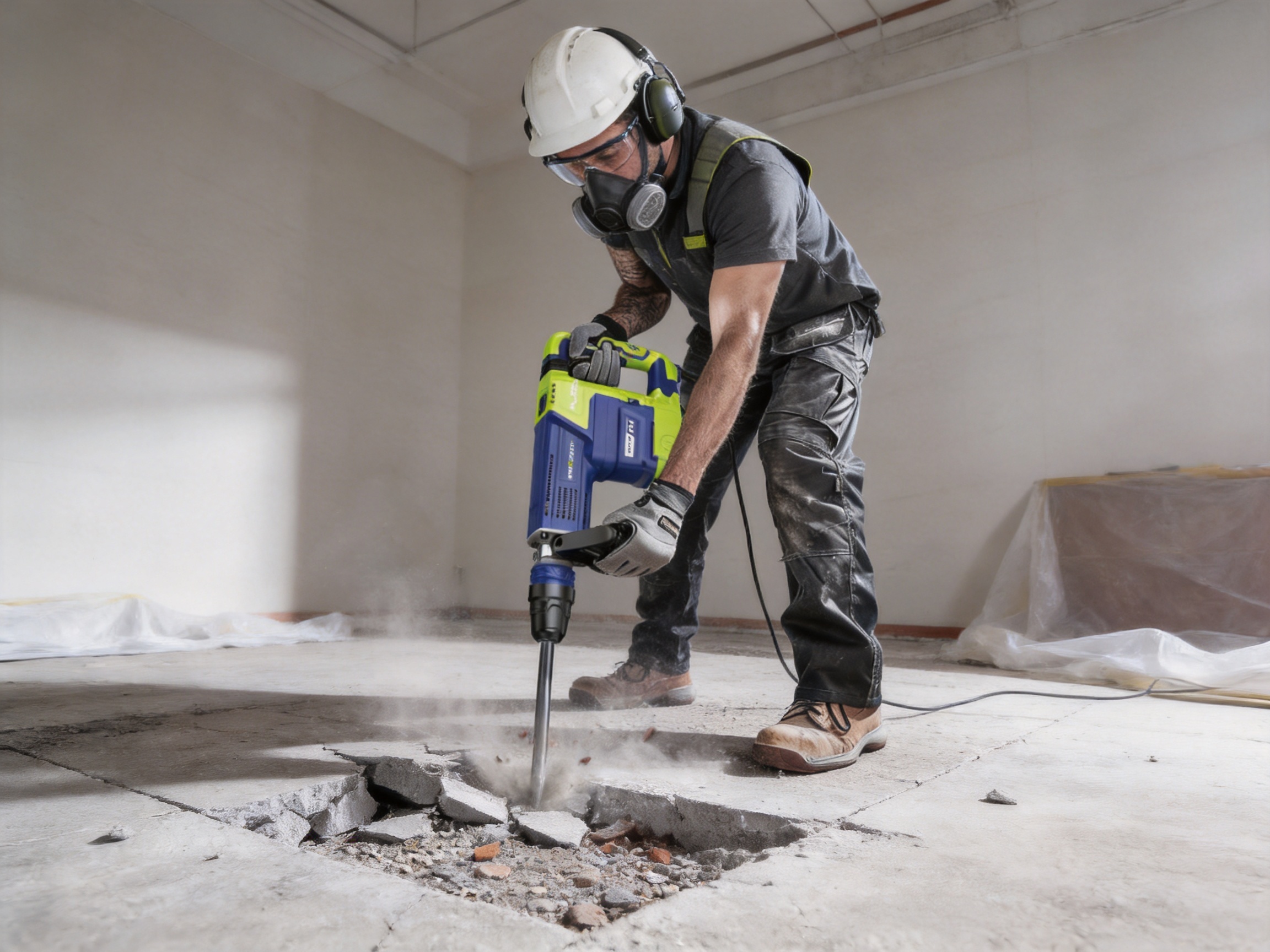
The machine is suitable for a range of demanding applications when used with the correct accessory. Concrete slab removal is one of the most obvious uses. A pointed chisel can begin penetration, while a flat or scaling chisel can separate loosened sections. The high impact energy helps break thick or dense material into manageable pieces for removal.
Floor renovation is another useful application. Old concrete screed, tile bedding, hardened adhesive, and damaged flooring can require substantial impact force. The adjustable speed control allows the operator to begin carefully near walls, thresholds, or retained surfaces before increasing the setting in more open areas.
For masonry work, the hammer can assist with removing brickwork, blockwork, mortar, and sections of rendered surfaces. Precision is important when the operator is opening a wall for a doorway, pipe route, electrical channel, or repair area. Lower settings and suitable flat or narrow chisels can help manage the removal process.
Road and civil maintenance work may also benefit from a high-energy electric pick. Repairs can involve breaking damaged pavement, removing concrete around drainage components, or exposing buried structures. The corded design is useful where continuous power is available and where the work period is long enough that battery charging would be inconvenient.
Industrial maintenance teams can use a demolition hammer for removing refractory material, old mounting compounds, hardened deposits, and damaged concrete surrounds. In these environments, the ability to change accessories quickly and adjust impact behavior can reduce setup time between different maintenance stages.
Landscaping and property improvement projects may involve breaking small foundations, removing steps, dismantling retaining features, or clearing hard paving. The machine's capacity is more than may be necessary for light domestic work, but it becomes valuable when a contractor must complete substantial material removal efficiently.
In every application, the user must identify hidden electrical cables, gas lines, plumbing, reinforcement, post-tensioning systems, and other hazards before chiseling. The machine's power makes planning especially important. A high-performance hammer should be used to remove the intended material, not to discover concealed services through impact.
Productivity and Total Operating Value
The purchase value of a demolition hammer is determined by more than its initial price. Contractors should consider how quickly the machine completes work, how often it requires service, how easily accessories can be changed, how long operators can use it comfortably, and how much downtime results from maintenance or failure. The SW11E is designed to support these total operating considerations.
High impact energy can reduce the time required to break hard material. Adjustable speed can reduce wasted effort when the job changes. Quick-release accessory retention can shorten tool-change intervals. A service indicator can help prevent unexpected brush-related downtime. An ergonomic handle can support longer productive periods by reducing unnecessary hand fatigue. Each feature contributes to the overall usefulness of the machine.
For a professional crew, consistency is also valuable. A predictable tool allows the operator to plan the sequence of work and estimate progress more accurately. If the hammer performs consistently under the same conditions, supervisors can assign tasks with greater confidence. This is particularly important when demolition is only one stage in a larger construction or renovation project.
The corded design provides continuous operation as long as a suitable power source is available. There is no battery charging cycle, no need to manage multiple battery packs, and no reduction in work time caused by battery capacity. For indoor renovation, factory maintenance, workshop production, and construction sites with reliable mains power, this can be a practical advantage over cordless equipment.
At the same time, users must plan cable routing carefully. The power cord should be protected from sharp edges, water, vehicles, hot surfaces, and the working chisel. A suitable extension arrangement should be selected according to the tool's electrical requirements and local safety rules. Proper cable management allows the corded advantage of continuous output to be used safely.
Recommended Operating Method
Before starting work, inspect the demolition hammer, power cord, plug, housing, handles, switch, tool holder, and accessory. Confirm that the selected chisel is suitable for the material and is correctly inserted into the SDS-MAX holder. The accessory should be clean, free from cracks, and not excessively worn.
Mark the intended demolition area and identify hazards behind or below the surface. Remove loose objects from the surrounding area and establish a safe exclusion zone. Wear safety glasses or a face shield, hearing protection, suitable work gloves, protective footwear, and respiratory protection when dust may be generated.
Position the tool so that the chisel contacts the material at a suitable angle. Start at a controlled speed and allow the point or cutting edge to establish a working position. Avoid twisting the accessory excessively because side loading can damage the chisel, holder, or internal impact mechanism.
Increase the impact setting when the material and working position allow it. Apply steady guidance rather than excessive force. If the hammer begins to bounce, bind, overheat, or produce an unusual sound, stop and inspect the accessory and material. Do not continue simply by pressing harder.
Use the appropriate accessory for each stage. A pointed chisel is generally suited to penetration and concentrated fracture. A flat chisel can help separate material and create a broader cut. A scaling tool may be more appropriate for surface layers and residue. Correct accessory selection can improve productivity and reduce stress on the tool.
When the task is complete, switch off and disconnect the hammer before changing accessories, clearing debris, or carrying out inspections. Clean dust from the exterior and ventilation openings according to the recommended procedure. Store the tool in a dry, protected location and keep accessories organized for the next job.
Maintenance for Long Service Life
Regular maintenance protects both performance and safety. The operator should inspect the power cord for cuts, crushed sections, exposed conductors, or damaged strain relief. Any electrical damage should be handled by a qualified service professional. Do not use a tool with a compromised cord or plug.
The tool holder should be kept free from concrete dust and debris. Dirt in the clamping area can prevent the accessory from seating correctly and may accelerate wear. Inspect the shank of every accessory before installation and remove tools that are cracked, bent, excessively rounded, or otherwise unsafe.
Ventilation openings should remain clear so that cooling air can circulate around the motor. Dust accumulation can increase operating temperature and reduce component life. Cleaning should be performed with the hammer disconnected from the power supply and in a way that does not force debris farther into the housing.
Pay attention to changes in performance. Reduced impact, intermittent operation, excessive sparking, burning odor, unusual vibration, and abnormal noise can indicate a service requirement. The carbon-brush indicator provides useful information, but it is only one part of a complete maintenance program.
Replacement parts should meet the correct design and electrical specifications. Because the SW11E has an internal structure described as interchangeable with Bosch 11E, technicians may find the architecture familiar, but compatibility should always be verified before installation. Improvised parts can affect safety, impact performance, and warranty conditions.
For companies operating several machines, a maintenance log can be useful. Record operating hours where practical, brush replacement dates, accessory changes, abnormal events, inspections, and repairs. This information helps identify recurring problems and supports better planning for spare parts and scheduled service.
Safety Considerations
A 35-joule demolition hammer is a powerful machine and should be operated only by trained users who understand the risks of impact tools. The operator must maintain a stable stance and keep both hands in control of the machine when required by the application. Never point the tool toward another person, and keep bystanders away from flying fragments and dust.
Concrete and masonry can release respirable dust, including silica-containing particles. Dust control should be selected according to the material and work environment. Use suitable extraction, wet methods where appropriate, ventilation, and approved respiratory protection. Hearing protection is also important because repeated impact operation can create high sound levels.
Before chiseling, investigate the work area for hidden utilities and structural hazards. Do not assume that a wall, slab, or floor is free of electrical cables, water pipes, gas lines, reinforcement, or tensioned elements. When the work involves a load-bearing structure, obtain appropriate engineering advice before removing material.
Do not use the demolition hammer in wet conditions unless the complete electrical setup is specifically designed and approved for that environment. Keep the cord away from water and never pull the tool by its cable. Disconnect the machine before carrying, adjusting, cleaning, or servicing it.
Operators should also understand that vibration exposure depends on the material, accessory, force applied, work duration, and operating technique. Even with an anti-vibration handle, users should take breaks and follow workplace exposure-control procedures. If numbness, tingling, pain, or loss of grip develops, stop work and report the condition.
Why the SW11E Fits Professional Users
The SW11E is suited to professional users because it addresses the complete demolition task rather than focusing on a single headline specification. Its 1,550-watt input and 35-joule impact energy provide the force required for hard materials. Its adjustable electronic system gives the operator control over that force. Its SDS-MAX five-pit holder supports large accessories and secure impact transfer. Its D-shaped, anti-vibration handle supports handling, while its brush indicator supports preventive service.
These features are especially relevant to contractors who move between different job types. A specialist who performs only one repetitive operation may select a machine optimized for that single task. A general construction contractor, renovation team, facility-maintenance department, or equipment distributor may need a more versatile platform. The SW11E can cover aggressive demolition and more controlled removal without requiring a separate hammer for every material condition.
The product also benefits from the manufacturer's focused experience in demolition tools. Yongkang Siwei Technology Co., Ltd. describes itself as a professional manufacturer with capabilities in research and development, production, and sales. Its emphasis on durable materials, advanced processes, and professional tool performance aligns with the requirements of a high-impact machine.
Its wider work in brushless motors, electronic control systems, intelligent battery platforms, and cordless garden tools adds another dimension to its technical foundation. These developments demonstrate an ability to work across mechanical, electrical, and electronic systems. For buyers seeking a supplier rather than only a single product, this breadth may support future sourcing needs in construction tools and outdoor power equipment.
Choosing the Right Buyer and Distribution Market
Distributors should present the SW11E to customers who require heavy-duty electric demolition capability and have access to a suitable 220-240-volt, 50/60-hertz supply. The main customer groups include construction contractors, concrete repair companies, masonry specialists, renovation teams, road-maintenance organizations, industrial maintenance departments, equipment rental companies, and professional tool dealers.
Rental companies may value the straightforward service features and the familiar internal architecture. A rental fleet benefits from machines that are easy to inspect, maintain, and return to service. The carbon-brush indicator can assist fleet technicians in scheduling maintenance between rentals.
Construction contractors may focus on productivity, impact energy, tool changes, and operator comfort. Facility managers may emphasize reliability, service access, and the ability to complete occasional heavy repairs without outsourcing every demolition task. Tool distributors may highlight the combination of power, adjustment, and professional handling when explaining the product to end users.
Customers should be advised that the machine is not intended to replace every type of power tool. It is a demolition hammer, not a general-purpose drilling machine. For drilling small holes, a rotary hammer or drill may be more appropriate. For work in areas without mains power, a cordless solution may be preferable. Clear application guidance helps customers select the right product and improves satisfaction after purchase.
Frequently Asked Questions
What type of work is the SW11E designed for?
The SW11E is designed for heavy-duty chiseling and demolition of concrete, masonry, flooring, pavement, old adhesive, render, and similar hard materials. It is intended for professional construction, renovation, repair, and maintenance applications rather than light drilling.
What is the impact energy of the hammer?
The listed impact energy is 35 joules. This provides substantial force for breaking and removing hard materials when the correct accessory and operating technique are used.
Can the impact rate be adjusted?
Yes. The electronic six-speed stepless control provides an adjustable no-load impact range of 950 to 2,050 blows per minute. The user can select a lower or higher setting according to the material, accessory, and required level of control.
What kind of tool holder does it use?
The hammer uses an SDS-MAX five-pit clamping system. It is designed for secure retention of compatible large chisels and demolition accessories and supports quick tool changes.
What is the purpose of the D-shaped handle?
The D-shaped handle provides a practical gripping position and improved leverage for demolition work. It is useful when the tool is held vertically, horizontally, or at an angle and helps the operator guide the chisel more comfortably.
How does the anti-vibration handle help?
The soft rubber anti-vibration handle helps reduce the harsh feel of repeated impacts and provides a more secure, non-slip grip. It can improve comfort and control, although users must still follow vibration-exposure procedures and take appropriate breaks.
How does the carbon-brush indicator work?
The indicator light alerts the operator when the carbon brushes have reached the end of their service life and should be replaced. This allows maintenance to be planned before brush wear causes unexpected stoppage or motor problems.
Is the product suitable for continuous professional use?
The 1,550-watt motor, 35-joule impact energy, robust structure, and service indicator are intended for demanding professional applications. Actual continuous-use suitability depends on the material, duty cycle, maintenance, accessories, power supply, and operating environment.
What voltage does the hammer require?
The rated voltage is 220-240 volts at 50/60 hertz. Buyers should confirm that the local power supply, plug configuration, extension equipment, and electrical protection meet the requirements of the intended market.
Is the internal structure compatible with Bosch 11E?
The product information states that the internal structure is fully interchangeable with Bosch 11E. Service technicians should still verify individual components and use correct replacement parts before carrying out repairs.
What accessories can be used?
Compatible SDS-MAX pointed chisels, flat chisels, scaling tools, channeling tools, and other suitable demolition accessories may be used according to the application. Accessories must be selected, inspected, installed, and maintained in accordance with their specifications.
Can it be used for precision demolition?
Yes, the adjustable speed range can help the operator manage smaller or more controlled demolition tasks. Precision also depends on the selected chisel, the operator's experience, the material, and the need to protect nearby structures and services.
What should be checked before operation?
Inspect the power cord, plug, housing, handles, switch, tool holder, and accessory. Confirm that the work area is free from hidden services and unstable materials. Wear appropriate protective equipment and make sure the accessory is fully seated and secure.
What maintenance is required?
Routine maintenance includes cleaning the housing and ventilation openings, inspecting the cord and switch, checking the tool holder and accessories, monitoring impact performance, and replacing carbon brushes when indicated. Repairs involving electrical or internal impact components should be performed by qualified service personnel.
Conclusion
The SW11E Five-Pipe Clamping Demolition Hammer is a professional electric pick designed to combine serious demolition force with practical control and serviceability. Its 1,550-watt motor, 35-joule impact energy, 950 to 2,050 blows-per-minute adjustment range, SDS-MAX five-pit clamping device, D-shaped handle, anti-vibration grip, and carbon-brush indicator create a balanced platform for demanding construction and renovation work.
Its advantages over simpler fixed-speed hammers are found in the details that affect daily use: adjustable impact behavior, secure accessory retention, improved handling, planned brush maintenance, and a structure intended for repeated high-impact operation. These features can help contractors work more productively while maintaining better control over different materials and demolition conditions.
The product is supported by the manufacturing capabilities of Yongkang Siwei Technology Co., Ltd., a company focused on research and development, production, sales, demolition hammers, chisel-cutting tools, electronic controls, brushless motors, intelligent battery platforms, and cordless garden equipment. Its integrated approach and emphasis on professional quality provide a foundation for developing durable tools suited to harsh working conditions.
For users who need continuous mains-powered operation and substantial impact performance, the SW11E offers a practical solution for concrete removal, masonry demolition, flooring renovation, pavement repair, industrial maintenance, and other high-intensity applications. Correct accessory selection, safe operating procedures, regular inspection, and planned maintenance will allow the hammer's power and control features to deliver their full value over the working life of the equipment.
References
1. Product technical information for the SW11E Five-Pipe Clamping Demolition Hammer, including rated voltage, power input, impact rate, impact energy, motor dimensions, tool holder, handle design, and service indicator.
2. Manufacturer information from Yongkang Siwei Technology Co., Ltd. concerning professional tool manufacturing, research and development, production capabilities, demolition hammers, chisel-cutting tools, electronic controls, and intelligent battery platforms.
3. General professional practice for electric demolition hammer operation, accessory selection, preventive maintenance, vibration management, electrical safety, and dust control.
4. General technical principles relating to SDS-MAX tool holders, impact mechanisms, carbon-brush motors, electronic speed regulation, and high-impact construction equipment.
Product: SW11E Five-Pipe Clamping Demolition Hammer

Recommended Products
-


SW528 Small Hole Rebar Hammer
-
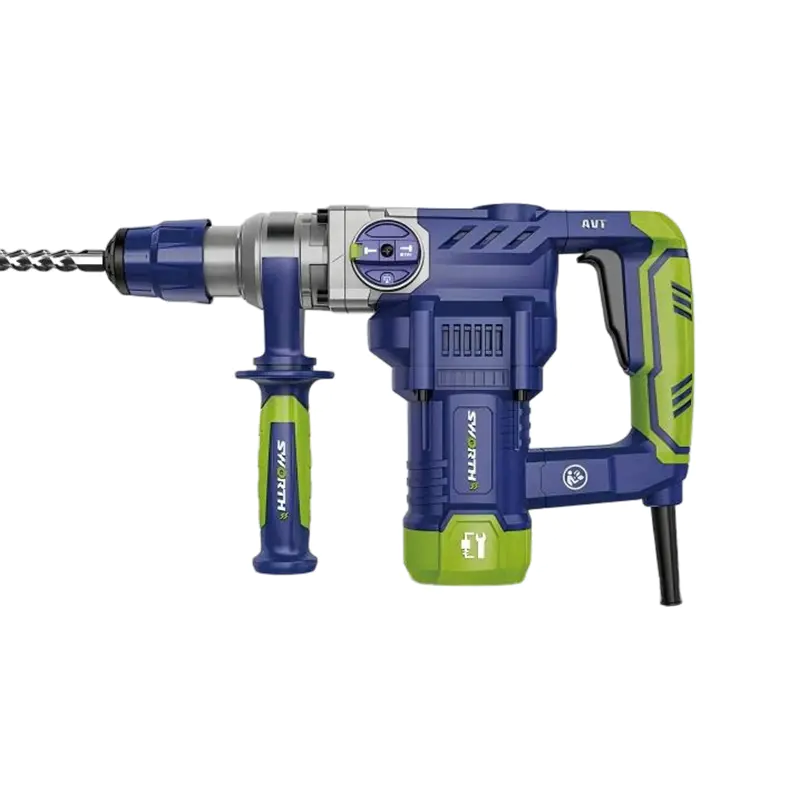
SW932 Groove Sandblasting Hammer
-
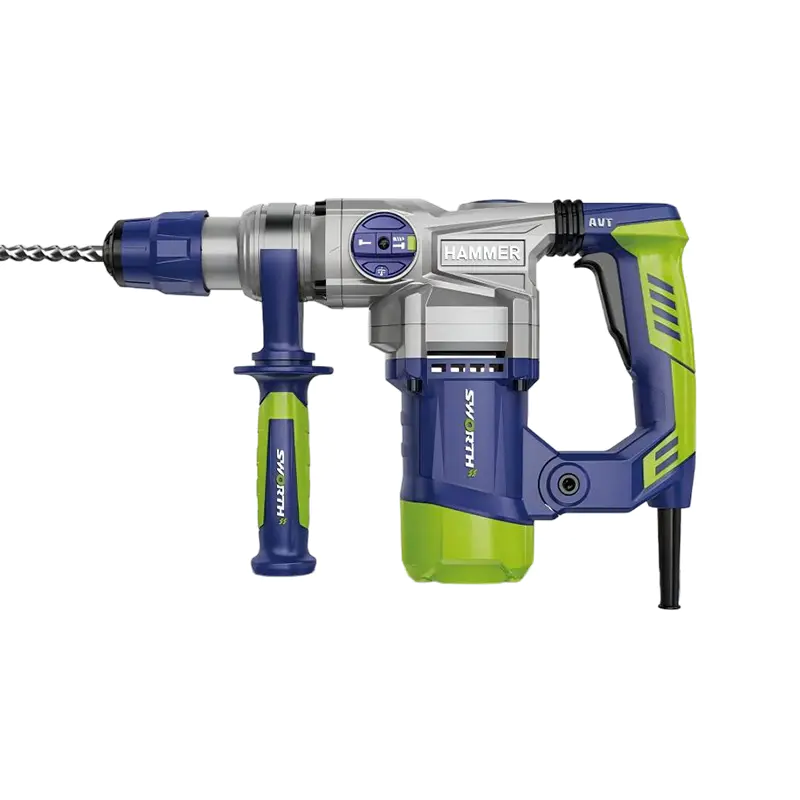
SW9362A Large Hole Rebar Hammer
-
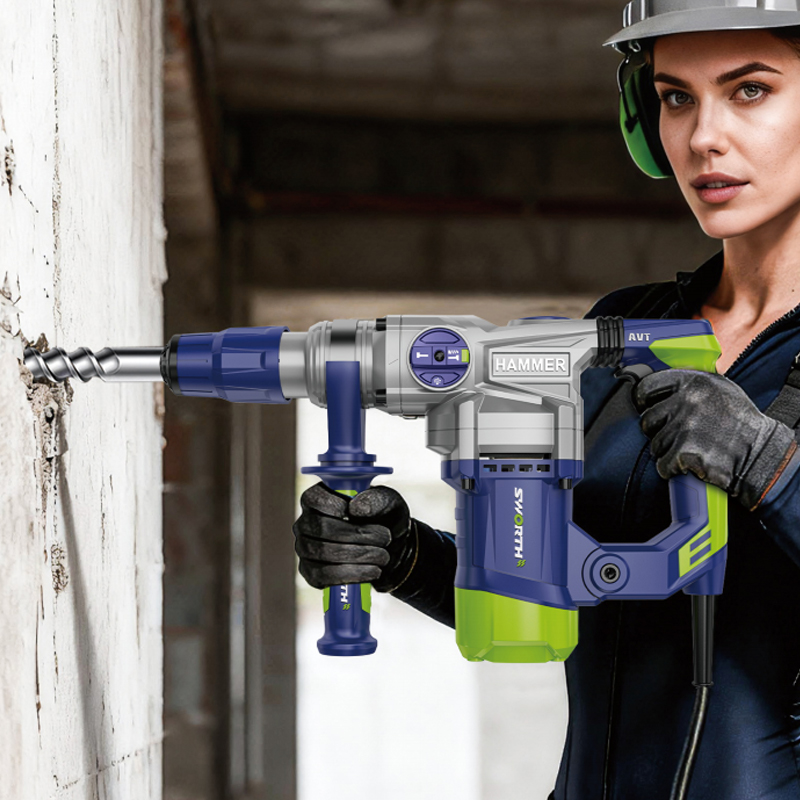
SW940 Enlarged Hole Rebar Hammer
-
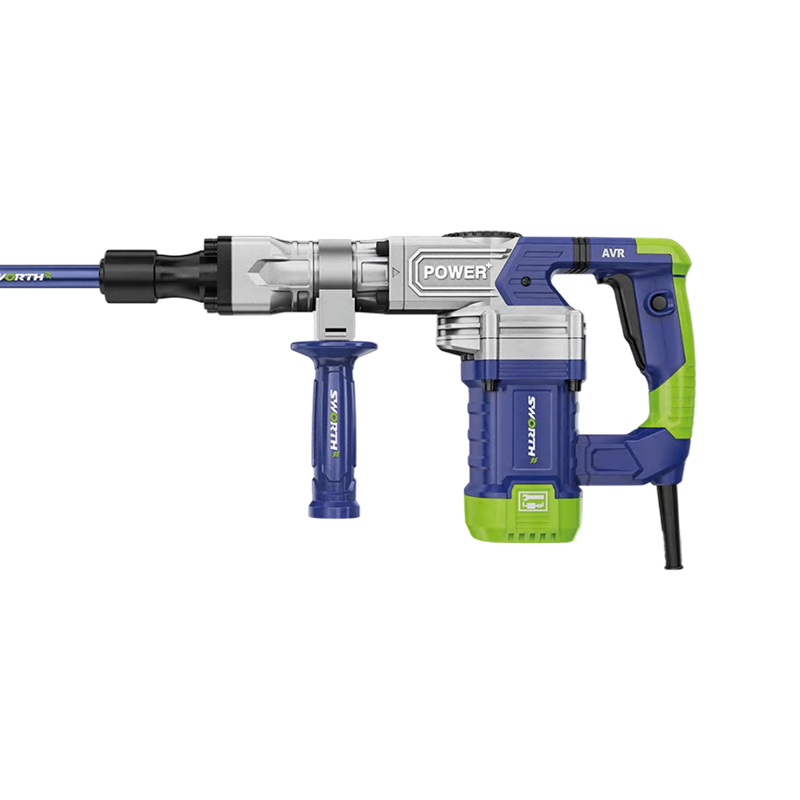
SW35S1 Powerful Demolition Hammer
-
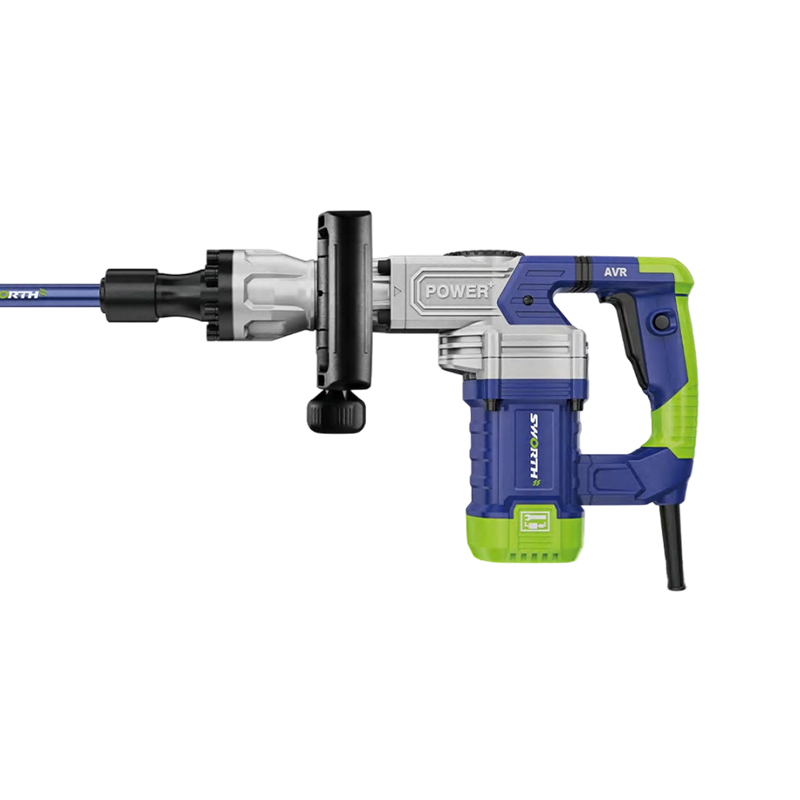
SW35S2 High-Efficiency Heat Dissipation Demolition Hammer
-
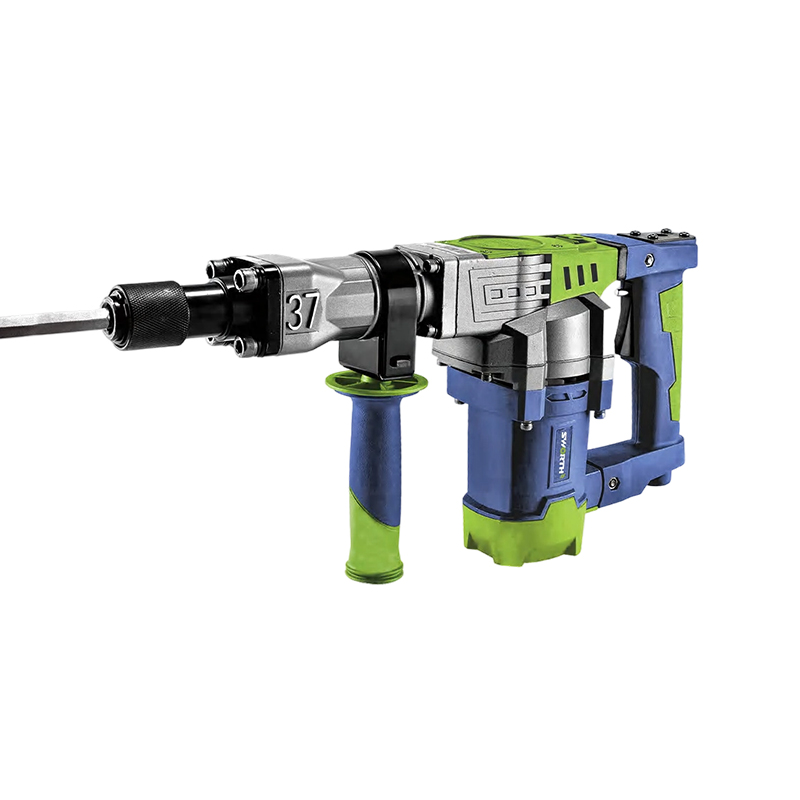
SW9371 High-Power Demolition Hammer
-
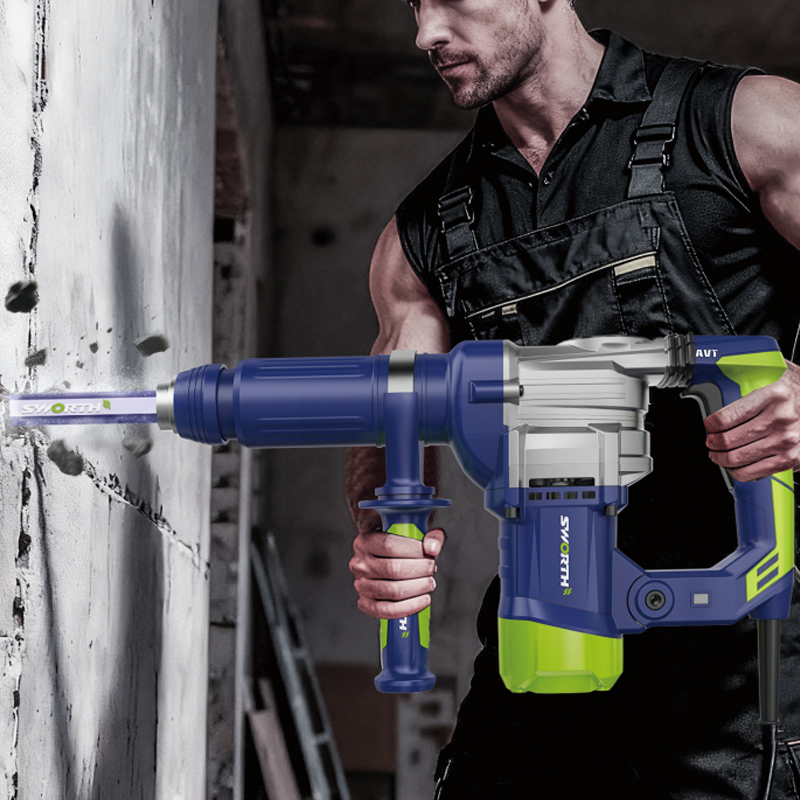
SW9373 Anti-Scalding Carbon Brush Holder Demolition Hammer
-
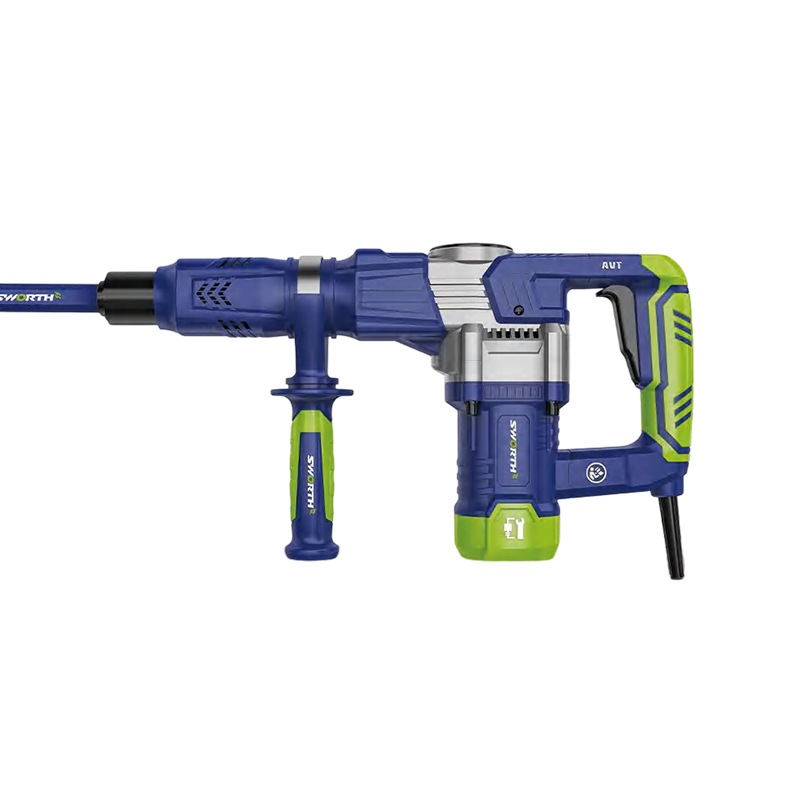
SW535 Powerful Anti-Scalding Demolition Hammer
-
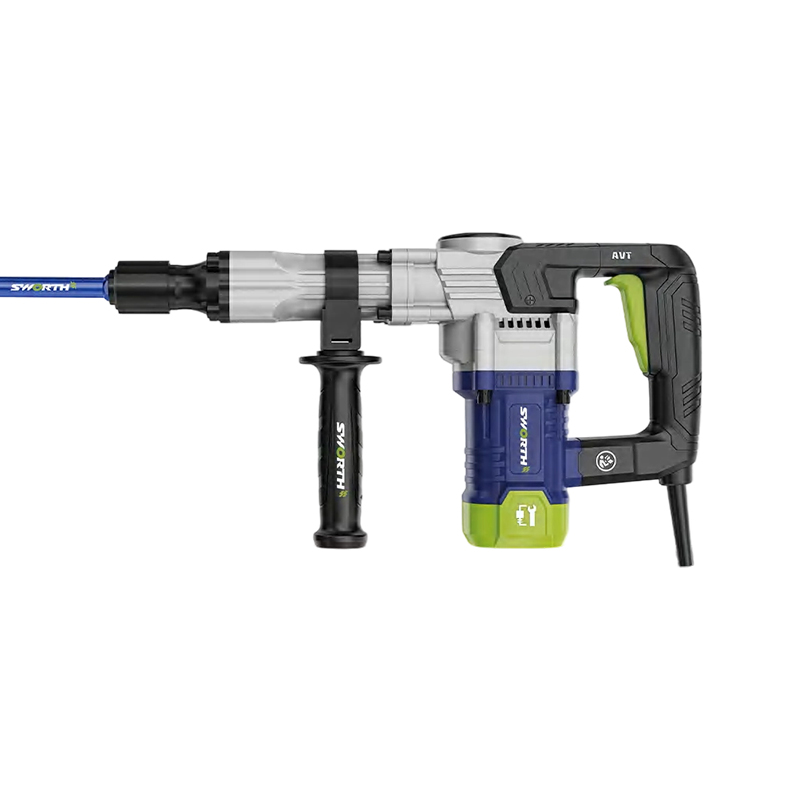
SW535-2 Durable Powerful Demolition Hammer
-
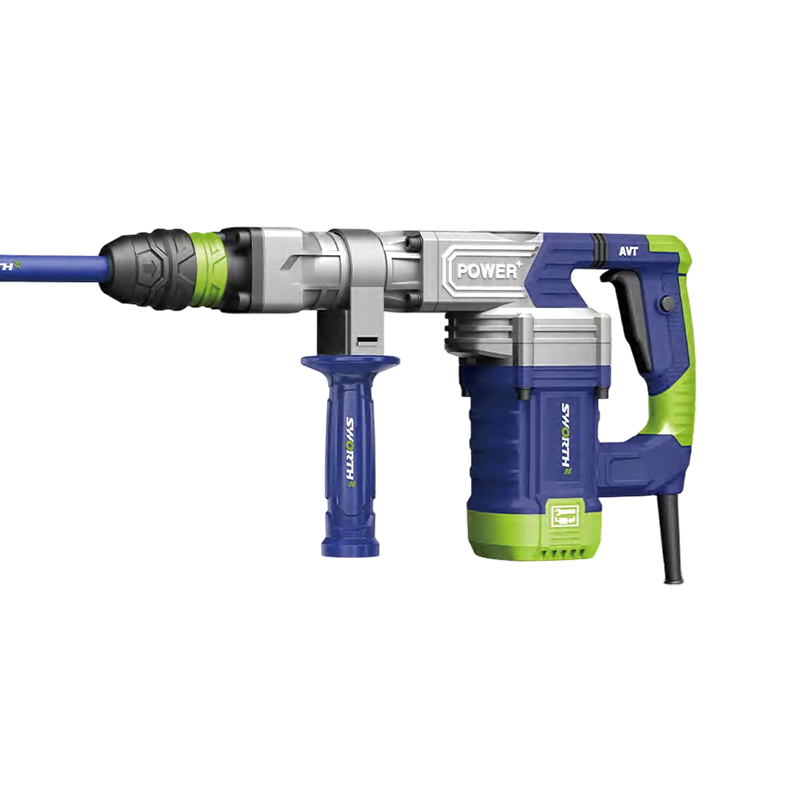
SW35S3 Five-Pipe Drill Bit Demolition Hammer
-
SW11E Five-Pipe Clamping Demolition Hammer
 +86-18314829275
 sale@sworthtools.com
 No. 101, Yugui Road, chengxi Industrial Zone, Yongkang City, Zhejiang Province, China
Copyright© Yongkang Siwei Technology Co., Ltd. All Rights Reserved

Hammer Tools & Cordless Garden Tools Manufacturer
