 English
 русский
 Español

SW932 Groove Sandblasting Hammer: Powerful, Safe, and Efficient Concrete Slotting Performance
When construction professionals need to create channels, grooves, service passages, or openings in masonry and concrete, tool selection directly affects productivity, operator comfort, work quality, and long-term project cost. A hammer that lacks impact power can make the job slow and frustrating. A tool that is too heavy can cause fatigue and reduce control. A machine without effective protection against excessive resistance may expose the operator to wrist injuries, motor stress, and premature mechanical wear.
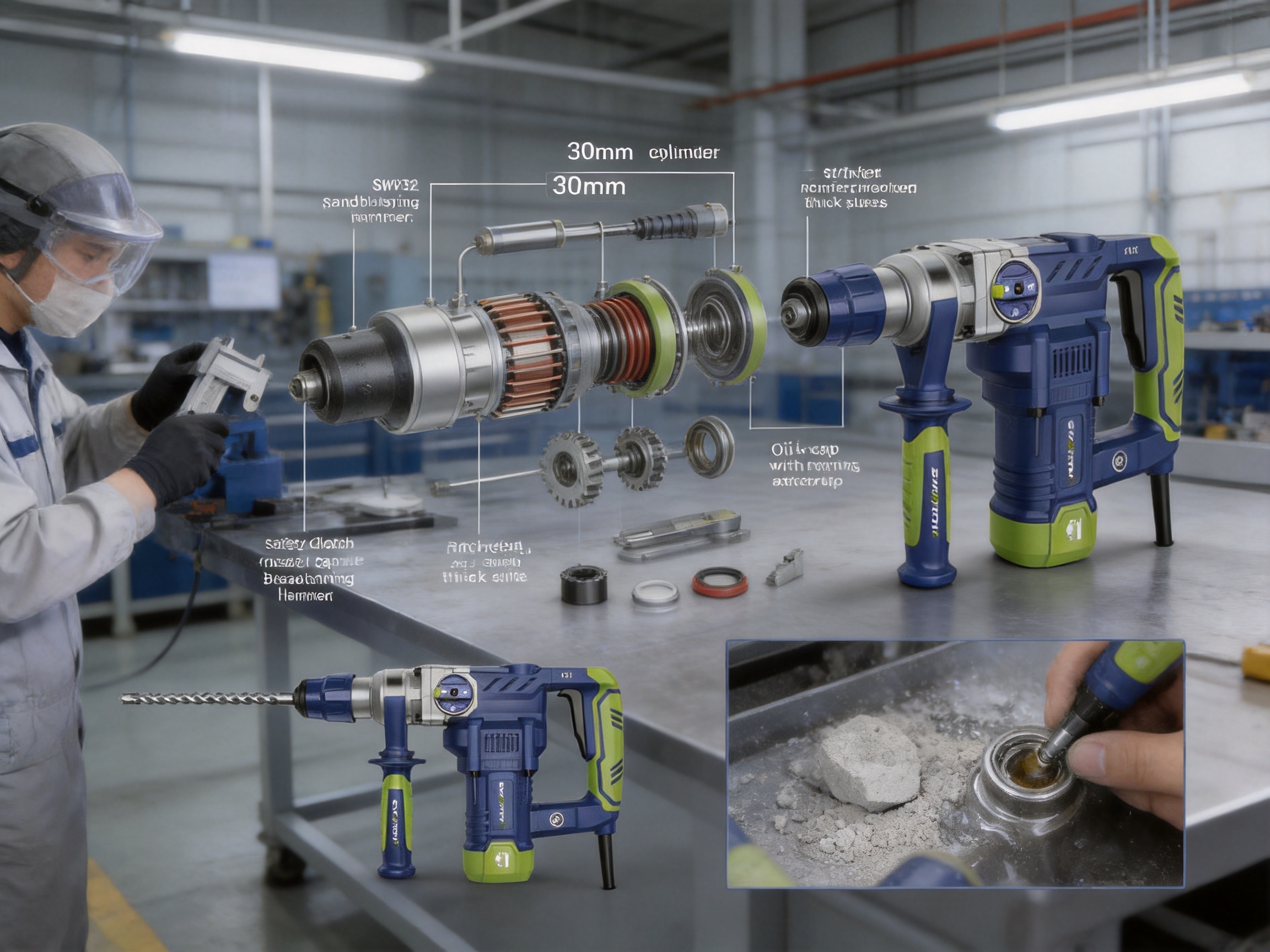
The SW932 Groove Sandblasting Hammer is designed to address these challenges with a combination of high input power, strong impact energy, controlled handling, and protective mechanical features. Its 1200W motor, 11J impact rating, 4.3KG body weight, safety clutch, reinforced sleeve, 30mm cylinder, and dust-resistant front-end design make it suitable for demanding groove-cutting, slotting, chiseling, and related construction tasks.
This article examines the product’s construction, technical specifications, operating advantages, safety features, manufacturing strengths, application value, maintenance requirements, and competitive position. It also explains why a professional demolition and chiseling tool should be assessed as a complete system rather than judged only by motor wattage or impact figures.
1. The Role of a Groove Sandblasting Hammer in Construction
Groove and slotting work is common in electrical installation, plumbing, interior renovation, masonry modification, building maintenance, and engineering construction. Workers may need to open narrow channels in brick, concrete, blockwork, or similar materials so that conduits, pipes, cables, brackets, or embedded components can be installed. In other situations, the tool may be used for breaking hardened material, removing local sections of masonry, or preparing a surface for additional construction work.
These applications place different demands on a power tool than ordinary drilling. Drilling focuses on creating a relatively defined circular hole. Groove cutting and demolition require repeated impact, controlled material removal, resistance to vibration, and the ability to maintain performance during prolonged use. The operator also needs a stable grip because the tool may be working against irregular surfaces or concealed reinforcement.
A groove sandblasting hammer must therefore balance several factors:
• Impact strength for rapid material removal.
• Mechanical durability for repeated high-load operation.
• Compact handling for accurate positioning.
• Vibration and shock management for operator comfort.
• Protection against sudden resistance caused by rebar or embedded obstacles.
• Effective sealing and lubrication to reduce internal wear.
The SW932 is built around these requirements. Instead of relying only on a powerful motor, it combines motor output with a dedicated impact mechanism, reinforced wear components, a safety clutch, and a compact 4.3KG format.
2. Product Overview
The SW932 Groove Sandblasting Hammer is an electric corded hammer designed for professional users who require dependable impact performance in demanding working environments. It operates on a 220–240V~, 50/60Hz electrical supply and uses a 1200W power input. Its stated no-load impact speed is 4800BPM, while the product information also identifies a performance configuration of 5100BPM compared with a regular hammer standard of approximately 4300BPM. This distinction should be confirmed against the exact production specification and market version before purchase.
With an impact energy rating of 11J, the tool is positioned for serious slotting and chiseling duties rather than light household maintenance. Its 4.3KG weight gives it a practical balance between impact capability and portability. The tool is heavy enough to deliver strong contact with hard materials, but compact enough to be moved, positioned, and used during extended work sessions.
The model includes a large switch, a soft rubber anti-slip handle, an intelligent safety clutch, a 30mm cylinder, an enlarged and thickened sleeve, and an iron front head fitted with an anti-dust cap. These details support both usability and service life. They also show that the product has been developed around real job-site conditions rather than laboratory power figures alone.
| Specification | SW932 Product Information | Practical Significance |
|---|---|---|
| Product type | Groove sandblasting hammer | Designed for slotting, chiseling, and demanding impact work |
| Rated voltage | 220–240V~, 50/60Hz | Suitable for compatible electrical systems and professional job sites |
| Power input | 1200W | Provides strong electrical input for high-load applications |
| No-load impact speed | 4800BPM | Supports rapid repeated impact during material removal |
| Additional stated speed configuration | Up to 5100BPM in the product notes | Indicates a high-efficiency impact configuration; verify the exact model rating |
| Impact energy | 11J | Delivers substantial force for masonry and concrete work |
| Weight | 4.3KG | Balances power, stability, portability, and fatigue management |
| Cylinder | 30mm | Supports greater impact capacity |
| Stator dimensions | Ø62 × 45H | Reflects a robust motor construction |
| Rotor dimensions | Ø36 × 45H | Supports the motor’s power transmission and operating durability |
| Safety equipment | Intelligent safety clutch | Helps reduce sudden torque transfer and protects the operator |
3. Strong 1200W Input for Demanding Work
Power input is one of the first specifications users examine when comparing corded hammers. The 1200W rating of the SW932 gives the machine a substantial electrical power reserve for high-intensity applications. This is important when the hammer is pressed against dense concrete, hard brick, mortar, or other resistant materials for long periods.
A high-wattage motor does not automatically guarantee superior performance, because impact efficiency also depends on the motor design, transmission system, cylinder size, striker movement, lubrication, and tool geometry. However, a 1200W input provides a strong foundation. When combined with the 30mm cylinder and 11J impact energy, it allows the SW932 to deliver force that is appropriate for professional slotting and demolition-related tasks.
Compared with lighter-duty hammers, a tool in this power class can reduce the number of passes needed to open a groove. Fewer passes may help shorten project time and reduce the cumulative physical effort required from the operator. Productivity gains are particularly valuable in electrical and plumbing installation, where multiple parallel channels may need to be prepared across walls or floors.
The motor must also tolerate frequent changes in load. Construction materials are rarely uniform. A tool can move through soft mortar, encounter harder aggregate, contact a dense section of concrete, and then return to a less resistant area. A professional design must withstand these variations without excessive loss of performance or unacceptable heat buildup.
4. 11J Impact Energy for Effective Material Removal
Impact energy describes the force delivered by each hammer stroke. The SW932 provides an 11J impact rating, placing it in a class suitable for serious chiseling and groove-opening work. This level of impact helps the tool break and loosen material efficiently instead of merely vibrating against the surface.
In practical use, impact energy contributes to the ability to:
• Remove masonry in controlled sections.
• Open channels for electrical conduit and plumbing lines.
• Break hard mortar and localized concrete sections.
• Assist with renovation and repair work.
• Remove surface material before installation or reinforcement.
• Carry out demanding chiseling operations with appropriate accessories.
Impact energy must be matched to the accessory and material. A pointed chisel concentrates force into a small area and is useful for breaking or starting a channel. A flat chisel spreads force across a wider edge and can assist with material removal and surface preparation. The operator should always select an accessory designed for the hammer’s mounting system and intended application.
The combination of 11J impact energy and a high impact frequency means that the tool can deliver both force and repetition. A slower machine may hit hard but remove material less quickly. A very fast machine with insufficient impact energy may produce movement without adequate penetration. The SW932 is intended to provide a more useful balance between these two characteristics.
5. High Impact Frequency and Work Efficiency
The product information lists a no-load impact speed of 4800BPM. The additional performance notes state that a regular hammer has a standard speed of approximately 4300BPM, while this configuration is identified as reaching 5100BPM. Because the published specifications contain both 4800BPM and 5100BPM references, buyers and distributors should confirm the exact rated figure for the model and batch they are ordering.
Regardless of the final verified rating, the stated operating range represents a high-frequency impact design. A high BPM figure can improve productivity when the tool is used for repeated chiseling and slotting. More impact cycles allow the accessory to engage the work surface continuously, helping break material into manageable fragments.
However, high frequency should not be considered in isolation. If the impact mechanism, sleeve, lubrication system, and housing are not designed to tolerate repeated cycles, a higher speed can accelerate wear. The SW932 addresses this concern with several reinforcing features, including an enlarged and thickened sleeve, a 30mm cylinder, an anti-dust cap, and a pressure-breathing oil cap.
The result is a design that seeks to maintain useful performance over sustained operation rather than simply producing a high initial impact rate. For professional users, consistency is often more valuable than a short burst of maximum speed. A tool that continues working reliably across a full project can offer better total productivity than a tool with impressive figures but frequent interruptions.
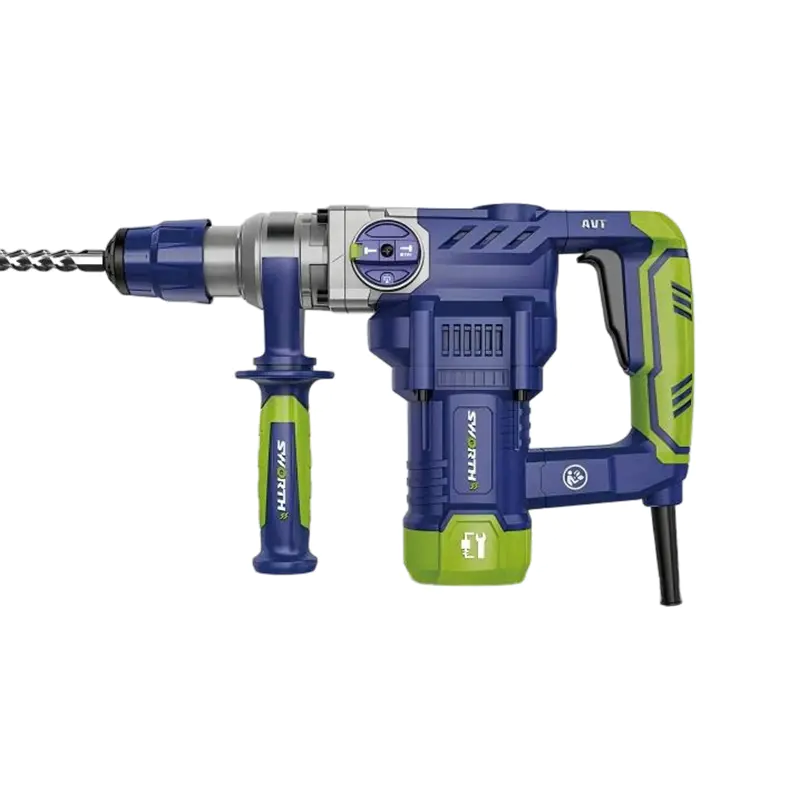
SW932 Groove Sandblasting Hammer
6. The Safety Clutch and Protection Against Sudden Resistance
One of the most important features of the SW932 is its intelligent safety clutch. During concrete and masonry work, an accessory may suddenly encounter reinforcement bar, embedded metal, unusually dense aggregate, or another obstruction. If the rotating or driven system remains rigidly connected under these conditions, the tool may transfer a sudden reaction force to the operator’s hands and wrists.
The safety clutch is designed to interrupt or limit power transmission when resistance becomes excessive. This helps reduce sudden twisting forces and may protect the operator from wrist strain or loss of control. It also helps reduce stress on the motor, transmission, and impact components.
A safety clutch does not eliminate all risk. Operators must still maintain a secure grip, use appropriate personal protective equipment, keep both hands in the recommended positions, and avoid forcing the machine beyond its intended application. The clutch is an additional protective layer, not a substitute for safe work practices.
Compared with basic hammers that may lack a responsive overload mechanism, the SW932 offers an important practical advantage. The safety clutch can make unexpected resistance more manageable and can reduce the consequences of hidden obstacles. This is especially valuable during renovation work, where the operator may not have complete information about concealed pipes, cables, reinforcement, or old structural repairs.
The safety clutch also benefits equipment ownership. Sudden stoppages and shock loads can damage internal gears, shafts, bearings, and couplings. Limiting these events helps reduce mechanical strain and may extend service intervals when the tool is used correctly.
7. Compact 4.3KG Design for Long Working Sessions
Professional users often work with a hammer for several hours in a day. In that environment, weight has a direct relationship with fatigue, precision, and safety. The SW932 weighs 4.3KG, offering a compact format for a tool with a 1200W motor and 11J impact energy.
A lighter body can make it easier to:
• Position the accessory accurately at the beginning of a groove.
• Work on walls and vertical surfaces.
• Change direction during irregular demolition work.
• Transport the tool between multiple work areas.
• Maintain control during extended use.
• Reduce unnecessary strain on the shoulders, elbows, and wrists.
Weight reduction must be achieved without weakening the impact housing or reducing durability. The product’s reinforced sleeve, metal front head, and robust motor dimensions indicate that portability has been balanced with structural strength. The aim is not to make the tool extremely light at the expense of performance, but to provide a manageable weight for its professional power class.
Operator fatigue can affect more than comfort. As fatigue increases, workers may apply excessive pressure, lose alignment, overlook hazards, or use awkward postures. A balanced 4.3KG hammer can help the user maintain a more stable working position and produce cleaner, more controlled results.
8. Ergonomic Handle and Large Switch
The SW932 is equipped with an anti-slip handle covered with soft rubber. This design supports grip security and comfort, especially when the tool is exposed to vibration, dust, or perspiration. A secure handle helps the operator maintain direction and react more effectively when material resistance changes.
The soft rubber surface also reduces the harsh feel of repeated operation. It does not remove impact vibration entirely, but it can improve the contact between the hand and the tool while making the grip less tiring. The handle should be kept clean and inspected regularly, because grease, dust, or damage can reduce grip reliability.
The large switch is another practical detail. A switch that is easy to press and hold can improve operation during long tasks. It allows the user to activate the tool without excessive finger pressure and may be easier to operate while wearing suitable work gloves.
Ergonomics are sometimes overlooked when comparing tools. Yet a machine with a powerful motor may deliver poor real-world results if the operator cannot hold it comfortably or control its position. The SW932’s handle and switch design complements its power system by helping transfer machine capability into usable job-site productivity.
9. 30mm Cylinder and Reinforced Impact Structure
The product information identifies a 30mm cylinder as one of the key design features. The cylinder is an important part of the impact assembly because it supports the movement and force generation of the hammer mechanism. A larger cylinder can contribute to a stronger impact system when it is properly matched to the motor, piston, striker, seals, and housing.
The 30mm cylinder helps explain why the SW932 can combine a compact overall design with an 11J impact rating. Its structure is intended to support greater power and repeated impact loading. It also provides a foundation for maintaining stable operation when the tool is used on hard material.
The enlarged and thickened sleeve further reinforces the front-end assembly. The sleeve is exposed to repeated motion, pressure, heat, dust, and accessory contact. Increasing its size and thickness can improve strength and wear resistance, provided the part is manufactured and finished accurately.
For buyers comparing the SW932 with less robust competitors, the cylinder and sleeve are meaningful points of differentiation. A competitor may advertise a similar wattage but use a smaller or less reinforced impact structure. In that case, the actual work rate, service life, and resistance to continuous use may differ significantly.
10. Dust Protection and the Anti-Dust Cap
Construction environments produce large amounts of abrasive dust. Concrete dust, brick particles, mortar debris, and sand can enter the front portion of a tool if sealing is inadequate. Once inside the sleeve or impact assembly, abrasive particles can increase friction, accelerate wear, contaminate lubricant, and reduce operating efficiency.
The SW932 uses an iron front head with an anti-dust cap to help prevent dust from entering the sleeve. This feature is particularly relevant for groove cutting and demolition work, where the tool is often operated close to the material surface and exposed to continuous debris.
No dust protection system can replace cleaning and maintenance. The operator should remove accumulated debris after use, inspect the front cap, and replace damaged sealing components when necessary. Nevertheless, an anti-dust cap provides an important first barrier and demonstrates that the design considers actual working conditions.
Improved dust control can provide several long-term benefits:
• Lower contamination of internal moving components.
• Reduced abrasive wear on the sleeve and accessory interface.
• More consistent movement of the impact mechanism.
• Longer lubricant effectiveness.
• Fewer interruptions caused by premature mechanical problems.
When comparing professional hammers, front-end protection should be evaluated alongside motor power. A powerful motor cannot compensate for rapid wear caused by unprotected internal components.
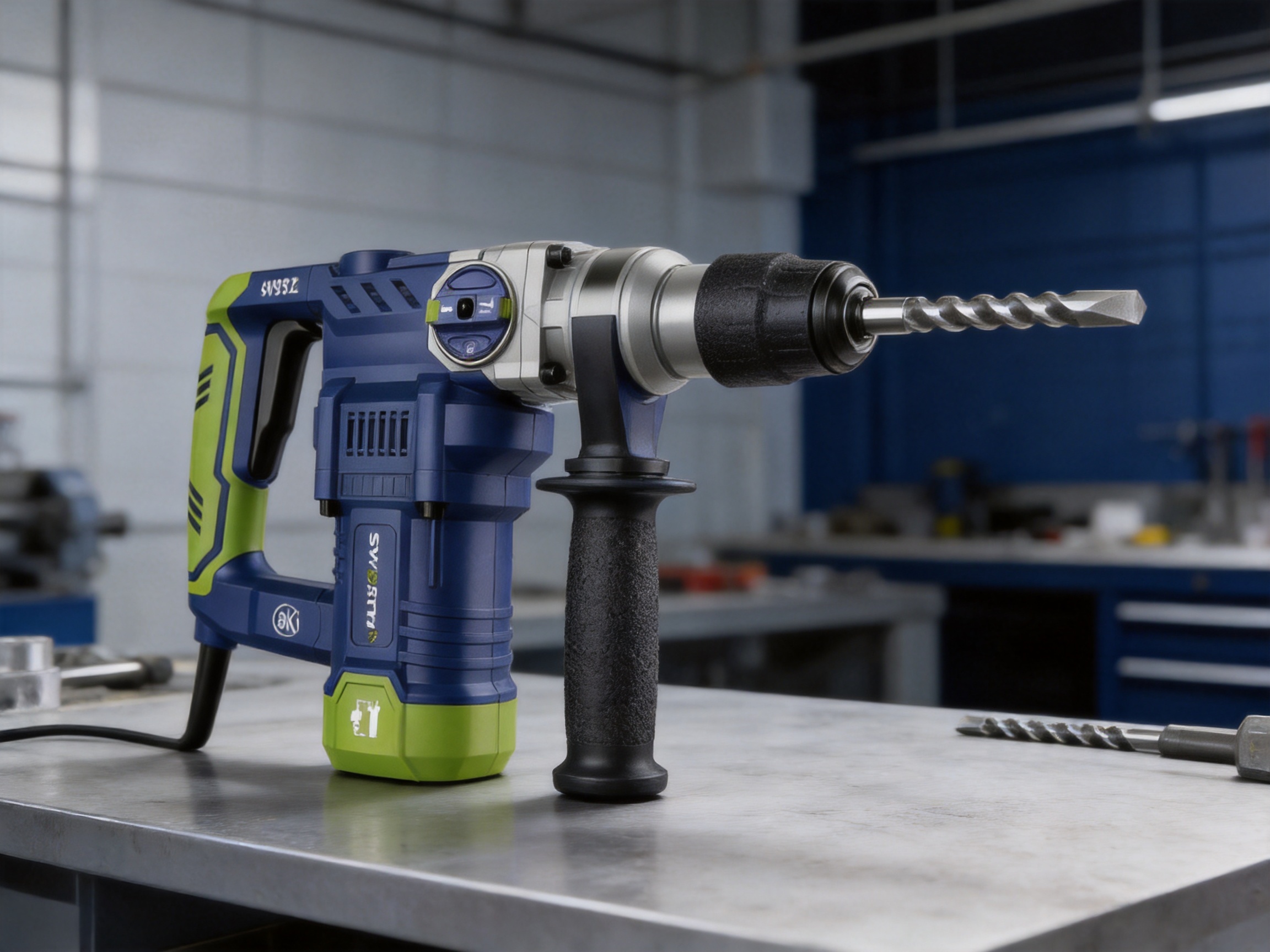
11. Oil Cap with a Breathing Hole
The SW932 includes an oil cap with a breathing hole. This small but important design detail allows internal pressure to be released during operation. As the tool heats up, air and lubricant inside the housing can expand. If pressure is not managed, it may contribute to oil leakage through seals or joints.
The breathing hole helps regulate pressure and reduce the likelihood of lubricant being forced out. Maintaining the correct amount of lubricant is essential for the impact mechanism, gears, bearings, and related moving parts. Too little lubricant increases friction and heat. Excessive leakage can create contamination and reduce the tool’s ability to protect its internal components.
This feature reflects a practical manufacturing approach: rather than treating lubrication as a service issue only, the product incorporates pressure management into the housing design. It can help maintain cleaner operation and reduce avoidable maintenance problems when the tool is used within its operating limits.
Users should follow the applicable maintenance instructions for lubricant type, fill level, inspection intervals, and service procedures. The oil cap should not be removed while the machine is running or hot, and users should avoid adding unapproved lubricants that may affect seals or internal parts.
12. Manufacturing Strengths and Engineering Approach
Yongkang Siwei Technology Co., Ltd. is described as a professional manufacturer integrating research and development, production, and sales. Its stated manufacturing philosophy emphasizes professional focus, quality first, advanced processes, and high-quality materials. This integrated structure can support better coordination between product design, component selection, assembly, testing, and customer feedback.
For a demolition and chiseling tool, manufacturing competence is especially important because the product operates under repeated mechanical shock. The motor, rotor, stator, cylinder, striker, sleeve, gear system, seals, housing, clutch, and handle must work together. A weakness in one part can reduce the benefit of the others.
An advanced manufacturing process for this type of product should include careful control of several areas:
• Electrical component consistency, including stator and rotor quality.
• Dimensional accuracy of the cylinder, sleeve, and impact assembly.
• Material strength in high-load metal components.
• Surface treatment and finishing for wear-sensitive parts.
• Correct gear alignment and transmission assembly.
• Proper installation of seals and dust protection parts.
• Lubricant quantity and distribution during assembly.
• Clutch response and overload protection verification.
• Electrical safety and insulation checks.
• Functional testing under representative load conditions.
The company’s experience with demolition hammers and chisel-cutting tools gives it a product focus that is relevant to the SW932. Specialist manufacturing knowledge can help improve details that general-purpose power-tool suppliers may overlook, such as front-end durability, impact balance, dust exclusion, and operator control.
13. Research and Development Capabilities
The company identifies research and development as part of its core business structure. It also reports experience with high-efficiency brushless motors, electronic control systems, and intelligent battery platforms for cordless garden equipment since 2024. Although the SW932 is a corded electric hammer, this broader development capability is relevant because modern tool manufacturing increasingly depends on motor efficiency, control engineering, thermal management, and system-level design.
Research and development capabilities can support future improvements in areas such as:
• More efficient motor designs.
• Improved overload response.
• Better thermal protection.
• Reduced vibration transmission.
• More durable impact assemblies.
• Optimized ergonomic housing designs.
• Improved service diagnostics.
• More efficient production and quality control.
The company’s product range also includes demolition hammers, chiseling tools, and cordless garden equipment. This combination suggests experience across both heavy mechanical products and electronically controlled power systems. For professional buyers, the ability to work with a focused supplier that understands multiple tool platforms can support product customization, technical communication, and long-term sourcing.
14. Competitive Advantages Over Basic Hammers
The SW932 should be compared with competing products across a complete set of performance and durability criteria rather than by one number. Its key advantages include the following.
14.1 High power in a manageable body
The 1200W motor and 11J impact energy provide serious working capability, while the 4.3KG weight keeps the tool relatively manageable. Some competitors may offer similar power but with a heavier housing, making overhead or extended work more tiring. Others may be lighter but provide lower impact energy and slower material removal.
14.2 Protection against rebar and overload
The intelligent safety clutch gives the SW932 an advantage over basic machines that transfer sudden resistance directly to the operator or transmission. This feature supports safer handling and may reduce mechanical shock when hidden reinforcement is encountered.
14.3 Reinforced front-end durability
The 30mm cylinder and enlarged, thickened sleeve support the tool’s high-impact purpose. The iron front head and anti-dust cap further protect the accessory and impact area from harsh working conditions.
14.4 Better long-session ergonomics
The anti-slip soft rubber handle, large switch, compact dimensions, and 4.3KG weight contribute to more comfortable operation. This can be especially valuable for contractors who use the tool repeatedly throughout the day.
14.5 Pressure-managed lubrication
The breathing hole in the oil cap helps release pressure and reduce oil leakage. This is a practical detail that can improve cleanliness and support internal lubrication stability.
14.6 Professional product specialization
The manufacturer specializes in demolition hammers and chiseling tools rather than treating them as a minor addition to a broad unrelated catalog. This specialization can support more relevant engineering decisions, product development, and technical service.
15. Suitable Applications
The SW932 can be considered for a range of professional and heavy-duty applications, subject to the correct accessory and safe operating procedure.
Electrical installation is one of the most obvious uses. Electricians may need to prepare wall channels for conduit, cable routes, switch boxes, and distribution components. The tool’s high impact energy can help remove masonry quickly, while its compact body supports positioning along marked lines.
Plumbing and mechanical installation may also require controlled opening of walls, floors, and masonry sections. The hammer can assist with removing hard material around pipe routes, access points, or repair areas.
Renovation contractors can use a suitable chisel accessory for removing old tile bedding, mortar, damaged concrete, and localized wall material. The safety clutch is useful in older buildings where concealed reinforcement or embedded materials may be present.
General construction work may include breaking small sections of hardened material, preparing surfaces, opening service passages, and carrying out corrective demolition. In each case, the user should assess the material, structural implications, and required accessory before starting.
Potential applications include:
• Wall and floor channel preparation.
• Masonry groove opening.
• Concrete and brick chiseling.
• Removal of hardened mortar.
• Renovation and repair demolition.
• Service access preparation.
• Localized material removal around installations.
• Construction and engineering maintenance work.
16. Correct Operating Practices
Before operation, inspect the power cord, plug, housing, handle, front cap, accessory, and switch. Do not use the tool if any electrical or mechanical component is damaged. Confirm that the accessory is compatible, correctly inserted, and securely retained.
Mark the intended groove or removal area before starting. A clear layout helps improve accuracy and prevents unnecessary demolition. Check for known electrical cables, water pipes, gas lines, reinforcement, and other concealed hazards. Where building plans or detection equipment are available, use them before cutting into a wall or floor.
Hold the hammer with both hands in a stable posture. Keep feet positioned to resist movement, avoid overreaching, and maintain a clear escape path if the accessory slips or the material breaks unexpectedly. Allow the tool’s impact system to perform the work rather than applying excessive downward force.
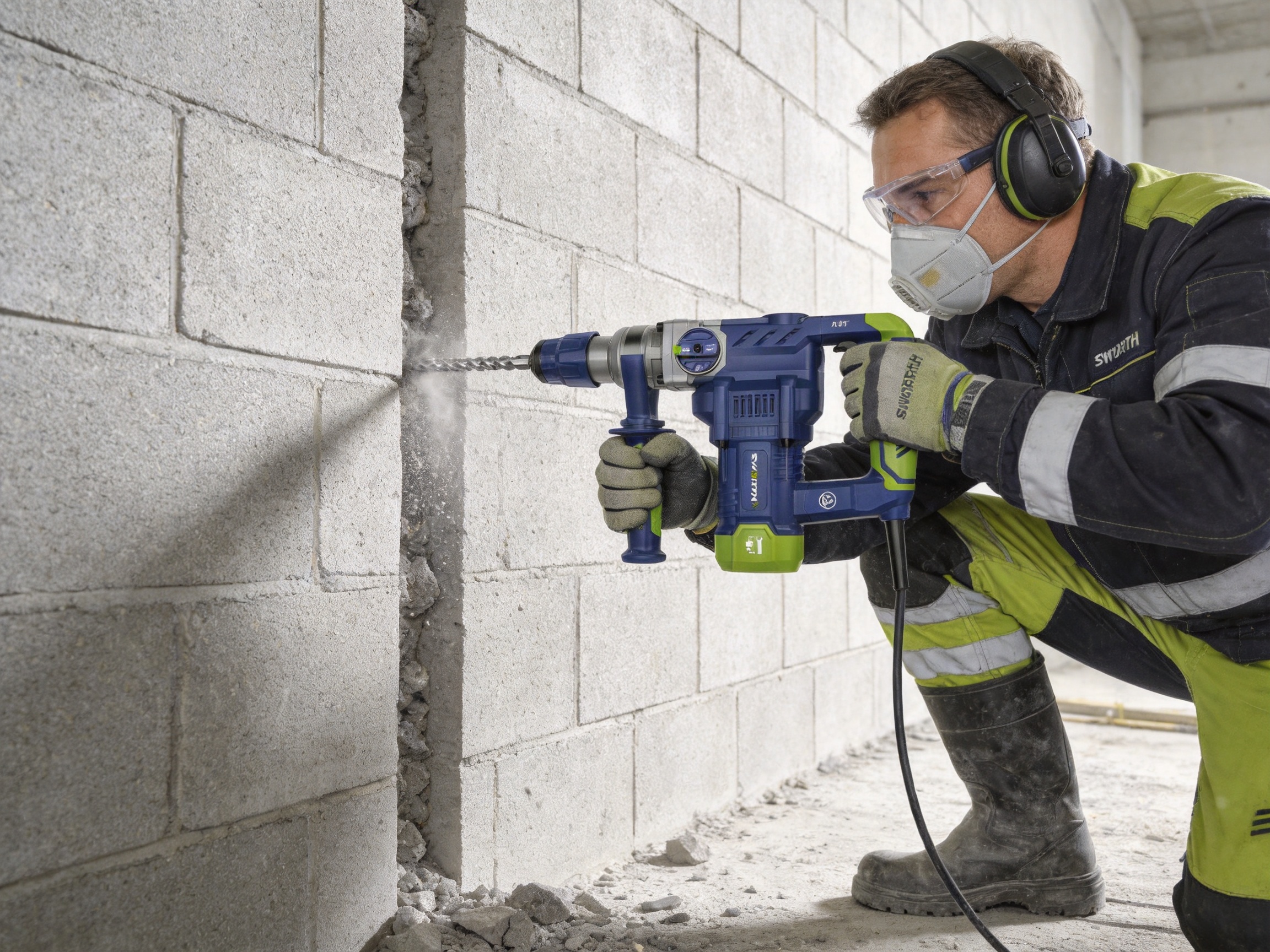
Use appropriate protective equipment, including safety glasses or a face shield, hearing protection, work gloves, safety footwear, and respiratory protection appropriate to the dust level and material. Dust extraction, ventilation, and wet-control procedures should be applied when suitable and permitted by the work environment.
If the tool encounters abnormal resistance, stop and inspect the area. Do not repeatedly force the machine against suspected reinforcement or metal. The safety clutch is designed to help manage excessive resistance, but controlled operation remains essential.
17. Maintenance and Service Recommendations
Regular maintenance helps preserve impact performance and protect the investment. After use, disconnect the tool from the power supply before cleaning or inspection. Remove dust and debris from the housing, handle, ventilation openings, front head, and accessory area.
Inspect the anti-dust cap for cracks, deformation, or excessive wear. A damaged cap may allow abrasive particles to enter the sleeve. Check the accessory for bending, mushrooming, cracks, or unusual wear. Replace damaged accessories because they can reduce efficiency and increase vibration.
Monitor the power cord and plug for cuts, exposed conductors, heat damage, or loose connections. Inspect the switch for irregular operation. Any electrical problem should be handled by a qualified service professional.
Lubrication should be maintained according to the manufacturer’s service guidance. Do not overfill the housing, use incompatible oil, or ignore signs of leakage. If oil appears around the cap or front head, stop and determine whether the issue is related to overpressure, seal wear, impact damage, or incorrect filling.
Unusual noise, burning odor, excessive sparking, loss of impact, overheating, or repeated clutch activation may indicate a service issue. Continuing to operate the tool under these conditions can increase damage and repair cost. Professional inspection is recommended when abnormal behavior persists.
18. Purchasing Considerations for Distributors and Contractors
Contractors should evaluate the SW932 according to their typical workload. If the primary tasks involve light drilling or occasional household repairs, a smaller tool may be more appropriate. If the work involves repeated masonry slotting, hard material removal, or renovation demolition, the SW932’s power and impact structure may offer better productivity.
Distributors should confirm the exact technical specification for their target market, especially the stated impact frequency. The product information includes both 4800BPM and a note referring to 5100BPM, so documentation should clearly identify the applicable rating for each production version.
Other purchasing questions include:
• Which accessory and tool-holder system is supplied?
• What accessories are included as standard?
• What warranty and service support are available?
• Are spare sleeves, dust caps, switches, brushes, clutches, and seals available?
• What packaging is used to protect the tool during transport?
• What electrical certifications are required in the destination market?
• Are user manuals and safety labels supplied in the required language?
• What is the recommended maintenance schedule?
A professional manufacturer should be able to provide clear technical documentation and communicate consistently about specifications, replacement parts, quality procedures, and application limits. These factors can be as important as the initial purchase price.
19. Quality, Materials, and Production Control
The company states that it uses advanced processes and high-quality materials to ensure that products can withstand harsh working conditions. For a high-impact hammer, this commitment should be reflected in the control of both materials and manufacturing tolerances.
High-load metal parts require appropriate material selection and heat treatment. Rotating components require accurate balance and alignment. Sealing surfaces must be finished correctly to limit dust entry and lubricant loss. Housing components must maintain dimensional stability under vibration and heat. Rubber grips must provide secure adhesion and resilience under repeated handling.
Production control should also cover assembly sequence. A correctly manufactured part can still perform poorly if it is installed incorrectly, lubricated inadequately, or exposed to contamination during assembly. Functional testing after assembly helps identify abnormal noise, inconsistent impact, switch problems, clutch issues, and electrical faults before shipment.
For international customers, consistent production control is important because tools may be used under different climates, electrical standards, transportation conditions, and service arrangements. A supplier with integrated research, production, and sales functions may be better positioned to communicate technical changes and respond to customer requirements.
20. Environmental and Product-Lifecycle Considerations
A durable tool can reduce the environmental impact associated with frequent replacement. Longer service life means fewer discarded housings, motors, gears, sleeves, and electrical components. Maintenance-friendly designs and replaceable wear parts can further support responsible product ownership.
The SW932 is a corded tool, so it does not require battery replacement or battery charging infrastructure. This can be advantageous for fixed job sites or workshops where reliable mains power is available. Corded operation also provides continuous working capability without pauses for battery changes or charging.
Users should still manage the power cord carefully and avoid operating in conditions that create electrical hazards. At the end of the product’s service life, electronic and electrical components should be handled according to applicable recycling and disposal requirements.
The manufacturer’s additional work in brushless motors, electronic controls, and lithium-ion garden tools indicates an interest in more efficient power systems and green new-energy technologies. While those technologies are separate from the corded SW932, they represent a broader direction toward improved energy efficiency and responsible tool development.
21. Why Professional Users Need More Than Peak Power
Peak power can attract attention, but professional users typically judge a tool by total productivity. Total productivity includes the speed of material removal, the number of interruptions, operator fatigue, accessory life, maintenance frequency, safety behavior, and the cost of ownership.
The SW932 is designed to address these broader factors. Its 1200W motor and 11J impact energy support fast work. Its 4.3KG weight and rubber handle support handling. Its safety clutch helps manage sudden resistance. Its reinforced sleeve and 30mm cylinder support durability. Its anti-dust cap and pressure-breathing oil cap address common causes of premature wear and leakage.
This combination gives the product a more complete competitive position than a machine promoted only by wattage. It is intended to be a practical professional tool that can deliver strong performance while remaining controllable and serviceable.
22. Frequently Asked Questions
Q1: What is the SW932 Groove Sandblasting Hammer designed for?
The SW932 is designed for demanding impact applications such as groove opening, slotting, chiseling, localized concrete and masonry removal, renovation work, and construction maintenance. It is especially suitable where repeated impact and material removal are required.
Q2: How powerful is the motor?
The rated power input is 1200W. This provides a strong electrical power base for high-intensity tasks and supports the tool’s 11J impact energy rating.
Q3: What does the 11J impact rating mean?
The 11J rating indicates the approximate impact energy delivered by the hammer mechanism. Higher impact energy generally helps the tool break and remove hard material more effectively, although actual performance also depends on the accessory, material, operator technique, and maintenance condition.
Q4: What is the impact speed?
The listed no-load impact speed is 4800BPM. The product notes also refer to a 5100BPM configuration compared with a regular hammer speed of approximately 4300BPM. Buyers should confirm the exact impact-speed specification for the version being supplied.
Q5: How heavy is the tool?
The SW932 weighs approximately 4.3KG. This provides a balance between strong impact performance and manageable handling during extended work.
Q6: How does the safety clutch help the operator?
The safety clutch is designed to reduce sudden torque transfer when the accessory encounters excessive resistance, such as reinforcement bar or another hard obstruction. It can help reduce wrist shock and protect internal components, but it does not replace safe operating procedures.
Q7: Is the SW932 suitable for long-term work?
Its compact weight, anti-slip soft rubber handle, large switch, reinforced sleeve, dust protection, and pressure-managed oil cap are intended to support prolonged professional use. Long-term performance still depends on correct operation, suitable accessories, regular cleaning, and proper maintenance.
Q8: What is the purpose of the 30mm cylinder?
The 30mm cylinder supports the impact mechanism and contributes to the tool’s power capacity. It is one of the structural features that helps the hammer deliver strong repeated impact.
Q9: Why is the anti-dust cap important?
The anti-dust cap helps limit the entry of concrete, brick, mortar, and sand particles into the sleeve. This can reduce abrasive wear and help protect internal moving components.
Q10: Does the oil cap require special attention?
Yes. The oil cap should be inspected for damage and leakage, and lubrication should be maintained according to the applicable service instructions. The integrated breathing hole helps release pressure and reduce the possibility of oil leakage.
Q11: Can the hammer be used on reinforced concrete?
The safety clutch is designed to help when excessive resistance or rebar is encountered. However, users should not deliberately force the tool through reinforcement. The work area should be assessed first, and suitable methods and accessories should be used for the specific material.
Q12: What personal protective equipment is recommended?
Safety glasses or face protection, hearing protection, work gloves, safety footwear, and suitable respiratory protection should be considered. The exact requirements depend on the material, dust level, workplace rules, and local regulations.
Q13: What gives the manufacturer an advantage in this product category?
The manufacturer focuses on demolition hammers and chisel-cutting tools and integrates research and development, production, and sales. This specialization supports relevant engineering knowledge in impact mechanisms, protective features, high-load materials, and professional tool applications.
Q14: Is the product cordless?
No. The SW932 is a corded electric hammer rated for 220–240V~, 50/60Hz operation. It is suitable for locations with compatible mains power and provides continuous operation without battery charging interruptions.
Q15: What should buyers confirm before placing an order?
Buyers should confirm the exact impact-speed rating, accessory system, included accessories, electrical certification, warranty conditions, spare-parts availability, packaging, user documentation, and service support for the destination market.
23. Final Assessment
The SW932 Groove Sandblasting Hammer is a professional-oriented impact tool designed to combine strong material-removal performance with practical handling and protective engineering. Its 1200W motor, 11J impact energy, high impact frequency, 30mm cylinder, and reinforced sleeve give it the power required for demanding groove and chiseling work.
Its competitive value is strengthened by features that are sometimes absent from basic hammers: an intelligent safety clutch, an anti-slip soft rubber handle, a large switch, an anti-dust cap, and an oil cap with a breathing hole. These elements address operator safety, comfort, contamination, pressure management, and service life.
The 4.3KG body weight is also significant. It allows the tool to remain powerful without becoming unnecessarily difficult to control during extended use. For electricians, plumbers, renovation contractors, construction teams, and engineering maintenance workers, this balance can improve both daily comfort and overall productivity.
The manufacturer’s integrated research, production, and sales structure, together with its specialization in demolition hammers and chiseling tools, provides a solid foundation for professional tool development. Its reported use of advanced processes and high-quality materials supports the objective of producing equipment that can withstand demanding conditions.
Before purchase, customers should verify the exact technical version and confirm the impact-speed specification because the supplied product information references both 4800BPM and 5100BPM. With that clarification, the SW932 can be evaluated as a capable, durable, and safety-conscious solution for high-intensity slotting, chiseling, and masonry removal.
References
1. Product specification sheet for the SW932 Groove Sandblasting Hammer, including rated voltage, power input, impact frequency, impact energy, cylinder dimensions, and protective features.
2. Manufacturer-provided product description for professional groove, slotting, sandblasting, chiseling, and demolition applications.
3. Manufacturer company information regarding research and development, production capabilities, material quality, and professional demolition-tool specialization.
4. General occupational safety principles for portable electric impact tools, masonry work, dust control, personal protective equipment, and concealed-service inspection.
5. General power-tool maintenance practices covering lubrication, electrical-cord inspection, accessory condition, dust removal, sealing components, and service intervals.
Product: SW932 Groove Sandblasting Hammer

Recommended Products
-
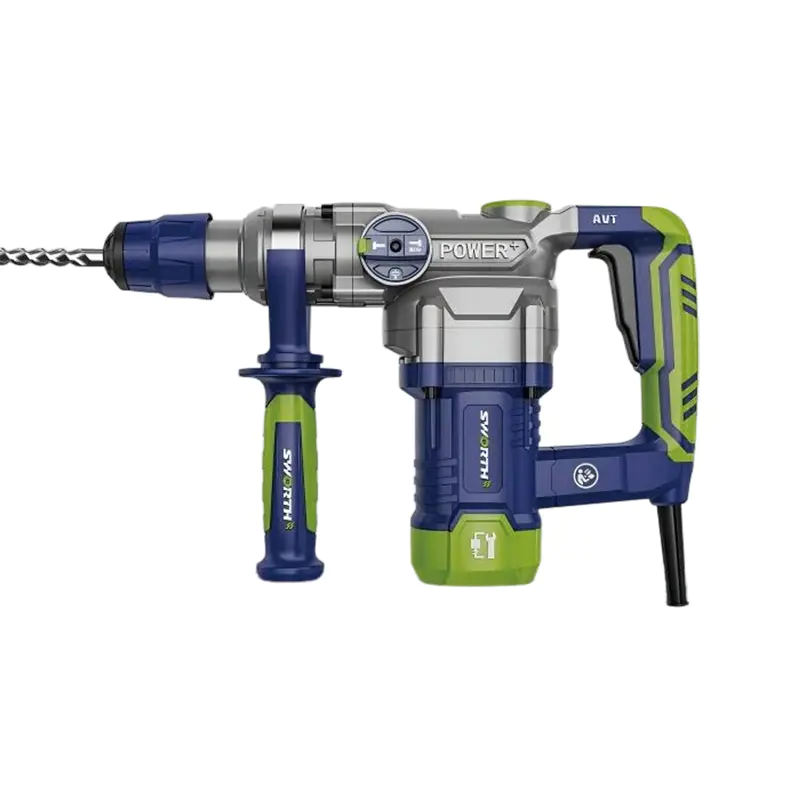


SW528 Small Hole Rebar Hammer
-
SW932 Groove Sandblasting Hammer
-
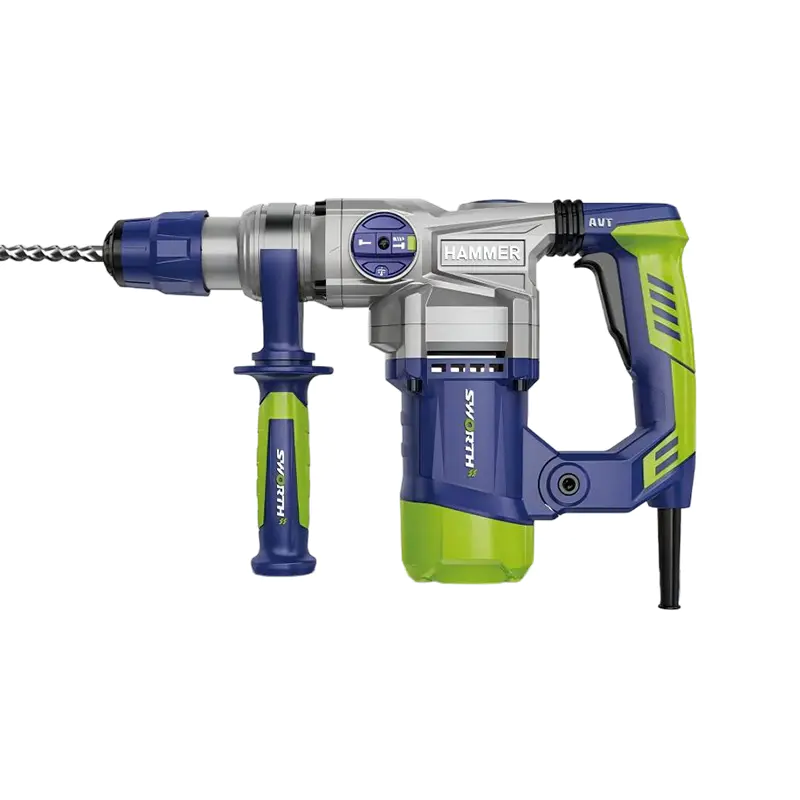
SW9362A Large Hole Rebar Hammer
-
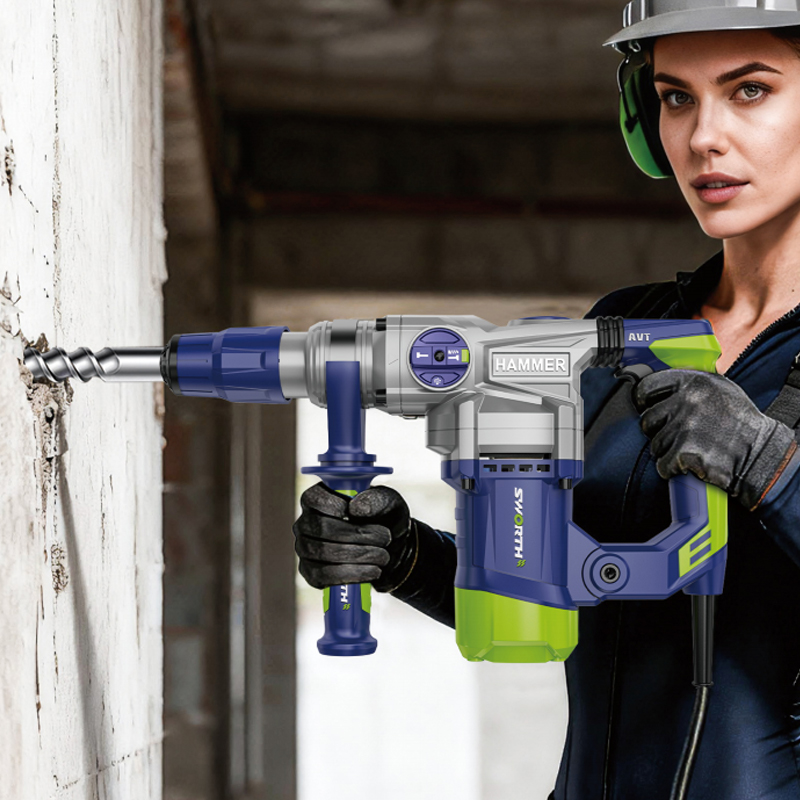
SW940 Enlarged Hole Rebar Hammer
-
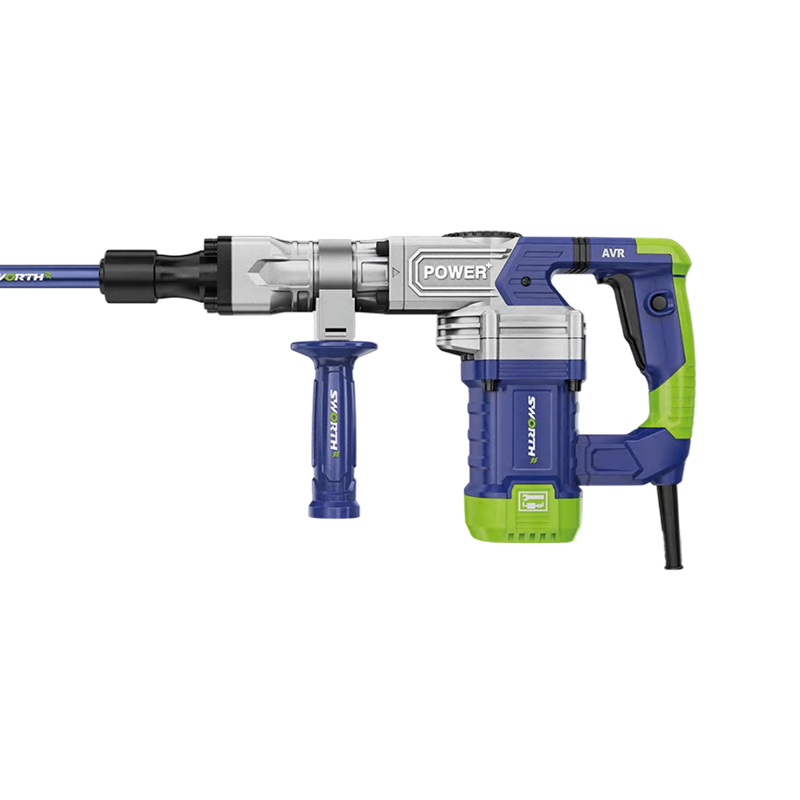
SW35S1 Powerful Demolition Hammer
-
SW35S2 High-Efficiency Heat Dissipation Demolition Hammer
-
SW9371 High-Power Demolition Hammer
-
SW9373 Anti-Scalding Carbon Brush Holder Demolition Hammer
-
SW535 Powerful Anti-Scalding Demolition Hammer
-
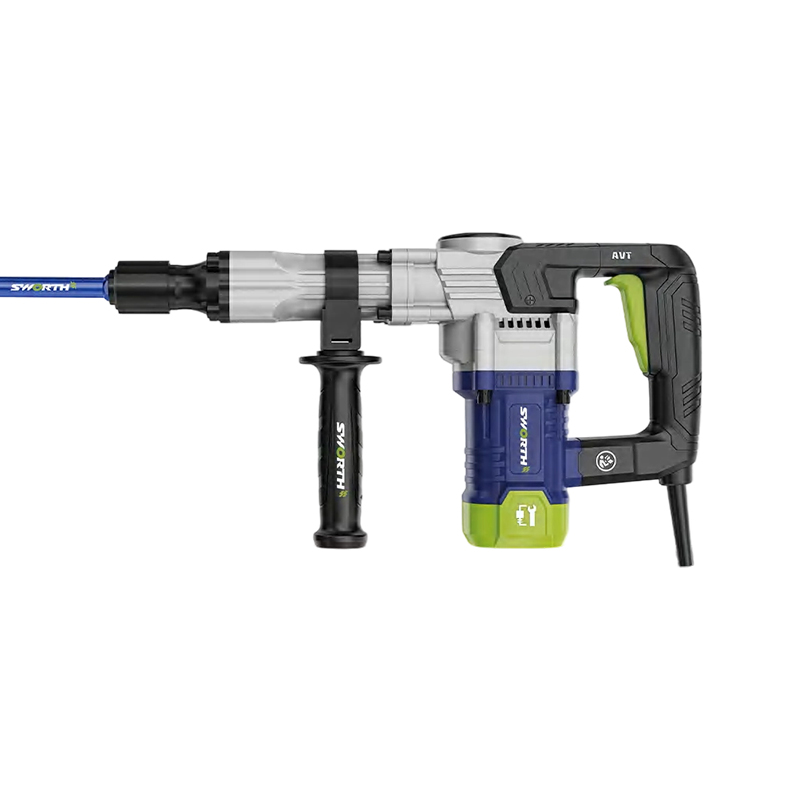
SW535-2 Durable Powerful Demolition Hammer
-
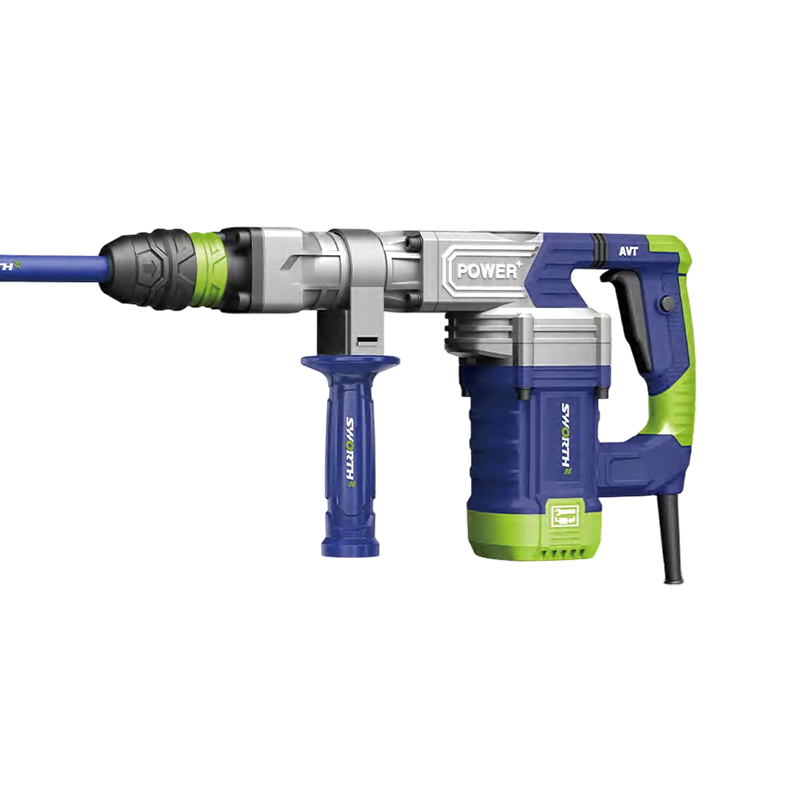
SW35S3 Five-Pipe Drill Bit Demolition Hammer
-

SW11E Five-Pipe Clamping Demolition Hammer
 +86-18314829275
 sale@sworthtools.com
 No. 101, Yugui Road, chengxi Industrial Zone, Yongkang City, Zhejiang Province, China
Copyright© Yongkang Siwei Technology Co., Ltd. All Rights Reserved

Hammer Tools & Cordless Garden Tools Manufacturer
