 English
 русский
 Español

High-Speed Rotary Hammer for Faster Concrete Drilling and Demanding Renovation Work
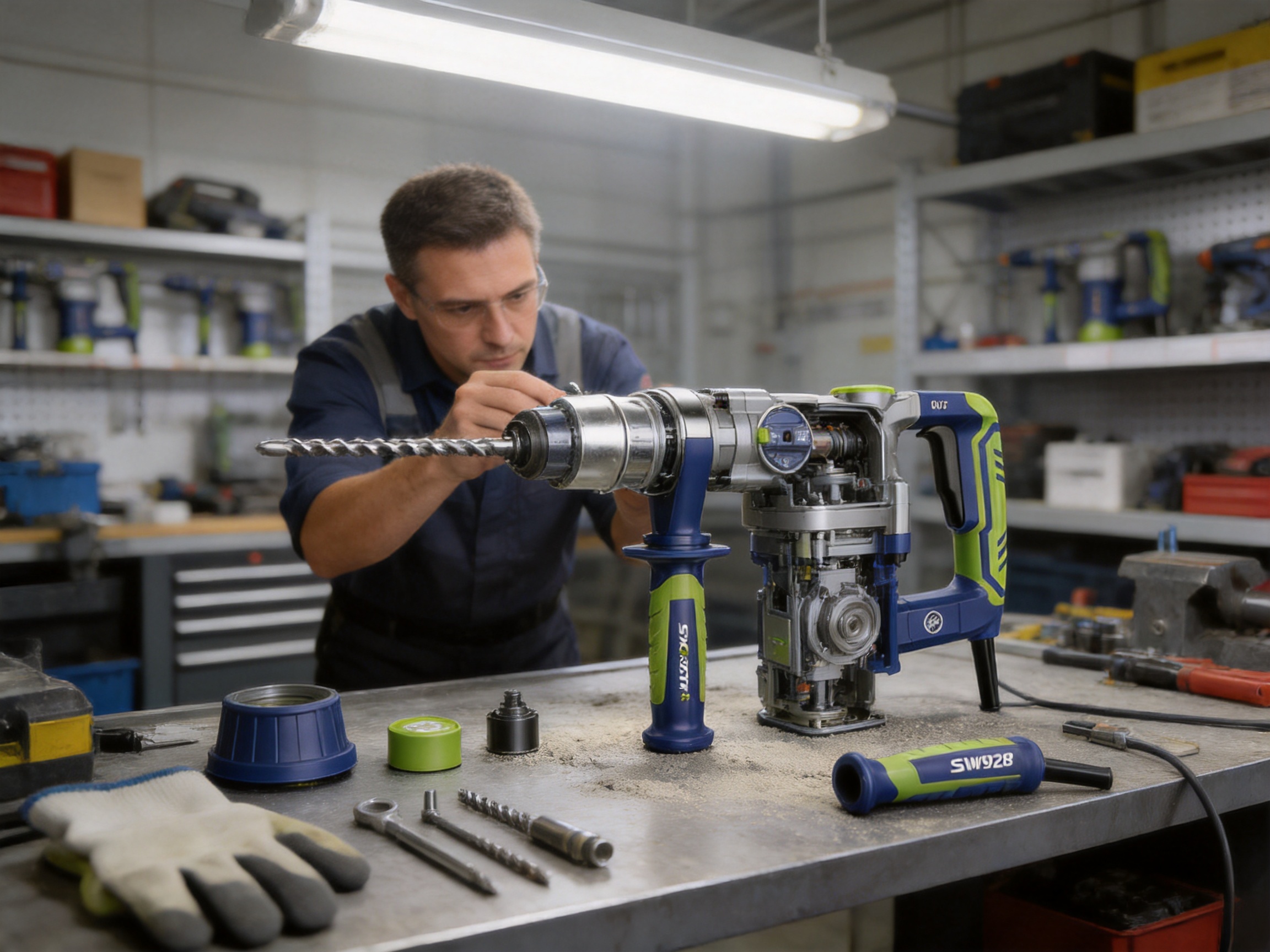
Professional construction projects depend on tools that can deliver consistent performance under pressure. When crews drill anchor holes, route pipes through concrete slabs, or install utilities in reinforced structures, every minute matters. A rotary hammer that combines high impact frequency, substantial impact energy, controlled handling, and dependable protection can help contractors complete more work while reducing unnecessary machine downtime.
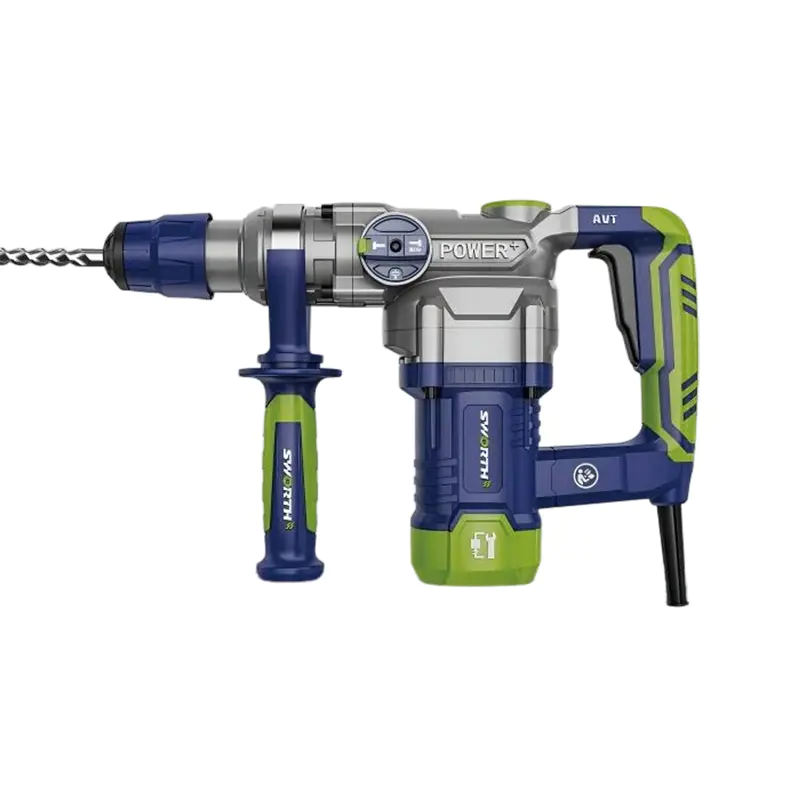
The SW928 High-Speed Rotary Hammer is designed for demanding concrete drilling and renovation applications. With a 1,200-watt motor, a 5,100 blows-per-minute impact rate, a 10-joule impact rating, and a no-load speed of 1,100 revolutions per minute, it is built to work through hard masonry, dense concrete, and difficult jobsite conditions. Its performance is supported by a safety clutch, a pressure-relief oil cap, a dust-sealed iron head, and a soft rubber grip designed for comfortable control during extended use.
Compared with conventional rotary hammers operating at approximately 4,500 blows per minute, the SW928 delivers 5,100 blows per minute. This represents an impact-rate increase of approximately 13 percent. The higher impact frequency can help users complete drilling operations more quickly, especially when making repeated holes for anchors, conduits, pipework, and structural installations.
The machine is manufactured by Yongkang Siwei Technology Co., Ltd., a professional tool producer integrating product research and development, manufacturing, and sales. The company serves construction professionals as well as users of cordless garden equipment. Its experience in impact tools, electronic controls, brushless motor systems, and battery platforms supports a product-development approach focused on durability, efficiency, operator comfort, and practical jobsite performance.

SW928 High-Speed Rotary Hammer
Designed for High-Productivity Concrete Drilling
Concrete drilling is one of the most demanding applications for a portable power tool. The machine must repeatedly convert electrical energy into mechanical impact while maintaining stable rotation. At the same time, the housing, gear system, impact assembly, lubrication system, and handle must withstand vibration, dust, heat, and shock loads.
The SW928 is designed around this demanding operating environment. Its 1,200-watt power input provides the electrical capacity required for heavy rotary hammer work. The 10-joule impact rating gives each blow substantial energy for breaking and penetrating concrete. The 5,100 BPM impact rate increases the number of impacts delivered during a given period, helping the tool remove material efficiently as the drill bit advances.
A higher impact rate does not replace the need for suitable drilling technique or correct accessories. However, when combined with adequate impact energy and a robust mechanical structure, it can improve productivity across repeated drilling tasks. For professional crews, this matters because the time saved on individual holes can accumulate significantly over a complete installation project.
The tool is especially suitable for work where operators need to drill multiple holes in succession. Anchor installation, structural fixing, utility routing, and renovation projects often require dozens or hundreds of holes. A tool that reduces the time spent on each hole can help crews keep pace with other trades and meet project schedules more reliably.
Core Performance Specifications
| Product | SW928 High-Speed Rotary Hammer |
| Category | Rotary Hammer |
| Rated Voltage | 220–240V~, 50/60Hz |
| Power Input | 1,200W |
| Impact Rate | 5,100 BPM |
| No-Load Speed | 1,100 r/min |
| Impact Energy | 10J |
| Stator Dimensions | Ø65 × 57H |
| Rotor Dimensions | Ø39 × 45H |
The specification profile positions the SW928 as a high-performance corded rotary hammer for professional and heavy-duty applications. Its 220–240V electrical rating makes it suitable for compatible power systems in commercial workshops, construction sites, renovation environments, and industrial facilities.
The 50/60Hz rating supports use across electrical markets that operate at either common frequency. Before operation, users should always confirm that the local supply matches the rated voltage and that the extension cord, socket, and site protection devices are appropriate for the machine’s power demand.
Why a 5,100 BPM Impact Rate Matters
The impact rate describes how many hammering actions the tool produces in one minute. The SW928 operates at 5,100 blows per minute, while the standard comparison point for regular rotary hammers is approximately 4,500 blows per minute. The difference is 600 additional impacts per minute, or approximately 13 percent more impact activity than the stated standard.
In practical terms, the higher frequency can help the tool break and loosen concrete material more continuously. As the bit rotates, the impact mechanism applies repeated blows to the working surface. These blows help fracture the material at the cutting edge, while rotation clears and advances the bit through the hole.
The benefit is most apparent in repeated drilling operations. If a crew is installing anchors in a concrete column or preparing multiple holes for a support system, faster drilling can reduce the time required for each position. The result can be a more efficient workflow, less waiting between operations, and improved utilization of labor and equipment.
Higher speed should always be combined with proper pressure. Excessive force can reduce bit life, increase vibration, and place unnecessary stress on the tool. The best results generally come from allowing the hammer mechanism and cutting accessory to perform the work while the operator maintains steady alignment and controlled feed pressure.
The SW928’s impact rate is therefore a productivity advantage rather than a substitute for correct use. It is particularly valuable to professional users who understand how to match the tool, bit, drilling mode, and pressure to the material and hole diameter.
10-Joule Impact Energy for Hard Materials
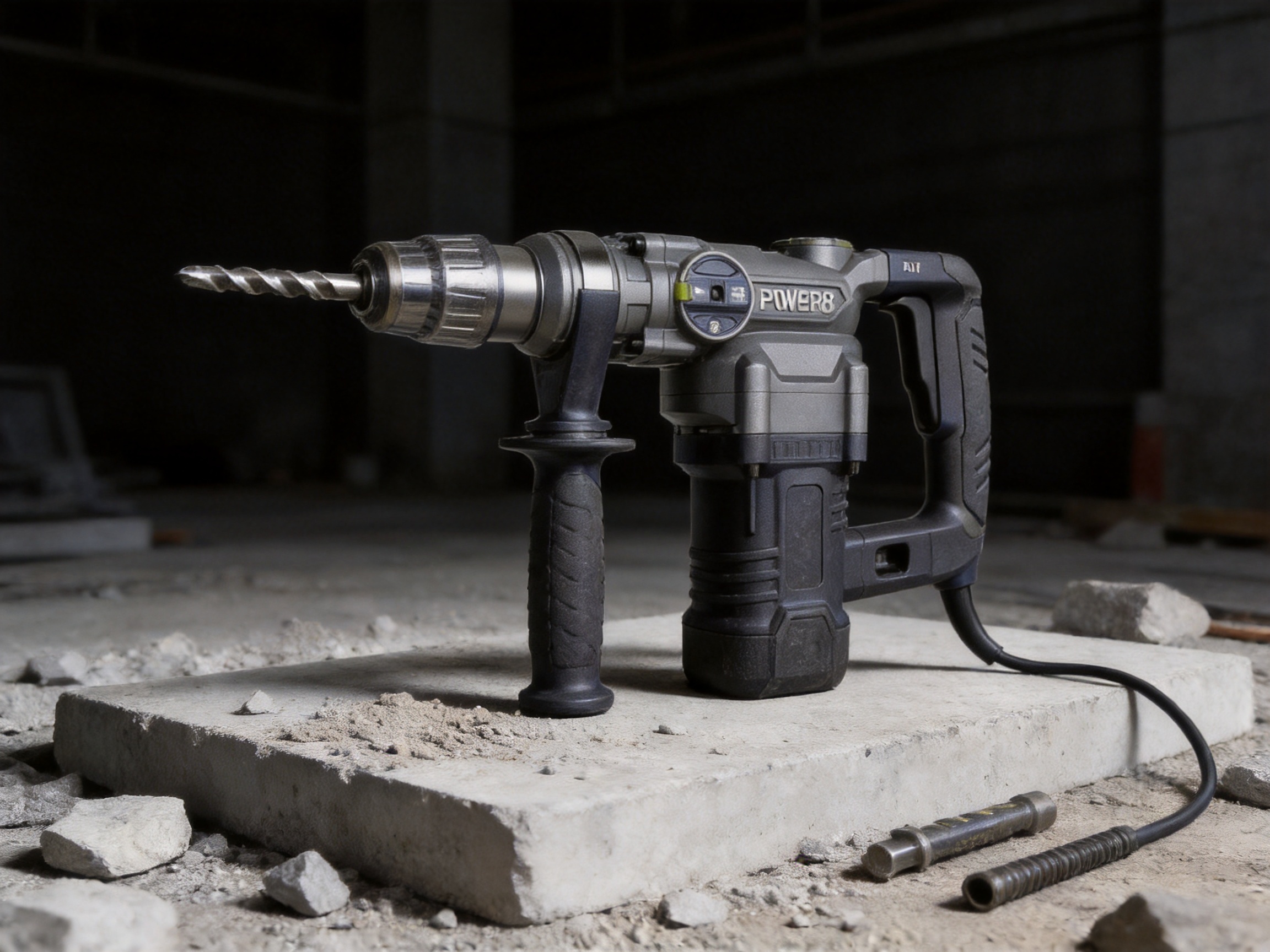
Impact energy is another important performance factor in rotary hammer selection. The SW928 is rated at 10 joules, providing significant energy for concrete drilling and demanding masonry work. A higher impact-energy rating allows the tool to deliver stronger blows to the accessory and working surface.
This capability is useful when drilling in dense concrete, hard masonry, thick slabs, and reinforced structures. In these conditions, a light-duty drill may require excessive time and operator pressure. A purpose-built rotary hammer with substantial impact energy is better suited to breaking through hard material while maintaining a productive drilling pace.
Ten joules of impact energy also supports a broad range of professional renovation tasks. The tool can be used for anchor holes, service penetrations, pipe routes, and utility installation where the material is too hard or thick for a conventional hammer drill to handle efficiently.
Impact energy and impact frequency work together but serve different functions. Impact energy describes the force available in individual blows, while impact rate describes how frequently those blows occur. The SW928 combines both characteristics in a balanced configuration: strong 10-joule impacts and a high 5,100 BPM rate.
This combination makes the machine appropriate for contractors who need a tool that can work quickly without sacrificing the force required for difficult concrete. It can reduce the need to change between multiple machines when moving from ordinary masonry to harder structural material.
Applications on Professional Jobsites
Anchor Drilling in Concrete Columns and Load-Bearing Walls
Structural anchors are used to secure brackets, supports, rails, frames, equipment, and other components to concrete. Drilling these holes requires accuracy, adequate depth, and sufficient power. A rotary hammer must penetrate the material without excessive delay, particularly when many anchors are required along a wall or column.
The SW928’s 10-joule impact energy helps address dense concrete, while its 5,100 BPM impact rate supports faster hole production. The safety clutch adds protection if the bit encounters unexpected resistance or binds in the hole.
Pipe Routing Through Thick Foundation Slabs
Plumbing, electrical, heating, and communication installations often require openings through thick concrete slabs. These tasks may involve drilling multiple holes or creating pathways for pipework. Thick slabs can place a sustained load on a tool, making motor capacity and impact performance essential.
The SW928 is designed for this type of heavy renovation and installation work. Its 1,200-watt power input provides a strong electrical foundation, while its dust-sealed iron head helps protect the internal sleeve area from abrasive particles generated during concrete drilling.
Overhead Utility Installation
Overhead drilling presents additional handling challenges. Operators may work from scaffolding, lifts, or ladders while positioning the tool above shoulder height. A stable grip, accessible trigger, and predictable response are particularly important in these conditions.
The SW928 includes a soft rubber anti-slip handle and an oversized trigger designed to be easier to press and hold while wearing gloves. These features can improve control during overhead utility installation, although users must still follow applicable working-at-height procedures and maintain secure footing.
Renovation in Rebar-Dense Structures
Renovation work often takes place in older or heavily reinforced buildings where concrete may contain dense reinforcement. Drilling in such structures can be slower and more demanding than drilling in ordinary masonry. The machine may also experience sudden resistance when the accessory contacts a harder inclusion.
The SW928’s safety clutch is designed to interrupt drive transmission during a sudden bit jam. This helps reduce the risk of a violent reaction being transferred to the operator’s wrists. The feature is valuable in challenging drilling conditions, but it does not eliminate the need for proper positioning, suitable bits, and safe operating procedures.
Operator Protection and Handling Features
A productive tool must also be manageable. Concrete drilling creates vibration, dust, heat, and reaction forces. If the operator cannot maintain control, performance may decline and fatigue may increase. The SW928 incorporates several features aimed at improving handling and protecting the user during demanding work.
Safety Clutch
The safety clutch is designed to help prevent wrist injuries caused by sudden kickback. If a drill bit becomes stuck, the rotating body of the tool can react sharply. The clutch helps disengage or limit the transfer of drive force when the accessory encounters an abrupt obstruction.
This is especially useful in reinforced concrete, where a bit may meet rebar or another hard inclusion. A clutch cannot replace safe technique, but it adds an important layer of mechanical protection between the tool and the operator.
Soft Rubber Anti-Slip Grip
The handle uses soft rubber to improve comfort and grip. Rubber surfaces can help reduce slipping when the user is wearing gloves or working in conditions where dust and perspiration affect hand contact. The shape is intended to support a firm hold while limiting discomfort during extended drilling.
Comfort is not merely a convenience. A secure grip helps the operator maintain alignment, apply consistent pressure, and respond more effectively if the bit meets resistance. It can also reduce the need to over-tighten the hand around the handle, which may contribute to fatigue over a long shift.
Oversized Trigger
The large trigger is designed for easier operation with gloved hands. Construction workers commonly wear protective gloves, especially when handling concrete, reinforcement, scaffolding, or rough materials. A small or difficult-to-reach switch can make continuous operation uncomfortable.
An oversized trigger provides a broader contact area and can be easier to control. Operators should still release the trigger whenever the tool is not actively drilling and should disconnect the power supply before maintenance, accessory changes, or inspection.
Pressure-Relief Oil Cap and Lubrication Protection
Impact mechanisms generate heat and pressure during operation. Proper lubrication is essential because the internal hammering components and gears work under repeated mechanical loads. The SW928 uses an oil cap with a breathing hole designed to release pressure and help prevent oil leakage.
Without suitable pressure management, heated lubricant can expand and create unwanted internal pressure. This may contribute to leakage around seals or caps. The pressure-relief design helps manage this condition and supports cleaner, more reliable operation.
Lubrication maintenance should follow the applicable service instructions. Users should inspect the oil cap and surrounding housing for signs of leakage, contamination, or damage. If unusual noise, overheating, reduced impact, or persistent oil loss occurs, the tool should be removed from service and examined by a qualified technician.
The oil-cap design is one example of how small engineering details can influence long-term tool performance. A rotary hammer is not defined only by motor power. Its durability also depends on how effectively the manufacturer manages heat, lubrication, sealing, vibration, and contamination.
Dust-Sealed Iron Head for Reduced Internal Wear
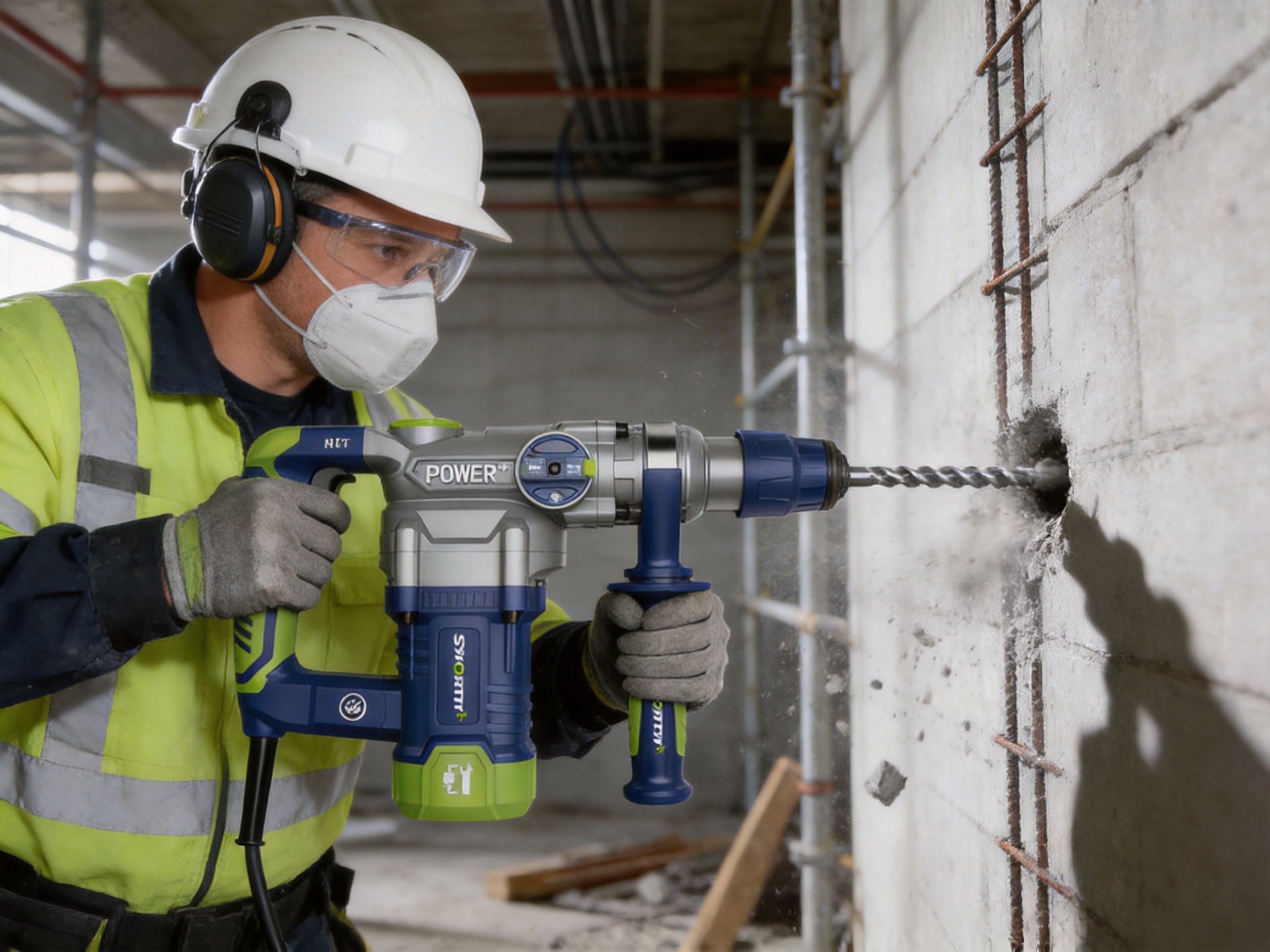
Concrete drilling produces fine abrasive dust. If dust enters the sleeve or impact area, it can accelerate wear on internal components, contaminate lubricant, and reduce the service life of the machine. The SW928 uses an iron head with a dust cap to help prevent dust from entering the sleeve.
The iron head provides a robust front structure for a tool that must withstand repeated impact. The dust cap adds a protective barrier around the accessory and sleeve area. Together, these features are intended to reduce the amount of abrasive material reaching sensitive internal components.
Dust protection is especially important on renovation sites, where concrete, mortar, brick, and old building materials can create large quantities of fine particles. The protective design does not mean that the tool can be ignored after use. Operators should clean the exterior, inspect the accessory area, and follow the recommended maintenance schedule.
Reducing dust entry can help lower internal wear and maintain more consistent performance. It may also reduce the frequency of maintenance interruptions, supporting the company’s stated goal of delivering durable and efficient tools for professional users.
Motor and Mechanical Configuration
The SW928 is equipped with a 1,200-watt power input and a motor configuration identified by a Ø65 × 57H stator and a Ø39 × 45H rotor. These dimensions form part of the electromagnetic system that converts electrical energy into rotational and mechanical output.
The stator and rotor must work together with the gearing, impact assembly, bearings, housing, and cooling arrangement. Correct matching of these components helps the motor deliver stable output under load. It also supports the balance between rotation speed and impact performance required for concrete drilling.
The no-load speed is rated at 1,100 revolutions per minute. This rotational speed allows the accessory to cut and clear material while the impact mechanism applies repeated blows. Actual speed under load will depend on the bit, material, drilling depth, operator pressure, and operating conditions.
A professional rotary hammer must be designed as a complete system. Increasing motor power alone is not enough if the gear train, impact assembly, lubrication, or housing cannot tolerate the output. The SW928’s specification and protective features indicate an integrated approach in which power, impact, sealing, clutch protection, and operator handling are considered together.
Manufacturing Strengths and Product Development
Yongkang Siwei Technology Co., Ltd. integrates research and development, production, and sales. This structure allows product requirements, manufacturing experience, quality feedback, and customer needs to be connected within one organization.
The company states that it follows the principles of professional focus and quality first. Its manufacturing approach emphasizes advanced processes and high-quality materials intended to withstand harsh working conditions. For professional tools, this focus is important because jobsite equipment is exposed to repeated shock, dust, vibration, transportation, and variable operating practices.
The company specializes in demolition hammers and chisel-cutting tools, giving it relevant experience in designing products that manage high mechanical loads. The SW928 benefits from this product background through its combination of impact power, safety clutch protection, pressure management, and dust control.
Manufacturing strength is reflected in more than the final appearance of a tool. It includes material selection, dimensional control, assembly accuracy, electrical safety, lubrication procedures, inspection, and performance testing. A rotary hammer requires close coordination between the motor, stator, rotor, gears, impact components, seals, switches, handle, and housing.
A manufacturer with integrated research, production, and sales functions can also respond more efficiently to field feedback. Professional users often identify practical requirements that are not obvious in laboratory testing, such as trigger usability with gloves, handle comfort during overhead drilling, oil behavior during extended operation, and dust accumulation around the front assembly.
The company also reports experience in high-efficiency brushless motors and electronic control systems developed since 2024 for green new-energy technologies and cordless garden equipment. Although the SW928 is a corded rotary hammer, this wider technical experience demonstrates the manufacturer’s ability to work with motor efficiency, electronic control, battery platforms, and application-specific tool design.
Advantages Over Conventional Rotary Hammers
The most direct advantage of the SW928 over the stated regular-hammer benchmark is its 5,100 BPM impact rate compared with approximately 4,500 BPM. The additional impact frequency can improve drilling productivity when the tool is used with suitable accessories and correct operating pressure.
A second advantage is the combination of high impact frequency with 10-joule impact energy. Some tools may emphasize speed but lack sufficient force for dense concrete, while others may provide strong impacts but operate more slowly. The SW928 is configured to deliver both force and frequency for professional drilling applications.
A third advantage is the attention given to protection features. The safety clutch addresses sudden bit binding. The dust-sealed iron head helps protect the sleeve area. The pressure-relief oil cap helps manage internal lubrication pressure. The soft rubber grip and oversized trigger support practical operation with gloves.
These features can provide a more complete professional solution than a basic hammer that focuses only on motor power. A tool’s overall value depends on productivity, protection, comfort, durability, and ease of maintenance. The SW928 addresses each of these areas within one platform.
Compared with light-duty drills, the SW928 is better suited to thick slabs, load-bearing concrete, rebar-dense structures, and repeated anchor drilling. Compared with ordinary rotary hammers, its higher impact rate is intended to shorten drilling time. Compared with unprotected heavy-duty machines, its clutch, grip, oil-cap, and dust-control features improve the emphasis on operator and equipment protection.
Performance comparisons should always be made using equivalent operating conditions. Bit diameter, accessory quality, concrete strength, drilling depth, electrical supply, and operator technique can all influence results. Even so, the stated specification gives the SW928 a clear positioning advantage for contractors seeking faster, high-energy concrete drilling.
Productivity and Total Operating Value
Tool productivity includes more than the speed of a single operation. It also includes setup time, operator fatigue, maintenance interruptions, accessory changes, and the ability to keep working in difficult materials. A tool that performs consistently can help reduce delays across an entire project.
The SW928 is designed to support productivity in several ways. Its high impact rate can shorten drilling cycles. Its 10-joule energy rating can help it handle hard material without requiring excessive operator pressure. Its safety clutch can reduce the consequences of sudden bit binding. Its dust-control features can help protect the internal mechanism from abrasive contamination.
The soft rubber grip and large trigger also contribute to sustained work. If the operator can hold the machine securely and operate the switch comfortably, it may be easier to maintain a steady rhythm during a long sequence of holes. Reduced fatigue can support better alignment and more consistent results.
For contractors, these factors may influence total operating value. A tool that completes holes faster and remains dependable can reduce labor time, improve crew utilization, and support more predictable project scheduling. The product is therefore positioned not only as a high-power machine but also as a productivity tool for professional users.
Recommended Operating Practices
Before use, inspect the power cord, plug, housing, handle, switch, oil cap, front assembly, and accessory. Do not operate the machine if any part is cracked, loose, damaged, or contaminated with excessive oil.
Confirm that the drill bit or other accessory is suitable for the rotary hammer and for the material being worked. The accessory should be correctly installed and securely retained. A worn, bent, cracked, or incorrectly fitted bit can reduce performance and increase vibration.
Mark the drilling position before starting. Hold the machine with both hands where possible, maintain a balanced stance, and keep the bit aligned with the intended hole. Avoid twisting the tool while the accessory is engaged in the material.
Use steady pressure rather than excessive force. The impact mechanism is designed to provide the breaking action. Pushing too hard can overload the motor, increase heat, accelerate accessory wear, and reduce drilling efficiency.
When drilling overhead or from scaffolding, follow all applicable safety requirements. Secure the work area, use suitable personal protective equipment, and make sure the operator has stable footing and adequate support. Concrete drilling may produce dust, fragments, and noise, so eye, hearing, respiratory, and hand protection should be selected according to the site conditions.
Release the trigger and disconnect the power before changing accessories, clearing a jam, cleaning the machine, checking the oil cap, or performing maintenance. Allow the tool to cool when it has been operating continuously under heavy load.
Maintenance for Long-Term Performance
Regular maintenance helps preserve the performance advantages of a rotary hammer. After use, remove dust from the exterior and front assembly using an appropriate cleaning method. Do not allow abrasive material to accumulate around the sleeve, ventilation openings, switch, or handle.
Inspect the dust cap and iron head area regularly. If the dust cap is worn or damaged, protection against contamination may be reduced. Replace damaged protective components before returning the tool to heavy service.
Check the oil cap for signs of leakage. The breathing hole should remain unobstructed so that pressure can be released as designed. Do not use unsuitable lubricants or add oil without following the recommended service procedure.
Monitor changes in operating behavior. Excessive noise, reduced impact, unusual vibration, burning odor, overheating, intermittent operation, or visible sparking may indicate a fault. Continued operation under these conditions can cause further damage and create a safety risk.
Store the machine in a dry and protected location. Keep it away from rain, corrosive chemicals, excessive heat, and loose debris. Store accessories separately and protect their cutting edges from damage.
Professional users should establish inspection intervals based on operating hours, drilling conditions, material hardness, and workload. Machines used daily in concrete may require more frequent inspection than those used occasionally for light renovation.
Quality Philosophy and Professional Reliability
Yongkang Siwei Technology Co., Ltd. presents itself as a professional tool manufacturer serving engineering and construction users. Its stated quality philosophy emphasizes professional focus, high-quality materials, and products capable of working in harsh conditions.
This philosophy is reflected in the SW928’s practical design details. The machine does not rely only on a high wattage rating. It combines motor output with impact performance, clutch protection, pressure management, dust control, and ergonomic handling. These characteristics are relevant to users who evaluate tools according to actual jobsite reliability rather than appearance alone.
The company’s experience in demolition hammers and chisel tools is particularly relevant to rotary hammer development. These product categories share requirements for durable impact assemblies, robust front housings, effective vibration management, and reliable lubrication. Knowledge gained from one tool category can support improvements across related products.
At the same time, the company’s work in cordless garden tools and electronic control systems demonstrates a broader development capability. Its product range includes lithium-ion lawn mowers, string trimmers, lawn tractors, hedge trimmers, electric pruning shears, and high-speed chainsaws. This experience expands the company’s knowledge of motor control, energy efficiency, battery integration, and user-centered tool design.
For distributors and professional buyers, a manufacturer with multiple product capabilities may offer advantages in product development, customization discussions, technical communication, and long-term supply relationships. The company’s integrated structure supports its position as a supplier for both construction tools and green garden equipment.
Choosing the SW928 for Different Workloads
The SW928 is a strong choice for contractors whose work involves frequent drilling in concrete, masonry, slabs, and reinforced structures. It is particularly appropriate when the project requires more than occasional household drilling and when drilling speed has a direct effect on labor productivity.
For anchor installers, the higher impact rate can support faster hole preparation. For renovation contractors, the 10-joule impact energy can help address hard structural materials. For utility installers, the combination of power and a glove-friendly trigger can support repetitive overhead work. For engineering crews, the safety clutch and dust-control features offer useful protection during demanding applications.
The tool may be more than necessary for light drilling in soft brick, thin block, or small household repair tasks. Buyers should select equipment according to material, hole size, operating frequency, power availability, and required mobility. The SW928 is optimized for users who value corded power and heavy-duty performance.
Because it operates from a 220–240V supply, it is best suited to locations and worksites equipped with compatible electrical infrastructure. Users who require unrestricted mobility or work in areas without reliable mains power may prefer a cordless platform, while users who need sustained high output can benefit from the continuous power of a corded machine.
Frequently Asked Questions
What type of tool is the SW928?
The SW928 is a high-speed rotary hammer designed for concrete drilling, masonry work, renovation, anchor installation, utility routing, and other demanding construction applications.
What is the impact rate of the SW928?
The impact rate is 5,100 blows per minute. This is approximately 13 percent higher than the stated standard rate of 4,500 blows per minute for regular rotary hammers.
What is the impact energy?
The rated impact energy is 10 joules. This level is intended for hard concrete, dense masonry, thick slabs, and other heavy-duty drilling tasks.
How powerful is the motor?
The machine has a rated power input of 1,200 watts. Its motor configuration includes a Ø65 × 57H stator and a Ø39 × 45H rotor.
What voltage does the tool use?
The rated supply is 220–240V~, 50/60Hz. Users should confirm compatibility with the local electrical supply before operation.
How does the SW928 compare with a standard rotary hammer?
Its primary stated advantage is the 5,100 BPM impact rate compared with approximately 4,500 BPM for a regular hammer. It also combines this higher rate with 10-joule impact energy, a safety clutch, a pressure-relief oil cap, and a dust-sealed iron head.
What is the purpose of the safety clutch?
The safety clutch is designed to reduce the transfer of sudden reaction force if the bit jams. It helps protect the operator’s wrists from kickback, especially when drilling in reinforced or difficult materials.
Why does the oil cap have a breathing hole?
The breathing hole is designed to release internal pressure and help prevent oil leakage during operation. It supports more stable lubrication management within the impact mechanism.
How does the dust-sealed iron head help?
The iron head and dust cap help limit the entry of concrete and masonry dust into the sleeve area. Reducing abrasive contamination can help lower internal wear and support longer service life.
Is the handle suitable for gloved operation?
The tool includes a soft rubber anti-slip handle and an oversized trigger. These features are intended to improve grip and make trigger operation easier when the user is wearing work gloves.
What applications are recommended?
Recommended applications include anchor drilling in concrete columns and load-bearing walls, pipe routing through thick foundation slabs, overhead utility installation, and heavy renovation work in rebar-dense structures.
Can the tool drill through reinforced concrete?
It is designed for demanding concrete work, including renovation in rebar-dense structures. Users must select appropriate accessories, maintain proper alignment, and follow safe procedures when reinforcement or unexpected resistance is encountered.
How can users maintain the machine?
Users should clean dust from the exterior and front assembly, inspect the dust cap and oil cap, check the power cord and switch, monitor unusual noise or vibration, and follow the manufacturer’s service recommendations.
Who manufactures the SW928?
The SW928 is manufactured by Yongkang Siwei Technology Co., Ltd., a tool manufacturer integrating research and development, production, and sales.
What other technical strengths does the manufacturer report?
The company reports experience in demolition hammers, chisel-cutting tools, high-efficiency brushless motors, electronic control systems, intelligent battery platforms, and cordless garden equipment.
Conclusion
The SW928 High-Speed Rotary Hammer is built for professional users who need fast, forceful, and controlled drilling in concrete and masonry. Its 5,100 BPM impact rate provides a clear speed advantage over the stated 4,500 BPM standard, while its 10-joule impact energy and 1,200-watt power input support demanding applications.
Its value extends beyond raw performance. The safety clutch helps reduce kickback risk, the pressure-relief oil cap helps control internal pressure, the dust-sealed iron head helps reduce abrasive contamination, and the soft rubber grip with oversized trigger supports practical operation with gloves.
These features make the tool suitable for anchor drilling, thick-slab pipe routing, overhead utility work, and heavy renovation in reinforced structures. For contractors and engineering crews, the combination of speed, impact force, protection, and handling can help reduce drilling time and keep projects moving.
The manufacturing background of Yongkang Siwei Technology Co., Ltd. further supports the product’s professional positioning. Through integrated research and development, production, and sales, together with experience in impact tools, motor systems, electronic controls, and cordless equipment, the company has developed a broad technical foundation for durable and efficient tools.
For users seeking a corded rotary hammer capable of handling hard concrete and repeated jobsite demands, the SW928 offers a balanced solution centered on productivity, mechanical protection, operator comfort, and long-term professional use.
References
1. Product technical specification sheet for the SW928 High-Speed Rotary Hammer.
2. Product application and feature information supplied by the manufacturer.
3. General principles of rotary hammer operation, impact energy, and concrete drilling practice.
4. General construction-tool maintenance guidance covering lubrication, dust control, accessory inspection, and electrical safety.
5. General occupational safety principles for concrete drilling, overhead work, personal protective equipment, and power-tool operation.
6. Manufacturer information concerning research and development, production capabilities, impact tools, brushless motor systems, electronic controls, and cordless garden equipment.
Product: SW928 High-Speed Rotary Hammer

Recommended Products
-


SW528 Small Hole Rebar Hammer
-
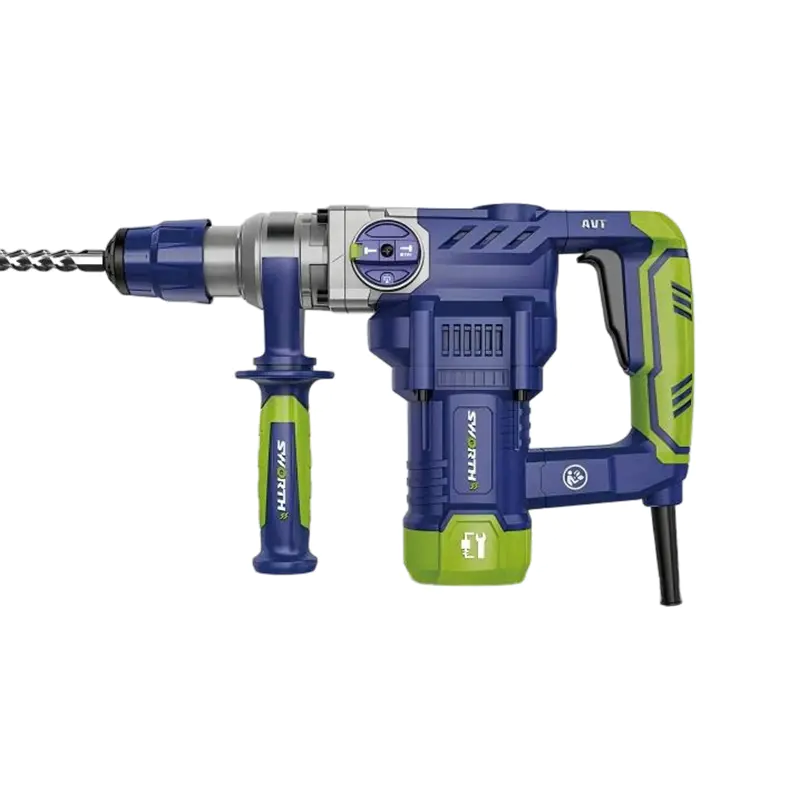
SW932 Groove Sandblasting Hammer
-
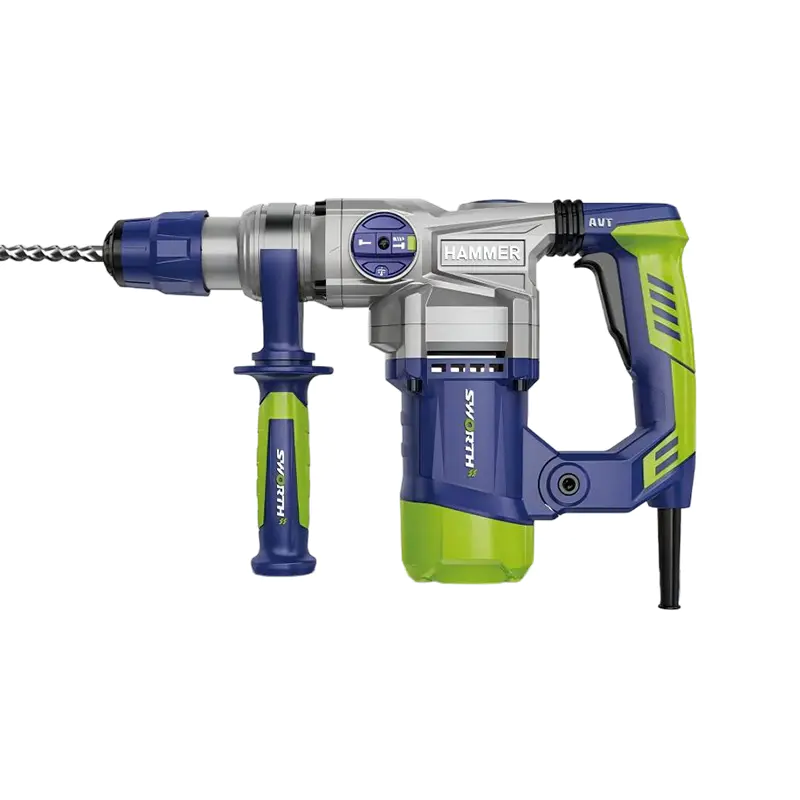
SW9362A Large Hole Rebar Hammer
-
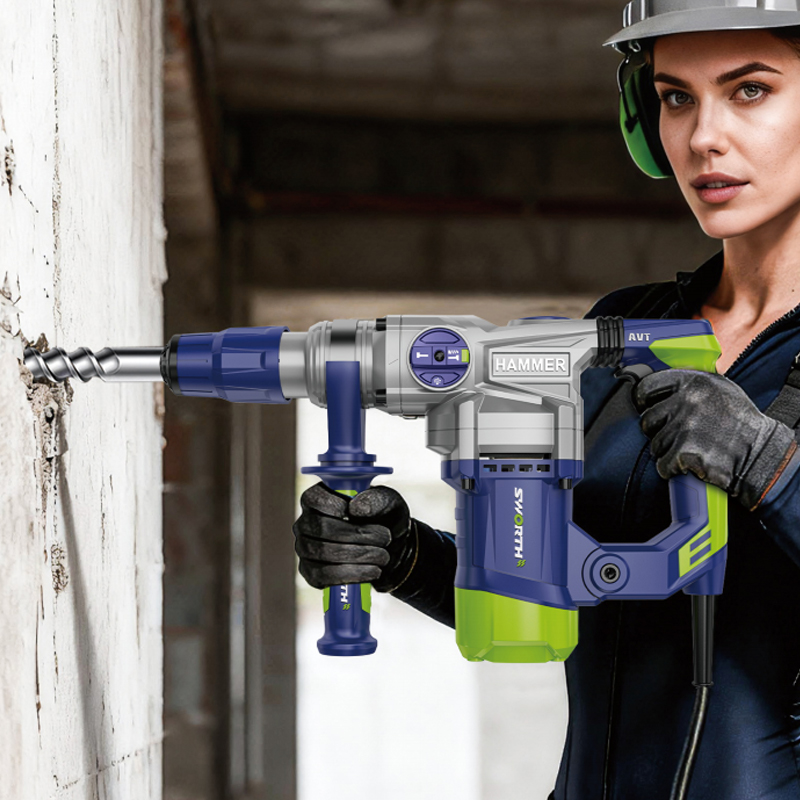
SW940 Enlarged Hole Rebar Hammer
-
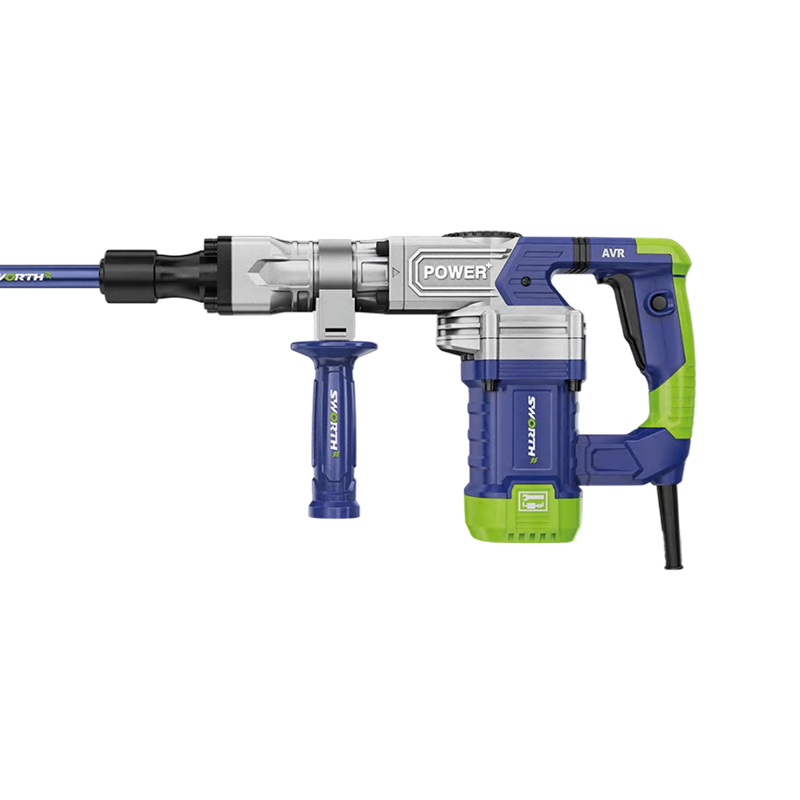
SW35S1 Powerful Demolition Hammer
-
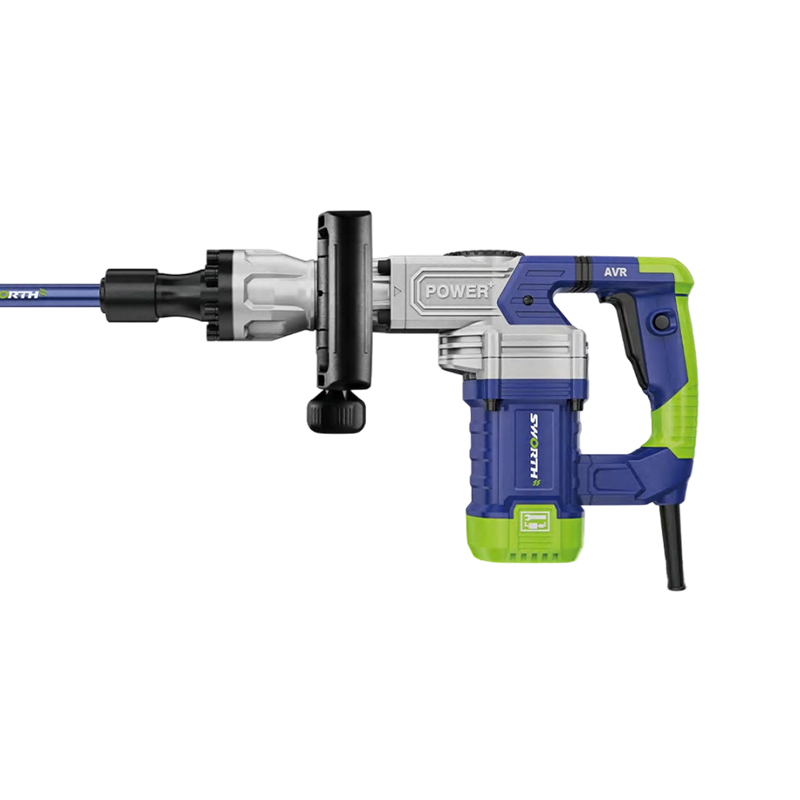
SW35S2 High-Efficiency Heat Dissipation Demolition Hammer
-
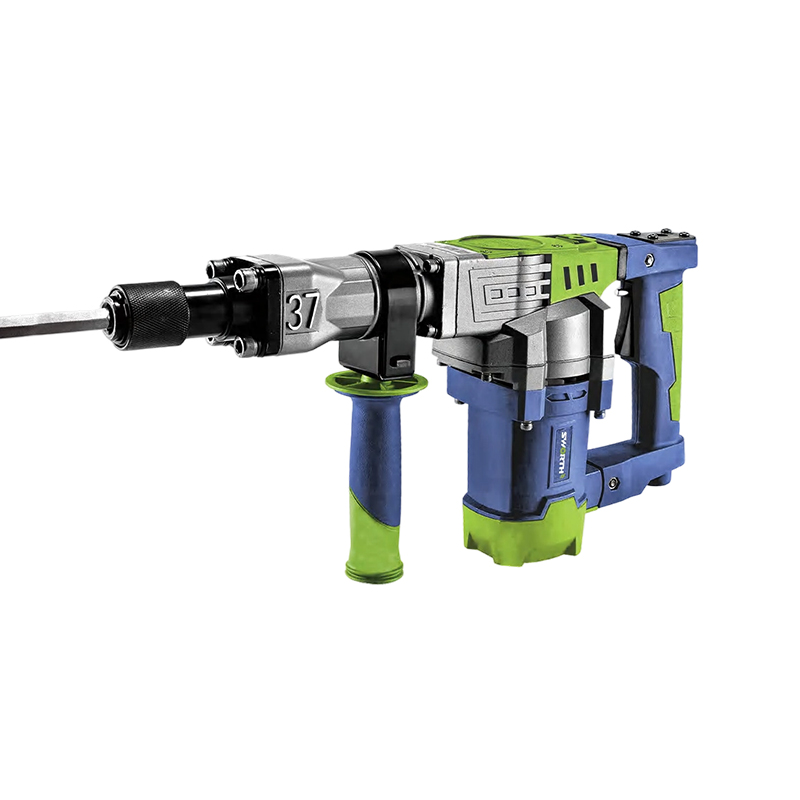
SW9371 High-Power Demolition Hammer
-
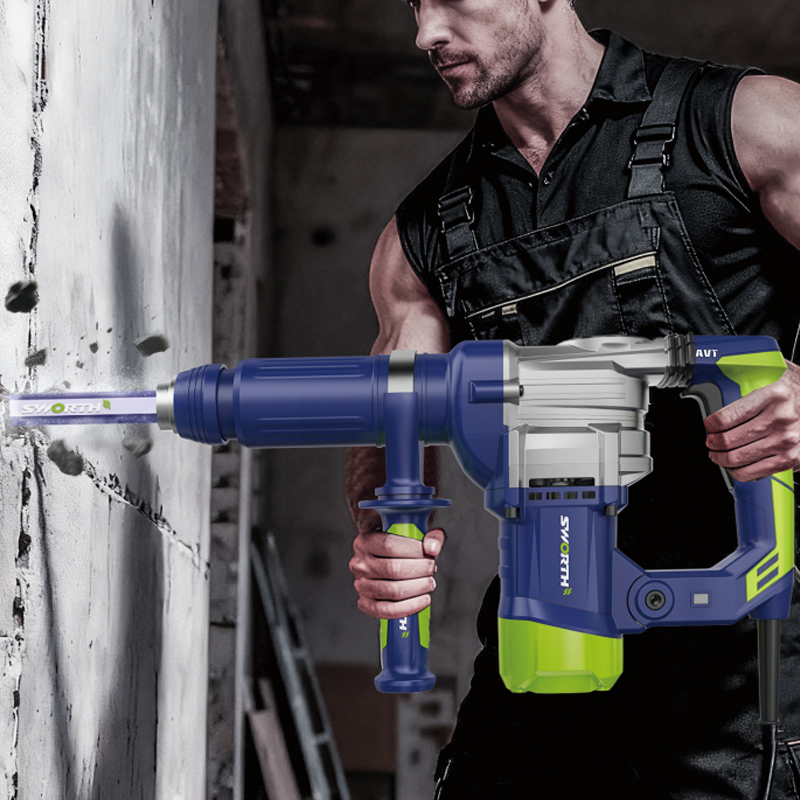
SW9373 Anti-Scalding Carbon Brush Holder Demolition Hammer
-
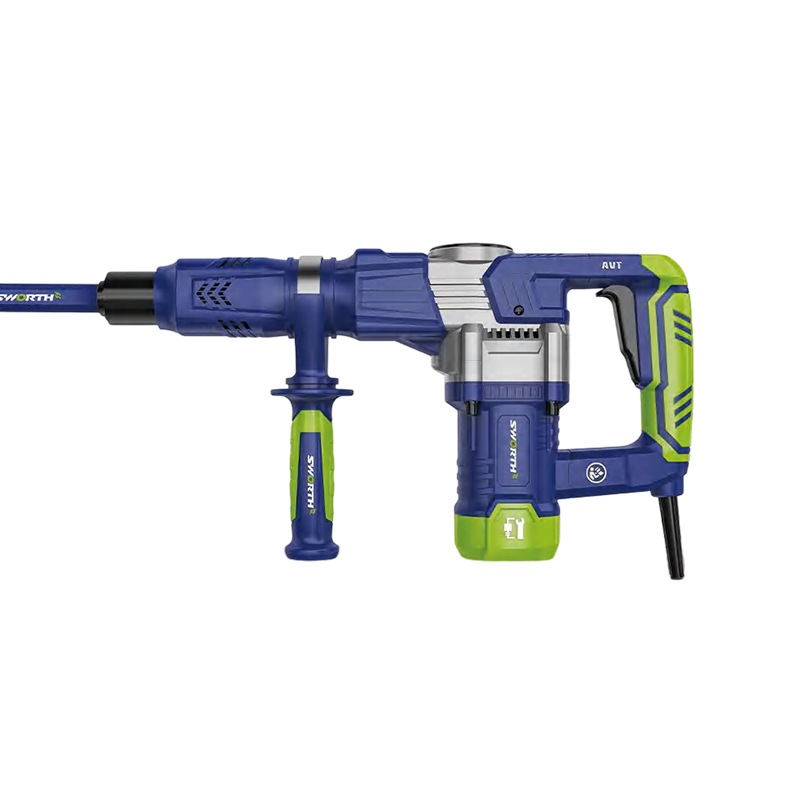
SW535 Powerful Anti-Scalding Demolition Hammer
-
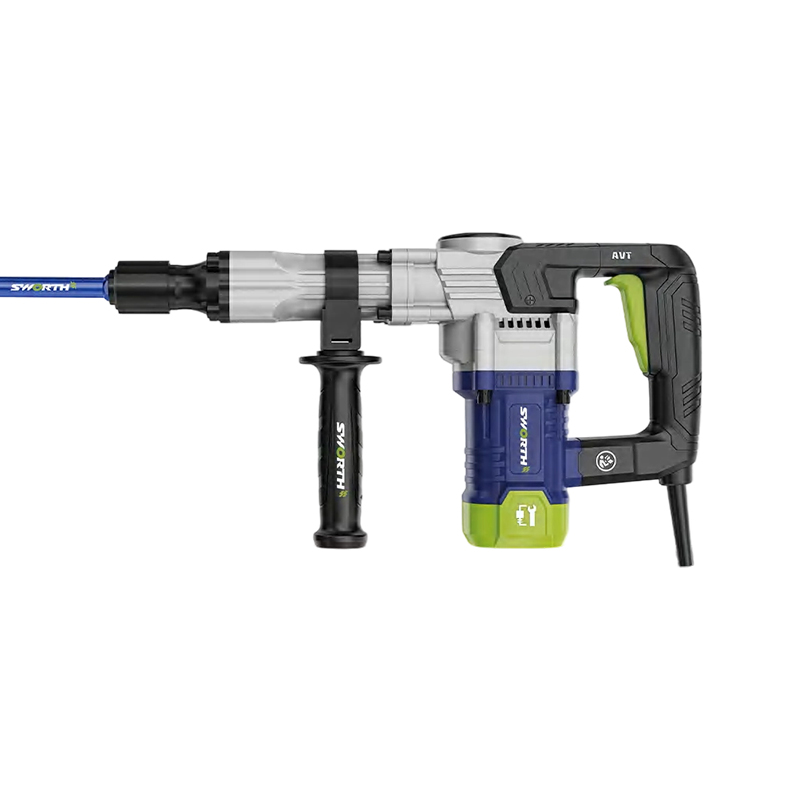
SW535-2 Durable Powerful Demolition Hammer
-
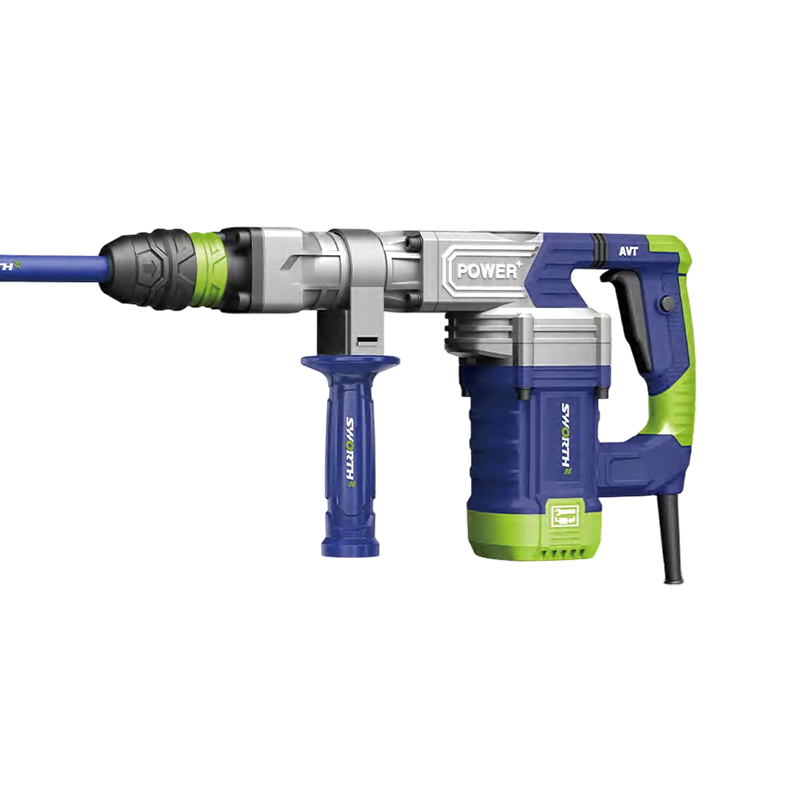
SW35S3 Five-Pipe Drill Bit Demolition Hammer
-

SW11E Five-Pipe Clamping Demolition Hammer
 +86-18314829275
 sale@sworthtools.com
 No. 101, Yugui Road, chengxi Industrial Zone, Yongkang City, Zhejiang Province, China
Copyright© Yongkang Siwei Technology Co., Ltd. All Rights Reserved

Hammer Tools & Cordless Garden Tools Manufacturer
